
To avoid these ads, REGISTER NOW!

Drill bits for easy hand drilling in steel

Olafur

Well-known member
Joined
Jun 2, 2011
Messages
2,578
Location
Iceland
Drilling with hand drill in less than optimal position so you can't put a lot of pressure on the drill. Regular hss bit takes forever to get through 3mm steel. Let alone stainless.

Years ago I had some strange bit, probably around 5mm, it looked like wood drill ("brad point"?) but had some fancy coating, probably TIN and it was fantastic for the first pass. Actually looked somewhat like the one pictured below if memory serves me. Picture from wikipedia "lip and spur bit" wood bit!?
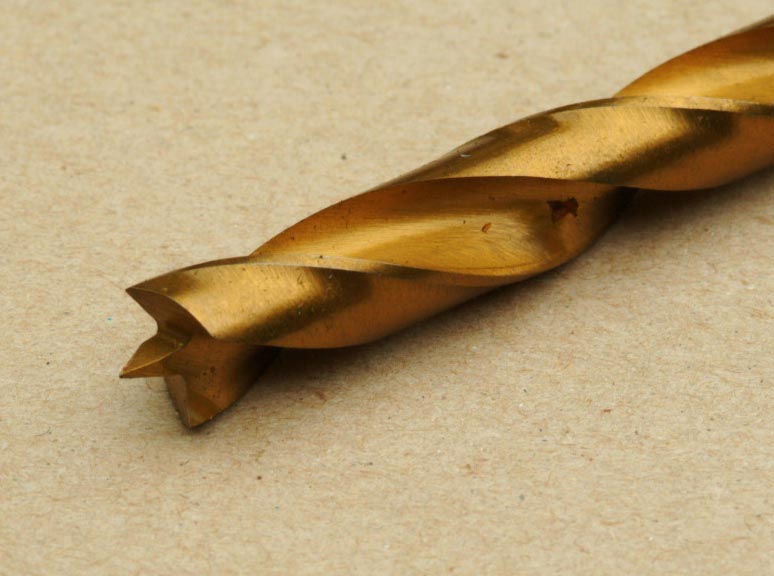
Drill_tip_spur.jpg


I have 4.5mm Irvin turbomax bit and it is an improvement over regular HSS split point but not much.

Ideas?
 
Last edited:
To avoid these ads, REGISTER NOW!

theoldwizard1

Well-known member
Joined
Feb 22, 2011
Messages
43,509
Location
SE MI
When drilling in steel, start with a center punch. If it is hard/thick steel, start with a center drill or any bit < 1/4". Work your way up to larger sizes. The LARGER THE BIT THE SLOWER IT SHOULD TURN ! Most 1/2" drills spin much too fast for a 1/2" bit.

Good bit have a Titanium Nitride coating.
 

JoeFin

Well-known member
Joined
Sep 13, 2013
Messages
717
Location
NorCal - where the Rednecks Race
Really its the Method more then the drill bit

A lot of people wind up their drill just as fast as it will go and burn the edge off the bit before they are 1/2 through the material
 

wingnut_1

Well-known member
Joined
May 25, 2012
Messages
335
Location
Midwest USA (Wisconsin)
When drilling in steel, start with a center punch. If it is hard/thick steel, start with a center drill or any bit < 1/4". Work your way up to larger sizes. The LARGER THE BIT THE SLOWER IT SHOULD TURN ! Most 1/2" drills spin much too fast for a 1/2" bit.

Good bit have a Titanium Nitride coating.

YEP! A smaller hole, a tad bit smaller than the web of the final drill size, makes a huge difference :thumbup:
 

PCustoms

Well-known member
Joined
Jul 23, 2011
Messages
23,684
Location
VT
The pilot drill should be just larger then the center web portion of your final drill diameter.

Use oil/cutting fluid, and go SLOW. This is going to be way slower then you think. If the bit is hot or smoking then you toasted it and it won;t cut correctly until it is re-sharpened.

We get good bits at work through our cutting insert vendor, they work.

I have a set of Hitachi I bought at Lowe's a while back, they work great if not abused. the 1/2" size has poked a lot of holes in a tuck frame and 1/4" hot rolled and looking at it you couldn't tell, still cuts great.

driterms.gif
 
OP
O

Olafur

Well-known member
Joined
Jun 2, 2011
Messages
2,578
Location
Iceland
Pilot point drill bit?

5TG17_AS01
This must be the point I am looking for. In memory the bit I had looked different - more like the wood bit pictured in first post. But I am probably wrong about that 20 years have passed. I will try these. Thanks!!

Sorry about the confusion regarding "hand drill" I am talking about cordless drill. I guess part of my problem is the shop-supplied HSS split point bits I am using are junk.

Next question:
Bits with carbide tips for steel - I saw a guy at the SEMA show many years back showing bits that ...well looked like masonry bits. He was drilling brake rotors and steel plates like there was no tomorrow. If memory serves he turned the bits very fast and the chips were very hot, sparks flying etc. Anyone tried something similar?

Thanks all!
 
To avoid these ads, REGISTER NOW!

manwithtools

ALLIANCE MEMBER
Joined
Aug 24, 2015
Messages
14,668
Location
Lebanon, TN
Just what the Doctor ordered ask and you shall receive:

https://www.artu.com/multi-purpose-drill-bits.php

Thank you for the cordless drill part because I for one was somewhat confused in your original request.:beer:

Except that these are not for use in steel, look at the page you referenced and read the notice at the bottom:

"Please be advised that ARTU Multi-Purpose Drill Bits are not recommended to be used on mild steel, ie: Angle Iron, Galvanized Pipe, Copper, Aluminum, Brass, Stainless Steel, etc."

A properly ground HSS steel bit turning at the proper speed with a little bit of cutting fluid will work fine. Just be sure it's a quality bit made of good steel and your all set.
 

Provincial

Well-known member
Joined
Sep 21, 2011
Messages
6,882
Location
Near Salem, OR
In my experience, cobalt drill bits seem to perform better on mild steel than regular hi-speed (M2) bits. I don't think it is because of the wear resistance (which is a major point when drilling harder or tougher materials), but may be because they are honed to a sharper edge, and hold it longer.
 

woody 73

Well-known member
Joined
Apr 14, 2009
Messages
11,567
Location
The Great State Up North
Except that these are not for use in steel, look at the page you referenced and read the notice at the bottom:

"Please be advised that ARTU Multi-Purpose Drill Bits are not recommended to be used on mild steel, ie: Angle Iron, Galvanized Pipe, Copper, Aluminum, Brass, Stainless Steel, etc."

A properly ground HSS steel bit turning at the proper speed with a little bit of cutting fluid will work fine. Just be sure it's a quality bit made of good steel and your all set.

Tough crowd today... :rolleyes:Sigh at the very bottom it READS: use the the cobalt bits.
 

BFHtime

Well-known member
Joined
Mar 31, 2012
Messages
983
I think cobalt steel has a higher tolerance to keeping its integrity, with heat.

Very slow drill speed with pressure is the way to go. Regular use of cutting oil to keep bit cool, and carry chips away from the cutting point. Sometimes a thicker lube is nice for pulling chips out, like engine assembly lube. Something a little tacky to carry chips up the flutes.
Slow speed so the tool almost stalls, then increase speed glacially slow as, pressure is increased. I find this makes nice chips of metal, and let's the bits last much longer. Using too much speed just eats the cuttin edge of the bit, where all the action happens.
Trying playing around with different drill speeds and pressures, and eventually you will where speed vs longevity have a range of variables.
 

uart

Well-known member
Joined
Nov 17, 2011
Messages
1,226
Location
Australia
Tough crowd today... :rolleyes:
Hi woody. Those carbide bits will work ok in mild steel, it's just they're not recommended because a regular twist bit is more efficient. With the zero degree rake angle they don't cut or penetrate very aggressively at all.
 
Last edited:

uart

Well-known member
Joined
Nov 17, 2011
Messages
1,226
Location
Australia
This must be the point I am looking for. In memory the bit I had looked different - more like the wood bit pictured in first post. But I am probably wrong about that 20 years have passed. I will try these. Thanks!!

There's a few variations on that basic bullet point or pilot point theme, and yeah I've seen some that do look a little more like the brad point wood ones. Some are actually pretty good for popping out clean holes in sheet metal (with the "spur" part cutting through first and pushing out a plug a bit like a hole saw would).

Both the bullet point ones you pictured, and the turbomax ones you mentioned before, they'll both penetrate a little easier then a regular drill bit. So both good for getting a hole started using a hand drill. The problem with those fancy point designs however, is that you can't easily resharpen them when they dull.

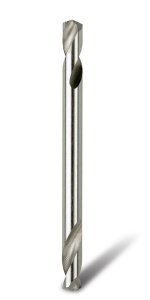
Another option is to just use a small pilot drill to get the hole started. I find those little 1/8" double ended stub (panel) bits to be ideal for this. The short length gives less breakage with hand drill use, and they're fairly economical to buy.
 

Attachments

  • panel.jpg
    panel.jpg
    11 KB · Views: 22
Last edited:
OP
O

Olafur

Well-known member
Joined
Jun 2, 2011
Messages
2,578
Location
Iceland
Just what the Doctor ordered ask and you shall receive:

https://www.artu.com/multi-purpose-drill-bits.php

Thank you for the cordless drill part because I for one was somewhat confused in your original request.:beer:
Yes, there they are! It seems these bits have not gained much popularity, that's unfortunate for the guy at the SEMA show who told us this would be the next big thing!

Few years back I was repairing transmission out of Mercedes Benz tractor (semi truck). And the pullers I had were not up to the task of removing several bearings. So I had to resharpen masonry drills and drill some sleeves in order to crack them with chisel to get them off. It was lots of fun, including a trip to the ER ... Since then I have keeping an eye out for these. Thanks for the link woody!
 
OP
O

Olafur

Well-known member
Joined
Jun 2, 2011
Messages
2,578
Location
Iceland
There's a few variations on that basic bullet point or pilot point theme, and yeah I've seen some that do look a little more like the brad point wood ones. Some are actually pretty good for popping out clean holes in sheet metal (with the "spur" part cutting through first and pushing out a plug a bit like a hole saw would).

Both the bullet point ones you pictured, and the turbomax ones you mentioned before, they'll both penetrate a little easier then a regular drill bit. So both good for getting a hole started using a hand drill. The problem with those fancy point designs however, is that you can't easily resharpen them when they dull.

Another option is to just use a small pilot drill to get the hole started. I find those little 1/8" double ended stub (panel) bits to be ideal for this. The short length gives less breakage with hand drill use, and they're fairly economical to buy.
In the underlined sentence you are describing the drill I had. I used it on stainless and thicker mild steel (4-6mm) as well. Good advice and thanks for the tips!

All:
The one variable that is sometimes difficult to control when drilling with cordless is pressure. Standing in a ladder or in some awkward position with only one hand on the drill etc. Then smaller bits tend to break and bigger bits just don't get the pressure needed to bite.

Thanks gentlemen for good advice and info!
 

uart

Well-known member
Joined
Nov 17, 2011
Messages
1,226
Location
Australia
All:
The one variable that is sometimes difficult to control when drilling with cordless is pressure. Standing in a ladder or in some awkward position with only one hand on the drill etc. Then smaller bits tend to break and bigger bits just don't get the pressure needed to bite.
Yeah, you've hit the nail right on the head there Olafur. Not being able to apply enough pressure (or properly control that pressure) is the major drawback with a hand held drill.

It's ok to say only use a pilot drill no bigger than the web of the following drill when you're working on a drill press (or mill or lathe), but you can't always get away with that on a hand held drill.

The simple fact is that if you apply the same force, but the drill is only working on the outer half of it's contact area, then you're applying twice the pressure at the cutting edges. Even though it's not ideal to do this on a drill press, stepping up sizes so that the "pilot" is a fairly large percentage of the following drill is just something that you sometimes have to do to get the cutting pressure you need.

Re the small bits snapping part:
That's why I recommend those small double ended panel drills for the first pilot. Say you're drilling though 5mm thickness, you put the drill bit into the chuck with just 6mm sticking out. You should try them, they really make things easier for getting that small first hole started. Plus they're generally low cost in packs of 10 etc, and if you snap one of the tips off you just turn them around and keep drilling. :)
 
Last edited:

Jim Johnstone

Well-known member
Joined
Apr 11, 2011
Messages
1,841
Location
Brantford, Ontario
This must be the point I am looking for. In memory the bit I had looked different - more like the wood bit pictured in first post. But I am probably wrong about that 20 years have passed. I will try these. Thanks!!

Sorry about the confusion regarding "hand drill" I am talking about cordless drill. I guess part of my problem is the shop-supplied HSS split point bits I am using are junk.

Next question:
Bits with carbide tips for steel - I saw a guy at the SEMA show many years back showing bits that ...well looked like masonry bits. He was drilling brake rotors and steel plates like there was no tomorrow. If memory serves he turned the bits very fast and the chips were very hot, sparks flying etc. Anyone tried something similar?

Thanks all!
I regularly use masonry bits to drill heat treated tool steel like D2 or A2. Cuts hot as hell and you need tons of coolant on them or the solder holding the carbide melts and you lose the insert. I've never tried with a hand held drill however, only in a mill.

Sent from my SM-G900W8 using Tapatalk
 
To avoid these ads, REGISTER NOW!
Top Bottom