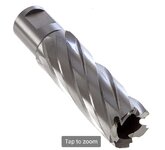
-Going from 1/2 to 5/8 in a 1" thick steel plate is very doable, even with less than premium drills. No mention of what powers the drilling, this is important too. No mention of the speed involved but if the drill flutes "disappear" then it's way too fast. No mention of the color of the chips being produced at the start. If they weren't silver then your RPM is too fast. If they were yellow, purple, or blue then you were going WAY too fast. No mention of cutting oil or coolant either, this makes a very big difference. No mention of continuous drilling or whether you did an interrupted cut (peck cycle). Continuous drilling generates a lot of heat, especially when you're drilling at a depth of approaching 2X the drill diameter. The quality of the drill bit itself is quite important but your RPM, technique, and machine are also important.
There's a chance you've already work-hardened the material if the drill "just stopped cutting". The material may be steel but there are plenty of flavors in steel, some being more difficult to cut than others. There's also plenty of examples of plate steel being a mix of different types of steel melted down to make new plate, not uncommon if it came from overseas. I've even known/seen of instances where armor plating from battleships may have been used. Steel is NOT all the same.
I've mentioned a few things to do about speed, cutting fluid, and technique. These are not options when plate thickness is 1", do them. I'm also going to suggest drilling from the other side to meet half-way. This makes it easier on the drill, less heat generated, and avoids the possibility of an already work hardened surface you may have created.
I'm also going to suggest you learn to sharpen a drill. Don't have the time to do it? Seems like you have all the time in the world right now if the job isn't getting done. Don't have the talent? Learn to do it. It's not that difficult and all of us started at the same point as you. A few video's should do. In this instance you only have to concern yourself with a small amount of clearance behind the cutting edge, just duplicate the existing angles a bit at a time before flipping to the other side. Go gently so you don't overheat the drill, keep a can of coolant/water nearby to prevent overheating. If the drill is getting too hot to hold plunge it into water until it ok to hold again. About .012 off per side will likely be good enough.
If you want to spend your money on expensive cutting tools just to throw them away that's your personal choice.