To avoid these ads, REGISTER NOW!

Drilling Through Stainless

dleonard1122

Well-known member
Joined
May 18, 2013
Messages
105
Location
New Jersey
What advice can you all offer up when drilling through stainless?

I have always been told to go slow, apply decent pressure, and to use some sort of lubrication. I've always had a rough time with it but usually attributed it to my drill bits. I recently bought a new set of turbo maxs off the matco truck and tried them today and still had a hard time.

Do you use any special bit? Any technique?
 
To avoid these ads, REGISTER NOW!

kursplat

Well-known member
Joined
Jun 7, 2010
Messages
911
Location
S.Cal
I think it's just the nature of the beast. from what I understand stainless has (relatively) harder and softer spots and the bit ends up chunking it's way through
 

vagabondmidget

Active member
Joined
Jul 28, 2012
Messages
40
Location
ATL
When working on fire trucks we always used cobalt drill bits, not sure if that actually made a difference, but moderate pressure and adjust speed till you're getting nice chips and do NOT stop once started.

Oh and cutting oil, forgot to add that.
 
Last edited:
OP
D

dleonard1122

Well-known member
Joined
May 18, 2013
Messages
105
Location
New Jersey
When working on fire trucks we always used cobalt drill bits, not sure if that actually made a difference, but moderate pressure and adjust speed till you're getting nice chips and do NOT stop once started.

Oh and cutting oil, forgot to add that.

Will have to give cutting oil a try.

As for not stopping.. Oops. The more you know
 

va.grouseman

Well-known member
Joined
Mar 26, 2011
Messages
4,965
Location
Southern-Central VA.
I also use good quality cobalt bits, not cobalt coated but all cobalt drill bits. Preferably M42. Start with a small diameter bit like 1/8th and drill a pilot. Then graduate up to the desired diameter in steps. Cobalt's don't need a lot of speed but never let the hole get dry. Be generous with the oil and your bits will glide smoother and last longer.

Edit-----Stainless is a tricky metal with unique property's. Harder to drill than most but I love the stuff. Use it wherever I can for the no rust factor. If it wasn't so expensive, I'd have "ALL THINGS STAINLESS"
 
Last edited:

EdT

Well-known member
Joined
Sep 21, 2010
Messages
1,104
Location
North Georgia
All of the above. Most of the stainless you will run into is 3XX series. In general this type of steel work hardens very easily. When you drill it, if the drill isn't moving material and making chips, it is just rubbing on the material which causes the SSTL to work harden. From that time on, you'll probably just melt the end off the drill and get whatever part of the hole really hard to melt the point off the next drill. As stated above Sharp drill bit, use cutting oil, moderate speed and, once you commit to drill the hole, lean into it and don't stop 'til you're done. You want to see chips coming off all the time.
 

Jhmt

Well-known member
Joined
Apr 1, 2013
Messages
76
Location
Finland
I have always been told to go slow, apply decent pressure, and to use some sort of lubrication.

This is the right way to go. Cutting lube is better than oil. Oil boils away too fast. I use only Cobolt bits for SS.
 

mtrcycldude

Member
Joined
May 26, 2014
Messages
6
Location
bonham, tx
General guideline for your rpm by drill size. 1/4 - 800, 1/2 - 400. 1.0 - 180.
Sharp drill, right speed and any old oil will do fine. I use 30 weight motor oil.
 

mjb

Well-known member
Joined
Jan 9, 2008
Messages
225
Location
San Diego
I drill 16 gauge 304 all the time. I use Champion 135 degree split point HSS bits. Boelube is my lube of choice.

I buy 3/16 bits in 20 packs and toss them as soon as they get a little dull.

The majority of my stainless drilling is done with a hand drill.

Good luck.
 

va.grouseman

Well-known member
Joined
Mar 26, 2011
Messages
4,965
Location
Southern-Central VA.
Previously posted by mjb.

I buy 3/16 bits in 20 packs and toss them as soon as they get a little dull.
-----------------------------------------------------------------------


Get you a Drill Dr. 750 and you can have those bits razor sharp again in 30 seconds. Even cobalt and titanium bits. I've snapped 1/2 inch cobalt's half into and got them back to a razor edge. But that takes a little more than 30 seconds of grinding. Works better and faster if you rough out a 135 degree on your bench grinder first then finish it out on the 750. It even reinstates the split point. Cobalt's aren't cheap. My 750 has paid for itself several times over. It will sharpen any bit from 3/32 to 3/4 inch. Got mine off E-bay. STOP THROWING THOSE DULL BITS AWAY.
 

MoonRise

Well-known member
Joined
Nov 5, 2010
Messages
4,028
Location
NJ
What advice can you all offer up when drilling through stainless?

I have always been told to go slow, apply decent pressure, and to use some sort of lubrication. I've always had a rough time with it but usually attributed it to my drill bits. I recently bought a new set of turbo maxs off the matco truck and tried them today and still had a hard time.

Do you use any special bit? Any technique?

Pretty much what was said above. Use a sharp (decent) bit, use a cutting lube (oil, etc), and do not just push the bit against the workpiece without siad bit cutting/drilling through (the stainless "work hardens" in an instant. Once that happens, it becomes very-very-very difficult to drill through that now pretty darn hard spot in the stainless steel).

try regular lard for lubricate - like Crisco . Some mix kerosene and lard but I never have

Although Crisco may work as a cutting/drilling 'goop' (tech term there :) ), it is not the same thing as actual lard. Lard is 'clean' rendered pig fat ('best' quality lard is usually considered to be wet-rendered from the fat around the kidneys, neutral flavor and clean and white in color). Crisco is hydrogenated vegetable oil. Similar stuff, but not exactly the same thing.
http://en.wikipedia.org/wiki/Lard

I'd rather reach fro some cutting/drilling lube than lard though. Save the lard to be used in a nice flakey pie crust, personal preference would be for an apple pie with lots of cinnamon. :)
 
To avoid these ads, REGISTER NOW!

dr_clyde

Well-known member
Joined
Jan 7, 2009
Messages
6,425
Location
Holland, MI
I run a ton of stainless. I use Norseman Magnum twist drills, and Union Butterfield drill and tap fluid. Has a nice minty smell lol.

Some of this has been said, but I'll offer my 2 pennies anyway.

Use constant steady pressure, stainless will work harden if you're not pulling a chip. Use a speed/feed chart to set your RPM, and use as rigid of workholding as you can. Drill press, vise, mill, you get the idea. If you must hand drill in sheet metal, drill a small pilot and use a sharp Uni-Bit. In solids and plate, I wouldn't recommend a hand drill unless you had no other choice.
 

larry_g

Well-known member
Joined
Apr 28, 2007
Messages
16,867
Location
oregon
Let me say it for a third time, STAINLESS WORK HARDENS. If your not cutting then your rubbing and the material gets harder.

lg
no neat sig line
 

DGK

Member
Joined
May 30, 2014
Messages
5
Your question is a little vague. Are you drilling thin sheet metal or solid metal? what size hole are you trying to drill? Are you using a hand drill or drill press/milling machine?
If you're drilling sheet metal, start with a good center mark to keep your bit from 'walking'. If your hand drilling it would be best to use a small (1/8) bit for a pilot hole. The speed of your drill is determined by the diameter of the bit, general rule, the bigger the bit the slower the speed. Use a good amount of pressure and cutting fluid designed for SS. You want to see chips coming off the metal while drilling. After your pilot hole is made, change to a step drill bit. Be sure to watch your speed and keep it cool with the fluid.
If your drilling solid metal, the same technique can be used but instead of the step drill bit just keep increasing the size of bit until your to your desired size of hole.
The main thing to remember is keep that bit and the material as cool as possible, heat is the enemy when it comes to drilling holes in stainless.
I like to use a split point bit in stainless and make sure to keep that pressure on it until it's about to break thru. Hope this helps some.
 

fnieto

Well-known member
Joined
Aug 27, 2013
Messages
1,401
Location
Tucson,Arizona
Previously posted by mjb.

I buy 3/16 bits in 20 packs and toss them as soon as they get a little dull.
-----------------------------------------------------------------------


Get you a Drill Dr. 750 and you can have those bits razor sharp again in 30 seconds. Even cobalt and titanium bits. I've snapped 1/2 inch cobalt's half into and got them back to a razor edge. But that takes a little more than 30 seconds of grinding. Works better and faster if you rough out a 135 degree on your bench grinder first then finish it out on the 750. It even reinstates the split point. Cobalt's aren't cheap. My 750 has paid for itself several times over. It will sharpen any bit from 3/32 to 3/4 inch. Got mine off E-bay. STOP THROWING THOSE DULL BITS AWAY.
I use a Drill Dr. and as well. It works fantastic, beats the old way of sharpening plus put a split point in the tip to boot!:rocker:
 

A_Pmech

Well-known member
Joined
May 8, 2007
Messages
8,002
Location
IL
Tool: Sharp HSS 118 degree twist drill.

Speed: 20-30 FPM

Feed: Moderately heavy

Coolant / lubricant: Stainless conducts heat poorly relative to most metals. As such, a water-soluble oil works well, especially as hole depth increases.

Chipbreaking can be difficult until the drill point reaches sufficient depth. Beware the razor sharp stringy chips. Pilot drill size should be about 75% the width of the drill dead center.

Drilling sheet metal can be more difficult than thicker materials due to heating, plastic flow and resulting work hardening ahead of the drill as a result of inadequate cooling.
 

Kevin54

MEMBER EMERITUS
Joined
Jan 12, 2005
Messages
29,341
Location
Urbana, Ohio
Tool: Sharp HSS 118 degree twist drill.

Speed: 20-30 FPMFeed: Moderately heavy

Coolant / lubricant: Stainless conducts heat poorly relative to most metals. As such, a water-soluble oil works well, especially as hole depth increases.

Chipbreaking can be difficult until the drill point reaches sufficient depth. Beware the razor sharp stringy chips. Pilot drill size should be about 75% the width of the drill dead center.

Drilling sheet metal can be more difficult than thicker materials due to heating, plastic flow and resulting work hardening ahead of the drill as a result of inadequate cooling.

^^^^THIS^^^^

You want your speed at the slowest you can go. If you are drilling a block of stainless, it will behave differently that say a .063 piece of sheet metal, but the same alloy. For instance, way back when, a lot of the lubricants used were a combo of Lard and Kerosene. It would still work today, but it's a little inconvenient unless momma has Lard in the Pantry. You can use a good heavy weight oil, or you can even use grease as a lube.

The biggest thing about drilling stainless.....a sharp drill bit, a very slow speed, and some heavy lubricant.

If you are drilling sheet metal, and things start to smoke or turn cherry red......you're screwed. Let the piece cool, sharpen your drill bit, and go at it again. Cherry red means that you are work hardening the part that you are drilling.

Above all, and above all lubricants.......You want the SLOWEST SPEED possible. You will be able to tell right off whether you will have success or not.
 

In My Garage

Well-known member
Joined
Jul 28, 2011
Messages
315
Location
ON
I had to drill ten larger clearance holes for a M16 bolt in 3/8 inch thick 304L stainless.

I went up in stages instead of going at it with one drill bit. It mattered that drill did not wander so the work was clamped down on my drill press table.

I used a quality drill bit, low RPM, lube and gentle pressure (drill press handle is geared).

The drill bit cut as well on the last hole as it did on the first hole.
 
OP
D

dleonard1122

Well-known member
Joined
May 18, 2013
Messages
105
Location
New Jersey
Your question is a little vague. Are you drilling thin sheet metal or solid metal? what size hole are you trying to drill? Are you using a hand drill or drill press/milling machine?
If you're drilling sheet metal, start with a good center mark to keep your bit from 'walking'. If your hand drilling it would be best to use a small (1/8) bit for a pilot hole. The speed of your drill is determined by the diameter of the bit, general rule, the bigger the bit the slower the speed. Use a good amount of pressure and cutting fluid designed for SS. You want to see chips coming off the metal while drilling. After your pilot hole is made, change to a step drill bit. Be sure to watch your speed and keep it cool with the fluid.
If your drilling solid metal, the same technique can be used but instead of the step drill bit just keep increasing the size of bit until your to your desired size of hole.
The main thing to remember is keep that bit and the material as cool as possible, heat is the enemy when it comes to drilling holes in stainless.
I like to use a split point bit in stainless and make sure to keep that pressure on it until it's about to break thru. Hope this helps some.

Sorry for skipping out on the specifics. I am by no means a professional. I work at a boat marina and work with SS often because of its non-rusting characteristics. Lots of railing and supports are made of SS and that is often where the drilling comes in. Hole size varies.

I understand all of the advice given but it's been posted multiple times to make sure you "have chips/ making progress." I know exactly what this is referring to but, what do you do if you aren't producing chips or strings of metal? Different angle? Smaller bit?
 

Fcvapor05

Well-known member
Joined
May 4, 2014
Messages
1,079
Sorry for skipping out on the specifics. I am by no means a professional. I work at a boat marina and work with SS often because of its non-rusting characteristics. Lots of railing and supports are made of SS and that is often where the drilling comes in. Hole size varies.

I understand all of the advice given but it's been posted multiple times to make sure you "have chips/ making progress." I know exactly what this is referring to but, what do you do if you aren't producing chips or strings of metal? Different angle? Smaller bit?

Slower speed, more pressure.

If you aren't making chips, the bit isn't cutting- it's dulling itself and hardening the workpiece, both of which are bad for you.
 

MoonRise

Well-known member
Joined
Nov 5, 2010
Messages
4,028
Location
NJ
I know exactly what this is referring to but, what do you do if you aren't producing chips or strings of metal? Different angle? Smaller bit?

Sharp bit, a 'decent' bit (actual cobalt tool steel, aka M42 or such, but the drill bit label/package will usually just say 'cobalt' on it), use some lube, slow the rpm/speed, and increase the feed/pressure.

If the bit isn't making chips, you are dulling the bit or softening the bit or work-hardening the workpiece or all of the above.
 

va.grouseman

Well-known member
Joined
Mar 26, 2011
Messages
4,965
Location
Southern-Central VA.
Quote from Fcvapor05.

If you aren't making chips, the bit isn't cutting- it's dulling itself and hardening the work piece, both of which are bad for you.
-------------------------------------------------------------------------------------


I concur. If the bit isn't cutting, stop immediately. Only an idiot will press harder and drill faster to get less results. It's like getting your car stuck in the snow but not admitting your stuck till you tear the transmission out. if you do happen to harden the metal especially on a thick piece of stainless, you may have to resort to carbide burrs as a drill bit. Sounds unorthodox, but I have resorted to them in the past. They will cut where a cobalt bit will not. The hardest thing I ever drilled was an extra set of holes in a 13 inch wheel puller. Once I got started I had to go through with it, but it was the hardest tool steel metal I have ever tried to put a hole in. Cobalt bits wouldn't touch the stuff. Just rode on the metal like carbon steel on a grinder. Had to drill the three holes with carbide burrs and it made a billion tiny metal splinters that I had to get out of my hands with a magnifying glass. Each hole was 1/2 inch diameter so I even had to use graduation with the burrs. As far as hardness is concerned, stainless couldn't hold the wheel puller a light.-----My point is if things go south while drilling your stainless, you can resort to carbide burrs as a drill bit. It don't sound right but it works, just try it. They come in all kinds of shapes and sizes. Their not cheap but it is an option. They will melt through stainless like butter.
 
Last edited:

Dustball

Well-known member
Joined
Jun 25, 2011
Messages
2,081
Location
Hudson, WI
I drill and tap stainless thick sheet metal all the time at my work (automated work cell building). I use a 1/8" cobalt bit for all my pilot holes and a standard drill bit afterwards. I buy Milwaukee 1/8" cobalt 2-packs from Fleet Farm for $2.99.

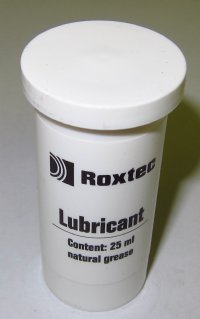
For lube, I use Roxtec lubricant which we have tons of at work. Roxtec manufactures cable entry systems for enclosures and they include a stick of lubricant with every cable entry frame. According to the MSDS, their lubricant is 100% beef tallow.

lubricant25ml_1017_general.jpg
 

laser3kw

Well-known member
Joined
Nov 17, 2012
Messages
7,276
Location
northen IL
Roxtec lubricant which...... is 100% beef tallow.

Lard! ;)
Market the simple ideas & make $$$$ :bowdown:
Taste good, Fry your eggs in it AND drill holes with it.
 
Last edited:

Kevin54

MEMBER EMERITUS
Joined
Jan 12, 2005
Messages
29,341
Location
Urbana, Ohio
Lard! ;)
Market the simple ideas & make $$$$ :bowdown:
Taste good, Fry your eggs in it AND drill holes with it.

We used to have a green tapping compound that was made from animal fat (Lard) but it could actually spoil. One of the old time toolmakers loved the stuff and used it for drilling, tapping, and even when he was fly cutting a part. That stuff smelled terrible, and of course he sat facing me as our benched were back to back. He had that **** all over his apron, then he would wear his apron for a month at a time.:puke: It had an actual expiration date on it. I had the task of ordering supplies and I finally told him that we couldn't get it anymore. :rocker: I think he was one of those persons that couldn't smell anything.
 
To avoid these ads, REGISTER NOW!
Top Bottom