To avoid these ads, REGISTER NOW!

Drywall tape pulling from ceiling at wall

CraigStu

Well-known member
Joined
May 22, 2014
Messages
4,023
Location
Blacksburg, Va
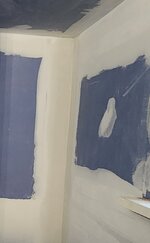
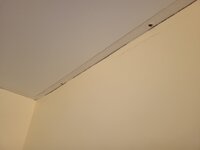
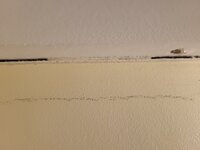
Standard 2x4 stick built house w/ trusses supporting the roof. Each winter this happens;
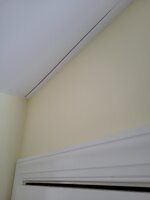
20250107_095531.jpg
I understand this is due to trusses changing shape slightly due to the weather. A friend had the same and it was suggested he install a piece of trim fastened to the ceiling but not the wall. This way the trim could slide up and down the wall. Makes sense to me but... this is in the master bath and I have no interest in installing trim on one of 4 walls. Same for the hallway w/ similar problem. Should I just cut the tape away and try to mud the ceiling only w/o carrying the mud onto the wall? Other ideas would sure be appreciated. THanks.
 
To avoid these ads, REGISTER NOW!

Youngandfree

Well-known member
Joined
Dec 29, 2020
Messages
877
Location
VA
You should probably remud and paint. That's not normal. It needs repaired properly. In my 40 years, it's never happened in the 3 houses I've lived in.
 

CoogarXR

Well-known member
Joined
Jan 11, 2016
Messages
6,852
Location
Ohio
Watching this thread, as I have the same problem on my old 1860s balloon frame house.
 

rlitman

Well-known member
Joined
Oct 18, 2010
Messages
24,591
Location
Long Island
There was a great post on this a month ago:
6716cf5871aa8b004651c518-pb0419_qm1-jpg.2233365


Too late now, but screws shouldn't be used on the ceiling close to corners like that. It allows the drywall to flex slightly.
Not too late. Get a magnet made to find screws in studs, find ALL the screws and dig them out. If you're going to be re-taping and mudding again anyway, fixing a few screw holes now is no big deal.
 

cgrutt

Well-known member
Joined
Mar 4, 2016
Messages
8,203
Is that just paper tape? Looks like it wasn't embedded in enough compound.

I've been using Straight Flex in corners followed by Adfors Fibafuse. I embed the Straight Flex and remove all the excess compound. After it dries embed the Fibafuse right into the corner spanning the edge of Staightflex on both wall and ceiling. Then another layer of mud (or two) on top of the Fibafuse. Extra step but seems to work great with no issues so far (been doing it this way for several years now). That old tape should just pull off but score the corner with a utility knife if it pulls off too much compound on wall.
 

pcmeiners

Well-known member
Joined
Aug 13, 2009
Messages
7,872
Location
In the only town in Pennsylvania, Bloomsburg.
Master bath.....moisture issue, either it is moisture from shower or the area has condensation from cold air infiltrating the walls. Remove all the tape you can, paint a light coat of oil or bin paint, NOT latex primer. Re-mud and tape again, prime with oil or Bin, top coat with your paint choice. If you use latex primer it will occur again in a short time. Latex primer does not penetrate mud or paper, it sits on the surface, oil or BIN penetrates and binds.
 
Last edited:

Bill T

Well-known member
Joined
Mar 28, 2009
Messages
140
Location
Easley,S.C.
I have the same issue. My home was built 1979. I have the exact same issue. Typically, in my home, the problem is at midspan on the trusses. Ten years ago, I had some other drywall work being performed in the house, so why not... I had them remud and tape the problem area. It lasted for 5-6 months, then same issue. I am preparing to sell my home. I do not want to just mud over the issue and screw the next person. I would like to repair correctly. I hope the repair method above works. For my sanity and the next homeowners.
 

bassJAM

Well-known member
Joined
Jun 10, 2020
Messages
861
Location
Cincinnati, OH
That's happening through my entire house. Built in 87 and they used screen tape for those corner joints. I've been slowly putting crown molding in every room to cover it, then at least I know it's a permanent fix.
 

cgrutt

Well-known member
Joined
Mar 4, 2016
Messages
8,203
I have the same issue. My home was built 1979. I have the exact same issue. Typically, in my home, the problem is at midspan on the trusses. Ten years ago, I had some other drywall work being performed in the house, so why not... I had them remud and tape the problem area. It lasted for 5-6 months, then same issue. I am preparing to sell my home. I do not want to just mud over the issue and screw the next person. I would like to repair correctly. I hope the repair method above works. For my sanity and the next homeowners.
They make a fiberglass (i think) mesh drywall tape that's about 3' wide. I had a project in an old historic home that had a cracking problem with the plaster ceiling. The plaster was in good shape but would constantly develop these hairline spider cracks throughout ceiling in main dining room. I covered the entire ceiling with the mesh and skim coated it with standard spackling compound. Problem solved. I doubt you need to go to that extent but they do sell heavy duty mesh tapes for problem areas maybe give that a shot.
 
OP
C

CraigStu

Well-known member
Joined
May 22, 2014
Messages
4,023
Location
Blacksburg, Va
So what I 'think' I understand is no screws in the ceiling drywall closer than 12" from the wall. Then mud and tape w/ extra strong tape vs the simple paper stuff. This way the ceiling drywall is super well attached to the wall drywall. As the truss goes up and down the ceiling drywall will flex enough that it doesn't pull away from the wall drywall. I could remove all the excess screws at the wall if there are any, tape and mud again w/ the good stuff. But, w/o the F clips, would it be a permanent fix? The weird part to me is this is the entrance to the master bath. The wall is parallel to the trusses. The wall on the other side, maybe 3ft away has no problem. The other problem area is on one side of the second floor hallway running 90deg to the trusses. And again, the other side of the hallway 3ft away has no problem.
 

rlitman

Well-known member
Joined
Oct 18, 2010
Messages
24,591
Location
Long Island
So what I 'think' I understand is no screws in the ceiling drywall closer than 12" from the wall. Then mud and tape w/ extra strong tape vs the simple paper stuff. This way the ceiling drywall is super well attached to the wall drywall. As the truss goes up and down the ceiling drywall will flex enough that it doesn't pull away from the wall drywall. I could remove all the excess screws at the wall if there are any, tape and mud again w/ the good stuff. But, w/o the F clips, would it be a permanent fix? The weird part to me is this is the entrance to the master bath. The wall is parallel to the trusses. The wall on the other side, maybe 3ft away has no problem. The other problem area is on one side of the second floor hallway running 90deg to the trusses. And again, the other side of the hallway 3ft away has no problem.
The paper tape is plenty strong, and mesh isn't (in fact mesh is far worse in this particular use). If you want the strongest tape, FibaFuse beats paper a LITTLE bit, but it's also harder to work with, especially in corners.

As I see it, there are only two possible causes here. Either you've got movement that's pulling the tape off (which can be fixed by removing screws and letting the board bend a little as needed), OR the tape let go because of moisture. The thing is that if this were moisture damage, you'd probably see signs of it in the paint as well. Plus moisture only on one wall; well actually that's possible, IF one wall were colder than the others for some reason.

Forgetting the orientation, are the problem walls the ones that are more towards the middle of the truss (where you'd experience the most uplift)?

The F clips have nothing to do with the sheetrock and everything to do with framing. If the wall isn't moving horizontally, I wouldn't worry too much about it. Do you even have access to the top plate of the wall from above, and if so isn't it buried in insulation?
 
To avoid these ads, REGISTER NOW!

Ultradog MN

Well-known member
Joined
Jan 20, 2024
Messages
752
Location
Twin Cities
As was said above:
The paper tape was embedded in too dry of mud. I seriously doubt it has anything to do with the framing - or whether the screws have anything to do with it.
Do not use mesh tape in corners!
Your taping knife will cut through it when you second coat it.
I use paper tape only in corners.
And I usually use Durabond to tape the first coat - especially in bathrooms or other potentially damp locations.
I'm nearly done taping and painting the 700 sq ft shop area of my garage.
It sure is a mess in here.
 

Attachments

  • 07202514403.jpg
    07202514403.jpg
    935.2 KB · Views: 44

Wiz02

Well-known member
Joined
Jul 13, 2007
Messages
2,399
Location
Southeastern PA
I had a condo with roof trusses built in the 70's.

The second floor ceilings all drooped because the installers didn't use enough nails and the glue used to hold the drywall to the trusses let go. There were large cracks where the ceiling drywall met the wall in every 2nd floor room

Condo paid for all 2nd floor ceilings to be lifted up and screwed to the trusses. I then added crown mouldings to hide the cracks.

In my current home, the drywall crew either wasn't paid or it was everyone's first day on the job. I probably would have spent less time if I replaced all the drywall instead of fixing it.

I have a metal beam in the kitchen and hall ceiling that is boxed in with a wood frame and covered in drywall. Every single drywall joint was badly cracked.

Even though it is not recommended, I used fiberglass tape to fix the mess and 29 years and a few repaints later there are no cracks.

I know pros use paper tape, but I like the fiberglass tape as it's sticky without needing a drywall compound bed, and while I don't have actual numbers, you can tear paper tape without tools, but you need a knife or scissors to cut fiberglass tape, so it seems much stronger to me.
 

cgrutt

Well-known member
Joined
Mar 4, 2016
Messages
8,203
Not sure if the comments about not using mesh in corners is directed at my comments above or not but to be clear I agree. I run straight flex in corners and outside edges and regular paper on flat seams. But I also run a second course with fibafuse, which is sort of a mesh substitute. I lay that flat against the wall and into the corner, but I don't crease the Fibafuse. I put a flat layer that spans the seam of the straight flex on each side of the corner. Then finish with standard compound as usual. I do the same thing on flat seams running two pieces of fibafuse over the paper tape and spanning the edge of the paper on both sides. It's just a little extra work but I find the results much better than with just corner bead or paper alone. So far no issues.

I think this Pic has the straight flex in corner and paper on flat seam. It looks like I ran a second layer of fibafuse on left side of corner but haven't done it to right side yet. The flat seam looks like it has a layer of paper and two strips of fibafuse.

Screenshot_20250107_160401_Gallery.jpg

This is same corner after drywall was finished and has been primed ready for paint. It also looks like I caulked inside corner, which is really unnecessary but I do it because it hides any imperfections in mud.

Screenshot_20250107_160808_Gallery.jpg


ETA this is different corner but can see first coat with just the straightflex a little better. I cut top at 45 to keep adjoining corners as flat as possible.

Screenshot_20250107_163254_Gallery.jpg
 
Last edited:

larry4406

Well-known member
Joined
Jan 27, 2006
Messages
19,118
Location
Northern Virginia
We had a house type 10+ years ago with a vaulted ceiling in the master that this happened.

The roof truss would move throughout the year as temps and humidity changed. Every winter we would have service calls.

We had to eliminate all ceiling drywall screws within about 6-8" of the corner with the wall. Rare earth magnets are your friend to find the screws and back them out.

We had to use the fiber mesh tape (we call it stress tape for this reason).

After ceiling was repaired, we used color matched caulk to caulk the repaired corner.

Problems went away.

Very odd and happened only to that house type with the vault option.
 
OP
C

CraigStu

Well-known member
Joined
May 22, 2014
Messages
4,023
Location
Blacksburg, Va
As I see it, there are only two possible causes here. Either you've got movement that's pulling the tape off (which can be fixed by removing screws and letting the board bend a little as needed), OR the tape let go because of moisture.

Forgetting the orientation, are the problem walls the ones that are more towards the middle of the truss (where you'd experience the most uplift)?

Do you even have access to the top plate of the wall from above, and if so isn't it buried in insulation?
I 'think' it's movement. This first showed up in the hallway 3 yrs ago. That wall is 90deg to the trusses and about 9ft from the back of the 28ft deep house. The problem in the pic is a 38" wall. If I had taken the pic a little further back the end of the wall has another wall at 90deg about 5-6ft long w/ a fiberglass shower in the last 3ft. So there is moisture in the bathroom. But no other signs of moisture caused problems. There is possible access but you are correct, it is buried in blown in insulation. And the hall problem area may have the 2nd floor inside air handler in the way.
There have been several recommendations for tapes but what about mud? I have only used actual mud (vs pink that dries white repair stuff) once before and that was 20 yrs ago. A good mud recommendation please.
 

firebirdparts

Well-known member
Joined
Jun 8, 2016
Messages
10,594
Location
Kingsport, TN
If it was me I would try to let the paper flex and just stick it at the edge. That's not the standard way but I think it's worth a try.
 

PoorUB

Well-known member
Joined
Mar 29, 2021
Messages
11,622
Location
Fargo, ND
I have done a bit of drywall mudding over the years and I use nothing but mesh. I have had issues with tape failing but I have never had a joint or corner that I use mesh fail, not one.
 
OP
C

CraigStu

Well-known member
Joined
May 22, 2014
Messages
4,023
Location
Blacksburg, Va
MM, the drywalldoctor link is fantastic. Thanks for posting it.
Well here are the culprits for the bathroom problem.
20250108_155441.jpg
I removed the screws and removed some mud between wall and ceiling drywall
20250108_155413.jpg
Now the ceiling will move up and down >1/4" and almost sits right down on the wall drywall
when I let go of it. BTW this is definitely a movement problem. The tape pulls away from the ceiling but remains at a perfect 90deg to the wall.
 

NUTTSGT

Super Moderator
Staff member
Joined
Sep 14, 2009
Messages
50,895
Location
Northern Central Ohio
If it's happening every winter, my thoughts are a framing issue.

Does the gap open during the winter and close up during the spring ?

If so, I would guess those walls are not attached to the bottom chord of the trusses. Winter rolls in, relative humidity in the air goes away, the wood dries up and shrinks. The gap appears.

During the nicer months, the normal humidity plus bathroom humidity are enough to keep it closed. Too that end, I would also guess your house was built and drywalled in the spring.... April showers.


If you go up in the attic and stand on that truss, will the gap close up any ?
 
OP
C

CraigStu

Well-known member
Joined
May 22, 2014
Messages
4,023
Location
Blacksburg, Va
grissom, I think that link is exactly what I have. Of course it's too late to use that product. I am going to do all I can to get rid of any screws in the ceiling less than 12" from the wall. Then mud and tape probably w/ f-glass mesh and hope for the best.
 
To avoid these ads, REGISTER NOW!
Top Bottom