
You are using an out of date browser. It may not display this or other websites correctly.
You should upgrade or use an alternative browser.
You should upgrade or use an alternative browser.
Dumb question 120v 20amp Receptacles
- Thread starter Zrxpilot
- Start date
davetulk
Well-known member
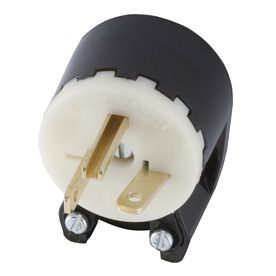
Some devices that require 20amp power will have the same sideways plug on it. It is to prevent then plugging in to a non 20amp receptacle.
Stuart in MN
Well-known member
As shown above, a 20 amp plug has a sideways prong on it. The vast majority of electrical devices are going to have a standard 15 amp plug, so a 20 amp receptacle isn't required. Also, in the US you can use regular 15 amp receptacles on a 20 amp circuit as long as you have two of them or more, and a standard duplex receptacle counts as two.
porschedude996TT
Well-known member
The subject is all about being Fail-Safe.
What all these different Plugs and Receptacles and Circuit Breaker are doing is protecting the wiring in the wall, the device being plugged in and the user from fire or electrocution. Same as when you build a new shop or house. The code, the city, the city inspector, the electrician are all doing their part to make sure that you are safe and the next guy who buys your house
When you have a device or appliance that requires more than 15 amps you should have a 20 amp plug on the cord.
Let’s say you have an 18 amp load with a 20 amp plug and you try to plug it into a 15 amp receptacle it will not go in the receptacle. The arrangement protected you and the building.
Let’s say you have a 12 amp load with a 15 amp plug and you plug it into a 15 amp receptacle, everything is safe.
Now let’s say the 12 amp load with the 15 amp plug into a 15 amp receptacle and the load jumps to 25 amps, the breaker should open and protect you, the load, and the wiring in the wall.
There should always be a device protecting the wiring down-stream.
Two other devices protect you and your house in different ways.
A Ground Fault Circuit Interrupter (GFCI) Breaker or Receptacle protects you from being electrocuted or from you being a ground path for a circuit.
An Arc Fault Circuit Interrupter (AFCI) Breaker protects your house from a fire. AN example of what it can do is: It can detect an arc within a faulty lamp cords where the conductor has broken down and as the conductor degrades heat is generated because there are fewer strands of wire carrying the current and it heats up like a heating element in a toaster. When it has degraded to the point that it starts to arc inside the cord, the AFCI will trip.
What all these different Plugs and Receptacles and Circuit Breaker are doing is protecting the wiring in the wall, the device being plugged in and the user from fire or electrocution. Same as when you build a new shop or house. The code, the city, the city inspector, the electrician are all doing their part to make sure that you are safe and the next guy who buys your house
When you have a device or appliance that requires more than 15 amps you should have a 20 amp plug on the cord.
Let’s say you have an 18 amp load with a 20 amp plug and you try to plug it into a 15 amp receptacle it will not go in the receptacle. The arrangement protected you and the building.
Let’s say you have a 12 amp load with a 15 amp plug and you plug it into a 15 amp receptacle, everything is safe.
Now let’s say the 12 amp load with the 15 amp plug into a 15 amp receptacle and the load jumps to 25 amps, the breaker should open and protect you, the load, and the wiring in the wall.
There should always be a device protecting the wiring down-stream.
Two other devices protect you and your house in different ways.
A Ground Fault Circuit Interrupter (GFCI) Breaker or Receptacle protects you from being electrocuted or from you being a ground path for a circuit.
An Arc Fault Circuit Interrupter (AFCI) Breaker protects your house from a fire. AN example of what it can do is: It can detect an arc within a faulty lamp cords where the conductor has broken down and as the conductor degrades heat is generated because there are fewer strands of wire carrying the current and it heats up like a heating element in a toaster. When it has degraded to the point that it starts to arc inside the cord, the AFCI will trip.