To avoid these ads, REGISTER NOW!

Electrical history. Curiosity mostly...

didit

Well-known member
Joined
Feb 11, 2020
Messages
892
Location
S.W. Ontario
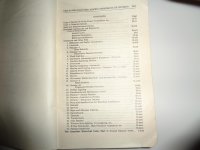
Likely won't help the OP any but when I read "Electrical history" it brought to mind this book that belonged to my Dad. It covered the year 1939 but also, all the revisions to the year 1942 are inserted into the pages, during the early war years.
 

Attachments

  • DSC06316.jpg
    DSC06316.jpg
    86.7 KB · Views: 78
  • DSC06317.jpg
    DSC06317.jpg
    125.9 KB · Views: 78
To avoid these ads, REGISTER NOW!

grounded-b

Well-known member
Joined
Oct 23, 2012
Messages
285
Location
Milwaukee, WI
My house was also built in 1950, we have the same small pieces of drywall as in your pictures.


Off topic, but those narrow strips of "drywall" were called "rock lath".

Rock lath predated "drywall". It was use as a base for the brown coat and finish coating in plaster. Saved a lot of time, over nailing up thousands of strips of wood lath.

Steve
 

b-boy

Well-known member
Joined
Oct 2, 2013
Messages
2,155
Location
Buffalo NY
My house was built in 1880. When I moved in there was a mix of wire. The original fuse box was still in the basement, but the house had been upgraded to a 200A service with modern breakers.

The majority of the house had been upgraded to NM-B, but there was still about 500ft of 2-wire metal clad BX. The copper was tinned. It looks like most of this was installed at the same time. My guess is early early 1900s. I replaced all of this, except for 2 runs that power overhead lights in the kitchen and dining room. I'd have to tear out plaster to get to those. This stuff was nasty. The cloth covering was super brittle. I found some live runs just laying behind walls.

I was shocked at how much wire electricians could stuff into a junction box back then. There were no wire nuts. Everything was soldered and taped with friction tape. There was 1 junction box, about 40% the size of a modern junction box, that had 5 wire pairs in it. It was folded so tightly that I had a hard time taking it apart.

There is evidence that K&T was in the house, but it's gone now. There were a few insulators still present in the basement. My guess is that it was replaced when the BX was installed.

The attic still has cloth-covered NM from the 50s. That's next on my list. That stuff scares me. It's super hot in the attic, and if you just look at this stuff, it starts to fall apart.
 
Last edited:

grounded-b

Well-known member
Joined
Oct 23, 2012
Messages
285
Location
Milwaukee, WI
My house was built in 1880.

The majority of the house had been upgraded to NM-B, but there was still about 500ft of 2-wire metal clad BX. The copper was tinned. It looks like most of this was installed at the same time. My guess is early early 1900s.

BX ( armored cable ) really wasn't popular until the 1930's.

BX is 2 wire, but the metal armor is the ground. So, it is still a valid wiring method per the NEC. Although the cloth covered rubber insulation has given way to thermoplastics.

My house was built in 1936 and was wired with cloth/rubber BX. It is still in great shape, EXCEPT at enclosed ceiling mounted light fixtures. Those fixtures trap the heat and cause the rubber insulation to get brittle and fall apart.

I have no plans to replace all of it throughout the entire house. Only repair the ends where brittle at fixtures.

Steve
 

b-boy

Well-known member
Joined
Oct 2, 2013
Messages
2,155
Location
Buffalo NY
BX ( armored cable ) really wasn't popular until the 1930's.

BX is 2 wire, but the metal armor is the ground. So, it is still a valid wiring method per the NEC. Although the cloth covered rubber insulation has given way to thermoplastics.

My house was built in 1936 and was wired with cloth/rubber BX. It is still in great shape, EXCEPT at enclosed ceiling mounted light fixtures. Those fixtures trap the heat and cause the rubber insulation to get brittle and fall apart.

I have no plans to replace all of it throughout the entire house. Only repair the ends where brittle at fixtures.

Steve

My Dad is retired, but was a metallurgical Engineer who specialized in home wiring. He did a lot of research on wiring types and safety. His advice was to get the BX out ASAP. He said he'd rather have K&T than cloth covered BX in a house.
 

dutchgray

Well-known member
Joined
Sep 28, 2014
Messages
6,469
Location
Dorset. England.
Rubber insulated and sheathed cable, seen plenty of it where the rubber has fallen off leaving the wires exposed, often still live and working fine until someone touches it or moves it.
In the UK in the late 50's you could get PVC insulated and sheathed cable, rubber insulated and sheathed cable and rubber insulated and lead sheathed cable all at the same time.
You do still find lead sheathed in use sometimes, it likes to melt itself back to the power source when damaged like a length of fuse if the over current is high enough and there is no RCD.
Very very rare to see cloth insulated nowadays, at least in my area (but it was already out of use when much of my area was electrified so there wouldn't have been much around)
 

alfredeneuman

Well-known member
Joined
Mar 3, 2011
Messages
4,595
Location
Fullerton, CA
BX ( armored cable ) really wasn't popular until the 1930's.
BX is 2 wire, but the metal armor is the ground. So, it is still a valid wiring method per the NEC.

AC cable has a full length metal strip or wire in intimate contact with the armor for grounding.
BX relies only on the armor, is not produced by anyone, and can't be used at all
 

grounded-b

Well-known member
Joined
Oct 23, 2012
Messages
285
Location
Milwaukee, WI
AC cable has a full length metal strip or wire in intimate contact with the armor for grounding.
BX relies only on the armor, is not produced by anyone, and can't be used at all

You are correct, I was mistaken.

BX is used as a slang term for modern type AC cable, but "true" BX was an old product without any grounding means, other the the armored jacket.

"true" BX is not a valid wiring method anymore.

Armored cable - type AC has replaced it.

Steve
 
To avoid these ads, REGISTER NOW!

Kyle1500

New member
Joined
Dec 11, 2021
Messages
3
AC cable has a full length metal strip or wire in intimate contact with the armor for grounding.
BX relies only on the armor, is not produced by anyone, and can't be used at all
Regarding BX cable, the armor especially if it were to rust or damaged in any way, can become extremely hot, if used as an equipment grounding conductor AND a hot to ground short occurs, and the armor offers enough resistance to limit the current flow to below the rating of the overcurrent protection device, even more so if the circuit is overfused. In extreme cases, in a darken room you can see the armor glow a dull red.
 

rburke65

Well-known member
Joined
Nov 10, 2007
Messages
12,349
Location
Canfield, Ohio
I have upgraded the main services on homes that were built with a 1/2” hard walled conduit with two rag coated # 10s, with two 30 amp. fuses…no other fuses in the house.
 

MBfreak

MEMBER EMERITUS
Joined
Dec 10, 2010
Messages
2,301
Location
Linkoping , Sweden
It was acccepted practice in UK metal clad 3 phase 400 V switchgear to have a fuse cartridge insert unit with one fuse in each phase and one fuse in the neutral. All rated at the same ampacity.
2 phase with 90 degrees offset new to me. Wonderful anomality! Happy we got symmetrical component math to loosen up 3 phase calcs
A friend of mine did his PhD thesis on power distribution 6 phase systems, 60 degrees spacing. He got his PhD , but he never saw any application.
For large VFD drives it is quite common though, but only as a stand alone feeder. Two transformers with 60 degrees diff.

Ola
 

SlappyWhite

Well-known member
Joined
Oct 3, 2012
Messages
1,819
Location
Upper Canada
I just did a full rewire of my current house (built in 1941), 100% replacement. The original was K&T and most of it was still in good shape with the exception of the kitchen light that had all the insulation burned off (too high wattage fixture at some point, common problem). The K&T wires were copper but fully "tinned" the entire lengths. Original stove was BX. All original K&T terminated in the usual sloped back boxes installed in baseboards or to the above and below straps. There were areas "remodelled" where we found aluminum (~70s) spliced to the K&T buried in the wall, no box! There was also 60°C NMSC poorly added in by someone (60s/70s), tied into the K&T. A Little "modern" 90°C NMSC mixed in. Service was actually 100A with the meter in the basement but I moved the location of the service so it is all dead now.

All rocklathe, it eats blades!

Farther back, my parents old house (built in the 1800s) has K&T added at some point obviously well after construction, one outlet per room. No boxes just wires to the devices. Original panel was on the second floor closet ceiling and only had two fuses (it was there and no longer in use when we moved in, wish I kept it) as at some point it got a 60 amp in the basement.... The house still had some large base light bulb ceiling fixtures.
 
Last edited:

nh_yota

Well-known member
Joined
Mar 10, 2015
Messages
4,078
Location
Seacoast New Hampshire
My house dates back to 1840 and small additions have been added on over the years (last in 1940's). Most of the wiring had been upgraded when I bought it in 2009 but there were some circuits still in BX and cloth NM that I have since rewired. Ironically there is no evidence the house was ever wired with K&T even though it's almost 200 years old and I live in a town with lots of old houses wired with K&T. I suspect did not have electricity until the BX was installed at some point. Either than or they did a really good job removing all the old K&T.
 

Kyle1500

New member
Joined
Dec 11, 2021
Messages
3
Yes. Up until sometime in the 30's or 40's they always fused the neutral.

That was probably the nicest example of an original electrical service from the 20's I have seen. The one in the picture is 7 circuits. Each block is hot and neutral for one circuit. That would have been a lot of circuits in that time. Most houses would have had 3 or 4 circuits.
Yep until about the late 20s or sometime in the '30s when homes had 120 volt only services , they typically fused with hot and neutral. Sometimes the hots and neutrals could be tapped off different circuits. Three way switches could be wired in such a way that reverses the polarity at the socket, and the socket can be live at both terminal and lamp is not lit. Sometimes the Three way switches in this fashion are on different circuits. Receptacles were few and far between. Panels may be either metal, or wood framed with an asbestos liner. Very intriguing what can be found when an older home is renovated.
 

JunkBonds

Well-known member
Joined
May 19, 2011
Messages
1,016
IMHO, Knob & Tube wiring, properly installed and maintained, was and is a very safe wiring system. The first electrical textbooks I read covered Knob & Tube systems.

To install a Knob & Tube system today would be impossible. To the best of my knowledge the materials are no longer available.

Those who knew how to nail the knobs, bore holes for the tubes and solder the connections and splices are all retired.
lol...retired :)

My father started his apprenticeship in 1949 removing knob and tube and replacing it with "modern" wiring. He would be 91 if still around.
 

ycgoat

Well-known member
Joined
Mar 28, 2020
Messages
971
Location
S.E. Va
My first house built in the 20's by my Great Grandfather was like that, the outlet cables were added later I think and were the old braided oiled NM covering I think from the 40s or 50s. State Farm Insurance made me change the fuse box before they would cover it. I also had to pay $200 to be released from a neighborhood agreement of sorts that said they would not use the house for a Chinese Laundry or any other unclean usages.
 
To avoid these ads, REGISTER NOW!
Top Bottom