I'm restoring a old fairbanks scale, same as this one (
) and I have been playing around with electrolysis to remove rust on the smaller parts in a 5 gal bucket, but the base is a bit bigger. Its about 36"x18"x6". It also has all the moving parts concealed within that are pressed fitted and not easily removable so I can't get it very well with a wire wheel. I was thinking of making a bigger electrolysis tank using a rubber made 55gal trash can, with a rebar cage to use as the anode. So, before I hurt myself, any safety concerns, other than the normal precautions with the 5gal bucket version, with an electrolysis tank with this much more volume and size? I am using a 2 amp 12v battery charger that does have short protection built in.

You are using an out of date browser. It may not display this or other websites correctly.
You should upgrade or use an alternative browser.
You should upgrade or use an alternative browser.
electrolysis for rust removal safety check
- Thread starter Paulski
- Start date
the beauty of electrolysis is it's as safe regardless of size. you may need to bump up the amperage a bit tho. and it's pretty much line of sight, so anything that's not directly towards the anodes won;t be as affected
redm18
Well-known member
If I remember correctly electrolysis does produce hydrogen which is explosive and flammable. In theory you could create an unsafe situation if you had a large electrolysis operation in a tightly enclosed environment. Practically speaking I don't think you create a danger if you tried as hydrogen is very hard to capture and hold because its so light. Any sort of ventilation at all would allow it to dissipate to safe levels.
andyvh1959
Well-known member
Isn't the hydrogen mostly due to the electrolyte used? Some use washing soda in the water. Some use pool shock treatment. Some use white vinegar. One produces hydrogen gas (very BOOM capable). One produces chlorine gas (very human dangerous). Both require lots of ventilation. But the amount of hydrogen or chlorine depends on how much product is used and how much amperage is applied. Whote Vinegar contains Carbon, Hydrogen and Oxygen, but is a more mild chemical than the others.
I have an early 60's vintage Jawa motorcycle gas tank I may try this process on to clean the tank inside, and may also fully immerse the tank to clean any rust from the outside of the tank.
I have an early 60's vintage Jawa motorcycle gas tank I may try this process on to clean the tank inside, and may also fully immerse the tank to clean any rust from the outside of the tank.
redm18
Well-known member
I thought the hydrogen came from the water?Isn't the hydrogen mostly due to the electrolyte used? Some use washing soda in the water. Some use pool shock treatment. Some use white vinegar. One produces hydrogen gas (very BOOM capable). One produces chlorine gas (very human dangerous). Both require lots of ventilation. But the amount of hydrogen or chlorine depends on how much product is used and how much amperage is applied. Whote Vinegar contains Carbon, Hydrogen and Oxygen, but is a more mild chemical than the others.
I have an early 60's vintage Jawa motorcycle gas tank I may try this process on to clean the tank inside, and may also fully immerse the tank to clean any rust from the outside of the tank.
RPH
Well-known member
Hydrogen is a component to the water molecule, H2O.I thought the hydrogen came from the water?
It's fairly safe, just no licking the foams, it is not froth.
Don't short the leads...
Don't use any stainless steel of any kind... more or less straightly for iron... you can use carbon/graphite rods as anode. But NO stainless or anything with chrome I think.
Don't short the leads...
Don't use any stainless steel of any kind... more or less straightly for iron... you can use carbon/graphite rods as anode. But NO stainless or anything with chrome I think.
andyvh1959
Well-known member
Chemistry was never a strong suit for me. Yes, Hydrogen comes from H20, water.
A good friend was using a stock tank to derust a truck door and powering the whole thing with a DC welder. It takes a fair bit of current to get the watt density to where it works well on large parts. It worked very well but after shorting the electrodes he added a fuse into the feed line to limit the current flow. Remember that the process is basically line of site so make sure that you have a current path to all the parts or rotate the part periodically to get all sides.
lg
no neat sig line
lg
no neat sig line
Increase the voltage not current, I think even on larger radiator I have. That weight about 100lbs it is only drawing about 10amp max. And it won’t budge till I increase the voltage to 24v. But higher voltage higher risk of hydrogen embrittlement or so it says.
Amp draw it dependents on many factor from number of anode used to how close the anode is to the part and how rusty it is those.
Amp draw it dependents on many factor from number of anode used to how close the anode is to the part and how rusty it is those.
BORING HOP YARD
Well-known member
I restored a 1949 Ferguson 2 bottom plow that was very rusty.
I got a plastic 55-gallon drum with removable top. I used washing soda, carbon anodes used for carbon arc gouging and a battery charger. Each batch of parts took about a week to remove all the rust. I will use this process again in the future, it works great. Parts will flash rust, so they need treated with metal conditioned as well.
After complete dis-assembly I batched the parts based on what would fit in the drum each run, one of the parts had to be flipped over to get the complete part treated.
I got a plastic 55-gallon drum with removable top. I used washing soda, carbon anodes used for carbon arc gouging and a battery charger. Each batch of parts took about a week to remove all the rust. I will use this process again in the future, it works great. Parts will flash rust, so they need treated with metal conditioned as well.
After complete dis-assembly I batched the parts based on what would fit in the drum each run, one of the parts had to be flipped over to get the complete part treated.
I think you biggest problem will be getting the interior nooks and cranny's cleaned. As posted above the process all works based on magnetic flux lines (Line of sight pretty much) and these change with the amount of steel involved and current density. I usually can get the interior spaces by placing an anode inside the door or what ever. But it must be insulated from the door too. So easier said than done for sure. I find that watching how the rust comes off will give you an idea on where to place the anodes.
The process is driven by the amps/sq. in - current density. So you can use a battery charger but those are pretty limited in amp output. I hook up my MIG welder and tape the on switch down and then remove the tension on the wire drive wheel. Now I have a VERY stout DC power supply with the amount of amperage adjustable on the welder. The more amps you can drive into the solution the better/faster it will work.
Yes Hydrogen is a byproduct but unless you purposely enclose the system for some reason there is no danger. Think about it? Hydrogen is the smallest molecule and much lighter than air. You will have a difficult time trying to collect such a gas.
While it does not remove paint directly I have found almost all paint will be removed in large sheets. This is because whether you can see it or not there is microscopic rust on all sheet metal. When the electrolysis works you can see the Hydrogen bubble from the surface and it's this process that also lifts the paint.
So maybe some electrolysis and then finish up the spots that did not get cleaned with Evaporust?
Vinegar is acetic acid and will eat good metal along with the rust. It will etch any machined surface badly to.
One other thing is with any of these techniques make sure the part is COMPLETELY submerged! The waterline will etch and permanetly mark the metal. This might or might not be a big deal?
.
.
.
The process is driven by the amps/sq. in - current density. So you can use a battery charger but those are pretty limited in amp output. I hook up my MIG welder and tape the on switch down and then remove the tension on the wire drive wheel. Now I have a VERY stout DC power supply with the amount of amperage adjustable on the welder. The more amps you can drive into the solution the better/faster it will work.
Yes Hydrogen is a byproduct but unless you purposely enclose the system for some reason there is no danger. Think about it? Hydrogen is the smallest molecule and much lighter than air. You will have a difficult time trying to collect such a gas.
While it does not remove paint directly I have found almost all paint will be removed in large sheets. This is because whether you can see it or not there is microscopic rust on all sheet metal. When the electrolysis works you can see the Hydrogen bubble from the surface and it's this process that also lifts the paint.
So maybe some electrolysis and then finish up the spots that did not get cleaned with Evaporust?
Vinegar is acetic acid and will eat good metal along with the rust. It will etch any machined surface badly to.
One other thing is with any of these techniques make sure the part is COMPLETELY submerged! The waterline will etch and permanetly mark the metal. This might or might not be a big deal?
.
.
.
BORING HOP YARD
Well-known member
I almost 100 percent agree with tester19, when I used the battery charger there was a line from the area that was sticking out of the solution. I was able to scrub with scotch-brite to remove. I used concrete metal prep from Home Depot followed by epoxy primer that allows for an acid treatment before prime. The only metal removed was rusty metal. Could be a product of going so slow during the electrolysis process.
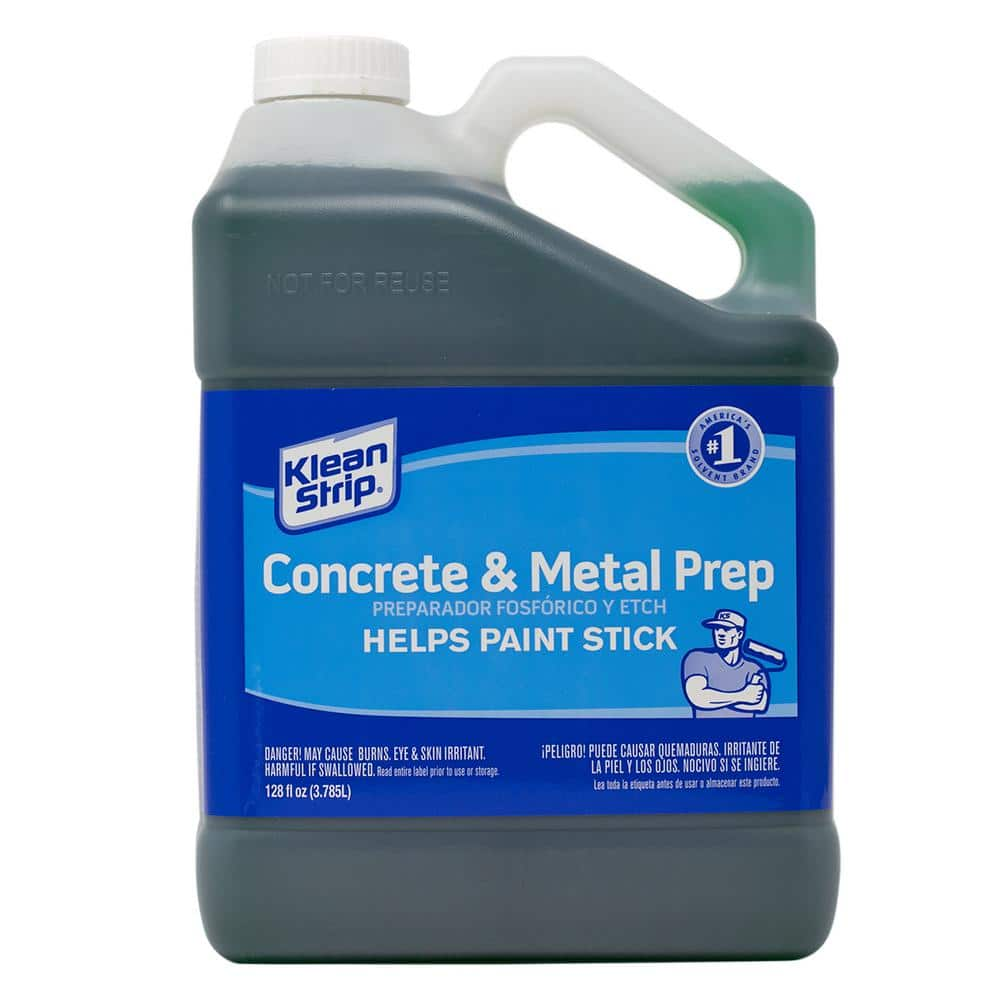
Klean-Strip 1 Gal. Concrete Etch, Metal Prep and Rust Inhibitor GKPA30220
For Pro's and DIY'ers, Klean-Strip is the leading brand of solvents, thinners, removers, and cleaners that are dependable for reliable results. Klean-Strip Concrete and Metal Prep does the job of three
www.homedepot.com
Thanks for all the info everyone. I have everything set up and will give it a shot tomorrow.
Another question - Anyone have any recommendations on a rust inhibitor for after electrolysis that washes off easily for painting? I have enough small parts that not everything will be done in a day and I imagine the parts will flash rust pretty quickly - before I get a chance to paint.
Another question - Anyone have any recommendations on a rust inhibitor for after electrolysis that washes off easily for painting? I have enough small parts that not everything will be done in a day and I imagine the parts will flash rust pretty quickly - before I get a chance to paint.
BORING HOP YARD
Well-known member
I have been using a phosphoric acid process for years that has proven time and time again to work very well.
Some people will spray the parts with acid products and let them dry overnight before they apply paint, I have seen paint adhesion failure with the let it dry overnight process.
I put the acid in a spray bottle at 100% and spray the part down and keep it wet for 5 min and then spray them down with a soapy mixture. I use dawn soap since the Ph will help naturalize the acid, this is followed with a very light scrub with some scote-brite, the goal is to just naturalize the acid. The part is then rinsed with fresh water and then quickly blown dry and wiped down until all water is gone, "don't let the water evaporate" What you now have is bare metal that has a phosphate coating on it. I have seen pieces of long-term projects in bare metal that have sat in the storage for years in Oregon with phosphate coating that had no rust.
I use Klean strip on the cheap and use rust mort when the budget allows, just a preference on my part.
 www.semproducts.com
Some people will spray the parts with acid products and let them dry overnight before they apply paint, I have seen paint adhesion failure with the let it dry overnight process.
I put the acid in a spray bottle at 100% and spray the part down and keep it wet for 5 min and then spray them down with a soapy mixture. I use dawn soap since the Ph will help naturalize the acid, this is followed with a very light scrub with some scote-brite, the goal is to just naturalize the acid. The part is then rinsed with fresh water and then quickly blown dry and wiped down until all water is gone, "don't let the water evaporate" What you now have is bare metal that has a phosphate coating on it. I have seen pieces of long-term projects in bare metal that have sat in the storage for years in Oregon with phosphate coating that had no rust.
I use Klean strip on the cheap and use rust mort when the budget allows, just a preference on my part.
Rust Mort™ | morttm | SEM Products
Rust Mort is an acidic compound that converts existing rust to an insoluble black coating prior to applying body filler, primer or top coat.
www.semproducts.com
willy3486
Well-known member
This is what I use a lot. I do have a beefed up power supply I use that is faster than a battery charger. I have used a 5 gallon bucket in the past and similar containers. I recently bought a small plastic kiddie pool, about 4 feet wide for bigger stuff. I plan to use a smaller 12 volt low amp adapter and let it set for a few days.
A few things on it. Don't reverse the polarity. If you do so the part you want to clean will be the one that gets eat away. Another thing is don't use it on chromed items unless you want the chrome off. I did it once and the chrome came off. I use it a lot if a item had rusted up pieces or bolts. I used it on a 40s Delta lathe I was restoring. It had bolts I couldn't get off and after dipping it the bolts came off. I am restoring a corn sheller now and was able to get off a few bolts without any issue after dipping it.
A few things on it. Don't reverse the polarity. If you do so the part you want to clean will be the one that gets eat away. Another thing is don't use it on chromed items unless you want the chrome off. I did it once and the chrome came off. I use it a lot if a item had rusted up pieces or bolts. I used it on a 40s Delta lathe I was restoring. It had bolts I couldn't get off and after dipping it the bolts came off. I am restoring a corn sheller now and was able to get off a few bolts without any issue after dipping it.
GilbertoS374
Member
- Joined
- Jan 25, 2022
- Messages
- 10
I found out the hard way that vinegar will eat aluminum. If you have small holes in large sheet of aluminum, the vinegar will run into the holes and eat the aluminum. I was making my own motor mounts and I used vinegar to etch the holes. When I went to drill the holes I found out that vinegar had eaten the aluminum around the holes. I guess the vinegar must have bubbled up through the holes. I was lucky that the holes were on the bottom side of the aluminum. At least I didn't have to flip the metal over and clean it. I ended up having to drill out all of the holes.I think you biggest problem will be getting the interior nooks and cranny's cleaned. As posted above the process all works based on magnetic flux lines (Line of sight pretty much) and these change with the amount of steel involved and current density. I usually can get the interior spaces by placing an anode inside the door or what ever. But it must be insulated from the door too. So easier said than done for sure. I find that watching how the rust comes off will give you an idea on where to place the anodes.
The process is driven by the amps/sq. in - current density. So you can use a battery charger but those are pretty limited in amp output. I hook up my MIG welder and tape the on switch down and then remove the tension on the wire drive wheel. Now I have a VERY stout DC power supply with the amount of amperage adjustable on the welder. The more amps you can drive into the solution the better/faster it will work.
Yes Hydrogen is a byproduct but unless you purposely enclose the system for some reason there is no danger. Think about it? Hydrogen is the smallest molecule and much lighter than air. You will have a difficult time trying to collect such a gas.
While it does not remove paint directly I have found almost all paint will be removed in large sheets. This is because whether you can see it or not there is microscopic rust on all sheet metal. When the electrolysis works you can see the Hydrogen bubble from the surface and it's this process that also lifts the paint.
So maybe some electrolysis and then finish up the spots that did not get cleaned with Evaporust?
Vinegar is acetic acid and will eat good metal along with the rust. It will etch any machined surface badly to.
One other thing is with any of these techniques make sure the part is COMPLETELY submerged! The waterline will etch and permanetly mark the metal. This might or might not be a big deal?
.
.
.
Yes Vinegar is acetic acid so it will eat steel too!
One new thing I have found is Lowes now sells cleaning Vinegar. This is 30% Acetic Acid. But be careful as this will burn you as it's 6 times the strength of regular vinegar. I have not tried it yet but might. Not any real savings because it's over $20/gallon.
Anybody try this?
Must be faster than regular vinegar too?
.
.
.
One new thing I have found is Lowes now sells cleaning Vinegar. This is 30% Acetic Acid. But be careful as this will burn you as it's 6 times the strength of regular vinegar. I have not tried it yet but might. Not any real savings because it's over $20/gallon.
Anybody try this?
Must be faster than regular vinegar too?
.
.
.