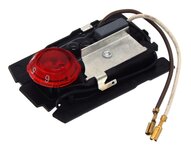
The electronic modules were usually the first part to fail on older tools with the safety or variable speed modules.
On European made tools, those electric modules were also fairly expensive, and could easily cost $100+ just for the replacement part.
Some manufacturers however made the same tool both with and without the fancy electronic module, so if a module failed, it was sometimes possible to just rewire the tool as a fixed speed tool.
Router speed controllers, made for routers such as the Porter Cable 690, which was made for decades without variable speed, could allow speed adjustment on fixed rpm tools, and the variable speed controllers weren’t that expensive at maybe $30+/-.
If ghe speed box failed it was far cheaper to just buy a new one than to repair a tool with a broken internal electrical module.
The boxes weren’t as convenient as the internal modules, but were originally intended for routers that might be used in router tables.
It’s possible the current electrical modules are more reliable, and a bit more affordable, but problems seem to still show up, particularly on “brushless tools” were the electronics are fundamental to the motor operation.
These brushless tools also may have more complex tool switches, judging by cordless tools, and the switch is one of the other main components that can fail.
On older tools, switch types were usually somewhat standardized, so replacements could be found in case a switch failed.
I’m not sure how well that is going to work on some of the newer tools.
Admittedly this is speculation based on problems I’ve heard of and reviews I’ve read, so

.