To avoid these ads, REGISTER NOW!

EMT versus Flex versus grey conduit

OP
G

green.bubbly

Well-known member
Joined
Dec 14, 2008
Messages
2,156
Location
Lafayette, LA
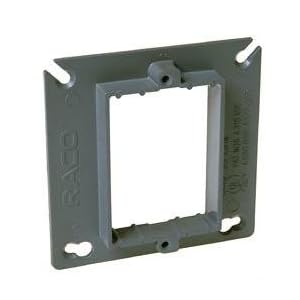
Bingo. That is where I was having trouble understanding. I was stuck on using a cover plate for exposed work. It finally hit me that I can use a standard wall plate to cover the cut in the plywood.

The fancy wall plate was just an example. And I really like the idea of the single device mud ring. That way I can use a single gang wall plate.


Let me once again tell everyone thanks for their input and I apologize for making this so difficult. I have so much **** on my mind trying to plan and organize the building of my garage and home that I am getting brain locks.

Back to Lowes for 4x4 boxes, single gang mud plates and normal residential single gang wall plates.
 
To avoid these ads, REGISTER NOW!

mrb

Well-known member
Joined
Dec 31, 2008
Messages
3,734
make sure you get the unbreakable nylon plates.

dont buy the handy box covers that are near the mud rings and metal boxes. they wont cover the gap

if you want metal, get the stainless steel plates. they look nice and dont cost too much.
 

Charles (in GA)

Well-known member
Joined
Jan 11, 2006
Messages
12,489
Location
50 mi south of Atlanta
Here is a plastic single device mud ring, metal is quite similar.

31neCoFsFDL._SL500_AA300_.jpg


Here is a metal one, not very tall relief, but they come in everything from 1/4" to 1-1/2" this is just the sample pic I found.

052396.jpg


Here is a two gang mud ring.

052400.jpg


As noted, the cover plate, plastic, metal, nylon, whatever, will cover the cutout if you do a decent job with a rotozip or similar. If you are sloppy, you may need mid size or large cover plates (which look a little off, but they do the job)

Charles
 

Charles (in GA)

Well-known member
Joined
Jan 11, 2006
Messages
12,489
Location
50 mi south of Atlanta
I spent hours standing in my shop just staring at the walls and ceiling, trying to figure out what I wanted to do and the best way to do it. Looking back, it still isn't the best way, but it works, and isn't bad, its just that a couple of the details could have been different, possibly not better, just different. The time I spend was well worth it. I went off half cocked on my original switch plan, and realized it wasn't going to be the best way, and scrapped it and started over.

Here is what I ended up with, five gang boxes (very expensive and special order) with three switches and room for one more on the right for a future outside flood. The LH most position is blocked inside with too many wires and the ****** from the panel.

attachment.php


Here is what I started to do, two separate four square boxes, *******, more *******, just ugly and no room to work or function. Look at the two bottom images to see what I am talking about, no thought, not workable, scrapped the whole thing.

attachment.php


Charles
 

Charles (in GA)

Well-known member
Joined
Jan 11, 2006
Messages
12,489
Location
50 mi south of Atlanta
If you can, take the cable in one of the corner knockouts, and not in the middle KO's. The wire can be run 3/4 of the way around the inside of the box and then wind up at the switch or receptacle, leaving you lots of wire to work with, and smooth broad bends.

Charles
 

mrb

Well-known member
Joined
Dec 31, 2008
Messages
3,734
nice conduit work in those pics. Another way to do it if you wanted all 4S boxes is to put two 4S boxes higher -these will be junction boxes, land the vertical conduits in them and go sideways into the panel. Then drop straight down into two more 4S boxes that will house the switches. Gets rid of alot of wire in the boxes containing the switches and you only have one conduit into each of them.
 

mrb

Well-known member
Joined
Dec 31, 2008
Messages
3,734
Is that a single gang box stuffed with a big fat 220 receptacle I see? :lol_hitti


electinstall.jpg

no. those single receptacles are pretty small. and theres only one conduit going into the box and no splices in the box.
 
OP
G

green.bubbly

Well-known member
Joined
Dec 14, 2008
Messages
2,156
Location
Lafayette, LA
Never seen a metal building with so many wall girts, thats about crazy.

Charles


Yeah, it is hurricane rated to 130mph. Those girts are 24 foot long which is the entire length of the building. That caused another issue when I went to put in my windows. Naturally, my 3x3 windows did not fit and I ended up with some little tiny little port hole freakin windows. That brought up my next issue of not being able to put a window air conditioner and had to go with a mini-split.

Looking back, I should have stopped and cut the girts and framed in some beams. But at the time, I was tired, hot and overly eager to keep the project moving so I could move on to working on my house.
 

Charles (in GA)

Well-known member
Joined
Jan 11, 2006
Messages
12,489
Location
50 mi south of Atlanta
no. those single receptacles are pretty small. and theres only one conduit going into the box and no splices in the box.

MRB is correct. It is a tight fit. That was some of my early electrical, very first boxes installed after the panel was in place, just to close out the inspection so I could get the meter installed. I've learned alot since then. However, wires straight in to the receptacles, and none going out and no wire nuts. Yes, also note there are no GFCI breakers and those are not GFCI receptacles. Inspector didn't care in 2001 nor did I. I do have a couple of GFCI receptacles if I run cords outside, but otherwise, I'm not a fan of them.

Charles
 

Charles (in GA)

Well-known member
Joined
Jan 11, 2006
Messages
12,489
Location
50 mi south of Atlanta
Those freaking 5 gang boxes in the top pic were special order at the electrical house (idiots) and about $50 each (bought at different times, one is welded, one is drawn). I asked for a flat metal face for the switches and the guy looked in the catalog, wrote some numbers down and said he'd order them, when I went to pick them up, the "face" was a five gang MUD RING. The guy started this, "you can use those snap together face plates to cover it" ****, and I took the box and refused the mud ring, went elsewhere to order the five switch face plate. Bottom one was a blank I drilled up and cut and whittled on to make the fan switches and controls happen.

Charles
 
To avoid these ads, REGISTER NOW!
OP
G

green.bubbly

Well-known member
Joined
Dec 14, 2008
Messages
2,156
Location
Lafayette, LA
Out of curiosity, why the six outlets all together in one spot and why are two on a separate circuit? Can't tell from the pic if the lone receptacle is 20 amps or not.
 

Charles (in GA)

Well-known member
Joined
Jan 11, 2006
Messages
12,489
Location
50 mi south of Atlanta
Out of curiosity, why the six outlets all together in one spot and why are two on a separate circuit? Can't tell from the pic if the lone receptacle is 20 amps or not.

"In the beginning" I was in a hurry, and needed things to work, and not waste time running conduit and pulling wires. I also needed the welder outlet near the door (will not weld inside)

The upper most one is my 50 amp welder receptacle, 240v.

The next one down is a 20 amp 240 v receptacle I installed to run a portable air compressor, I no longer have the compressor but the outlet is great for my future MIG welder.

The lone duplex receptacle, third box down, is 120v but is a true 20 amp receptacle with the cross slot for oddball, rarely seen, 20 amp 120v cords.

The 4x4 box with the pair of receptacles was somewhat of an afterthought, one of those "I will because I can" deals. It is powered by the same two breakers that power the circuits on the rest of that wall.

The building is 60x60 and has ten 120v circuits supplying 29 receptacles scattered throughout the building on the posts or columns, with three boxes mounted on 7 ft high wall girts. There are three true 240v circuits, supplying the 50amp and 20 amp receptacles and the 2 post lift. In addition there is a 60 amp 240v sub feed supplying a panel in one corner that powers the 7.5 hp air compressor. There are four dedicated 120v circuits, one for the ceiling fans, one for the door opener, one for two 500 watt quartz flood lights (my original "temporary" lighting solution), and one for the 200K btu waste oil fueled furnace. There are three multi-wire circuits (double pole breakers as used on 240v circuits) with shared neutrals powering the three light switches, also double pole, that run the dozen 400w (120v) metal halide fixtures I installed.

I still need to run a circuit to run two 250w metal halide outdoor floods that will be mounted on one end of the building, the opposite end from the panel:(

Charles

Web page documenting construction

My GJ post about my ceiling fans.

Some close ups of the fan installation

My Metal Halide lighting project thread.
 
Last edited:
OP
G

green.bubbly

Well-known member
Joined
Dec 14, 2008
Messages
2,156
Location
Lafayette, LA
Geez, and I am freakin out planning my little two circuits for receptacles and one for lights.

And you just reminded me that I forgot about my outside flood lights!
 
OP
G

green.bubbly

Well-known member
Joined
Dec 14, 2008
Messages
2,156
Location
Lafayette, LA
Ok folks, thanks to all the advice and information given by the great people on this site, I think I am finished with the wiring. Before I call the inspector, here is another updated shot of my panel. I still have to fish the supply wire from the house and I have a few more cable clamps to install. Should have that done Monday night.


Since I have enough MC cable left over so I guess I will run a 220 outlet for any future use.


garagesubpanelcorrected.jpg


And here is the infamous duplex box...


doubleboxwithmudring.jpg
 
Last edited:

Norcal

Well-known member
Joined
Mar 16, 2008
Messages
13,753
You do know that the grounding conductor needs to be bonded at each box? A grounding screw & a short pigtail* is a EZ way to do it.

*They are avail. pre-made if desired.
 

mtne

Well-known member
Joined
Dec 3, 2007
Messages
113
Location
Denver
Interesting read on a few levels......

I must have missed it, (and it's much too late now) but why not use the romex behind an OSB wall? Is this a commercial garage?
 

kyles974

Well-known member
Joined
Aug 22, 2010
Messages
881
Location
Florida/Alabama
Interesting read on a few levels......

I must have missed it, (and it's much too late now) but why not use the romex behind an OSB wall? Is this a commercial garage?

I'm not sure if it was this thread or another (sometimes they all run together,LOL) but one did mention the fact of running conduit because of the easy way to add a plug later since machines, tools, etc., are changing.

My new shop is a metal building and deciding to run outside of the OSB. This will be my first time doing it this way, and I think I'm liking the idea already!
 
OP
G

green.bubbly

Well-known member
Joined
Dec 14, 2008
Messages
2,156
Location
Lafayette, LA
Interesting read on a few levels......

I must have missed it, (and it's much too late now) but why not use the romex behind an OSB wall? Is this a commercial garage?


Yep, I did a lot of learning in this thread and thanks to the patience of many helpful members, I was able to get my garage wired. The reason for not using romex was due to the metal studs/framing of my building. The wires had to be in conduit.
 
To avoid these ads, REGISTER NOW!
Top Bottom