To avoid these ads, REGISTER NOW!

Engine Building Tools

cpl

Well-known member
Joined
Apr 30, 2012
Messages
136
Location
Brazil
Hello everyone..

Im new into engine building and im looking to buy some precision tools to rebuild my engine.

Im needing a dial bore gauge and a torque wrench and need to know some good brands (nice deal and quality)... not harborfreight, not mitutoyo..


The dial bore needs 0.001mm (0.0005") precision
and the torque wrench needs to torque from 15ft.lbs to about 80-90ft.lbs


Any suggestions ? digital or analogic... a nice deal :dunno::beer:

Thank you
 
To avoid these ads, REGISTER NOW!
OP
C

cpl

Well-known member
Joined
Apr 30, 2012
Messages
136
Location
Brazil
Hmmm never saw that..

I was planning on using a mitutoyo micrometer.. thats ok?
 

Piles

Well-known member
Joined
Apr 22, 2013
Messages
119
As far as torque wrenches go, Precision and CDI are some of the best. And they don't break the bank. I just got a 30-250 clicker CDI sent to Canada for 165.

But I know some have had many of the cheapos be dead on after years of use. But for engine building I would like to be safe and use one of the above mentioned brands.
 
OP
C

cpl

Well-known member
Joined
Apr 30, 2012
Messages
136
Location
Brazil
good!! which model of cdi you got ?

its 3/8 ?

they have good price too.. 110U$


i need more precision tools ?
im thinking about a ARP Rod Bolt Stretch Gauge too...
 

Rakoprtr

Well-known member
Joined
Oct 6, 2013
Messages
221
Location
Huntsville tx
If u can afford it get an electric 3/8 torque wrench I have one from snappy but I know Carlisle makes one as long as I'm sure the big truck brands anyway nice thing is they do degrees as we'll so ur not guessing when torqueing heads with stretch bolts
 

kc-steve

Well-known member
Joined
Jun 22, 2010
Messages
4,240
Location
Kansas City
cpl, you might be way ahead of me on this, I didn't read that in your OP.

When I first rebuilt an engine I learned the hard way that I needed a ring groove cleaner. I couldn't get the pistons back in without it, but it was my first time at 16 years old. :)

Steve
 
Last edited:

Shadowdog500

Well-known member
Joined
Dec 7, 2009
Messages
9,826
Location
Down the shore
Hmmm never saw that..

I was planning on using a mitutoyo micrometer.. thats ok?

Most people use a micrometer to zero the bore gauge. This tool uses a stack of machinist gauge blocks so it is guaranteed to be dead on to the accuracy of your block set. It is kind of new and I don't have one, but if I wanted something dead nuts on to four decimal places I would probably get one.

Chris
 

Pudge87

Well-known member
Joined
Nov 11, 2012
Messages
154
Location
Spartanburg SC
You can use your mics to set your dial bore gauge. The mics become the "standard" once you've measured the piston. I like the rod bolt stretch gauge, it makes the stretch visable and not just a tighten and check ordeal. I also like Sunnen dial bore gauges, but they are pricey.

Other stuff, that you may or may not have
0-1" Dial indicator with a GOOD magnetic base.
Depth mics
Degree wheel
Valve spring height gauge
Adjustable pushrod length checkers
"solid" lifters
I Like the non adjustable ring compressors
Feeler gauges
 
OP
C

cpl

Well-known member
Joined
Apr 30, 2012
Messages
136
Location
Brazil
just reading about the fowler brand.. got this on praticalmachinist.com:


Fowler, like most of the name brand inspection equipment on the market now, has shifted production to China on many items.

Fowler hasn't made any products in the USA in years. Fred Fowler has been putting their name on other manufactures products for years. The real bad thing about Fowler is that they will change vendors and not change the catalog number of the item. This makes getting the correct parts for repair almost impossible.

What really shocked me was when I saw a Mahr micrometer that had a sticker on the back that said "Made in China". Starrett runs their Exact line of measuring tools in China.


:eyecrazy:
 
OP
C

cpl

Well-known member
Joined
Apr 30, 2012
Messages
136
Location
Brazil
Btw, i have one of this china made gauge, but i dont know if i can trust it:

$(KGrHqN,!iME8J7qwongBPtduuZcBw~~60_12.JPG
 
OP
C

cpl

Well-known member
Joined
Apr 30, 2012
Messages
136
Location
Brazil
hmm my china dial bore gauge (pic ahead) is 0.01mm only

Measuring Range - 50 to 160mm.
Probe Length - 150mm.
Dial Diameter - 55mm.
Resolution - 0.01mm.

indeed a need a new tool
 
To avoid these ads, REGISTER NOW!
OP
C

cpl

Well-known member
Joined
Apr 30, 2012
Messages
136
Location
Brazil
btw here is a nice nice video about showing tools to engine build


Pudge87

Well-known member
Joined
Nov 11, 2012
Messages
154
Location
Spartanburg SC
My question is, do you intend on getting into the machining side of things? If not I wouldn't spend my money on a high dollar dial bore gauge. A good machinist will do all the leg work for you. Most won't bore your block w/o the pistons you're going to use.
 

larryq

Well-known member
Joined
Jul 12, 2011
Messages
2,421
How many engines do you plan to rebuild? As Pudge87 said above, the machine shop will use their bore gauge when honing your cylinders and main bore. Unless you're doing all that yourself, or will be working on engines all the time, I can't see any reason for a big bucks gauge either. For one or two engines I wouldn't do it.
 
OP
C

cpl

Well-known member
Joined
Apr 30, 2012
Messages
136
Location
Brazil
Hi Pudge87 and Larryq, good point.

For now only this engine.. but i wish to do more in the future... for friends, experience and hobby.

But the main problem is... we CANT trust machine shops here in brazil.
Im building this engine for turbo application and 300hp.. so the cleareances need to be precise..
I dont want to build the engine without checking it twice (because of the high money invested)..


I can spend ~120-130U$ on the dial bore... and 100-120U$ on the torque wrench.. What should i get ?
 

Pudge87

Well-known member
Joined
Nov 11, 2012
Messages
154
Location
Spartanburg SC
What engine is being built? Depending on the engine, I've seen junk make your power goal. For now I would buy me a good torque wrench and use the dbg you have. I don't know what you're building, but its probably going to have .002-.003(thats thousandths not mm) clearance and that will show up on the current dbg.
 
Last edited:
OP
C

cpl

Well-known member
Joined
Apr 30, 2012
Messages
136
Location
Brazil
What engine is being built? Depending on the engine, I've seen junk make your power goal. For now I would buy me a good torque wrench and use the dbg you have. I don't know what you're building, but its probably going to have .002-.003(thats thousandths not mm) clearance and that will show up on the current dbg.


Its a simple honda vtec 1.6 engine.. d16y8 sohc.
 

Deskmechanic

Well-known member
Joined
Aug 17, 2010
Messages
426
Location
Long Beach, CA
.01mm = .0004, which is plenty close enough for piston to wall clearance checks. It's probably good enough for rod bearing clearance checks, but who knows if the chinese indicator is accurate to .01mm (or just marked that way). I use those cheap indicators for setting up valvetrains and the like, but would find a used Mitutoyo DBG on ebay for your price range.

And I highly recommend a rod bolt stretch gauge. Depending on the rod bolts (and rods) you are using, they may not give you torque figures, only stretch. I bought mine direct from a company called CCA racing www.ccaracing.com.

A lot of Mitutoyo stuff that I have is marked "Made in Brazil" so you must be able to find them used somewhere down there.

I completely understand your desire to have good tools - I don't trust ANY machinist, EVER. Always double check what they tell you.
 
Last edited:

JonnFX

Well-known member
Joined
Apr 23, 2013
Messages
127
Location
Arizona
Here are a couple tools that I made to keep my costs down.

Added a cheap drill motor and foot switch to a manual ring filer


Built a rod bolt stretch gauge. It is so nice to watch the change as you tighten.


Welded some hydraulic lifters to make them solid, for push rod length check. (I guess you don't need these or adjustable push rods for your overhead cam motor)


I built a piston stop from a threaded rod and a spark plug extender, aluminum end piece.


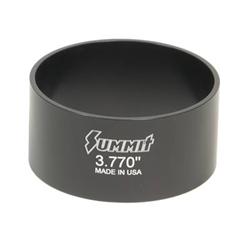
Like mentioned above, definitely get a nonadjustable ring compressor, similar to this. It will save you a lot of headaches.
sme-903770_w_ml.jpg
 

64Trvlr

Well-known member
Joined
Sep 7, 2012
Messages
420
Location
Northern AZ
You can use your mics to set your dial bore gauge. The mics become the "standard" once you've measured the piston. I like the rod bolt stretch gauge, it makes the stretch visable and not just a tighten and check ordeal. I also like Sunnen dial bore gauges, but they are pricey.

Other stuff, that you may or may not have
0-1" Dial indicator with a GOOD magnetic base.
Depth mics
Degree wheel
Valve spring height gauge
Adjustable pushrod length checkers
"solid" lifters
I Like the non adjustable ring compressors
Feeler gauges

A few more things

Balancer installer/puller
Ring groove cleaner
Ring filer
Cylinder hone
Plasti gauge
Good gasket scrapers
Thread chasers
Bottom taps for blind threads
Glyptal
 

Pudge87

Well-known member
Joined
Nov 11, 2012
Messages
154
Location
Spartanburg SC
I don't trust ANY machinist, EVER. Always double check what they tell you.

Hey now, I'm offended by that statement. If I do something, its right. I take a lot of pride in what I do, so don't judge ALL machinist. Sometimes people complain about a machinist when they try to save a dollar, just saying.

JonnFX, the stretch gauge you built, do you have plenty of room with it inside the block?
 

Deskmechanic

Well-known member
Joined
Aug 17, 2010
Messages
426
Location
Long Beach, CA
Hey now, I'm offended by that statement. If I do something, its right. I take a lot of pride in what I do, so don't judge ALL machinist. Sometimes people complain about a machinist when they try to save a dollar, just saying.

JonnFX, the stretch gauge you built, do you have plenty of room with it inside the block?


You are right, there's enough blame to go around. But I've been burned several times so I take that attitude with every NEW machinist.

Now I have two shops that I trust. Even so, final responsibilty for making sure the clearances are what I want resides with me, since I'm the one speccing and assembling the motor.
 

Pudge87

Well-known member
Joined
Nov 11, 2012
Messages
154
Location
Spartanburg SC
You are right, there's enough blame to go around. But I've been burned several times so I take that attitude with every NEW machinist.

Now I have two shops that I trust. Even so, final responsibilty for making sure the clearances are what I want resides with me, since I'm the one speccing and assembling the motor.

I will agree with that. I'm actually on the same page. Before assembly I make sure clearances are right myself.
 

ndoran

Well-known member
Joined
Jun 23, 2011
Messages
496
Most people use a micrometer to zero the bore gauge. This tool uses a stack of machinist gauge blocks so it is guaranteed to be dead on to the accuracy of your block set. It is kind of new and I don't have one, but if I wanted something dead nuts on to four decimal places I would probably get one.

Chris

I appreciate the enthusiasm of the reply but I do not know how you can achieve accuracy to a tenth of a thousandth of an inch (0.0001 inch) from micrometers?? I am interested to know because we have invested over $10 million in machine tools and 0.5 million in a coordinate measurement system to achieve these measurement accuracies so if there is a better way of doing so I want to know because our annual capital investment to maintain this capability is horrendous.

Note 0.0001 inch = 2.54 micrometers. Even Mitutoyo's flagship micrometer cannot achieve this it can achieve ±0.5µm. Note the transfer of body heat to the micrometer affects the accuracy.

http://www.mitutoyo.com/press_releases/high-accuracy-digimatic-digital-micrometer/

The measurement accuracy is also affected by the temperature of the part which is why at work when we machine and inspect parts to these types of tolerances and we do so in temperature controlled rooms 20 degrees centigrade plus/minus 1 degree and use coordinate measuring machines to do this not to mention the machine tools that are required to make the part in the first place.
 

Shadowdog500

Well-known member
Joined
Dec 7, 2009
Messages
9,826
Location
Down the shore

Hmmm never saw that..

I was planning on using a mitutoyo micrometer.. thats ok?


Most people use a micrometer to zero the bore gauge. This tool uses a stack of machinist gauge blocks so it is guaranteed to be dead on to the accuracy of your block set. It is kind of new and I don't have one, but if I wanted something dead nuts on to four decimal places I would probably get one.

Chris


I appreciate the enthusiasm of the reply but I do not know how you can achieve accuracy to a tenth of a thousandth of an inch (0.0001 inch) from micrometers?? I am interested to know because we have invested over $10 million in machine tools and 0.5 million in a coordinate measurement system to achieve these measurement accuracies so if there is a better way of doing so I want to know because our annual capital investment to maintain this capability is horrendous.

Note 0.0001 inch = 2.54 micrometers. Even Mitutoyo's flagship micrometer cannot achieve this it can achieve ±0.5µm. Note the transfer of body heat to the micrometer affects the accuracy.

http://www.mitutoyo.com/press_releases/high-accuracy-digimatic-digital-micrometer/

The measurement accuracy is also affected by the temperature of the part which is why at work when we machine and inspect parts to these types of tolerances and we do so in temperature controlled rooms 20 degrees centigrade plus/minus 1 degree and use coordinate measuring machines to do this not to mention the machine tools that are required to make the part in the first place.

I was responding that most people do use a caliper, but if I wanted 4 digit accuracy I would use the tool that stacks gauge blocks. Heck a $100 grade B gauge block set would get you that accuracy! I personally wouldn't even trust that micrometer you referenced unless I checked it against a gauge block. The fowler tool I referenced is within +/- 0.00005" accuracy.

If you really wanted to do it right you can get a master ring gauge to 5 digits accuracy for a couple hundred bucks.


I also know that things grow and shrink with temp, and that a torque wrench needs to be at the temp it was calibrated a to be accurate.

When you posted this, I was in the middle of writing a response indicating that people here must be building Indy car engines! Glyptol gives minimal oil return increase, but can cause major havoc if it starts to peel. Unless you are running a weird sized bore you can usually get rings that don't need to be filed. Never needed a stretch gauge for rod bolts, torque seems to work ok for me. I use a 20+ year old $60 craftman click torque wrench and it has never been outside of tolerance whenever I checked it on a torque wrench calibrator. A degree wheel and a piston stop aren't needed on a stock build, just use the marks.

Funny no one mentioned an engine stand!

Chris
 
Last edited:

Pudge87

Well-known member
Joined
Nov 11, 2012
Messages
154
Location
Spartanburg SC
I appreciate the enthusiasm of the reply but I do not know how you can achieve accuracy to a tenth of a thousandth of an inch (0.0001 inch) from micrometers?? I am interested to know because we have invested over $10 million in machine tools and 0.5 million in a coordinate measurement system to achieve these measurement accuracies so if there is a better way of doing so I want to know because our annual capital investment to maintain this capability is horrendous.

Note 0.0001 inch = 2.54 micrometers. Even Mitutoyo's flagship micrometer cannot achieve this it can achieve ±0.5µm. Note the transfer of body heat to the micrometer affects the accuracy.

http://www.mitutoyo.com/press_releases/high-accuracy-digimatic-digital-micrometer/

The measurement accuracy is also affected by the temperature of the part which is why at work when we machine and inspect parts to these types of tolerances and we do so in temperature controlled rooms 20 degrees centigrade plus/minus 1 degree and use coordinate measuring machines to do this not to mention the machine tools that are required to make the part in the first place.

We are building an engine here. Something that has been done numerous times without million dollar gauges. Nothing in an engine needs to be +/- a tenth. I think you meant to post this in "I want to grind a bearing race" thread.
 

JonnFX

Well-known member
Joined
Apr 23, 2013
Messages
127
Location
Arizona
To avoid these ads, REGISTER NOW!
Top Bottom