To avoid these ads, REGISTER NOW!

Epoxy Anchors Yes/No

whejdak

Well-known member
Joined
Jul 20, 2011
Messages
176
I know this looks like it has been beaten to death but it seems like a lot of conflicting information about what to do.

I have a MaxJax and it has been installed for several years. When I installed I found that my concrete was in the 4 inch area. I went a head and used the wedge anchor provided. Had some problems trying to get all to not spin. None the less, I put all 10 in the concrete. I saw where they should be tightened every once in a while. So I tried. Seemed like they all could use some torquing. One doing nothing but spinning around on me.
I don't use the lift anymore for cars and won't. What i do use it for is my lawn mowers and JD Gator. all in the range of 2000 pounds.
After lifting the equipment , I've been putting four post jacks under each lift arm. An over kill for sure but a comfort .
I never felt completely comfortable with the Wedge Anchors in at 4". Hence the post jacks.
I was thinking now of moving the location of the MaxJax. this time using epoxy anchors .
After reading all the information available, it seems like the PS2-58 Wej-it is the device to use.
Info says 6 1/4 inch hole. Using my calculator that would mean 2 1/4 inches of bottom of concrete dirt/stones beyond the 4 inches.
I've never had any problems with the way i installed years ago but I used the four extra stands anyway.
If I could get the 90 ft/lbs torque with the epoxy anchors I wouldn't need those four stands .
So, use don't use the 6 inch epoxy anchors it's a waste of extra money or use the wedge anchors and try my skills at getting them to grab the concrete.
Looking for comments and opinions (everyone has one).
Thanks
 
To avoid these ads, REGISTER NOW!

Uncle murph

Well-known member
Joined
Jan 28, 2021
Messages
1,466
Location
Harford county
I know this looks like it has been beaten to death but it seems like a lot of conflicting information about what to do.

I have a MaxJax and it has been installed for several years. When I installed I found that my concrete was in the 4 inch area. I went a head and used the wedge anchor provided. Had some problems trying to get all to not spin. None the less, I put all 10 in the concrete. I saw where they should be tightened every once in a while. So I tried. Seemed like they all could use some torquing. One doing nothing but spinning around on me.
I don't use the lift anymore for cars and won't. What i do use it for is my lawn mowers and JD Gator. all in the range of 2000 pounds.
After lifting the equipment , I've been putting four post jacks under each lift arm. An over kill for sure but a comfort .
I never felt completely comfortable with the Wedge Anchors in at 4". Hence the post jacks.
I was thinking now of moving the location of the MaxJax. this time using epoxy anchors .
After reading all the information available, it seems like the PS2-58 Wej-it is the device to use.
Info says 6 1/4 inch hole. Using my calculator that would mean 2 1/4 inches of bottom of concrete dirt/stones beyond the 4 inches.
I've never had any problems with the way i installed years ago but I used the four extra stands anyway.
If I could get the 90 ft/lbs torque with the epoxy anchors I wouldn't need those four stands .
So, use don't use the 6 inch epoxy anchors it's a waste of extra money or use the wedge anchors and try my skills at getting them to grab the concrete.
Looking for comments and opinions (everyone has one).
Thanks
It doesn’t matter what you are lifting,I would install it according to the manufacturer’s specifications even if that means cutting out some concrete.It only takes one “just for a minute “episode to get someone killed,if not you then some subsequent owner.
 
OP
W

whejdak

Well-known member
Joined
Jul 20, 2011
Messages
176
What is great about the MaxJax..... When I am done using it, I'll remove it and sell it. I'd never leave it in place for someone else to use.
Thanks for taking the time to respond.
 

duneslider

Well-known member
Joined
Jan 20, 2013
Messages
2,262
Location
Riverton, Utah
Are you turning these with just a wrench/ratchet? Try hitting them with an impact and see if they will snug up, then you can check the torque with your torque wrench once it is tight. There isn't much holding wedge anchors from spinning, especially before they have been fully set.
 

gmcgeo

Well-known member
Joined
Mar 11, 2019
Messages
3,701
Epoxy anchors (like Wej-it PS2-58 or Hilti HIT-HY 200 + HAS rods) perform better in thinner concrete than wedge anchors because they don’t exert expansion forces that can cause microfractures.

You drill deeper "yes" but you’re anchoring in the full 4” slab. The extra 2+ inches beyond the slab is just for epoxy depth; you're not relying on that lower fill layer for structural integrity.
Torque to spec (90 ft/lbs) is achievable with proper curing and installation, giving you that solid, locked-down feel you’re looking for.

If you ever want to uninstall and move it again, epoxy anchors can be cut flush or drilled out. Easier than dealing with a broken wedge anchor.

If you didn’t feel good the first time, and now you have a spinner, your concrete is likely on the brittle edge of spec.
Wedge anchors put radial pressure on the concrete and require proper embedment, which you probably don’t fully have.
 
OP
W

whejdak

Well-known member
Joined
Jul 20, 2011
Messages
176
The one Wej-it I'm talking about will spin (bolt) with an impact. It got tight but when i tried to torque it, it just broke loose again.
Someone said to get it wet down the hole and then try it. I don't know if that would do anything or not.
Another thought was to use a diamond core bit and drill out the Wej-it and then use an epoxy anchor. I realize that the hole won't be 7/8 " anymore, but filling with more epoxy and the anchor sounds like a good thing to do?
I'd rather not move it, but if I do. I'd use Epoxy Anchors. Back to the same issue. They are 6 inches requirements. I'm thinking that 4" inches will be against the concrete and some in the bottom where the drill went through the concrete.
The wedge type has the same depth to use but less of an area to grab with.
 

gmcgeo

Well-known member
Joined
Mar 11, 2019
Messages
3,701
The one Wej-it I'm talking about will spin (bolt) with an impact. It got tight but when i tried to torque it, it just broke loose again.
Someone said to get it wet down the hole and then try it. I don't know if that would do anything or not.
Another thought was to use a diamond core bit and drill out the Wej-it and then use an epoxy anchor. I realize that the hole won't be 7/8 " anymore, but filling with more epoxy and the anchor sounds like a good thing to do?
I'd rather not move it, but if I do. I'd use Epoxy Anchors. Back to the same issue. They are 6 inches requirements. I'm thinking that 4" inches will be against the concrete and some in the bottom where the drill went through the concrete.
The wedge type has the same depth to use but less of an area to grab with.
A wedge anchor that spins during torque application is no longer reliable.

It means one or more of these is true, The hole is oversized or wallowed out, The wedge didn’t expand properly.
The concrete is fractured or too thin to grip securely.
 
OP
W

whejdak

Well-known member
Joined
Jul 20, 2011
Messages
176
Apparently, MaxJax is now using a knock off Wej-it epoxy Anchor.
Looking for the PS2-58 I find little selling companies. And some very expensive ones.
Looking into the Hilti anchors now.
What would you do?
 

gmcgeo

Well-known member
Joined
Mar 11, 2019
Messages
3,701
I would use Hilti HIT-HY 200-R with HAS-Rods

Adhesive: HIT-HY 200-R or A (rigid / all-temp versions)
Rod: HAS-U 5/8" or 3/4" x ~6" rods (depending on baseplate hole)

These are mechanically cleaned anchors, so no need for extreme hole brushing or air blasting if using the Hilti SafeSet system (with roughening brush or vacuum bit). You can still manually clean with air/brush if doing it by hand.

You can embed these only 4" deep, and Hilti's specs still meet or exceed torque/pullout for your needs at that embedment. You're not lifting 8,000 lbs—just ~2,000. You’ll be way within safety margins.
 
OP
W

whejdak

Well-known member
Joined
Jul 20, 2011
Messages
176
Thanks
I'm actually feeling good about doing the new project and looking forward to it. I've always had some doubts in my mind with the wedge anchors. That's why I've been using the extra floor stands under the lift arms.
 

NUTTSGT

Super Moderator
Staff member
Joined
Sep 14, 2009
Messages
50,962
Location
Northern Central Ohio
Something I would think about considering the talk of moving the lift is the concrete thickness. Do you think the concrete is going to just as thick, thicker or woefully inadequate in the new location ?

I'd look into cutting out a section of the floor and pouring a new area that is plenty deep enough for what you want. A new pour 12" thick, 3' wide and 12' long is less than 1.5 yards of concrete. Tied together with rebar it'll do the job and you can you the appropriate anchors without fear of them coming out.
 
OP
W

whejdak

Well-known member
Joined
Jul 20, 2011
Messages
176
NUTTSGT:
I might have done that years ago but not now. I'm 78 and don't put any auto's on the lift anymore. Or haven't in a long time.
Trying to find someone to what you spec'd out is almost impossible around here. Doing it myself, (at 78) no .
I have several pieces of garden and grass machines that need to be serviced on a lift, so I need it.
The thickness of my concrete has worked OK but now some of those wedged anchors are questionable. That's why I'm thinking about moving it and using Epoxy this time.
 

gmcgeo

Well-known member
Joined
Mar 11, 2019
Messages
3,701
NUTTGT has a point, If you plan to keep the lift for years and want rock-solid safety, this pad idea is smarter than hoping your next location has better concrete. It costs a little more up front but completely removes the "what if" factor.
 

gmcgeo

Well-known member
Joined
Mar 11, 2019
Messages
3,701
If using 5/8 rod and 7/8 hole, i would suggest 2 tubes. One would get it done, 2 for safety
 
OP
W

whejdak

Well-known member
Joined
Jul 20, 2011
Messages
176
Two tubes? How many oz in the tube?
I kind of guessing around 20 oz's.
 

NUTTSGT

Super Moderator
Staff member
Joined
Sep 14, 2009
Messages
50,962
Location
Northern Central Ohio
NUTTSGT:
I might have done that years ago but not now. I'm 78 and don't put any auto's on the lift anymore. Or haven't in a long time.
Trying to find someone to what you spec'd out is almost impossible around here. Doing it myself, (at 78) no .
I have several pieces of garden and grass machines that need to be serviced on a lift, so I need it.
The thickness of my concrete has worked OK but now some of those wedged anchors are questionable. That's why I'm thinking about moving it and using Epoxy this time.
@78, I completely understand.
 
To avoid these ads, REGISTER NOW!
OP
W

whejdak

Well-known member
Joined
Jul 20, 2011
Messages
176
I was messing around with that loose anchor just now. I knocked the anchor back into the concrete and started the process of trying to secure the anchor. I thought it was working before I realized that the anchor pulled out and was tightening against the bolt that was holding the foot in place and not to an anchor that was holding against the concrete.
Which made me wonder now about the rest of those fasteners.
All the more reason to move it and epoxy it in.
Wow those 200/500 caulk guns are expensive.
 

nadogail

Well-known member
Joined
Jan 23, 2009
Messages
31,961
Location
Coronado, CA
The reliability of anchors that have been set in concrete depends on the strength of the concrete.

In my experience, Hilti branded tools and anchors have been the most reliable and effective.
 

Renegade1LI

Well-known member
Joined
Mar 11, 2018
Messages
4,959
Location
long island ny
I was messing around with that loose anchor just now. I knocked the anchor back into the concrete and started the process of trying to secure the anchor. I thought it was working before I realized that the anchor pulled out and was tightening against the bolt that was holding the foot in place and not to an anchor that was holding against the concrete.
Which made me wonder now about the rest of those fasteners.
All the more reason to move it and epoxy it in.
Wow those 200/500 caulk guns are expensive.
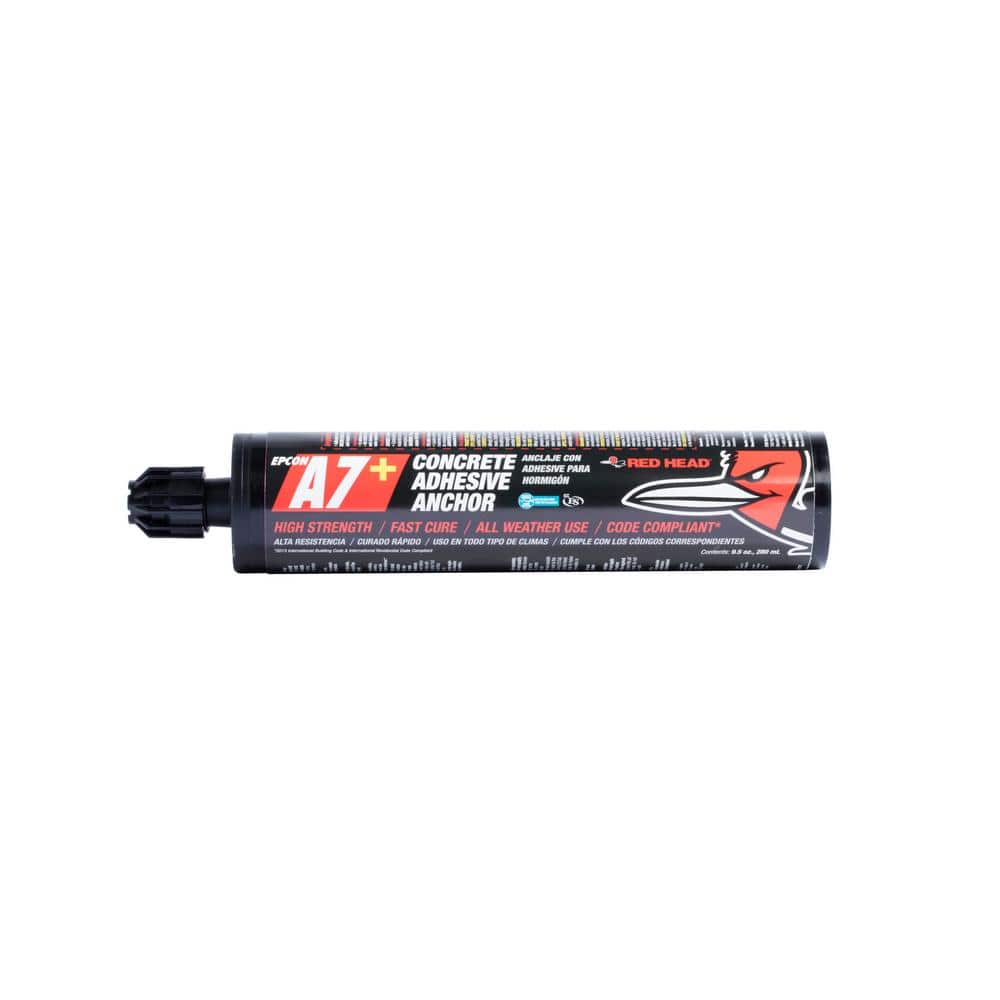
Just pick up some redhead epoxy at HD that fits a standard caulking gun.
 

pcmeiners

Well-known member
Joined
Aug 13, 2009
Messages
7,905
Location
In the only town in Pennsylvania, Bloomsburg.
You do not need epoxy, search google Rockite.... I have set steel support beams for multi story buildings with it, if you like wasting money go with expoxy......


gmcgeo

Well-known member
Joined
Mar 11, 2019
Messages
3,701
You do not need epoxy, search google Rockite.... I have set steel support beams for multi story buildings with it, if you like wasting money go with expoxy......

Rockite is NOT designed for applications like MaxJax, where you're lifting 2,000+ lbs and torquing bolts to 90 ft-lbs.
It’s great for static anchors, but not for safety-critical dynamic loads like a vehicle lift, even for mowers or Gators.

Yes, Rockite can hold a steel post or bolt under light stress. But that’s a completely different ballpark than anchoring a hydraulic lift system under torque, vibration, and side-loading.

using it for a lift is like using drywall screws on a deck. It might seem fine, until it isn't.

Hilti HIT-HY 200 or Simpson SET-XP
ICC-tested, code-approved, rated for cracked concrete, seismic zones, and high-torque loading.


You are not wrong, it does work in some cases, just not in his case.
 
Last edited:

gmcgeo

Well-known member
Joined
Mar 11, 2019
Messages
3,701
"Rockite is NOT designed for applications".... can you back that up ?

Rockite is stronger than the concrete it is used on.

Absolutely,

What Rockite is good for

Fast repairs in concrete and masonry.
Locking non-structural items into place (sign posts, handrails, electrical boxes).
Backfilling loose or oversized holes.
High compressive strength for static loads.

What Rockite is not good for

Tensile, shear, or torque loading.
Dynamic loads (like a lift moving up/down repeatedly).
ICC approvals or engineering load data for structural anchoring.
Outdoor or freeze-thaw conditions.
Installations where bolts must be torqued to 90 ft-lbs (like MaxJax).


Rockite is a solid product for static anchors and patching, but it’s not engineered for dynamic or torque-critical structural use. MaxJax anchors need to handle torque, shear, and tension, under vibration, at consistent values. Epoxy systems like Hilti or Simpson provide those ratings and are what MaxJax bases their new installs around. I’d rather pay a bit more and know the anchors won’t fail under stress.

Rockite doesn’t publish pullout, torque, or shear values for embedded anchors.
There’s no ICC-ES, IBC, or ACI 318 anchoring approval, which is standard for anchors used in structural/lift applications.

Appreciate the suggestion, but unless Rockite has a design guide or engineering sheet showing actual pullout strength, torque values, or suitability for dynamic loading (like a lift anchor under repeated stress), it’s not something I’d trust for this application.


The tech sheet you linked lists compressive strength, but that doesn’t address the kind of loading or torque MaxJax requires (90 ft-lbs+ per anchor). If there’s a document showing Rockite tested for tension, shear, or torque loads in concrete, especially for anchors under vibration and lift movement, I’d love to see it, because that’s what epoxy systems like Hilti and Simpson provide, and they’re ICC-approved for cracked concrete, seismic zones, etc.


Let me know when you can provide a tech sheet for Rockite that shows actual pullout strength, torque ratings, and suitability for dynamic or seismic loads. Until then, I’ll stick with something that’s engineered and rated for this kind of application.
 

Fixr

Well-known member
Joined
Dec 23, 2012
Messages
9,702
Location
SW VA
I know this looks like it has been beaten to death but it seems like a lot of conflicting information about what to do.

I have a MaxJax and it has been installed for several years. When I installed I found that my concrete was in the 4 inch area. I went a head and used the wedge anchor provided. Had some problems trying to get all to not spin. None the less, I put all 10 in the concrete. I saw where they should be tightened every once in a while. So I tried. Seemed like they all could use some torquing. One doing nothing but spinning around on me.
I don't use the lift anymore for cars and won't. What i do use it for is my lawn mowers and JD Gator. all in the range of 2000 pounds.
After lifting the equipment , I've been putting four post jacks under each lift arm. An over kill for sure but a comfort .
I never felt completely comfortable with the Wedge Anchors in at 4". Hence the post jacks.
I was thinking now of moving the location of the MaxJax. this time using epoxy anchors .
After reading all the information available, it seems like the PS2-58 Wej-it is the device to use.
Info says 6 1/4 inch hole. Using my calculator that would mean 2 1/4 inches of bottom of concrete dirt/stones beyond the 4 inches.
I've never had any problems with the way i installed years ago but I used the four extra stands anyway.
If I could get the 90 ft/lbs torque with the epoxy anchors I wouldn't need those four stands .
So, use don't use the 6 inch epoxy anchors it's a waste of extra money or use the wedge anchors and try my skills at getting them to grab the concrete.
Looking for comments and opinions (everyone has one).
Thanks
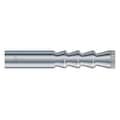
Actual hole size is pretty critical with wedge anchors. I have drilled concrete that for one reason or another pushed the bit around, making the hole oversized. I ended up grinding the sides of the carbide tip of the bit down maybe 1/16" in diameter, which resulted in a nice snug fit that required tapping (not pounding) the anchor in. The anchors torqued up nicely.
 
OP
W

whejdak

Well-known member
Joined
Jul 20, 2011
Messages
176
Ok gang, I went a head and made my mind up. I went and bought 10 epoxy drop in anchors.
Z-p2_tmcpEx_.JPG and I bought the caulk gun, injection nozzles, and Hilti 200 epoxy . These anchors have female threads so that a bolt can be removed from them and the MaxJax can be moved if needed. I didn't buy the treaded rods because I would have had to lift the post and lower onto the treads. Didn't like thinking about doing that.

So after drilling out the holes needed and cleaning them I'll insert the epoxy into the holes.
Now comes the next issue. All the video's out there show treaded rod and the epoxy coming out.
Since these anchors will be flush with the floor I don't want any of that epoxy getting into the female threads.
I'm thinking of placing a bolt (screwing it in) in the anchor first and then inserting. When the epoxy comes out I should be able to clean it off of the bolt after removing it.
Basically i'm trying to protect the top threaded hole from getting anything into it.
Any idea's ?????
I also see where the hole drilled should be 1" for 5/8 inch anchor. I'm assuming that is so the epoxy has an area to fill in.
 

gmcgeo

Well-known member
Joined
Mar 11, 2019
Messages
3,701
Ok gang, I went a head and made my mind up. I went and bought 10 epoxy drop in anchors.
Z-p2_tmcpEx_.JPG and I bought the caulk gun, injection nozzles, and Hilti 200 epoxy . These anchors have female threads so that a bolt can be removed from them and the MaxJax can be moved if needed. I didn't buy the treaded rods because I would have had to lift the post and lower onto the treads. Didn't like thinking about doing that.

So after drilling out the holes needed and cleaning them I'll insert the epoxy into the holes.
Now comes the next issue. All the video's out there show treaded rod and the epoxy coming out.
Since these anchors will be flush with the floor I don't want any of that epoxy getting into the female threads.
I'm thinking of placing a bolt (screwing it in) in the anchor first and then inserting. When the epoxy comes out I should be able to clean it off of the bolt after removing it.
Basically i'm trying to protect the top threaded hole from getting anything into it.
Any idea's ?????
I also see where the hole drilled should be 1" for 5/8 inch anchor. I'm assuming that is so the epoxy has an area to fill in.

Instead of inserting the bolt first,
Insert the anchor body (female insert) into the epoxy-filled hole.
Then thread a sacrificial bolt (or waxed bolt) into the anchor while the epoxy is still unset.
Once cured, unscrew the bolt, and you’ll have clean, protected threads.

This keeps the epoxy from seeping into the threads as it settles and expands.

To keep epoxy out of the threads, here's the safest approach

Thread in a greased or Vaseline-coated bolt during curing.
Once epoxy is cured, remove the bolt . your threads stay clean.

OR
Insert a rubber cap, plastic plug, or foam earplug into the anchor before epoxy insertion.
Some people even use crayons or modeling clay in a pinch.


You could Tape across the top of each anchor hole before epoxy install.
Poke a small hole to insert epoxy nozzle and center anchor.
Keeps overflow off your threads and your floor.


I would do 7/8" Hole for 5/8"


If you ever need to level the anchor tops perfectly flush, you can Put blue painter's tape over the hole before starting and poke through it for the stud to pass through. Once cured, peel it and you'll have a clean edge around the hole.
 
Last edited:
OP
W

whejdak

Well-known member
Joined
Jul 20, 2011
Messages
176
Thanks, some good ideas.
I guess I'll just have to be very careful when i do it.
 

70runner

Well-known member
Joined
Feb 17, 2010
Messages
189
Location
Avocado country
Only downside of the Hilti HY-200 injectable hybrid mortar system is the unique dispenser. Bought mine used on ebay for about half price of new. Previous lift install used female anchors, however, with these must be careful to install slightly below grade such that anchor-baseplate contact does not compromise torque settings. For current install, used Hilti Hit-Z male threaded anchors with HY-200A-V3 system. Easier install. If I ever need to move/remove (unlikely), just cut at grade. From my research and multiple conversations with Hilti engineers, the HY-200 system is perhaps the best anchor system for 2 post lifts.
 
OP
W

whejdak

Well-known member
Joined
Jul 20, 2011
Messages
176
I bit the bullet and bought the caulk gun new. Hoping to sell afterwards. Tried the internet, but to many scams out there.
Good to know about Hilti. That's what I'm getting.
 
OP
W

whejdak

Well-known member
Joined
Jul 20, 2011
Messages
176
Everyday that passes seems like I think of something new.
Question? Dealing with the spinner anchor that I've been talking about.
I am wondering about drilling it out. I have a 7/8 diamond core bit but that is the same size as the anchor. I'm thinking that if I had a 1 " core bit it would fit around the anchor and I could then drill it out.
Two additional thoughts with that
one - if it did drill it out, could I fill the 1 " with an epoxy anchor!
Two - I don't know the thickness of the core bit. Hence it might drill a 1 " hole but it still might not fit around the anchor that it in there now.
Thoughts
 
OP
W

whejdak

Well-known member
Joined
Jul 20, 2011
Messages
176
Previous questions were just thought questions.
I know bounding the anchor down would be an option (better) but I'm not sure whether or not I drilled through the concrete. If I didn't , that anchor won't get pounded out.
I tried pulling it. They won't happen for sure. Not without ripping out a chuck of the concrete on top.
One other thing that I thought about would be to get a rebar bit and drill out anchor that is in there now.
 
OP
W

whejdak

Well-known member
Joined
Jul 20, 2011
Messages
176
I wrote to Hilti for an answer to my concerns above.
I got an answer.
However I don't have time to complete a "Civil/Mechanical" engineering degree to understand it.
I should have expected that if I did get an answer it would be with " Arm waving, sparks throwing, pointing to other URL's . I think Merlin the magician responded.
I've got another idea.

Bill
 

rust in the eye

Well-known member
Joined
Oct 2, 2017
Messages
2,789
Location
Chicagoland
Didn't read all so if I'm way off base..........
One anchor is loose? Can you get it out?? Why not re-drill the plate and re-bore the hole to next size?
 
To avoid these ads, REGISTER NOW!
Top Bottom