Hey all, first post.
Went to build the garage of my dreams, and having done epoxy floors in the past, I did my homework when shopping for a contractor. Saw his past work, got references, made sure his proposal was suitable for auto use, etc.
Existing slab was in decent shape, ~4k sf. Was formally used for storage, so no oil or grease issues. Poured in the early 80s, no moisture barrier present underneath it.
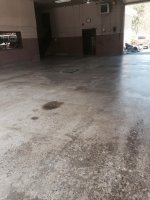
Contractor grinded the surface, patched all cracks and defects, applied a moisture mitigating primer (standard practice according to him), a self leveling epoxy coat, and then a urethane top coat. Looked just great.
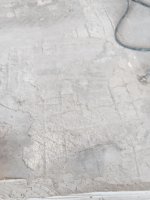
Fast forward two months, and small bubbles are starting to form all over the place.
Contractor comes over, pops some bubbles and finds evidence of moisture in them. The base concrete also was pulling up with these bubbles, suggesting very good primer adhesion.
He then tells me that this is due to hydro-static pressure under the slab from a fluctuating water table, causing water vapor to migrate up, get trapped under the epoxy, and start lifting it.
He then says that such cause is not covered under his warranty, since it is an "act of God."
Ouch.
However, he then tells me that at no cost he would be willing to remove the existing epoxy and apply a standard primer with urethane top coat, under the premise that such a combo would breathe, allowing water vapor to escape.
He predicts the bubbling will get worse, eventually they will crack, and the areas will peel. Basically an epoxy floor nightmare, just what I was trying to avoid with my due diligence.
Lifts and modular work stations are all already installed, so all that would need to be pulled out to redo.
While I am glad he is willing to try to mitigate, ultimately I would be getting a lesser grade floor with no refund.
A) is fluctuating hydro-static pressure something he should have discovered before putting down the floor? He says there is no way to test for that.
B) will a primer and urethane combo provide a "breathable" surface?
Thanks for reading.
Ron
Went to build the garage of my dreams, and having done epoxy floors in the past, I did my homework when shopping for a contractor. Saw his past work, got references, made sure his proposal was suitable for auto use, etc.
Existing slab was in decent shape, ~4k sf. Was formally used for storage, so no oil or grease issues. Poured in the early 80s, no moisture barrier present underneath it.
Contractor grinded the surface, patched all cracks and defects, applied a moisture mitigating primer (standard practice according to him), a self leveling epoxy coat, and then a urethane top coat. Looked just great.
Fast forward two months, and small bubbles are starting to form all over the place.
Contractor comes over, pops some bubbles and finds evidence of moisture in them. The base concrete also was pulling up with these bubbles, suggesting very good primer adhesion.
He then tells me that this is due to hydro-static pressure under the slab from a fluctuating water table, causing water vapor to migrate up, get trapped under the epoxy, and start lifting it.
He then says that such cause is not covered under his warranty, since it is an "act of God."
Ouch.
However, he then tells me that at no cost he would be willing to remove the existing epoxy and apply a standard primer with urethane top coat, under the premise that such a combo would breathe, allowing water vapor to escape.
He predicts the bubbling will get worse, eventually they will crack, and the areas will peel. Basically an epoxy floor nightmare, just what I was trying to avoid with my due diligence.
Lifts and modular work stations are all already installed, so all that would need to be pulled out to redo.
While I am glad he is willing to try to mitigate, ultimately I would be getting a lesser grade floor with no refund.
A) is fluctuating hydro-static pressure something he should have discovered before putting down the floor? He says there is no way to test for that.
B) will a primer and urethane combo provide a "breathable" surface?
Thanks for reading.
Ron