To avoid these ads, REGISTER NOW!

Ergonomic Alternatives

garboui

Well-known member
Joined
Jun 30, 2011
Messages
999
Location
Southern Ontario
Recently I have been doing a bit of a tool/ garage transform as tendon damage in my right (dominant) arm has dramatically reduced its strength and endurance. Things like hand filing and holding a drill are now painfully impossible. While some things I have been able to adapt to left hand use like drill use, and screwdriving some things are just difficult. I am making this post to hopefully give someone else suffering from arm pain ideas but also to get more for myself to be more safe, capable and comfortable in the garage.

Some changes I have or already planning on making:
- Purchased 90deg air die grinder to replace hand filing and is light enough to replace most angle grinder duty
- switched to very lightweight air hose whips.
- Raised horizontal bandsaw to better height and added more material support.
- need to get a smaller air cooled tig torch. currently only running a 26 size. need to start practicing with left hand torch
- bought a 20t press so I no longer have to beat things, in, flat, or bent with a vice and hammer. The press is getting a left hand drive conversion.
- more work holding, clamps, additional vice and drill press hold downs.

Unsure:
- converting drill press to left hand use. I'm a little unsure on the execution. Its an old Craftsman from the 60's and I would really want to not mame the casting for this conversion, a series of chains and cogs up and over the top also seems inelegant.
- crane/ lifting tool? a engine hoist would be ideal but there is no space for that in the garage (outside storage is a no go)
- If I want to eliminate/reduce my angle grinder usage what's the next best thing?
 
To avoid these ads, REGISTER NOW!

Ign

Well-known member
Joined
Jul 7, 2006
Messages
12,769
Location
Butte Peak ND
The M12 die grinders get rid of that hose but are more bulky and of course weigh more tool-only vs tool-only

HF used to offer an air file which I have. I honestly don't know if they still offer it. I don't use it much but always thought the concept was fantastic for quickly opening up small slots that don't need to be perfect.

I wonder if a belt file would be useful for you?
 
OP
G

garboui

Well-known member
Joined
Jun 30, 2011
Messages
999
Location
Southern Ontario
Comparing the M12 line of tools was the first thing I did. Going air was still a win with size, weight and cost. With the 1/4" whip the hose pull is pretty low.

Didn't think about the belt file but does solve the cleaning up inside edges problem. For opening slots I usually use carbide burrs. How well do the belts last around sharp steel edges? The die grinder sander discs shred pretty quick.
 

tool_scrounge

Well-known member
Joined
Jul 20, 2010
Messages
4,211
Location
Southern California
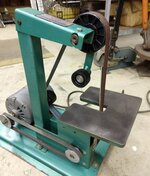
If you are not working on big stuff get a stationary belt grinder, like a quality 1x42 type. I use mine all the time.

Rockwell Delta had foot actuated accessory conversion for a lot of their drill presses (1940s-1970s)

For lifting stuff, I used the heck out of a manual Hoyer patient lift. 400 lb capacity, light weight, leg spacing is lever adjustable, and very easy to maneuver. Can be cheap on the used market. Electric versions are also available but they weigh/cost more. I sold my engine hoist after getting the Hoyer lift. The Hoyer took up a lost less space and was high enough to lift stuff out of a truck bed.

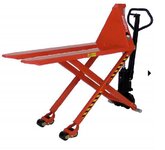
High Lift Pallet jacks are also useful. Usually they raise up to ~32" off the ground. Look at Interthor Thorklifts and Bishamon Skidlift. Both are available as manual or electric. With these you can slide stuff out of the truck bed.
 

Attachments

  • Foley_belt_grinder.JPG
    Foley_belt_grinder.JPG
    52.9 KB · Views: 13
  • Delta drill press foot operated.JPG
    Delta drill press foot operated.JPG
    119.5 KB · Views: 16
  • Hoyer_lift.JPG
    Hoyer_lift.JPG
    19.1 KB · Views: 13
  • Intherthor_thorklift.JPG
    Intherthor_thorklift.JPG
    37.5 KB · Views: 11
  • bishamon skid lift.JPG
    bishamon skid lift.JPG
    45 KB · Views: 10

mogandave

Well-known member
Joined
Nov 4, 2021
Messages
3,052
Location
Bangkok
Having spent a bit of time on a drill-press, operating it left handed should not be an issue. That said, one thing I would do would be to incorporate a foot petal to start and stop it.

You might want to rig a plug in foot switch you can use with any your hand power tools.
 

sk farmer

Well-known member
Joined
Mar 4, 2009
Messages
5,571
Location
nd
i would think just rotating your drill press 90 degrees so that the handles are in the front and could be operated with either or both hands would be a tremendous help. it would also not alter the press. matter of fact, using both hands to operate the press may give you a better feel for the work being done anyway.
 
To avoid these ads, REGISTER NOW!

Tools4Me

Well-known member
Joined
Jun 22, 2021
Messages
546
I agree with the others here, foot pedals are great. I purchased a couple of these units on Ebay and made on/off momentary foot pedals for my drill press, my lathe, and a couple other shop items. I purchased the standard ones because I already had some protective pedal shields I picked up at a garage sale to use, but I would recommend the shielded pedal version if your foot pedals will be out in the open or in a more heavily traveled area. The shield makes it very hard to accidentally step on or drop something onto the foot pedal and accidentally turn the machine on. I wired mine so there are two cords coming out of each pedal. One has a female plug on the end and the other has a male. The black "hot" wire for both cords goes through the foot pedal's internal switch. That way I can use the pedals with any machine I want by simply plugging one cord into the wall and the other one in-line with the tool's original power cord. The only other thing I have to do is leave the power tool's original built in manual flip switch in the "on" position so the foot pedal becomes the new on/off switch. No modification to the machine or drill press wiring is needed.

or

I dont know what type of work you mainly do, but a Foredom tool is much lighter, more flexible, and easier on the hands than any Dremel type tool. Less weight, size, vibration, etc. and designed for regular use by professionals instead of hobby use only. They are dial or foot pedal operated, so the handpieces work equally well in either hand. I use mine all the time for small or more detailed jobs. Any jobs you would imagine someone like a jeweler, gunsmith, or a detailed woodcarver doing, are done well with a Foredom tool. Sanding, polishing, smoothing, grinding, small cutting tasks, etc. It also does a good job of replacing small hand files most of the time.

You might have some already, but spinner adapters for ratchets are very useful tools for removing and installing bolts while using a hand ratchet. They allow you to break the bolt free with the ratchet, continue ratcheting until the bolt is too loose for the ratchet to continue working, then you move your hand up and cup the head of the ratchet in your hand and use the spinner with your fingers to unscrew the bolt the rest of the way. All done one-handed.

Proto, Koken, Snap-on, and other brands all make versions of this tool in various drive sizes.

This example listing is for a Snap-on TMS70A 1/4" drive finger spinner.
 

mogandave

Well-known member
Joined
Nov 4, 2021
Messages
3,052
Location
Bangkok
I agree with the others here, foot pedals are great. I purchased a couple of these units on Ebay and made on/off momentary foot pedals for my drill press, my lathe, and a couple other shop items. I purchased the standard ones because I already had some protective pedal shields I picked up at a garage sale to use, but I would recommend the shielded pedal version if your foot pedals will be out in the open or in a more heavily traveled area. The shield makes it very hard to accidentally step on or drop something onto the foot pedal and accidentally turn the machine on. I wired mine so there are two cords coming out of each pedal. One has a female plug on the end and the other has a male. The black "hot" wire for both cords goes through the foot pedal's internal switch. That way I can use the pedals with any machine I want by simply plugging one cord into the wall and the other one in-line with the tool's original power cord. The only other thing I have to do is leave the power tool's original built in manual flip switch in the "on" position so the foot pedal becomes the new on/off switch. No modification to the machine or drill press wiring is needed.

or

I dont know what type of work you mainly do, but a Foredom tool is much lighter, more flexible, and easier on the hands than any Dremel type tool. Less weight, size, vibration, etc. and designed for regular use by professionals instead of hobby use only. They are dial or foot pedal operated, so the handpieces work equally well in either hand. I use mine all the time for small or more detailed jobs. Any jobs you would imagine someone like a jeweler, gunsmith, or a detailed woodcarver doing, are done well with a Foredom tool. Sanding, polishing, smoothing, grinding, small cutting tasks, etc. It also does a good job of replacing small hand files most of the time.

You might have some already, but spinner adapters for ratchets are very useful tools for removing and installing bolts while using a hand ratchet. They allow you to break the bolt free with the ratchet, continue ratcheting until the bolt is too loose for the ratchet to continue working, then you move your hand up and cup the head of the ratchet in your hand and use the spinner with your fingers to unscrew the bolt the rest of the way. All done one-handed.

Proto, Koken, Snap-on, and other brands all make versions of this tool in various drive sizes.

This example listing is for a Snap-on TMS70A 1/4" drive finger spinner.

Those look like pretty robust switches for the money. You can also add coolant to the foot-switch such that when the pedal is engaged, the coolant comes on, or does not depending on how you have it set. We used mostly mist, but you can do it with anything. Solenoid valves, relays switched and other component have really gotten cheap.
 

Prospecter

Well-known member
Joined
May 16, 2015
Messages
2,443
Location
Maine
I recommend Bob Heine's thread. Hilarious, and also many years of dealing with these sorts of issues.
I am a retired special education teacher / administrator, and have personal experience due to nerve damage in my right hand from an accident.

An occupational therapist specializes in these sorts of applications, and some specialize in hand issues. Different than a physical therapist, OTs help folks adapt to their disabilities. I benefitted from free advice from my colleague, who was a hand specialist, but insurance will pay for consultation.

Doing dishes can be quite helpful. The combination of warm water and fine motor practice. A sock filled with rice and warmed by the microwave is a treat.

You are on the right track with pursuing adaptations. On the drill press, consider adapting the handles so they operate perpendicular to the drill head instead of parallel. Depending on your needs, that might work and be a simple fix. (New handle and wheel available from McMaster Carr and others.)

I try to think of these issues as "annoying and inconvenient." Doesn't change the issues, but keeps my attitude from getting in the way.
 

rdoty

ALLIANCE MEMBER
Joined
Feb 7, 2018
Messages
650
Location
Massachusetts
12V impact drivers are small, light, and incredibly useful. I have the Bosch driver and use it constantly. With an adapter they can be used with standard 1/4" or 3/8" sockets.

There are small ratchets available that take 1/4" hex bits - one example is https://www.amazon.com/gp/product/B01BUJXQJ6/?tag=atomicindus08-20. These let you apply a lot of torque to screws with little hand strength.

If you will be using a press you might want to upgrade to a air/hydraulic jack - this minimizes pumping.

An engine hoist is useful for a wide range of lifting and positioning tasks. Are you sure you don't have room for a folding engine hoist?

Do you have a vise on your drill press? You might also consider a vise with X and Y positioning - this let's you clamp the part in the vist, accurately position the part, and drill it without having to hold it.

Adjustable roller stands like https://www.amazon.com/dp/B07JH4ZS33/?tag=atomicindus08-20 are really good for supporting things that hang off the workbench, drill press table, table saw or chop saw.
 

mogandave

Well-known member
Joined
Nov 4, 2021
Messages
3,052
Location
Bangkok
On the issue of small impact drivers, there is nothing easier on the hands than a good pneumatic pulse tool hung with a balancer. These can be used ALL day, every day in production without issue.

That said, they are expensive. As I remember, the last Fuji screw-guns I bought were about $1,500 each, and that was 15-20 years ago.
 
To avoid these ads, REGISTER NOW!
Top Bottom