

You are using an out of date browser. It may not display this or other websites correctly.
You should upgrade or use an alternative browser.
You should upgrade or use an alternative browser.
Etching concrete with muriatic acid
- Thread starter ADKGarage
- Start date
RTcat
Well-known member
I would think your jug of acid should give you specs on what ratio to use for new concrete. I know mine did.

No it does not! It gives generalizations but I need to know what is the definitive answer to the ratio of acid/water when concerned with NEW smooth, 1 month old concrete. Than the next question would be the same concerned with neutralizing the acid with ammonia/water, what is the ratio there.
The reason why I am asking is that there is a thread here where the debate is heating up concerning the same yet NO answers are posted as to the Ratios that people are referring to. So the question remains:
The reason why I am asking is that there is a thread here where the debate is heating up concerning the same yet NO answers are posted as to the Ratios that people are referring to. So the question remains:
Dude, try some google-fu with "acid etching concrete" as the search terms
http://www.sealkrete.com/acid_etching_no_cne.htm
Typical is 1 part hydrochloric acid mixed into 3 parts water.
ALWAYS add the acid into the water!!!
Do NOT add water into the acid to dilute it. The dilution of strong acid into water releases heat, and if you dump water into the strong acid you can end up with the mix 'boiling' out and splashing concentrated acid all over the place.
RTFM!!! Or in this case Read the F'n Label for info and safety precautions.
http://www.sealkrete.com/acid_etching_no_cne.htm
Typical is 1 part hydrochloric acid mixed into 3 parts water.
ALWAYS add the acid into the water!!!
Do NOT add water into the acid to dilute it. The dilution of strong acid into water releases heat, and if you dump water into the strong acid you can end up with the mix 'boiling' out and splashing concentrated acid all over the place.
RTFM!!! Or in this case Read the F'n Label for info and safety precautions.
Garage Flooring
ALLIANCE MEMBER
We always recommend grinding to our customers. .That said
We started selling http://www.garageflooringllc.com/acid-etching-garage-floor-coatings-prep/ for people who want to etch. Acid etching is acid etching but this is a little safer to handle and seems to actually absorb contaminants.
This post also seems to have good info: http://www.garagejournal.com/forum/showthread.php?t=44258
We started selling http://www.garageflooringllc.com/acid-etching-garage-floor-coatings-prep/ for people who want to etch. Acid etching is acid etching but this is a little safer to handle and seems to actually absorb contaminants.
This post also seems to have good info: http://www.garagejournal.com/forum/showthread.php?t=44258
Last edited:
Just found this:
Etching solution:
The method of etching is not as important as the end result. A properly etched surface should be clean and have the texture of medium grit sandpaper which would allow immediate water penetration. This will ensure the material being applied will bond to the concrete substrate.
Etching solution:
- Type of Acid: Out of the variety of acids available for etching concrete (muriatic, sulfamic, phosphoric, organic salts or citric), muriatic (hydrochloric) and phosphoric acids are normally the products of choice. Muriatic acid, also known as hydrochloric acid, should only be used where chlorides are permitted. Seal-Krete Clean-N-Etch is a combination of phosphoric acid and a cleaning agent.
- Container/Acid Ratio: Acid resistant containers (plastic) should be used for mixing and spreading acids. It is essential to calculate the dilution of acid to water since commercial containers may vary in concentration. Typically, muriatic acid is usually mixed at a ratio of one part acid to three parts water in order to reach a required level to adequately etch bare concrete. Phosphoric Acid, Seal-Krete Clean-N-Etch is mixed at one part acid/cleaner to one part water.
- Determining Acid Strength: The best method for determining muriatic acid concentration, is to test the substrate with a very dilute solution, then add acid to the container as required until a strong bubbling action is observed in the test. This will confirm the amount of acid concentration needed for the project. One gallon of the acid mixture should be allowed for each 50-75 sq. ft. of rough concrete or each 75-100 sq. ft. of smooth concrete.
- Pre-Wet the Concrete: The concrete surface should be pre-wet with clean, potable water. The substrate should be uniformly wet without any puddling or standing water. The concrete should remain wet until the acid solution is applied. Note: The area being treated should be done in small sections so the concrete does not dry out before applying and working the acid.
- Application of the Acid: The acid solution should be applied uniformly over the surface of the concrete. An excellent means of application is with a plastic garden sprinkling container. The fresh acid should be deposited in a consistent manner over the entire surface so the etching results will be uniform. The acid solution should not be dumped onto the floor and swept over the surface. Acid spread in this manner will be partially spent and will not yield uniform results. The acid solution will begin bubbling indicating it is reacting to the surface layer of concrete. Any areas failing to produce the bubbling action would indicate the area has contaminates that are preventing the acid from reaching the concrete. It will be necessary to properly clean and re-etch or prepare these areas by mechanical means. The acid solution should be scrubbed thoroughly with a stiff bristled brush during the application process.
- The acid solution should be allowed to remain on the concrete as long as the bubbling continues (usually 2-10 minutes, however, this would depend on the floor conditions and acid concentration used for the project). The floor should not be allowed to dry out during the acid etching process.
- When the bubbling action of the acid solution slows down, spray the area with a generous amount of water or first spray a solution of one pound of baking soda in five gallons of water to neutralize the acid and then flush with water. For proper disposal of all liquids, use a wet vac if no drains are present. The surface should have a uniform texture of medium grit sandpaper, if not; the acid etching process must be repeated. The substrate should be flushed two or three times while scrubbing with a stiff bristle broom in order to remove any existing powdery residue. To avoid possible adhesion failure, vacuum any residue or white powder after the surface is dry (before painting).
- If muriatic acid is used for etching, check the pH of the final rinse water on the wet concrete with pH paper. An ideal pH reading is 7.0 (neutral); however, a range of 6.0-9.0 is usually acceptable for most coatings, unless otherwise stated. A pH range below 6.0 would indicate acid residue remains in the pores of the concrete and must be neutralized. A strong ammonia solution or two pounds of baking soda in five gallons of water will generally neutralize the concrete in one application. The neutralizing solution should be spread uniformly over the substrate in the same manner as the acid solution. The surface should remain wet with the solution for at least ten minutes before agitating and flushing with water as recommended when etching the substrate. The pH should be re-checked and the neutralization process repeated if the pH of the rinse waster is still below 6.0. For a pH reading over 9.0, repeat the rinsing process until the pH is at an acceptable level.
- No matter what coating system is selected, it is important the moisture in the concrete is low enough that it will not affect the application, cure or performance of the coating. An ideal moisture content would be below 12% for most coatings and below 15% for acrylic paints and sealers. Should a moisture meter be unavailable, ASTM Test Method D 4263-83 should be followed to determine moisture content. This is the Standard Method for Indicating Moisture in Concrete by taping sheets of minimum 4 mil thick polyethylene plastic, at least 18 by 18 inches square, onto the concrete with 2-inch wide duct tape. A test patch should be applied for each 500 square feet of concrete. These test patches should be allowed to remain in place at least 16 hours before removing to check for moisture on the back of the plastic and concrete area being tested. This method is not an exact measurement of the moisture content; however, it will determine the relative amount of free moisture in the concrete and whether or not to postpone the coatings application. Warm, dry air blown over the surface will hasten drying of the concrete. Using fans alone will speed up the dry time.
The method of etching is not as important as the end result. A properly etched surface should be clean and have the texture of medium grit sandpaper which would allow immediate water penetration. This will ensure the material being applied will bond to the concrete substrate.
bglad
Well-known member
Just did my garage with the bio-safe etching. Seemed to work OK. I also sanded my floor with a palm sander using 60 grit. It's a 40 x 40 and my knees are still hurting. Also is ADK the Adirondack mountains/
Falcon67
Well-known member
I used 4:1. Rinse well and possibly repeat if necessary.
Finally, etching has been completed however, it seems that some areas of the concrete were affected more than other areas. The concrete looks almost splotchy, that is the lighter areas seem less effected than the darker areas where it is visually apparent that the acid etched deeper into the concrete.
I have seen pic that other have posted and this seems to be a common occurrence. Is this an issue or not, should I re-etch the lighter spots or is everything okay to proceed? The concrete is brand new, 1-2 months old and it was power troweled to a smooth finish, no oil or other contaminants.
Oh, hey Bglad, yes I'm near Speculator, Lake Pleasant. Where do you live?
I have seen pic that other have posted and this seems to be a common occurrence. Is this an issue or not, should I re-etch the lighter spots or is everything okay to proceed? The concrete is brand new, 1-2 months old and it was power troweled to a smooth finish, no oil or other contaminants.
Oh, hey Bglad, yes I'm near Speculator, Lake Pleasant. Where do you live?
AlphaGarage
Well-known member
It's really difficult to spec exactly how much muriatic acid is needed to get the job done.
The Muriatic acid found in retail outlets varies in strength, anywhere from about 28% to 38% of full strength. So right there that will make a big difference. And then the amount/strength required will also depend on the composition of the concrete.
Muriatic acid works by eating away at the calcium in the concrete, and not all concrete has the same amount of calcium.
Probably as good a way as any to figure out if you have the proper ratio of water to acid is to mix a small batch, say one cup acid with 2 cups water, and pour it onto the floor (of course, follow all package safety instructions) and pour it onto an inconspicuous part of the floor. Then agitate it a bit with a broom or brush. You want to see or hear it slightly bubbling or fizzing. If it just sits there like water, increase the amount of acid, if it wildly bubbles, foams, and smokes it's too strong - add more water.
Keep in mind that muriatic acid is probably one of the most dangerous and caustic materials we'll find in the hardware store - so be careful!
Also, do not allow the acid/water solution to dry on your floor! The leached calcium which was held in suspension will settle and dry on the concrete, and it's not easy to remove.
If you're in a situation where you can't grind, and can't or don't want to deal with a toxic chemical and its odors and side effects, there are more user friendly chemicals.
Wolverine has "OrganiPrep 921" , it's non-flammable and contains no Hazardous or Toxic Air Pollutants, has low odor, no Volatile Organic Compounds, and is easy to clean up with soap & water. Our contractors use it in hospitals, care facilities, zoos, kennels, clean rooms etc.
"OrganiPrep 921 Product bulletin" - a PDF with details.
"OrganiPrep 921 msds" - MSDS PDF
The Muriatic acid found in retail outlets varies in strength, anywhere from about 28% to 38% of full strength. So right there that will make a big difference. And then the amount/strength required will also depend on the composition of the concrete.
Muriatic acid works by eating away at the calcium in the concrete, and not all concrete has the same amount of calcium.
Probably as good a way as any to figure out if you have the proper ratio of water to acid is to mix a small batch, say one cup acid with 2 cups water, and pour it onto the floor (of course, follow all package safety instructions) and pour it onto an inconspicuous part of the floor. Then agitate it a bit with a broom or brush. You want to see or hear it slightly bubbling or fizzing. If it just sits there like water, increase the amount of acid, if it wildly bubbles, foams, and smokes it's too strong - add more water.
Keep in mind that muriatic acid is probably one of the most dangerous and caustic materials we'll find in the hardware store - so be careful!
Also, do not allow the acid/water solution to dry on your floor! The leached calcium which was held in suspension will settle and dry on the concrete, and it's not easy to remove.
If you're in a situation where you can't grind, and can't or don't want to deal with a toxic chemical and its odors and side effects, there are more user friendly chemicals.
Wolverine has "OrganiPrep 921" , it's non-flammable and contains no Hazardous or Toxic Air Pollutants, has low odor, no Volatile Organic Compounds, and is easy to clean up with soap & water. Our contractors use it in hospitals, care facilities, zoos, kennels, clean rooms etc.
"OrganiPrep 921 Product bulletin" - a PDF with details.
"OrganiPrep 921 msds" - MSDS PDF
Last edited:
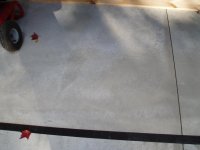
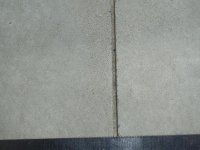
I wet the area that would be etched and then used the squeegee to pull off the excess water thereby allowing the acid/water mix to hit the area uniformlly than scrubbed the solution into the concrete. it sure did fiz when it hit the floor and than subsided, that is when I scrubbed it in. It sat for about 10 minutes, than got wet down and washed off. When the entire floor was complete I rewashed and scrubbed the floor with ammonia and water to neutralize the acid. Here is a pic. Does this look normal to proceed?
Attachments

Last edited:
bglad
Well-known member
Town of Corinth. Not sure if you received my other message
I wet the area that would be etched and then used the squeegee to pull off the excess water thereby allowing the acid/water mix to hit the area uniformlly than scrubbed the solution into the concrete. it sure did fiz when it hit the floor and than subsided, that is when I scrubbed it in. It sat for about 10 minutes, than got wet down and washed off. When the entire floor was complete I rewashed and scrubbed the floor with ammonia and water to neutralize the acid. Here is a pic. Does this look normal to proceed?
Attached Thumbnails


Attached Thumbnails
Familyof8kids
Well-known member
Looks great. If you are worried you could always do another acid wash. I used 100% strength and ruined every cheap tool, fresh sandblasted parts, etc. in the garage.
Wow, that must have practically melted the concrete. This is the first time I ever used acid and I was not sure what to expect so I was very cautious usin this stuff. Anyway, I reapplied the acid and now the concrete is surely ready for the application of epoxy....Finally! Now I have to wait at least 2 days and hope the temps hold to the 70's so the epoxy cures properly.
dcs Inc
Well-known member
Very uneven profile. Some of the areas are near the proper profile, some are not. You just can't get the proper profile with an acid. But hey, I'm not selling ya anything, let the diy sales men pushing their "stuff" give you the nod.
LegacyIndustrial
ALLIANCE MEMBER
Very uneven profile. Some of the areas are near the proper profile, some are not. You just can't get the proper profile with an acid. But hey, I'm not selling ya anything, let the diy sales men pushing their "stuff" give you the nod.
Dern tootn Indy!!
dcs Inc
Well-known member
Most excellent.
Last edited:
drinkmoresake
Well-known member
- Joined
- Jun 3, 2012
- Messages
- 66
Very uneven profile. Some of the areas are near the proper profile, some are not. You just can't get the proper profile with an acid. But hey, I'm not selling ya anything, let the diy sales men pushing their "stuff" give you the nod.
Not trying to sell anything here but just want to mention that one way to get around the uneven profiling that can happen with acid (due to high & low spots in floor) is to use the etching solution made by Surface Gel Tek. Since it is suspended in a gel solution it doesn't flow off the high spots and "pool" in the low spots. It is not cheap but it really produces a nice even profile for those who feel more comfortable etching. I was amazed how well it worked on my floor.
Thanks for all the replies. I re-etched the uneven surfaces yesterday and used a stronger solution of acid/water. The surface shows clearly that the etching is more consistant and deeper. Afterwards I rinsed with ammonia/water and later power washed the entire surface. Now it is continuing to dry and hopefully thursday/friday I can get the epoxy down.
I am hoping that the temp of the slab does not drop below the 50-60 degree mark. If I can't get the epoxy down now, I'll have to wait another week or two and the nights are getting especially cooler up here. I'll take some pis and post tomorrow
I am hoping that the temp of the slab does not drop below the 50-60 degree mark. If I can't get the epoxy down now, I'll have to wait another week or two and the nights are getting especially cooler up here. I'll take some pis and post tomorrow
dcs Inc
Well-known member
Good luck. Keep an eye on the humidity levels in this area. It will be high as the concrete dries. Fans would help move the air.
dcs Inc
Well-known member
Not sure what epoxy you are using but you might want to check with them on using propane as a heat source. Hoepfully they will know what I'm talking about. Gotta go, class tomorrow.
Jim B
Well-known member
Why??
Herb67SS
Well-known member
Yeah, why not
Unvented fuel-burning heaters (propane, kerosene, oil, etc) produce lots of CO2 and water and may also produce CO.
The excess CO2 can cause all sorts of curing issues with the concrete itself (causes "carbonation" of the curing concrete and a very soft top layer, not an issue here, as your concrete is already in place and 'cured').
With coatings (like an epoxy), the issue is usually not the carbon dioxide but all the moisture that the heater is dumping into the space being heated.
So RTFM and/or call the tech folks.
The excess CO2 can cause all sorts of curing issues with the concrete itself (causes "carbonation" of the curing concrete and a very soft top layer, not an issue here, as your concrete is already in place and 'cured').
With coatings (like an epoxy), the issue is usually not the carbon dioxide but all the moisture that the heater is dumping into the space being heated.
So RTFM and/or call the tech folks.
Herb67SS
Well-known member
Thanks for the info.
/h
/h
That is an interesting little note that could save a lot of asses out there. Holy cow! I would think that this kind of info would be relevant enough to post on the packaging to help people out. I mean gee... several hundred dollars and *** load of work, sweat and $ down the drain just because dah, we forgot to mention it? Thanks for the heads up, I was going to crank on my propane heater tomorrow!
What is the MINIMUM temp I can lay the EPOXY-COAT down on the cement? I know the air temp is 40, does that apply to the cement too? This is really important to me because I was not able to get the epoxy down today and I will have to wait a week or two. The temps are dipping into the 30's over night. I don't want to wait until next summer, I need to get all my **** moved up here and stored in the garage. I do not want to have to unpack an entire house come spring/summer. Years ago I broke my back and neck, this is a real FM deal if I have to wait.
What is the MINIMUM temp I can lay the EPOXY-COAT down on the cement? I know the air temp is 40, does that apply to the cement too? This is really important to me because I was not able to get the epoxy down today and I will have to wait a week or two. The temps are dipping into the 30's over night. I don't want to wait until next summer, I need to get all my **** moved up here and stored in the garage. I do not want to have to unpack an entire house come spring/summer. Years ago I broke my back and neck, this is a real FM deal if I have to wait.
Jim B
Well-known member
Unvented fuel-burning heaters (propane, kerosene, oil, etc) produce lots of CO2 and water and may also produce CO.
The excess CO2 can cause all sorts of curing issues with the concrete itself (causes "carbonation" of the curing concrete and a very soft top layer, not an issue here, as your concrete is already in place and 'cured').
With coatings (like an epoxy), the issue is usually not the carbon dioxide but all the moisture that the heater is dumping into the space being heated.
So RTFM and/or call the tech folks.
Wow! That be one hell of a heater. Glad I live in Calif. where we don't need heaters.

Garage Flooring
ALLIANCE MEMBER
I forget the number but I remember going through Gas NFI Certification the amount of moisture at 100,000 BTU/Hour is around a gallon, I think slightly higher.
I forget the number but I remember going through Gas NFI Certification the amount of moisture at 100,000 BTU/Hour is around a gallon, I think slightly higher.
The burn "rate" does not affect how much water vapor is being produced, just the total amount of fuel being burned (or the heat from that fuel).
but yeah, at ~100k Btu (doesn't matter if that heat was produced in one hour or five minutes
 ), a little less than one gallon of water (as a combustion by-product) would be produced.
C3H8 + 5 O2 → 3 CO2 + 4 H2O + heat
Which is :
propane + oxygen → carbon dioxide + water + heat
One US gallon of propane gives you 91,690 Btu, so a burn rate of 1 gallon propane per hour gives you close to that 100k Btu/hr rate. (For the picky, do the math yourself.
)Further tech note: Most of the 'propane' you buy is not 100% "propane", but a mix of "propane" and "butane" and possibly other hydrocarbons, as well as the odorant. In the US, most 'propane' you get is around 90% "propane".
Garage Flooring
ALLIANCE MEMBER
The burn "rate" does not affect how much water vapor is being produced, just the total amount of fuel being burned (or the heat from that fuel).
but yeah, at ~100k Btu (doesn't matter if that heat was produced in one hour or five minutes
C3H8 + 5 O2 → 3 CO2 + 4 H2O + heat
Which is :
propane + oxygen → carbon dioxide + water + heat
One US gallon of propane gives you 91,690 Btu, so a burn rate of 1 gallon propane per hour gives you close to that 100k Btu/hr rate. (For the picky, do the math yourself.
Further tech note: Most of the 'propane' you buy is not 100% "propane", but a mix of "propane" and "butane" and possibly other hydrocarbons, as well as the odorant. In the US, most 'propane' you get is around 90% "propane".
You said that much more scientifically than me
I was only giving the rate because in my mind its relevant. If I burn an appliance rated at 100,000 Btu per hour 24 hours a day I am adding the equivalent of almost 24 gallons of water into the system.
briantompo
Member
How about using a big, portable dehumidifier to dry the place out while heating it? Might be just enough to let you paint before it's too cold.