To avoid these ads, REGISTER NOW!

Everything you need to know about bench vises...

OP
M

mjozefow

Well-known member
Joined
Apr 9, 2009
Messages
2,111
Location
Lafayette, IN
Mjozefow,

thanks for the reply. looking at the Wilton Tradesman series 1700 series vs Wilton Combination C- series, I couldn't see so much reason for the C series to cost so much more. Narrower jaws, but wider pipe clamps...then noticed close to twice the weight. do you think the much higher price for a C series is worth it? If I were a professional machinist like my father was might think so, but I'm a diy'er, handy man, with a truck, tractor, bush-hog and sailboat. not sure i will see the benefit of more poundage.

Any good USA/Euro made vise will provide years of service to a DIY guy. :beer:

I'd buy a Wilton Tradesman if you have your heart set on a new vise. The C series is likely overkill, but very stout...
 
To avoid these ads, REGISTER NOW!

autopts71045

Banned
Joined
Apr 19, 2010
Messages
374
Location
Illinois
Mjozefow,

thanks for the reply. looking at the Wilton Tradesman series 1700 series vs Wilton Combination C- series, I couldn't see so much reason for the C series to cost so much more. Narrower jaws, but wider pipe clamps...then noticed close to twice the weight. do you think the much higher price for a C series is worth it? If I were a professional machinist like my father was might think so, but I'm a diy'er, handy man, with a truck, tractor, bush-hog and sailboat. not sure i will see the benefit of more poundage.

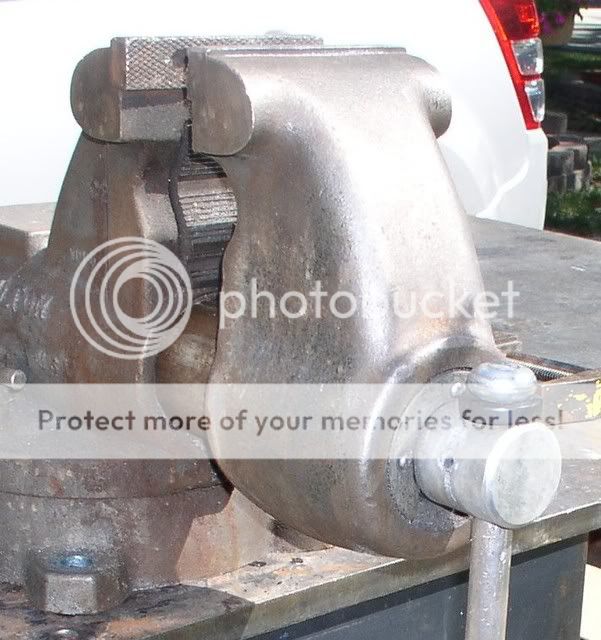
There's no question the C series is more for the industrial market. Pictured are a tradesman 1755, 5 1/2" jaws and a C-2 with 5" jaws. Besides the jaws being bigger, notice the bigger jaw surface area behind the jaws and also of coarse the pipe jaws fit the rugged look of the C series vise. Resale on a used C- series is comparatively low when matched to a used Ttradesman. I've sold a number of C Wiltons often getting less then what I get for a Tradesman. If your not looking for a 6 1/2 or 8" Wilton. The C series is the way to go. C Series on Ebay don't usualy fetch much.
1755j.jpg

C-2J.jpg
 

autopts71045

Banned
Joined
Apr 19, 2010
Messages
374
Location
Illinois
Also, one big difference between the C- series and the Tradesman is the size of the jaw towers. Notice how the ends of the Tradesman extend out not giving the jaw as much support as the C-2. The C-2 jaw support is massive. The C-1 or C-2 is the way to go if your looking 6" or less width.
1755m.jpg

C-2m.jpg
 
Last edited:

taylorguitar

Well-known member
Joined
Sep 30, 2010
Messages
55
Location
In the woods in Arkansas
It is truly amazing what the trained eye can see vs. the untrained eye. I didn't see the jaw "beefyness" of the C series until you guys mentioned it. Now it jumps out into my face. Good info...much appreciated...but the Tradesman is so much more aesthetic...curvy lines...you know...why own something useful and quality with less *** appeal when you can have *** appeal?
 

taylorguitar

Well-known member
Joined
Sep 30, 2010
Messages
55
Location
In the woods in Arkansas
question of value and quality...has anyone on this forum ever actually needed the more massive jaw surface of a C series(as mentioned in the few recent posts) or is it just the idea of having more?
 

autopts71045

Banned
Joined
Apr 19, 2010
Messages
374
Location
Illinois
question of value and quality...has anyone on this forum ever actually needed the more massive jaw surface of a C series(as mentioned in the few recent posts) or is it just the idea of having more?

Given an equal price and condition, its the C-Series, hands down. I've seen the jaw ends completely gone when accidently hit with a 20oz hammer on the smaller 1700 Series.
 
OP
M

mjozefow

Well-known member
Joined
Apr 9, 2009
Messages
2,111
Location
Lafayette, IN
The C-series is really nice, but I'll have to show you guys a pic with the pipe jaws popped out. They seriously reduced section in those things.
 

autopts71045

Banned
Joined
Apr 19, 2010
Messages
374
Location
Illinois
The C-series is really nice, but I'll have to show you guys a pic with the pipe jaws popped out. They seriously reduced section in those things.

Thats a good point. Here's some more C-1 pipe jaw trivia. Listen up you guys with C-1's wanting pipe jaws! Wilton, (to my knowledge) made 3 different style jaws on their C-1 from the early 60's until today. The early C-1 jaw was held in by 2 dowel pins. That replacement # has long been discontinued. The second, held in with set screws, and today's pipe jaws, held in with a clip. THEY ARE ALL THE SAME JAW!. Today's jaw has a removable clip, and if you align it up on an older C-1, mark where the dowel pins are and drill 2, 7/16" holes and there you have it. In one photo, one jaw is on top of the other. I guess I Have to clean the lense.
By the way, I have new pipe jaws for a C-2, if interested, $75 and I don't think you will find them cheaper.
C-1-2Jaws.jpg

C-1Jaws.jpg

C-1-3Jaws.jpg
 
Last edited:

taylorguitar

Well-known member
Joined
Sep 30, 2010
Messages
55
Location
In the woods in Arkansas
Need some advice...I am going to use the maple bowling alley butcher block as a workbench. I intend to mount a vise to the end corner. Do you guys think I need a back plate on the underside of the workbench to provide additional strength and avoid separation of boards?
 

old salvage

Well-known member
Joined
Dec 16, 2007
Messages
1,464
Location
Rhode Island
Need some advice...I am going to use the maple bowling alley butcher block as a workbench. I intend to mount a vise to the end corner. Do you guys think I need a back plate on the underside of the workbench to provide additional strength and avoid separation of boards?

How thick is the wood and how big is the vise ?
 

autopts71045

Banned
Joined
Apr 19, 2010
Messages
374
Location
Illinois
Need some advice...I am going to use the maple bowling alley butcher block as a workbench. I intend to mount a vise to the end corner. Do you guys think I need a back plate on the underside of the workbench to provide additional strength and avoid separation of boards?

Right on, its a great idea if you have a decent size jaw grabber!!
 

taylorguitar

Well-known member
Joined
Sep 30, 2010
Messages
55
Location
In the woods in Arkansas
you guys should look around for old bowling alleys. my brother and I got tons of it...mostly used for interior stairs, workbenches, etc. by now. i have another section that is even thicker but it's so narrow (17 inches) so it's not much use unless i cut in half and put together for double width. any opinions on 34" inch wide workbench. seems like too wide to me..../???
 

autopts71045

Banned
Joined
Apr 19, 2010
Messages
374
Location
Illinois
you guys should look around for old bowling alleys. my brother and I got tons of it...mostly used for interior stairs, workbenches, etc. by now. i have another section that is even thicker but it's so narrow (17 inches) so it's not much use unless i cut in half and put together for double width. any opinions on 34" inch wide workbench. seems like too wide to me..../???

Pollard Bros, whose been making industrial mapletop work benches for 75 years still sells a 6ft X 36" maple top bench. Bigger ones arn't unusual in plants and big shops. Should you have the room and build one, keep in mind what you might want to store underneath, like a compressor and such.
 
To avoid these ads, REGISTER NOW!

BanjoSavesTheDay

Well-known member
Joined
Nov 10, 2009
Messages
627
Location
Huntington, WV
Someone appreciated our work... Check this ad out:

This is a 4" Athol machinist's vise. Athol was bought out by Starrett Co. in 1905, so this vise is over 100 years old and in excellent condition. The jaws are smooth, and the vise does not swivel. Vises made in the US of this type cost $300 +. The Chinese vises that are cast in someone's back yard now sell for $80 to $100. Check it out. I am asking $100 or best offer cash. Please reply to the craigslist address.

Q: What are the different types of bench vises?

A: There are four main types of bench vises. These are the machinist's vise, the mechanic's vise, the post vise, and the woodworkers vise.

The machinist's vise is considered the "cream of the crop". They are stoutly made and are finely machined. The jaws should match up perfectly, and they will be made of very high grade (60,000psi or greater) cast* iron. Note: The surface behind the back jaw is NOT an anvil or hammering surface!


*Technically, machinist's vises are almost always made of ductile iron, not cast iron. And yes, before some wag says "well they're cast in a mold, so it's cast iron," the phrase cast iron usually implies grey or white cast irons, which are brittle due to significant graphite content existing in the iron in flakes. Ductile iron's graphite is in a nodular shape which inhibits cracking. It's an important distinction in vises, because high quality vises are made from nodular or spheroidal (ductile) iron, and cheaply made economy vises (often imported) are made of grey cast iron.

The mechanic's vise is a vise designed to function as more than a mere vise. They usually have an integrated anvil area, and are made of lower grade iron.


http://oregoncoast.craigslist.org/tls/1977400638.html
 

autopts71045

Banned
Joined
Apr 19, 2010
Messages
374
Location
Illinois
Re: Mounting Hardware

For the mounting purposes of a stationary Jack, do you have any suggestions on the hardware to use?

I've got a nice Prentiss No.3 (which I cannot find any other references to through google) And I temporarily mounted it using deck screws and a series of washers...

But, I just refinished my workbench and I Want to mount it properly!

Thanks!

attachment.php

I'm confused about the stationary jack thing. Are you asking the pro-per way to mount a stationary vise? If so, its looks like you mounted it well.
 

old salvage

Well-known member
Joined
Dec 16, 2007
Messages
1,464
Location
Rhode Island
I've read two dates for the Athol Machine co buyout, 1905 and 1920. Looked through my bookmarks yesterday and couldn't find source.
 
Last edited:

autopts71045

Banned
Joined
Apr 19, 2010
Messages
374
Location
Illinois
WILTON VISE ANVILS
Guys, if you own or acquired a Wilton bullet, try not to use the anvil. Wilton's anvil is not hardened and it actually part of the casting body. I've seen anvils beaten almost thru to the channel bar. Steel stock is all over. Find a piece and when needed, clamp it to your bench. If one doesn't care about keeping the anvil nice, I guess thats OK too. Just another item to know about Wilton brand bench vises.
 
Last edited:

autopts71045

Banned
Joined
Apr 19, 2010
Messages
374
Location
Illinois
SERRATED VISE JAWS
Guys, the serratred jaws on your vise might be the most important part of that work piece. If your jaws are nice or very new, try to avoid putting certain pieces of metal in them like small steel rod, threaded bolts, small pipe etc. These photos show what, from the top, looks like nice jaws, well aligned, but when you see that jaws from the side, its obvious that its user cranked down threaded rod, bolts, and the like basically f*&%$g them up.
They are ways to avoid ruining your jaws, One, get a cheap, small pipe vise and mount it to a 2"X4". When you need to hold rod or small pipe, let your bench vise then hold your pipe vise and proceed. Also find some old leather, like one of your old belts, and cut off a few sections. Cradle a bolt with double leather on each side to protect the jaws. Those of you that have vises with forged jaws that are still nice, keep copper liners on permently. I hope these tips add something to "Everything you wanted to know about bench vises"
SerreatedJaws.jpg

SerreatedJaws1.jpg

SerreatedJaws2-1.jpg

SerreatedJaws4.jpg
 
Last edited:
OP
M

mjozefow

Well-known member
Joined
Apr 9, 2009
Messages
2,111
Location
Lafayette, IN
Autopts, I will add your info soon. Thanks for posting it!

I'm not sure I'm with you on preserving the jaws though. I don't encourage getting too stupid, but isn't the point of the replaceable jaw to be able to freshen the vise up at any time? I might be a bit biased though since I make inserts...
 
Last edited:

A_Pmech

Well-known member
Joined
May 8, 2007
Messages
8,002
Location
IL
but isn't the point of the replaceable jaw to be able to freshen the vise up at any time? I might be a bit biased though since I make inserts...

When you gain the mysterious ability to make things, your viewpoint changes.

:)
 

autopts71045

Banned
Joined
Apr 19, 2010
Messages
374
Location
Illinois
Autopts, I will add your info soon. Thanks for posting it!

I'm not sure I'm with you on preserving the jaws though. I don't encourage getting too stupid, but isn't the point of the replaceable jaw to be able to freshen the vise up at any time? I might be a bit biased though since I make inserts...

I guess everyone views vise maintenance different. With your shapper 3 ft away, you can make jaws but 95% of us can't. From those photos, basic common sence in what we put into the teeth of those jaws can extend the life. Say? Did you find a vise candidate yet?
 

BanjoSavesTheDay

Well-known member
Joined
Nov 10, 2009
Messages
627
Location
Huntington, WV
Craigslister strikes again! It's so funny that someone is using this stuff. More power to them, but I'm dieing to know if it's somebody on here.

http://roseburg.craigslist.org/tls/2020970822.html

This is a Reed 204 R machinist's vise with milled smooth jaw faces. Jaws are 4" wide and the vise opens to 6". There is .006 total play in the jaws. The vise is in excellent condition. It also has a swivel base. I want $125 cash for it. please reply to the craigslist address.

FAQ:

Q: What are the different types of bench vises?

A: There are four main types of bench vises. These are the machinist's vise, the mechanic's vise, the post vise, and the woodworkers vise.

The machinist's vise is considered the "cream of the crop". They are stoutly made and are finely machined. The jaws should match up perfectly, and they will be made of very high grade (60,000psi or greater) cast* iron. Note: The surface behind the back jaw is NOT an anvil or hammering surface!


*Technically, machinist's vises are almost always made of ductile iron, not cast iron. And yes, before some wag says "well they're cast in a mold, so it's cast iron," the phrase cast iron usually implies grey or white cast irons, which are brittle due to significant graphite content existing in the iron in flakes. Ductile iron's graphite is in a nodular shape which inhibits cracking. It's an important distinction in vises, because high quality vises are made from nodular or spheroidal (ductile) iron, and cheaply made economy vises (often imported) are made of grey cast iron. - Thanks zrexxer

The mechanic's vise is a vise designed to function as more than a mere vise. They usually have an integrated anvil area, and are made of lower grade iron.
 
To avoid these ads, REGISTER NOW!
Top Bottom