I'm considering buying an electric car. So, if I do, I'll need an EVSE for the garage. I don't know much about the state of equipment, what the choices are, etc. What do people like? the garage has a 100A feed, and I can install it hardwired or an outlet and use a cord connected one. (my preference would be hardwired, but its not a big deal). I don't think I care about anything but plugging the car in, but maybe I do?

You are using an out of date browser. It may not display this or other websites correctly.
You should upgrade or use an alternative browser.
You should upgrade or use an alternative browser.
EVSE choices?
- Thread starter dscheidt
- Start date
fitter30
Well-known member
Level2 charger needs a 50 amp outlet.
 www.legrand.us
Plug-In Home Level 2 EV Charger | Legrand
For safe, fast and easy at-home EV charging, this Level 2 EV Charger simply plugs in, indoors or out, to charge any electric vehicle with up to 40A of output.
www.legrand.us
dcg9381
Well-known member
First, what EV do you have? Going to a 100A EVSE won't do much of anything for many EVs (Tesla excluded).
What "features" do you want in an EVSE?
You want one that's hardwired, but there are quite a few that can charge at various voltages/amp rates, which makes them useful if you're going on a trip and want to take the EVSE with you. I prefer the plug type.
The charge rate difference between hardwired and 14-50R is 48A and 40A. Unless you step up to one of those fancy 100A Tesla chargers. That charge rate is more than enough for most modern EVs to "fill" overnight.
Make sure you get one that does not require internet. I've seen some where initial models would not charge without controls from a phone.
What "features" do you want in an EVSE?
You want one that's hardwired, but there are quite a few that can charge at various voltages/amp rates, which makes them useful if you're going on a trip and want to take the EVSE with you. I prefer the plug type.
The charge rate difference between hardwired and 14-50R is 48A and 40A. Unless you step up to one of those fancy 100A Tesla chargers. That charge rate is more than enough for most modern EVs to "fill" overnight.
Make sure you get one that does not require internet. I've seen some where initial models would not charge without controls from a phone.
Level2 charger needs a 50 amp outlet.
Plug-In Home Level 2 EV Charger | Legrand
For safe, fast and easy at-home EV charging, this Level 2 EV Charger simply plugs in, indoors or out, to charge any electric vehicle with up to 40A of output.
for most people a 30A circuit is probably beyond adequate.First, what EV do you have? Going to a 100A EVSE won't do much of anything for many EVs (Tesla excluded).
What "features" do you want in an EVSE?
You want one that's hardwired, but there are quite a few that can charge at various voltages/amp rates, which makes them useful if you're going on a trip and want to take the EVSE with you. I prefer the plug type.
The charge rate difference between hardwired and 14-50R is 48A and 40A. Unless you step up to one of those fancy 100A Tesla chargers. That charge rate is more than enough for most modern EVs to "fill" overnight.
Make sure you get one that does not require internet. I've seen some where initial models would not charge without controls from a phone.
dcg9381
Well-known member
Yes, but not all EVSE's support 24 amp continuous.for most people a 30A circuit is probably beyond adequate.
My preference is for a plug-in EVSE that supports both 120V and 240V plugs, and has a variety of charge rates available based on the circuit's rating. And does not depends on an internet or phone connection.
Buy one that uses a 50amp "stove plug" (14-50R) and have an appropriate outlet installed in the garage. Not sure its still the same, but 6 or 7 years ago telling anyone you wanted a car charger outlet in a garage would mean you were paying 3-5x more for what a stove plug would cost. As mentioned above, you will not need anything more than 20-30 amps for regular driving habits.
First, what EV do you have? Going to a 100A EVSE won't do much of anything for many EVs (Tesla excluded).
What "features" do you want in an EVSE?
You want one that's hardwired, but there are quite a few that can charge at various voltages/amp rates, which makes them useful if you're going on a trip and want to take the EVSE with you. I prefer the plug type.
The charge rate difference between hardwired and 14-50R is 48A and 40A. Unless you step up to one of those fancy 100A Tesla chargers. That charge rate is more than enough for most modern EVs to "fill" overnight.
Make sure you get one that does not require internet. I've seen some where initial models would not charge without controls from a phone.
I don't have an EV. I'm shopping at the moment. the likely contenders are the rivian r1s or kia ev9, but it's possible we end up with something else, including another old-fashioned gasoline-powered one. (No chance it will be a Tesla, though.)
I don't actually know what features I want, other than "plug the car in". I haven't paid attention to the EVSE space in some time, so I dont' even know what's available. The concern about cost of hardwired vs plug-connected etc isn't a real issue. If I decide I want one that's portable (which is pretty unlikely, at least initially) I can get a second one suited for that.
justsam
Well-known member
I can't speak for other makes but as a Tesla Model X owner I can tell you the car comes with a Mobile EVSE. It is limited to 32Amps, requiring a 40Amp circuit, so max of 7.7kW. It has interchangeable input power connectors to cover virtually all 120/240V configurations. For me I keep this unit in the Frunk of the car, and use the wall mount EVSE when at home.
The wall mount Tesla EVSE is hard wired only and charge rate is 48Amps, requiring a 60Amp circuit. Gives a max of 11.5kW. Older wall chargers offered higher rates but no longer available. This could change of course since CyberTruck is power hungry!
You may want to consider the output side of the EVSE as that standard is changing, and in North America manufacturers will transition to the NACS connector in 2025 now being standardized as SAE J3400. This is the current Tesla connector. During transition, there will be adapters, just as there are today.
An article explaining the transition:
While there is contention around universal plug technology, there is critical mass from global automakers supporting the Combined Charging System (CCS) in North America with CHAdeMO being phased out. However, that critical mass appears to be shifting as North America transitions to the North American Charging Standard (NACS). With NACS progressing towards standardization by SAE as J3400, all manufacturers are projected to make the move to the Tesla connector.
The wall mount Tesla EVSE is hard wired only and charge rate is 48Amps, requiring a 60Amp circuit. Gives a max of 11.5kW. Older wall chargers offered higher rates but no longer available. This could change of course since CyberTruck is power hungry!
You may want to consider the output side of the EVSE as that standard is changing, and in North America manufacturers will transition to the NACS connector in 2025 now being standardized as SAE J3400. This is the current Tesla connector. During transition, there will be adapters, just as there are today.
An article explaining the transition:
While there is contention around universal plug technology, there is critical mass from global automakers supporting the Combined Charging System (CCS) in North America with CHAdeMO being phased out. However, that critical mass appears to be shifting as North America transitions to the North American Charging Standard (NACS). With NACS progressing towards standardization by SAE as J3400, all manufacturers are projected to make the move to the Tesla connector.
mike93lx
ALLIANCE MEMBER
The mobile charger is not expensive, but it is an add on. Maybe it was included at some point, thoughI can't speak for other makes but as a Tesla Model X owner I can tell you the car comes with a Mobile EVSE. It is limited to 32Amps, requiring a 40Amp circuit, so max of 7.7kW. It has interchangeable input power connectors to cover virtually all 120/240V configurations.
The wall mount Tesla EVSE is hard wired only and charge rate is 48Amps, requiring a 60Amp circuit. Gives a max of 11.5kW. Older wall chargers offered higher rates but no longer available. This could change of course since CyberTruck is power hungry!
You may want to consider the output side of the EVSE as that standard is changing, and in North America manufacturers will transition to the NACS connector in 2025 now being standardized as SAE J3400. This is the current Tesla connector. During transition, there will be adapters, just as there are today.
An article explaining the transition:
While there is contention around universal plug technology, there is critical mass from global automakers supporting the Combined Charging System (CCS) in North America with CHAdeMO being phased out. However, that critical mass appears to be shifting as North America transitions to the North American Charging Standard (NACS). With NACS progressing towards standardization by SAE as J3400, all manufacturers are projected to make the move to the Tesla connector.
For non-Tesla use, the emporia evse looks good and is $400. I would go hardwired unless you have another use for the receptacle
Last edited:
A receptacle in the garage requires gfci protection. For this reason, I would hard wire it as I always expect it there for the life of my vehicle. I also won't need a gfci cb. I would also grow tired of pulling it off the wall.
Buy a separate portable evse and keep in in the trunk. This way, I'm sure I have charging capability with me if plans change. Yes, you pay for convenience and less need to remember more baggage. It's also a backup in case the home unit fails.
Buy a separate portable evse and keep in in the trunk. This way, I'm sure I have charging capability with me if plans change. Yes, you pay for convenience and less need to remember more baggage. It's also a backup in case the home unit fails.
Not exclusively 50A, could be 20A - 80A.Level2 charger needs a 50 amp outlet.
Level 1 = 120vac input
Level 2 = 240vac input
Level 3 = 3 phase input
NostraThpmas
Active member
- Joined
- Jul 17, 2023
- Messages
- 36
The different price points for 14-50R have to do with the number of plug/unplug cycles it can withstand. For a car charger most assume plug/unplug daily. For a stove, once every 15-20 years.
mike93lx
ALLIANCE MEMBER
The bigger issue is draw over significant lengths of time. Your oven will never pull 40a for 8 hrs straight, but an evse can.The different price points for 14-50R have to do with the number of plug/unplug cycles it can withstand. For a car charger most assume plug/unplug daily. For a stove, once every 15-20 years.
dcg9381
Well-known member
Why would you plug/unplug it daily? You only need to unplug it if you take it with you.The different price points for 14-50R have to do with the number of plug/unplug cycles it can withstand. For a car charger most assume plug/unplug daily. For a stove, once every 15-20 years.
RVs use the same connector, not that this contributes to any "reliability" argument.
justsam
Well-known member
Stay away from any "budget" NEMA 10-50R. I have read stories of them failing not from insertion cycles, but from heat. Applies mostly to EVSE that provide 48Amps. I suspect one reason the Tesla Wall EVSE is no longer available with a NEMA 14-50P, and must be hardwired.
Opps meant 14-50R as stated in the body of the text!
Opps meant 14-50R as stated in the body of the text!
Last edited:
gtae07
Well-known member
The portable Tesla charger still comes with a 14-50 pigtail (and a 5-15; you can order others) but it's limited to a max of 32A. I usually turn it down to 24A since when I'm using it it's normally at my parents' house on a 15ft extension. I use a hardwired 48A unit at home, at least when the car isn't sitting there broke because some fool ran into itStay away from any "budget" NEMA 10-50R. I have read stories of them failing not from insertion cycles, but from heat. Applies mostly to EVSE that provide 48Amps. I suspect one reason the Tesla Wall EVSE is no longer available with a NEMA 14-50P, and must be hardwired.

But even though it's wired for 48A I usually turn it down a little, why thermally stress everything if I don't have to?
75gmck25
Well-known member
EVSE's are a little weird to understand because both the car charger (which is built into the car) and the wall charger work together to manage the max charge rate. For example, my Toyota RAV4 Prime has a 6.6kw (max) charger in the vehicle that will handle up to 32 amps. I could buy a wall charger that provides higher amperage, but it's irrelevant since the car itself (which is one half the charge function) maxes out at 32 amps.
I bought and installed a hardwired Chargepoint EVSE for my RAV4. This is a "smart" wall charger that had to be configured with a phone app to the specific vehicle you want to charge. I installed a 60 amp breaker and 6 gauge copper wiring, so the charger/receptacle could possibly handle up to 40-45 amps continuous, but the max my car will take is 32 amps.
I picked this charger because I could use my 10% military discount at Home Depot, and I got a $120 purchase rebate from my electric company. I am also supposed to get $40/year back for the next three years because I let the utility company do remote monitoring. My phone app shows each time I charge the vehicle, how long it took, and based on my utility rate it calculates how much each charge cost.
I don't have a garage, so using the hardwired option was simpler than figuring out where to find an in-use exterior 240V receptacle. If you do plan to install a receptacle plug for a wall charger in the garage, remember that most plug-in chargers only have about a one foot cord. Based on reading some of the documentation online, electrical code (or UL approval?) allows using a non-GFCI receptacle in a garage if the power cord for the charger is less than about 12", since the charger has its own GFCI built in. Also, don't be confused about specs that show a 22' or 25' cord, since this is the cord from the charger to the car.
I bought and installed a hardwired Chargepoint EVSE for my RAV4. This is a "smart" wall charger that had to be configured with a phone app to the specific vehicle you want to charge. I installed a 60 amp breaker and 6 gauge copper wiring, so the charger/receptacle could possibly handle up to 40-45 amps continuous, but the max my car will take is 32 amps.
I picked this charger because I could use my 10% military discount at Home Depot, and I got a $120 purchase rebate from my electric company. I am also supposed to get $40/year back for the next three years because I let the utility company do remote monitoring. My phone app shows each time I charge the vehicle, how long it took, and based on my utility rate it calculates how much each charge cost.
I don't have a garage, so using the hardwired option was simpler than figuring out where to find an in-use exterior 240V receptacle. If you do plan to install a receptacle plug for a wall charger in the garage, remember that most plug-in chargers only have about a one foot cord. Based on reading some of the documentation online, electrical code (or UL approval?) allows using a non-GFCI receptacle in a garage if the power cord for the charger is less than about 12", since the charger has its own GFCI built in. Also, don't be confused about specs that show a 22' or 25' cord, since this is the cord from the charger to the car.
but no.Not exclusively 50A, could be 20A - 80A.
Level 1 = 120vac input
Level 2 = 240vac input
Level 3 = 3 phase input
L1 = 120v
L2 = everything faster AC
L3 = does not exist
DCFC: ANYTHING DC.
you're not allowed to do 48A on a 14-50 or 6-50.Stay away from any "budget" NEMA 10-50R. I have read stories of them failing not from insertion cycles, but from heat. Applies mostly to EVSE that provide 48Amps. I suspect one reason the Tesla Wall EVSE is no longer available with a NEMA 14-50P, and must be hardwired.
mike93lx
ALLIANCE MEMBER
DCFC are commonly referred to as L3but no.
L1 = 120v
L2 = everything faster AC
L3 = does not exist
DCFC: ANYTHING DC.
Searching for L3 charging will yield endless hits on it
they are. but L1 and L2 have actual defined meanings. L3 does not.DCFC are commonly referred to as L3
also 3ø onboard charging is common in Europe. it does not exist in the USA (no EVSE spec exists to allow it here).
mike93lx
ALLIANCE MEMBER
Not sure how you can say that when it is so commonly used. Who sets the "definition"?they are. but L1 and L2 have actual defined meanings. L3 does not.

The Different Levels of EV Charging Explained - EVESCO
There are three different EV charging levels; Level 1, Level 2, and Level 3. We explain the differences between each charging level.
 www.power-sonic.com
ALinCarolina
Well-known member
There are plenty of good EVSEs out there. I have two Wallbox Pulsar Plus chargers and have been very happy. They are very well made and the customer service is excellent. I have one plugged into a 14-50 so I can take it with me if ever needed. It's on a 50 amp breaker. In our second home I hardwired a 48 amp from a 60 amp breaker.
I like having wifi access as well as bluetooth so that is a feature you can decide on. There is an adjustment inside the charger to dial in less amperage if needed. The Kia also has settings to manage how many amps for charging so you can throttle the AC current back if desired. For most EV owners the difference between charging at 32 or 40 or 48 amps is negligible since it is usually plugged in all night anyway. I rarely need to charge more than 4 hours.
I like having wifi access as well as bluetooth so that is a feature you can decide on. There is an adjustment inside the charger to dial in less amperage if needed. The Kia also has settings to manage how many amps for charging so you can throttle the AC current back if desired. For most EV owners the difference between charging at 32 or 40 or 48 amps is negligible since it is usually plugged in all night anyway. I rarely need to charge more than 4 hours.
that's why you hard-wire. Or roll your own with 14-60 or 6-60 devices.you're not allowed to do 48A on a 14-50 or 6-50.
Last edited:
umm, but yes.......but no.
L1 = 120v
L2 = everything faster AC
L3 = does not exist
DCFC: ANYTHING DC.

except both your links agree with the standards in that L1 and L2 are defined, L3 is not even present on those pages?
L2 goes up to 400kW.
you need to google "dc level 3 charger near me"they are. but L1 and L2 have actual defined meanings. L3 does not.
also 3ø onboard charging is common in Europe. it does not exist in the USA (no EVSE spec exists to allow it here).
SAE set the standards.
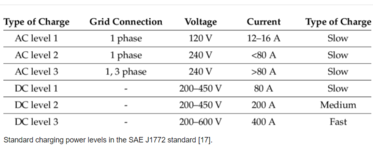
You picked a web page that was reporting "state of the art" dated Dec 16, 2019at 8:19am ET.except both your links agree with the standards in that L1 and L2 are defined, L3 is not even present on those pages?
L2 goes up to 400kW.

google is not a source of authority. it was a search engine, now a mechanism to display ads.you need to google "dc level 3 charger near me"
SAE set the standards.
BTW AC level 3 was removed from the standard (never implemented). I only care about what the standard says, not what "people say".
I can't find any reference to L3/Level 3 in any documents I have access to. happy to be proven wrong tho! Maybe it's in the J3400 spec!

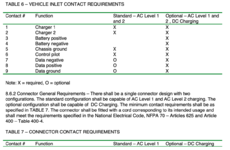
I never stated google as any authority. I should have written "search the internet for fast DC chargers near me" and you would find many such commercial locations offering fast 20-30 min charge stations today. That is built into many ev nav systems today so people can plan around charging breaks.
johnre
Well-known member
Clipper Creek HCS-50 (which is now called Enphase).
And I hardwired it because that was the only way to get the 50% state tax rebate / subsidy at the time it was offered, but I also routed the 50 A power feed through a J-box that could accept a NEMA 10-50R, should I want to go that way instead at some point in the future.
And I hardwired it because that was the only way to get the 50% state tax rebate / subsidy at the time it was offered, but I also routed the 50 A power feed through a J-box that could accept a NEMA 10-50R, should I want to go that way instead at some point in the future.
Last edited:
justsam
Well-known member
Can you clarify please? A single receptacle, (NEMA 14-50) on a dedicated circuit, with 50 Amp breaker, 60Amp wire, is not allowed for continuous load of 48Amps.you're not allowed to do 48A on a 14-50 or 6-50.
A continuous load has to be fed with circuit conductors, wiring devices and cb rated at 125% of cont load value.Can you clarify please? A single receptacle, (NEMA 14-50) on a dedicated circuit, with 50 Amp breaker, 60Amp wire, is not allowed for continuous load of 48Amps.
you could do it with a 14-60, but there's no EVSE's with a 14-60P i'm aware of.Can you clarify please? A single receptacle, (NEMA 14-50) on a dedicated circuit, with 50 Amp breaker, 60Amp wire, is not allowed for continuous load of 48Amps.
Amusingly, 14-30, 14-50, and 14-60 all have the same size blades for current carrying conductors.
dcg9381
Well-known member
I cleaned up this thread to keep it on topic.
Fellas, please keep your opinions and off topic facts to yourself. These folks are having a productive discussion and we don't need some ******** breaking that up.
Thanks!
Fellas, please keep your opinions and off topic facts to yourself. These folks are having a productive discussion and we don't need some ******** breaking that up.
Thanks!
fitter30
Well-known member
Reread post 2 This charger uses 50 amp plug.Not exclusively 50A, could be 20A - 80A.
Level 1 = 120vac input
Level 2 = 240vac input
Level 3 = 3 phase input
There are dozens of manufacturers that offer a 48A max charger that comes equipped with a 14-50 plug and cord. They recommend 6AWG Copper. If it were one or two of them, I'd say that they just dont understand. But it seems to be the most common. Surely they cant ALL be wrong.you could do it with a 14-60, but there's no EVSE's with a 14-60P i'm aware of.
Amusingly, 14-30, 14-50, and 14-60 all have the same size blades for current carrying conductors.
CD
Yeah. I hit send before I cleared it out of my previous writing that I didn't post. I responded to another post. I've deleted it.@cybrdyke ryan already cleaned up, no need to rehash the bad info. You must have been writing as that was being done
Feel free to delete this, too.
What's your point? I stated not exclusively......20, 30A plugs exist as well. So you found one that does. I can also put a 48A EVSE on a 60 A plug.Reread post 2 This charger uses 50 amp plug.
Also note that an outlet does not necessarily imply receptacle. You initially wrote outlet.
Last edited: