To avoid these ads, REGISTER NOW!

Exposed cinder block wall waterproofing

heiner921

Well-known member
Joined
Nov 19, 2017
Messages
112
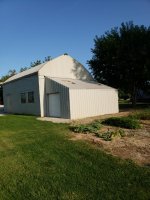
So I have an old (early 70s) 30x30 quonset hut that was used for horses back in the day but now is my shop that has a cinder block wall. Kinda a funny looking thing but, hey, it's a place to work on stuff.

Anyways, I want to get this thing insulated for next winter. I have a few water leaks I need to address first though, a big one being this cinder block wall.

It has a lot of step cracking and needs some tuck pointing as well. I can see day light out some cracks too.

I'm looking for a cheaper option to water proof this wall, instead of tearing it down and starting over.

My plan is to do some tuckpointing and use the motar repair in a caulk tube to do most of these repairs.

After that I plan to paint the outside with block filler paint. Was told by a Mason that it's good for filling the old porous blocks and help seal them up. Only problem I have is that the wall has been painted before and on the bucket of paint it says not to go over pretty painted wall surfaces.


Guess I'm looking for advice as if I'm on the right track or to explore other options here

After is all watertight I plan to put a 2x6 stud wall on the inside, insulate, vapor barrier, and then finally a plywood wall.

Sorry the pics dont do much help. Only ones I have at the time of the wall.

Thanks again!!
 

Attachments

  • 20180823_174809.jpg
    20180823_174809.jpg
    147.6 KB · Views: 119
  • 20180823_174822.jpg
    20180823_174822.jpg
    130 KB · Views: 121
To avoid these ads, REGISTER NOW!

metlmunchr

Well-known member
Joined
Sep 10, 2011
Messages
1,278
Zinser block filler can be used on previously painted block. Block filler has a dead flat finish, and while it is suitable for exterior use, it is a primer. I wouldn't use it on the exterior without subsequently coating it with an exterior paint since exposed latex primers don't hold up well when exposed to UV and weather.

Make sure your block is absolutely dry prior to applying filler. I've seen so-called pro painters spray it on damp bare block in new construction and watched half of it run off the wall and puddle on the floor in a matter of a few minutes.

On a previously painted block wall, I'd spray the wall with a mix of trisodium phosphate and wash it down to get rid of any dirt or mold and mildew prior to the filler. Be sure to get actual TSP and not one of the TSP substitutes as the subs don't work nearly as well as the real stuff. There's a lot of deceptive marketing of the substitutes that'll make you think you're buying TSP until you read the fine print and see its phosphate free. Most any brand of the real stuff will say TSP and trisodium phosphate on the package while the substitutes will only say TSP since its not actually trisodium phosphate.
 
Last edited:

Red 17

Well-known member
Joined
Oct 25, 2018
Messages
441
Location
Pasadena CA
My dad was never able to seal a concrete block wall that was between the milking area and office in his milking parlor building. Apples and oranges I know, but that block will let water in no matter what you do, short of hot mopping a couple layers of tar paper over it and covering it with another material, like the always attractive corrugated metal.

The "danger" here is water finding it's way in behind your new insulation and wall. That will be nasty.
 

PWC Repair

Well-known member
Joined
Dec 27, 2012
Messages
3,165
Location
Arkansas
How about after cleaning and completely dry, rolling on the white elastomeric roof coating?
Or, pricey but permanent, have the Rhino Lining guy come out and spray it!!
 

soj

Well-known member
Joined
Dec 3, 2007
Messages
729
Location
North Georgia
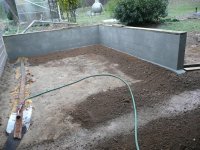
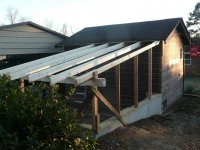
I used Thoroseal on a shed wall that is partially underground and have had no leaks (about 3 years old). Scroll down on that page to the "Frequently bought together" section to see the acrylic polymer additive I used with it. Super easy to apply with a brush. I used two coats on both sides of the wall.
 

Attachments

  • P1080709.jpg
    P1080709.jpg
    152.3 KB · Views: 52
  • P1080714.jpg
    P1080714.jpg
    157.3 KB · Views: 48
  • P1080734.jpg
    P1080734.jpg
    150.7 KB · Views: 49

stm317

Well-known member
Joined
Aug 8, 2017
Messages
1,339
Different option, fir strip the outside, glue 1/2" foam board in between strips, cover with your choice of material.

This was my first thought too. Use another material to keep the block from getting wet in the first place. Tyvek, furring strips with insulation between them and then your siding.
 
To avoid these ads, REGISTER NOW!
OP
H

heiner921

Well-known member
Joined
Nov 19, 2017
Messages
112
Today I had thought about doing fir strips and then matching tin like what I did for my added enclosed lean-too that you see in the picture. I would have to add to the roof too then as there is no over hang. Think this would be the best way to never have to keep chasing the leaking issue and would insure I wont have any leaks
 

kbs2244

Well-known member
Joined
Nov 11, 2006
Messages
14,065
The energy guys will tell you to out your new walls on the outside.
You can make it rain proof and the block on the inside will provide "thermal mass" to keep temp swings down.

Do some research.
 
OP
H

heiner921

Well-known member
Joined
Nov 19, 2017
Messages
112
Well its be decided. I'm going to build my stud wall on the inside with king stud post at every rafter (every 6 feet) then the block wall is coming down completely.
 

Dberglind

Well-known member
Joined
Sep 26, 2012
Messages
221
I used Drylok on the interior of my basement. It's only been 2 years, but so far so good.
 

kbs2244

Well-known member
Joined
Nov 11, 2006
Messages
14,065
That is a lot of dirty debris
Be sure you have a place for it to go.
 
To avoid these ads, REGISTER NOW!
Top Bottom