
You are using an out of date browser. It may not display this or other websites correctly.
You should upgrade or use an alternative browser.
You should upgrade or use an alternative browser.
Extending Ground wires
- Thread starter Skooterj
- Start date


wyliesdiesels
Well-known member
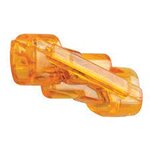
Greenies would allow up to 5 IIRC conductors being reduced to 1. So that could help on keeping things tiddy
Terry D
Well-known member
Around here, when we extend grounds in a panel. We have to extend each one individual to the ground bar. We are not allowed to group them in a wire nut and only bring one to the ground bar. I'm not sure if the is in the NEC, just know it will fail an inspection here.
I usually use wire nuts to extend conductors.
I usually use wire nuts to extend conductors.
Walkers
Well-known member
Here they say no junctions in the panel, as it is not a junction box. So you have to put a J box alongside the panel and make your junctions there.
wyliesdiesels
Well-known member
Is that a local written amendment? Cause thats not NEC code. Splices are allowed in the panel.Here they say no junctions in the panel, as it is not a junction box. So you have to put a J box alongside the panel and make your junctions there.
sparky 1971
Well-known member
I splice in just about every panel I change out. I know Wagos are supposed to be just as good as wire nuts but I can't bring myself to use them. Wire nuts for me, but not the greenies. Nothing against them, I just don't want to use them.
Walkers
Well-known member
I haven’t seen it written, but have run across it multiple times during inspections. I am curious what the NEC actually says about junctions and where they can occur, but it is a moot point here because if you have a junction in your panel you get a fail on your inspection.Is that a local written amendment? Cause thats not NEC code. Splices are allowed in the panel.
Terry D
Well-known member
I haven’t seen it written, but have run across it multiple times during inspections. I am curious what the NEC actually says about junctions and where they can occur, but it is a moot point here because if you have a junction in your panel you get a fail on your inspection.
This is the applicable code section. It used to say no splices were allowed unless there is enough room. This led many, many folks to simply state "NO splices allowed". They were wrong. You'd be amazed at what it would physically take to reach that 75% number of fill.Article 312 Cabinets, Cutout Boxes, and Meter Socket Enclosures
I. Installation
312.8 Switch and Overcurrent Device Enclosures with Splices, Taps, and Feed- Through Conductors. The wiring space of enclosures for switches or overcurrent devices shall be permitted for conductors feeding through, spliced, or tapping off to other enclosures, switches, or overcurrent devices where all of the following conditions are met:
(1) The total of all conductors installed at any cross section of the wiring space does not exceed 40 percent of the cross-sectional area of that space.
(2) The total area of all conductors, splices, and taps installed at any cross section of the wiring space does not exceed 75 percent of the cross-sectional area of that space.
(3) A warning label is applied to the enclosure that identifies the closest disconnecting means for any feed-through conductors.
So basically yes, splices are FINE in a breaker panel.
Walkers
Well-known member
That’s very interesting.
Terry D
Well-known member
I should have added that local jurisdiction has the power to override the NEC. So it may or may not be legal to do in your area. Always check with them first.That’s very interesting.
rlitman
Well-known member
The REAL ones (not the knockoffs) are not just as good. They're significantly better....I know Wagos are supposed to be just as good as wire nuts...
Terry D
Well-known member
Not to get off track here, I can see them being faster and just as good. But as far as better, a properly twisted connection with a good quality wire nut will last forever, as long as the capacity rating of the wirenut is not exceeded. That is where most problems occur. And yes, i twist my wires. I know some dont. Just my personal preferenceThe REAL ones (not the knockoffs) are not just as good. They're significantly better.
Walkers
Well-known member
Usually, here, they just adopt the UBC, UPC, NEC, etc, just a few years behind.I should have added that local jurisdiction has the power to override the NEC. So it may or may not be legal to do in your area. Always check with them first.
theoldwizard1
Well-known member
I wish I knew that years ago !Greenies would allow up to 5 IIRC conductors being reduced to 1. So that could help on keeping things tiddy
sparky 1971
Well-known member
I'll agree that they are as good, maybe. But there's no way I'm going to concede that they are better. If I have three or more wires, I pre twist. I also use what I consider to be the good wire nuts. Orange wire nuts, orange, tan, and gray twisters, and red and blue wing nuts, everything by Ideal, no generic knockoffs. Wagos are probably better than scotchlocks and the phony things that come with the fixtures though.The REAL ones (not the knockoffs) are not just as good. They're significantly better.
I do use a lot of wagos when converting florescent to led so I'm not anti wago, just old and set in my ways.
Last edited:
Do you need to upsize the conductor coming out and running to the ground bar? I would assume if you had a ground fault, it would be in only one circuit, but code doesn't always agree with my assumptions.Greenies would allow up to 5 IIRC conductors being reduced to 1. So that could help on keeping things tiddy
wyliesdiesels
Well-known member
nope as long as all ground wires are the same gauge. NEC allows multiple circuits to use a single EGC as long as its sized for the largest circuit.Do you need to upsize the conductor coming out and running to the ground bar? I would assume if you had a ground fault, it would be in only one circuit, but code doesn't always agree with my assumptions.
the end of the greenie has a hole so you leave one conductor long and shorten the others and twist them onto the longer conductor inside the nut. the longer one then becomes the tail you terminate to the lug.
Hey, I know this is a bit old, but I'm finally getting around to my project. Does the above quote mean I could run two 14 AWG and one 12 AWG into a Greenie as long as the 12 was actually hooked up to the ground bar? I'm pretty sure I've got it all planned out so that I will not have to do this, but I just wanted to make sure it was allowed if I needed too.nope as long as all ground wires are the same gauge. NEC allows multiple circuits to use a single EGC as long as its sized for the largest circuit.
the end of the greenie has a hole so you leave one conductor long and shorten the others and twist them onto the longer conductor inside the nut. the longer one then becomes the tail you terminate to the lug.
rlitman
Well-known member
Yes, so long as nothing larger than a 20A circuit is in that box.... Does the above quote mean I could run two 14 AWG and one 12 AWG into a Greenie as long as the 12 was actually hooked up to the ground bar? ...