To avoid these ads, REGISTER NOW!

Fast paint removal options?

bzinsky

Well-known member
Joined
Oct 27, 2014
Messages
5,565
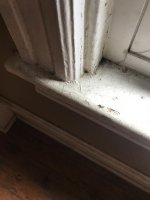
So I’m renovating a 100 year old home with lots of woodwork. Nearly every sq inch of the house needs paint. Some of it has multiple layers, drips, cracking, some is ok, basically what’d you’d expect.

I’m just looking to repaint the wood and have a semi smooth surface to work with. Not looking for perfection here.

Wondering if there are any tricks to the trade to get a decent surface to work with.

Liquid stripper would be far too much labor, and I don’t need it that perfect. Not enough flat surfaces for a sander.

I tried a drill attachment with a bunch of little steel rods coming out once and all it did was chew up the wood.

Any suggestions would be appreciated.

Here’s a sample picture, try not to focus too much on this individual spot. There is 1000 times that to do and the paint is in various condition.
 

Attachments

  • DA03DD21-B418-4A45-B076-8AB563F4EA60.jpg
    DA03DD21-B418-4A45-B076-8AB563F4EA60.jpg
    57.3 KB · Views: 138
To avoid these ads, REGISTER NOW!

yeldogt

Well-known member
Joined
Jan 2, 2012
Messages
18,184
No quick answer -- is this your rental? I only say because of the lead possibility -- you have to disclose it in many jurisdictions.
 

The Cobbler

Super Moderator
Staff member
Joined
Oct 24, 2013
Messages
25,824
Location
Niagara Region, Ontario, Canada
no easy fix .
1)chemically strip the paint, keeping in mind the base coats are undoubtedly lead based.
2) scrape the loose stuff , hand sand the trim with course paper, and patch with spackle or compound to feather the depressions and finer sand .
keep the paint at a low sheen, not semi or gloss as this will make the imperfections more noticeable.
In fact. if you paint the trim the same as the walls ( or same tone but a wee bit darker) the imperfections are less obvious than if the trim is highlighted another colour
 

dogdog

Well-known member
Joined
Nov 15, 2011
Messages
12,711
I removed something like that on my old door and trims. No fast method for this...

1) you gotta be careful about lead pain... for paint that old, wear protection mask, gloves...
2) I used a heat gun with a nozzle that deflect/concentrate heat to only one dir... you can also use a soft flame torch.. scrape and heat as you go...
3) use a wire brush on some area that your scraper can't get to.
4) the remaining part you can't get to with heat, use the paint strippers....
5) anything minor you messed up just use some wood putty, I used the Durham water base... but not the best if you are going to stain... there are stain-able ones.
 

Kaizen

Well-known member
Joined
Jan 9, 2015
Messages
6,947
Location
New England
I like heat gun. Like said ventilate and don’t catch it on fire.
Easiest way to take off layers like that without chewing wood.
In my house I’ve just replaced most of it with replica moldings. Just easier unless you have nice wood under there and can stain it


Sent from my iPhone using Tapatalk
 
OP
B

bzinsky

Well-known member
Joined
Oct 27, 2014
Messages
5,565
The problem is most of those methods will require about 3 months of labor. Just not doing it lol. If this was a banister, or a one room, sure, but this is an entire home.

I agree with stripper if I was staining it, but I’m just repainting it and want a half decent surface to paint on.

Was hoping there is some sort of motorized abrasive trick that won’t damage the wood, or maybe even a heat trick; ie using a giant heater like a salamander (that’s a joke, but you get my point)

Heat gun is far too slow unfortunately.

If there is no way around it I guess I’m SOL
 

Leaflessshadetree

Well-known member
Joined
Aug 1, 2013
Messages
7,146
Location
Don't ask.
To start with I use a 2000+ PSI pressure washer to quickly remove most of the dirt and loose chips. It will also cut into wood if you aren't careful. I start with a wide (45 deg) spray pattern and at least 1ft away.
Makes scraping and sanding what's left a lot easier.
 

tthornto

Well-known member
Joined
Mar 11, 2011
Messages
743
To quickly knock down high spots from cracking paint, swelled wood, and old paint drips on fairly large flat surfaces like window sills. A planer works well. a Power planer makes it very quick work just be careful not to go to deep. When you think its almost where you want it and you think you should go just a little deeper to make it perfect, that's when you stop.

Much like it is with women, I don't know of any shortcuts for dealing with the complex curves and crevices, it just takes a lot of work, but it's worth it.
 

maxpat82

Well-known member
Joined
Dec 9, 2012
Messages
275
blast it with wallnut shell. (Like sand blasting but with crushed wallnut shell media)
 

ItsNemo

Well-known member
Joined
Mar 5, 2016
Messages
4,805
Location
Canada
Honestly the heat gun is going to do the best job and it's not *that* slow going for flat surfaces.
 

PWC Repair

Well-known member
Joined
Dec 27, 2012
Messages
3,170
Location
Arkansas
I think I would just pop all the trim, easier to paint all the walls anyway, drop it at the local sandblaster and pick it up clean.
 

jdsac

Well-known member
Joined
Mar 2, 2011
Messages
565
No easy way- look up "dietrich: (may be spelled wrong) restoration products. They make commercial resto products. Don't look at the whole house, you will never start or finish it. Break it down into a window at a time. Brush on the stripper & wrap it with saran wrap for best results Follow instructions exactly and wear a quality respirator (not a paper mask) and vent the area. It will take time- no shortcuts here. It will be expensive, but if you do a fairly
small area at a time you can spread out the costs, just buy as needed.

http://www.diedrichtechnologies.com/paint-removers/606-multi-layer-paint-remover
 
Last edited:
To avoid these ads, REGISTER NOW!

johnnyradiant

Well-known member
Joined
Mar 27, 2017
Messages
833
Location
Vancouver, BC
With a place that old there is little point in testing for lead unless you suspect an area is newer and you want to confirm there is no lead in the newer area. There is always the chance that the walls aren't lead but... Trim work at that age almost always has a couple layers of lead. There are profile sanders that will smooth/feather out the bad areas and scuff the new areas for fresh paint. Be careful to get any chips scraped back to where it has a good bond. Be careful that with that many years of paint you may find some grief where ever latex was put on top of oil. If it did occur and with not proper attention it may just be barely hanging on and once the fresh paint's moisture hits it that latex layer may want to break it's bond with the paint below. A good strong TSP wash will help with your adhesion.

My first Festools were a sander and their vac with HEPA filter for doing much the same as what you have ahead of you. I gulped at the price but knew I was going have other jobs to use it on. I use my Fein multi tool, and Porter-Cable profile sander on that kind of work too. Still can't get away from scrapers, heat guns and regular hand and power sanders either.
 

rsanter

Well-known member
Joined
Dec 22, 2007
Messages
18,493
Location
visalia ca
I helped a friend fix up an old house.
Lots of great old wood that had been painted and it was a total pain to strip all that stuff.
In the end we figured out that what seemed to be the easiest way was to carefully remove as much of the wood as we could.
Do a chemical strip outside and to the sanding and prep work outside on a bench at convienient Work height.
Then reinstall the pieces.
Some stuff could not be easily removed to we had to work it in place mostly using a heat gun
 

wssix99

Well-known member
Joined
Mar 2, 2011
Messages
5,156
Location
Chicago, IL
Lead paint is a probably a given. Proper removal is going to be a delicate operation with specialized safety equipment.

... Or, you could just go for something a little more radical.

boring-flamethrower.gif
 

Spareparts

Well-known member
Joined
Mar 12, 2010
Messages
2,042
Location
Lansing Ks.
My house is over 100 yrs. old and in the same shape, I did 1 room at a time, removed all the trim, outside did the chemical strip and a pressure washer at a distance and it removed all the paint and the original coat of finish. It took about one week to finish a room, seemed to take forever but the finish product was good. Some rooms were painted but the main living area was finished with polyurethand that was 30 + yrs ago and holding up well. I did all the stripping on a large 30'X50' tarp, when finished rolled it up and disposed of it properly.
 

Sawdustmaker

Well-known member
Joined
Jan 15, 2017
Messages
928
Location
Placentia, Orange Co., California
Recently saw an episode on Ask This Old House where they used a product called Smart Strip. After applying it was covered with laminated paper with the brand name of Dumond (Paint Removal System). Let it set for a couple of hours and then scrapped off. Did a really good job. The client was stripping several coats of white paint off what appeared to be fir trim. The product is non-toxic, no fumes. The episode is probably on their website. Hope this helps.

OOPS! Noticed that Slednut posted a link to the video. Be sure to watch it.
 
Last edited:
OP
B

bzinsky

Well-known member
Joined
Oct 27, 2014
Messages
5,565
I think I might try soda blasting.

I understand it will start to dig into the wood. But I was hoping it would be great for making light passes over the existing paint to smooth it out and remove crackig stuff. I feel like most that experience the issue are trying to get the stuff down to bare wood for staining, and that’s not my intent.
 

yeldogt

Well-known member
Joined
Jan 2, 2012
Messages
18,184
Have done many old houses -- they all had many layers of paint. The best results always came from chemical strippers. It's a summer time job --- one or two windows at a time .. box fan for exhaust. Removing trim with old plaster walls runs the risk of damage --- but, I did do a whole house where I removed the baseboard and sent it out.

The OP does not want to do that -- the best he can hope for is encapsulation with a sound coat of paint. My insurance company asked about lead paint a few years ago -- think this is going to be an issue in rental properties soon.
 

MemphisR32

Well-known member
Joined
Oct 9, 2014
Messages
155
I know for work we used Co2 (dryice) blasting to remove paint on delicate surfaces. I believe the company we used was called Coldjet or Icejet (something like that). There might be a place near you to rent this equipment but like others have said you might have lead in the removed paint particles.
 

yeldogt

Well-known member
Joined
Jan 2, 2012
Messages
18,184
I know for work we used Co2 (dryice) blasting to remove paint on delicate surfaces. I believe the company we used was called Coldjet or Icejet (something like that). There might be a place near you to rent this equipment but like others have said you might have lead in the removed paint particles.

I have done dry ice/ soda/ shells -- they work .. but, will do some damage. Both soda and dry ice are used when doing old barns -- and they abrade that old stuff. the shells are harder and more care needed.

The problem is the old oil paint.
 
OP
B

bzinsky

Well-known member
Joined
Oct 27, 2014
Messages
5,565
Have done many old houses -- they all had many layers of paint. The best results always came from chemical strippers. It's a summer time job --- one or two windows at a time .. box fan for exhaust. Removing trim with old plaster walls runs the risk of damage --- but, I did do a whole house where I removed the baseboard and sent it out.

The OP does not want to do that -- the best he can hope for is encapsulation with a sound coat of paint. My insurance company asked about lead paint a few years ago -- think this is going to be an issue in rental properties soon.

yeah but did you do it with intent to stain the wood?

because that's completely different, and I would absolutely use chemical strippers if I was doing that.

I just want to repaint it and it not to look horrible.
 

My Old Tools

Well-known member
Joined
Jun 4, 2014
Messages
5,427
Location
Hamrick Lake, TX
Simplest way is to pull the trim and strip it in a vat with lye and a pressure washer. Let it dry then re-install. Lye will remove most paint in 15-20 minutes.
 

yeldogt

Well-known member
Joined
Jan 2, 2012
Messages
18,184
yeah but did you do it with intent to stain the wood?

because that's completely different, and I would absolutely use chemical strippers if I was doing that.

I just want to repaint it and it not to look horrible.


For the most part I was repainting. Chemical strippers will often leave some the original oil primer and first top coat .... I find using a brush helps.

blasting typically removes everything -- it's a little harder to control.
 

homeschool

Well-known member
Joined
Sep 14, 2016
Messages
259
http://www.silentpaintremover.com

I restored my 100 yr old farmhouse and did the first half of the woodwork with chemicals and sometimes a heat gun. About halfway through I bought the silent paint remover and wish I'd have done it wayyyy sooner. The biggest advantage is the paint comes off in large sections and doesn't leave that gooey chemical/old paint mixture that sticks to everything and is a pain to clean up.

It was a little costly but so worth it IMO. Have had zero problems in probly 15 years I've had it. Their scrapers are good too. Still tedious, but significantly less labor intensive and no chemicals.

I agree with the idea of painting over as well. There will be some spots that you don't really have a choice.

Sent from my XT1254 using Tapatalk
 

Woz

Well-known member
Joined
May 26, 2009
Messages
200
Location
Northville, MI.
I was just about to add the Silent Paint Remover link to this thread also. I have used this system to remove all the exterior paint from a 2100 square foot house. It took me and my two brothers about a month to do it but this gets you down to the bare surface safely. The infrared heat is below the melting point that releases the lead fumes so it is pretty safe. This device strips flat surfaces very quickly. Of course I would suggest the required PSE and good ventilation indoors.
 

77Birdman

Well-known member
Joined
Nov 6, 2017
Messages
235
Location
North Eastern MD
If you have children in the house, the best thing to do is wet sand with a scotch bright pad to clean the surface and then paint over it. This will encapsulate the lead paint. Chances are the surface layers are not lead if it has been repainted in the last 40 years. Most of the methods mentioned above are a NO NO. Heat is only ok if it is a very low heat. Power sanding should not be done. Chemical stripping is ok. The work area should be confined to a small space only and sealed off good.
I am RRP lead paint certified and to do the job properly will be tedious at best.
 
To avoid these ads, REGISTER NOW!
Top Bottom