To avoid these ads, REGISTER NOW!

Filling space between slabs - rebar dowels needed?

carhunter

Well-known member
Joined
Nov 8, 2010
Messages
793
Location
southern Ohio
I'm doing some DIY rehab work in a former bowling alley and need to fill the ball return channels. There are 6 "trenches", each about 14" wide, 12" deep and 80' long.

The plan is to fill with compacted gravel up to 4" below the top, and pour concrete to bring them flush with the top. A portion of the center channel will be reused as a floor drain.

The construction is slab on top of slab - the top 12" is a second slab poured over the original one-piece floor, and the channels were formed in place. The ends are closed.

If the gravel is compacted and rebar is used lengthwise, do I need to drill and install rebar dowels along the sides? I'm thinking that since the base below is solid cement, it can't really go anywhere.

We're talking about drilling 250 or more holes, so it would definitely save some labor.

I've also toyed with the idea of removing the top slabs altogether, which would give us another foot of valuable ceiling height, but I don't think I can strip out almost 200yds of concrete by myself :eyecrazy:
 

Attachments

  • slab detail.jpg
    slab detail.jpg
    8.9 KB · Views: 26
  • IMG_0673.jpg
    IMG_0673.jpg
    144.9 KB · Views: 203
To avoid these ads, REGISTER NOW!

larry_g

Well-known member
Joined
Apr 28, 2007
Messages
16,913
Location
oregon
I only know from watching TV, but isn't there an acrylic adhesive that you can spray on the old concrete just before pouring the new stuff that is supposed to help bond the new to old? I guess that how you do the rebar is somewhat defendant on the use and loads the floor is going to see. Warehouse with fork-truck traffic is different than a retail clothing store.

lg
no neat sig line
 

flat tire

Well-known member
Joined
Mar 24, 2015
Messages
2,916
Location
hills of wv.
what length rebar are you using?
if using 20' rebar I would still add rebar to the sides. drilling across from each other. I would add re bar 1' from each end and 2 equally spaced between them
are you having a drain in each ditch? if not you might consider concrete wire instead of rebar
be sure to use an adhesive like sikalatex on the old concrete
 
OP
C

carhunter

Well-known member
Joined
Nov 8, 2010
Messages
793
Location
southern Ohio
There will just be one drain,in the center channel only. One of those 4" wide channel drains like you see in driveways. Probably about 20' long, with a pvc pipe the rest of the length under the concrete.

20' rebar is commonly available here. Was thinking about 2 runs of rebar down the middle, with the ends inserted into the old slab.

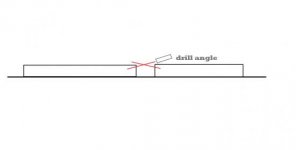
Doing it on the sides will be tricky because with a 14" wide channel, I don't think I'd be able to drill straight and deep enough to insert a piece of rebar across the entire channel. The dowels would each at a slight up angle and would have to be tied together in the middle. (unless someone makes a right angle hammer drill?)
 

Attachments

  • slab2.jpg
    slab2.jpg
    7 KB · Views: 34
Last edited:

flat tire

Well-known member
Joined
Mar 24, 2015
Messages
2,916
Location
hills of wv.
drilling on an angle will not hurt a thing. just use a #3 or #4 bar and bend them down and tie together
you should only need 4 side holes per 20'
I might add on some real small state jobs we have even used 20 penny spikes in the sides of the pour
 
Last edited:

rsanter

Well-known member
Joined
Dec 22, 2007
Messages
18,541
Location
visalia ca
I would want to have them connected so the new concrete cant shift. I know it really cant go far but I would want to be sure.

what about using a nail set and shooting some concrete nails into the side of the exsisting concrete to help connect the two

bob
 

Jlbc212

Well-known member
Joined
Dec 7, 2013
Messages
1,530
Location
Northeast MA
Is there any reason the slabs may shift? Is the base soil unstable? Are you planning on putting tons of weight on the concrete? If the answer is no, why go through all that extra work?
 

wssix99

Well-known member
Joined
Mar 2, 2011
Messages
5,167
Location
Chicago, IL
If the gravel is compacted and rebar is used lengthwise, do I need to drill and install rebar dowels along the sides?

What are you using the floor for? People or vehicle traffic? If vehicle, I'd use pins and maybe something else.

Having a good compacted base is key, but it sounds like you'll have 5" wide strips of concrete on either side of the drain. If these strips are shallow, they will be really weak. (Even with rebar in them.) Depending on the design of your drain, you might be better off with a deeper pour with the drain embedded in the concrete.
 
OP
C

carhunter

Well-known member
Joined
Nov 8, 2010
Messages
793
Location
southern Ohio
Is there any reason the slabs may shift? Is the base soil unstable? Are you planning on putting tons of weight on the concrete? If the answer is no, why go through all that extra work?

What are you using the floor for? People or vehicle traffic? If vehicle, I'd use pins and maybe something else.

Having a good compacted base is key, but it sounds like you'll have 5" wide strips of concrete on either side of the drain. If these strips are shallow, they will be really weak. (Even with rebar in them.) Depending on the design of your drain, you might be better off with a deeper pour with the drain embedded in the concrete.

There will be vehicle/light forklift traffic. But the the original floor slab, with about 8" of compacted gravel and recycled concrete base.on top of it. Its locked in on the sides and bottom.

I guess there's some potential for the base to settle somewhat over time, but it would be a minute amount? I'm already guessing the new concrete will shrink somewhat when drying and I'll lose about 1/16" of an inch in height.

Good point about the sides of the drain - hadn't considered that. Would be a good idea to pour concrete around sides and underneath them.
 
To avoid these ads, REGISTER NOW!

Crusarius

Well-known member
Joined
Aug 22, 2013
Messages
383
Location
Upstate NY
what about a steel frame and just put steel grates or plates over them? may end up being just as much or more than concrete. but it gives you options for drainage and wire runs in the future.
 

bcradio

Well-known member
Joined
Jan 30, 2012
Messages
6,017
Location
New Mexico
I would pay a little more upfront and pour it all in concrete and skip the rebar.

You are looking at approx. 2.6 yards of concrete per trench (assuming 60ft lanes) to fill it all with concrete. To me the savings in work alone would be worth doing all concrete.
 
Last edited:
OP
C

carhunter

Well-known member
Joined
Nov 8, 2010
Messages
793
Location
southern Ohio
what about a steel frame and just put steel grates or plates over them? may end up being just as much or more than concrete. but it gives you options for drainage and wire runs in the future.

Would love to do it with grating, but the channels aren't very straight. There's a up to a 2 inches of side to side variation on a couple of them.
Kinda funny to look at, but I guess as long as the balls started at point A and ended up at B, they didn't care how much the track wandered.

I would pay a little more upfront and pour it all in concrete and skip the rebar.

You are looking at approx. 2.6 yards of concrete per trench (assuming 60ft lanes) to fill it all with concrete. To me the savings in work alone would be worth doing all concrete.

There's an extra 15-20' added on because the returns run well past the lanes, and back behind the pin setters. That's about 20-21 yards of 'crete to do the whole run, whereas a 4" slab would run just 7 yds. Almost a $1300 difference.

Although I could maybe split the difference and pay someone to drill the rebar holes for me...Anyone want to work for $1 per hole? :D
 

wssix99

Well-known member
Joined
Mar 2, 2011
Messages
5,167
Location
Chicago, IL
light forklift traffic

Forklifts put much higher forces on the slab vs. a light vehicle with large rubber tires. (and a wide contact patch to spread out the weight.)

I would definitely pin the cap to the existing slab. I'd also pour the drain into concrete and connect the pins on either side with a "U" shaped stirrup, tied to the pins on either side and going under the trench train. This is something you might want to pay an engineer (who specializes in commercial/factory floors) to spec for you. It shouldn't cost you much and you might even spend less than if you over-pin the slab.


Although I could maybe split the difference and pay someone to drill the rebar holes for me...Anyone want to work for $1 per hole? :D


They make special drills for this... http://www.ezdrill.com/drills/single-drills/

I would expect if you look up a local concrete cutting company, they will have the drill to do this and can kock out drilling the pins for you very quickly.
 

James E

Well-known member
Joined
Jun 21, 2010
Messages
16,507
Location
Raleigh, NC
Subscribed. I have a narrow pour across my driveway where the shop utilities were laid and it's settled and cracked. I have to have it re-poured and have been wondering the very same thing.
 
OP
C

carhunter

Well-known member
Joined
Nov 8, 2010
Messages
793
Location
southern Ohio
They make special drills for this... http://www.ezdrill.com/drills/single-drills/

I would expect if you look up a local concrete cutting company, they will have the drill to do this and can kock out drilling the pins for you very quickly.

Wow, what a set-up! I think I've seen those along freeways.

Unfortunately I only got a portion of the flooring. Previous owner purchased the building just so she could sell the lanes and equipment, then flipped the property.
 

matt_i

Well-known member
Joined
Mar 14, 2008
Messages
10,776
Location
SE Michigan
What I would do is this. Don't try to have a single piece of rebar go across the entire trench into a hole directly across from it. Nearly impossible to get the steel into both holes at once unless you are superman.

Instead, drill each sidewall but in an alternating pattern. Place the short pieces of rebar into the hole, then cut it off within 1/4" of the other side of the trench. Bend them down (hammer) so that they cannot escape. Finish with the long lengths of rebar, tieing them together with wire. You will have more than enough shear strength to keep the new slab from lifting up. You will have plenty of support underneath due to the underneath layer of slab, concrete is strong in compression. The long lengths of rebar will keep cracks tightly held.
 

wssix99

Well-known member
Joined
Mar 2, 2011
Messages
5,167
Location
Chicago, IL
Don't try to have a single piece of rebar go across the entire trench into a hole directly across from it.

I wasn't very clear in my explanation. I was thinking of pinning the slabs on alternate sides, having a separate U stirrup to go pin-to-pin, and then wire tying the stirrup to the two pins on either side.

The method you are suggesting is probably much stronger (in addition to providing crack control) as the pin-to-pin method would have very little overlap of the rebar and pins.


Wow, what a set-up! I think I've seen those along freeways.

Yea. Necessity is the mother of invention. The companies who do it on freeways (and have this tool) could knock out your job in the blink of an eye! :)
 
To avoid these ads, REGISTER NOW!
Top Bottom