Even though this is off-topic, where does it state in the NEC 480 V plug cannot be used as a 240 V plug? Better yet, where does it say under the NEC that a stove plug in a industrial situation cannot be used as a three phase plug for it’s rated voltage?
I have ARKTITE CROUSE-HINDS(AR-348,APJ 3475) plugs in my shop that are rated for 250–600 V, they are rated for 30amps. What horsepower are they rated for as a disconnect under the NEC? Or are these even NEC approved?
Some higher amperage extension cords that I use have an HBL5100PS1W/CS1W for temporary generators.
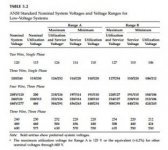
Most household/residential wiring is not generally rated for over 300 V. So I’m wondering where under the NEC it states that you are allowed to have for general purpose household more than 300 V on any given line/circuit?
Read nec 406.8 Non-interchangeability. It explains mix and match is not permitted. I would bet the cec has a similar common sense requirement.
As for your stove example, that is my point. The plug and recept voltage, amperage, # poles,# wires need to match the circuit/load requirements. Industrial location or not is irrelivant.
As for the arctite pin/sleeve plug/recepts you list, they are not part of the standard nema configs being referenced in the context of this thread. Most residential applications could not afford the cost of pin and sleeve connection, so from an economic standpoint they are out of the question. These are specifically made to serve industrial environments.
However, mfrs dimension/placement of these component connection points to also prevent interchangeability. As for their hp/amperage/voltage ratings they are certainly available. I'll give you the link later tonite. No mystery there.
As Wylie already splained you, nec does not specify component rating but rather the mfr who does and then submits their product for testing to get listing and labeling for the claimed ratings.
Building wiring is predominately 600v rated. I will send you a screen shot tonite from a book copyrighted 1963 that shows this. This is nothing new. We are not discussing bell wire, signal wire, or communications wiring in this thread. So what are you referring to?
You use the word "distribution" and and then apply that to the smallest branch circuits permitted. Wrong context. I dont think grandma is plugging her table lamp into an arctite recpt.
Just to be certain we have the correct usage of acronyms, I am refferring to the Canadian Electrical Code an the National Electrical Code - and not the clown electrical code or no electrical code.
And your requested code article references to justify your vast knowledge of both codes are stated where?


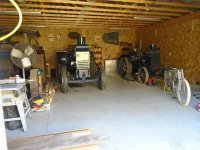
 couple pics of some old tractors for anyone who cares,thanks for the all the quick replys guys.