To avoid these ads, REGISTER NOW!

First attempt at electrolysis...??

Crow Horse

Well-known member
Joined
Dec 22, 2011
Messages
312
Location
Southern Tier, NY
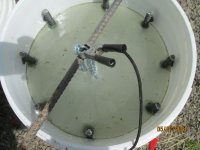
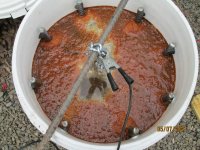
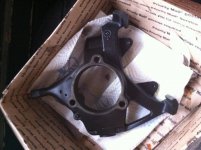
I cobbled together the items needed for electolysis rust removal. I need to clean up a steering knuckle from a Dana 30. Using a 5 gal. plastic bucket, expanded steel as my sacrificial, Oxy Clean to create the electrolyte, and a manual battery charger. My first run of about 2 hours yielded some promising results. My questions are - will water quality matter? Our tap water has methane in it as well as a high mineral content. We don't drink it... Should I use the 2 amp setting or the 10 amp setting? I'm using the 2 amp setting presently...

I will get sodium carbonate for the electrolyte and possibly some rebar to make sacrificials....
 
To avoid these ads, REGISTER NOW!

Firebrick43

Well-known member
Joined
May 12, 2015
Messages
13,971
Location
West central Indiana
No, high mineral content actually helps! Amperage is dependent on part and sacrificial electrode size. You can't shove anything in a 5 gal bucket however that needs 10 amps. If you were using a horse tank to do front fenders then yes.

Sodium hydroxide (lye, sold as flake type drain cleaner) is better as it is and excellent degreaser as well
 
OP
C

Crow Horse

Well-known member
Joined
Dec 22, 2011
Messages
312
Location
Southern Tier, NY
No, high mineral content actually helps! Amperage is dependent on part and sacrificial electrode size. You can't shove anything in a 5 gal bucket however that needs 10 amps. If you were using a horse tank to do front fenders then yes.

Sodium hydroxide (lye, sold as flake type drain cleaner) is better as it is and excellent degreaser as well

If I'm understanding you correctly, I should be using the 2 amp setting, right?
 

6PTsocket

Well-known member
Joined
Mar 12, 2014
Messages
4,593
Isn't NaOH kind of nasty to work with. It high enough concentrations, don't you risk getting burned or blinded in the event of a splash? The word lye always makes me nervous.
On the other hand, Sodium Cabonate is washing soda, a additive. I think I would rather just degrease first.

Sent from my SM-G900V using Tapatalk
 
OP
C

Crow Horse

Well-known member
Joined
Dec 22, 2011
Messages
312
Location
Southern Tier, NY
I used Ph Up (sodium carbonate), let it stew for the afternoon. I rinsed, dried, then gave it a spraying of Rusty Duck. I'm very impressed...
 

Attachments

  • Knuckle Electrolysis 002.jpg
    Knuckle Electrolysis 002.jpg
    142.1 KB · Views: 129

Socket Pounder

Well-known member
Joined
Feb 7, 2017
Messages
329
Location
Santa Clarita
You could have cleaned it manually in less time than it took to collect the materials for electrolysis. Electrolysis is good for complex parts, lots of parts, or continuously derusting but for one or a few parts it's much faster to get your hands dirty.
 

Firebrick43

Well-known member
Joined
May 12, 2015
Messages
13,971
Location
West central Indiana
Isn't NaOH kind of nasty to work with. It high enough concentrations, don't you risk getting burned or blinded in the event of a splash? The word lye always makes me nervous.
On the other hand, Sodium Cabonate is washing soda, a additive. I think I would rather just degrease first.

Sent from my SM-G900V using Tapatalk

In electrolysis you are not using real strong solutions of lye. In fact many of you degreasers, purple power for example, are lye based and about the same strength (mixed) as the electrolysis solution. As for burns, maybe if you grossly mishandle the flakes? The mixed solution, just like lye based degreasers is going to strip all oils from you skin and turn them into soap, which is why it feels slippery. This leads to extremely dry skin and prolonged exposure maybe dermatitis but some kitchen gloves negates this. I have never been burned on my skin by it. Eyes, really don't know ? I don't splash in it like my 3 year old does in the bath. Using a seperate degreaser is more dangerous as your typically scrubing and rinsing the part off


You could have cleaned it manually in less time than it took to collect the materials for electrolysis. Electrolysis is good for complex parts, lots of parts, or continuously derusting but for one or a few parts it's much faster to get your hands dirty.

Once you get the tank set up the only maintenance is adding water to replace evaporation. 30 secs it on a piece of wire and in the tank. Get home from work and turn hanger rod 180 degrees and next morning I have a clean and derusted part. Save tons of time.
 

dogdog

Well-known member
Joined
Nov 15, 2011
Messages
12,711
Not oxiclean but 20 Mule Team Borax ( sodium tetraborate) or Arm and Hammer superwash powder/Soda (sodium carbonate)... or regular baking soda and baked in a pan for some time at 300 deg F.....

I didn't have any good result with oxiclean, don't use lye, it's pretty harsh for your hand if you do touch it. and a manual 12V charger..... I just use 1 or 2 or 3 scope of the superwash or 20mule, till the water is soapy after it is mixed in. I just set it at 10AMP on a HF manual car charger.... it's take what it takes and drops to about < 1amp when the electrodes are covered, then clean the electrode and resume............ but mine is a 35 gallon tote and cast iron radiator about 100lbs age older than me, so not sure.


electrolysis solution doesn't have to be caustic, it is not the solution that "degrease" the piece you are trying to clean....if that is the proper term... the solution is to provide a conductive path for electron flow. .... you can google up the proper term for it. but the purpose of the solution is not for washing/degreasing....

There is a very good post here and a link to external source explaining about electrolysis....

http://www.target.com/p/mule-team-b...gclid=CP2GyZL5vNMCFcVWDQod2HUFrg&gclsrc=aw.ds

https://www.walgreens.com/store/c/a...soda-detergent-booster/ID=prod6146658-product


and also.... don't use electrolysis on Stainless steels....something about chromium or that Hexavalent chromium thing.
 
Last edited:

engineer2

Well-known member
Joined
Dec 13, 2009
Messages
11,793
Location
Chicago burbs
Old thread, but I expected better results trying to cleaning a rusty intake manifold.
Washing soda, 4 pieces of rebar, 12V at around 2 amps.
After 3 days all I've done is turn the rust black.
Does it need more time?
 

Attachments

  • IMG_3856.JPG
    IMG_3856.JPG
    3.2 MB · Views: 50
To avoid these ads, REGISTER NOW!
OP
C

Crow Horse

Well-known member
Joined
Dec 22, 2011
Messages
312
Location
Southern Tier, NY
The process is "line if sight" so you might need more rebar. I use at least 8 in a 6 gal. bucket and a charger set at at 2 amps. It took several hours but came out well. It was a small machinist's vise.IMG_4387.JPGIMG_4391.JPGIMG_4386.JPG
 

steaks&anvils

Well-known member
Joined
Oct 15, 2016
Messages
2,470
Location
Colorado
Is that chain plated? I don't think you are supposed to use plated metal in the electrolysis tank. Doesn't it create Hexavalent chromium and that is very nasty toxic.

Also, those washer/bolts might be an issue too?

there is an old thread about this:


engineer2

Well-known member
Joined
Dec 13, 2009
Messages
11,793
Location
Chicago burbs
If I try to wire brush the black off, there is more rust underneath. I don't have more rebar at the moment, but I can flip the item every day. lots of crud buildup on the rebar. I might just give it more time.
 

jonshonda

Well-known member
Joined
Jul 17, 2017
Messages
4,731
Location
Wisconsin
Instead of bar stock I use sheet steel and form it to the container for my sacrificial material. It is cheap, easy to work with, and has performed well.
 

budget76

Well-known member
Joined
Jan 19, 2016
Messages
502
the black means it's working, and it'll wire-brush or similar off very easy once success. if your rebar gets too full of gunk the process can't work well. I use an old mower blade for more surface area and wire brush it after each session.

i have never personally had the line-of-site issue. Mower blade gets clamped to the side of the bucket, the part gets hung in so it doesn't touch. Have only done a couple vices and some old car parts, don't do it too often, so its always semi-cobbled together.
 
OP
C

Crow Horse

Well-known member
Joined
Dec 22, 2011
Messages
312
Location
Southern Tier, NY
Good catch of my howling error. I don't believe the washers & bolts will be an issue because they're above the electrolyte. I'll have to ditch the chain and use an alternative. Thanks!
 

RTM

Well-known member
Joined
May 13, 2019
Messages
13,053
Location
SF Bay Area
i have never personally had the line-of-site issue. Mower blade gets clamped to the side of the bucket, the part gets hung in so it doesn't touch. Have only done a couple vices and some old car parts, don't do it too often, so its always semi-cobbled together.

Good point on the line of sight. That is the preferred path, and once the rust is gone there, it will start attacking other areas. The circle of rebar shown above can help.

Surface area is key, back when I did this a lot, guys recommended cooking vessel lids, for their large surface area.

I too cobbled mine together, using multiple sacrificial things, long skinny, or big flat depending on what I was working on. Mostly planes and accessories back then.
 

engineer2

Well-known member
Joined
Dec 13, 2009
Messages
11,793
Location
Chicago burbs
The intake dried out on my workbench. The black coating is back to brown rust. I think it is sooo rusty it just needs more time and clean electrodes.
 

Shiftless

Well-known member
Joined
Mar 9, 2014
Messages
14,453
Location
East Bay SFO
The intake dried out on my workbench. The black coating is back to brown rust. I think it is sooo rusty it just needs more time and clean electrodes.
I use Evaporust on pieces as large as vises.
After scrubbing off the black residue and rinsing with water, I find that I must immediately dry the part with a heat gun or propane torch and then while still warm, smear on a bit of Fluid Film. That technique seems to work well for me to retard rusting again.
 

engineer2

Well-known member
Joined
Dec 13, 2009
Messages
11,793
Location
Chicago burbs
I'm going to wire brush off the loose rust with my die grinder and give it another round of electrolysis. I'll clean the 1/4" layer of crud off the electrodes too. Probably touch up with Evaporust at the end. I have a bottle of something similar to Fluid Film.
 

Shiftless

Well-known member
Joined
Mar 9, 2014
Messages
14,453
Location
East Bay SFO
I'm going to wire brush off the loose rust with my die grinder and give it another round of electrolysis. I'll clean the 1/4" layer of crud off the electrodes too. Probably touch up with Evaporust at the end. I have a bottle of something similar to Fluid Film.
That’s a good plan.
The quarter inch of crud is seriously defeating the electrolysis process.
Next time, don’t let it get that thick. Thick crud slows you down a LOT!
 
To avoid these ads, REGISTER NOW!
Top Bottom