To avoid these ads, REGISTER NOW!

First time using a table saw today

bsaint

Well-known member
Joined
Apr 26, 2010
Messages
5,109
Location
Manchester, CT
Being 29, its the last frontier. Wood power tools. Something about those things scare the **** out of me.

I think its because everything spins twice as fast, is twice as aggressive and has the ability to **** the wood from underneath you and throw it at you. Mostly every metal process has a way to securely clamp everything and you take off small amounts of metal at a time.

I don't know how table saws or joiners or chop saws are still OSHA approved with their current designs.

Ive used every piece of metal fab equipment from a angle grinder to a laser cnc machine to a kneemill perfectly fine but I just can't get comfortable with wood tools.
 
To avoid these ads, REGISTER NOW!

jakemac

Well-known member
Joined
May 21, 2013
Messages
9,035
Location
New England
A few secrets to using a table saw.

1 - Plant your feet firmly. Don't work on an uneven. slippery, or cluttered floor.
2 - Always maintain your balance. Don't over reach to the point that you have to use your hands to recover.
3 - Never stand directly behind the workpiece. (just in case it binds)
4 - When having to move to feed the material into the machine, never cross your steps. Always use more of a shuffling motion to move forward.
5 - Always use a push-stick when passing the end by the blade.
6 - Never force the material through the machine. Go slow and steady at the machines pace.
7 - Set up an out-feed support before you start.

And lastly - Always think through your steps before you start.
 

neophyte

Well-known member
Joined
Apr 23, 2012
Messages
9,527
Location
Pennsylvannia
Go to the manufacturer websites of companies that manufacture woodworking tools, and find one or more tablesaw manuals to read. While the workpieces aren't necessarily clamped in place, the pieces should be properly supported by the fence, miter guide, or other jig or fixture, so they slide straight thru the blade. It's when workpieces shift in a manner they're not supposed to that problems occur. You also need to make sure the fences are properly adjusted so wood can't get squeezed between the fence and the blade.

Wood that is not flat and square can cause dangerous situations, as can wood that twists or bends while you're cutting it. Some machines like miter saws are better adjusted for this.

One advantage in safety between woodworking and metalworking machines, is that the drives systems are as robust, so the blades may be more likely to jam, then to pull you into the machine in case of problems.
 

Adam.C

Banned
Joined
Jan 29, 2013
Messages
1,490
30,000 table saw accidents each year. 3000 amputations. Table saws are some of the most dangerous tools we have access to.
 

BK13

Well-known member
Joined
Mar 1, 2013
Messages
2,692
Location
PDX, OR
I guess I just got jaded, started using a table saw by the time I was 10. It's been a while since I fired one up... Probably going to be scared to death of it now that I'm middle aged and frail, rather that young and bulletproof.
 

cheechi

Well-known member
Joined
Feb 29, 2012
Messages
4,384
Location
Triad, NC
Making yourself a table saw sled can help you get more comfortable with the tool as well as give you more functionality with it, specifically you can clamp smaller pieces to the sled and get to what you're used to.

Most woodworking tools are about the same as metal tools in function, but different in how they're typically used. Woodworkers use bandsaws for different cuts, drill press is about the same, sander, etc.
 

Zeke

Well-known member
Joined
Aug 13, 2009
Messages
17,176
Location
Long Beach CA, the sewer by the sea.
...while cutting off your fingers.

The main danger with a table saw is it will cut you and so fast you won't know it's happening. So, the best safety tip is too think about where your hands are every instant and where they would be if you slipped. Here in CA we even have to think about what might happen if there's an earthquake.

The 2nd most dangerous aspect of the TS is when it throws a chunk of wood at YOU. It's like getting hit with a pitch in the majors.

Of course eye protection will help prevent eye and facial injuries. Those aren't as common and really never happen it proper eyewear is worn.

Use clamps if you can. Make a cross-cut slide. Get finger boards and push sticks. I have a whole box full of those of all shapes. Some of the best are the ones you make.

Use zero clearance table inserts. You should have an insert for each blade. There is no reason for things to fall into that slot. People have wider slots for dust collection. There are other ways. Use a riving knife. Indeed, use the whole guard setup unless you are not cutting all the way through.

One more tip out of hundreds: don't use the fence for cross cuts leaving a piece of wood between the blade and the fence less than the length of the blade that is above the table. If you do, sooner or later that piece will come flying out. Sometimes you never find them. And it doesn't do the saw any good either, not to mention the pucker factor.

I've used a TS most of my life on a near daily basis and I'm afraid of them too.
 

Mandres

Well-known member
Joined
Jun 22, 2006
Messages
1,151
The #1 rule for tablesaws:

Make certain your fence is perfectly parallel to the blade. If the back side nudges in and pinches the stock between the fence and rear, upward-moving part of the blade you're going to have a dangerous kickback.

That's how people get hurt. Measure twice and make sure that fence doesn't pinch.
 

PelicanPines

ALLIANCE MEMBER
Joined
Apr 30, 2014
Messages
38,104
Location
New Jersey, USA, Earth, My own reality
On a lighter note... My uncle was a cabinet maker for 50 years. I'm proud to say, he lived till 94 yrs old, surviving cancer 3 times. Used a table saw along with many other power tools in his craft and while retired, almost every day.

Oh yea... he died with all his toes and almost 9 1/2 fingers.
 

1949 caddyman

Well-known member
Joined
Oct 5, 2010
Messages
1,778
Location
Arizona
I always keep my eye on the blade when actually cutting with the idea that I would stop before cutting my hand. All the other ideas are good also!
 
OP
B

bsaint

Well-known member
Joined
Apr 26, 2010
Messages
5,109
Location
Manchester, CT
I think my biggest concern, being new at the saw, is also what to do when you realize you cant reach to push the part all the way through. You can't let go...
 

theoldwizard1

Well-known member
Joined
Feb 22, 2011
Messages
43,073
Location
SE MI
The 2 best pieces of advice !

Always use a push-stick when passing the end by the blade.

Making yourself a table saw sled can help you get more comfortable with the tool as well as give you more functionality with it, ...
I will add

A dull blade is a dangerous blade. You will likely try to force the work piece and that is when bad things happen. Buy carbide tipped blades. They last almost forever.

Feather boards are useful for some operations.
 

PelicanPines

ALLIANCE MEMBER
Joined
Apr 30, 2014
Messages
38,104
Location
New Jersey, USA, Earth, My own reality
I think my biggest concern, being new at the saw, is also what to do when you realize you cant reach to push the part all the way through. You can't let go...

I use push sticks all the time. They help me push the wood to the table and fence, keeping the cut clean. They also keep my fingers away from the blade. I use an off table beyond the saw to catch whats being cut. It's about 1/2 inch lower than the table saw. I also have a roller stand but only need that with large sheets of plywood.

Sometimes it's all about the tools you use with the tools you use. <--- thats a good quote, if i have to say so myself.
 

christopher.layton

Well-known member
Joined
Mar 21, 2014
Messages
107
Location
Hood River, OR
...while cutting off your fingers.

The main danger with a table saw is it will cut you and so fast you won't know it's happening. So, the best safety tip is too think about where your hands are every instant and where they would be if you slipped. Here in CA we even have to think about what might happen if there's an earthquake.

The 2nd most dangerous aspect of the TS is when it throws a chunk of wood at YOU. It's like getting hit with a pitch in the majors.

Of course eye protection will help prevent eye and facial injuries. Those aren't as common and really never happen it proper eyewear is worn.

Use clamps if you can. Make a cross-cut slide. Get finger boards and push sticks. I have a whole box full of those of all shapes. Some of the best are the ones you make.

Use zero clearance table inserts. You should have an insert for each blade. There is no reason for things to fall into that slot. People have wider slots for dust collection. There are other ways. Use a riving knife. Indeed, use the whole guard setup unless you are not cutting all the way through.

One more tip out of hundreds: don't use the fence for cross cuts leaving a piece of wood between the blade and the fence less than the length of the blade that is above the table. If you do, sooner or later that piece will come flying out. Sometimes you never find them. And it doesn't do the saw any good either, not to mention the pucker factor.

I've used a TS most of my life on a near daily basis and I'm afraid of them too.


Some Good advise here. Especially the last sentence. Table saws should give you the willies. It's almost the only tool in a woodshop that's out to get you.


Sent from my iPhone using Tapatalk
 

lotsoftools

Well-known member
Joined
Oct 22, 2011
Messages
1,316
Location
Inland Empire
I've been injured on a table saw twice in my life. First time while cutting plexiglass (probably the wrong tool). I don't know exactly how it happened, but the saw grabbed the material and pulled my hand towards the blade. Thankfully the blade just nicked my pinky and left me with a nice scar.
The second time was when I was cross-cutting something AND using the fence (a big no-no as I understand it now). The saw grabbed the wood and shot it back into my arm. Left me bleeding, bruised and hurting like hell.

I have a lot of respect for the table saw now.
 

cheechi

Well-known member
Joined
Feb 29, 2012
Messages
4,384
Location
Triad, NC
Cross cutting does seem to be the biggest issue I see with new people using the table. You can use the fence when cross cutting but you have to be really aware of what's going on, what size scrap are you making, etc. whatever you do, don't have anything between the fence and the work piece. Doesn't matter how straight or square your piece of scrap is, it's not stationary and it will sucker punch you (best case scenario) since you only have 2 hands and you need them both (via push sticks, etc) on your work piece.

If the piece is too long it can raise up and wedge diagonally between the fence and blade. or slide along the top of the fence and fly anywhere, including at you.

If it's too small it can wedge anywhere, jam the belt, blade, insert, miter gage groove, etc. or fly anywhere, including at you.

Both of the above situations should be done on the miter saw if at all possible. If it's not, that's fine not every cut can be. But considering your best case scenario is going to be square, no miter or bevel cutting. Adding miter, bevel, or both to the mix increases the likelihood the above two things would go wrong, and how much more wrong and dangerous they can get.
 

PCO6

Well-known member
Joined
Dec 25, 2008
Messages
4,573
Location
Newmarket, Ontario
I use my table saw at least once a week and every time I do I think of 2 guys. One is my high school wood working teacher who lost 2 fingers. He was a great guy and he taught us a lot about safety. He had a momentary lapse (distracted by a student) and it cost him. The other guy is fellow I used to work with. He was a Civil Engineer and generally speaking a pretty practical guy. He too said he was distracted. A small sheet of plywood kicked back and up and smacked him in the face. It broke his nose, cracked a cheek bone and blackened both of eyes. He felt he got off lucky.

I treat mine with a lot of respect but having the above 2 examples also helps.
 

-Brent-

Well-known member
Joined
Dec 23, 2009
Messages
4,709
Location
Utah
I grew up around saws - radial, table, mitre, etc., and never had too much of a worry. I've heard stories and such but I guess I was taught well. Hell, my dad left me unsupervised at probably 12 making my own wood projects on the saw. If you work smart and pay attention (focus), you'll be fine.

Now, a metal lathe I am a little intimidated by. Mostly because I knew a high school kid that lost the hair/skin on the side of his head and had to have his ear sewed on (never looked the same) because his hair wasn't tied back and got pulled into the lathe when he looked closer at his work piece.

I've never had long hair but, man, thinking back to the damage that kid had done to him, I respect the unforgivable power a machine like that has.
 

pendragon1998

Well-known member
Joined
Mar 24, 2012
Messages
3,733
Location
NE Georgia
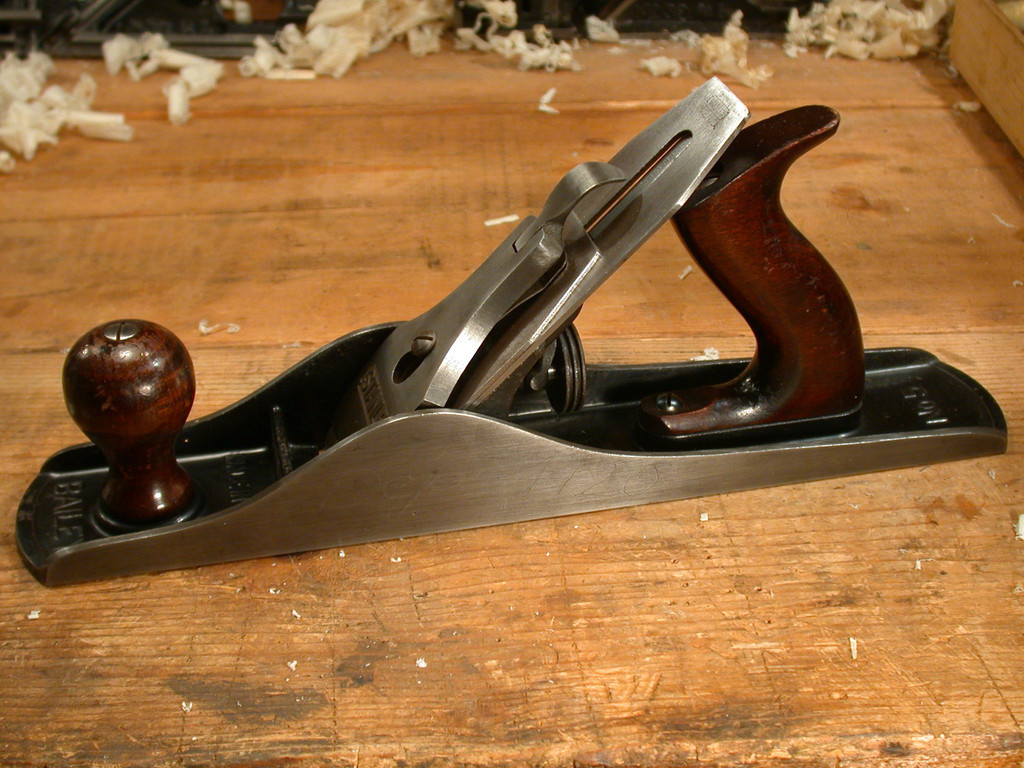
Being 29, its the last frontier. Wood power tools. Something about those things scare the **** out of me.

Haaave you met Stanley? :beer:

jack-plane.jpg
 

Zeke

Well-known member
Joined
Aug 13, 2009
Messages
17,176
Location
Long Beach CA, the sewer by the sea.
The #1 rule for tablesaws:

Make certain your fence is perfectly parallel to the blade. If the back side nudges in and pinches the stock between the fence and rear, upward-moving part of the blade you're going to have a dangerous kickback.

That's how people get hurt. Measure twice and make sure that fence doesn't pinch.

To further this very good point, I always move the fence TOWARDS the blade while adjusting. Every fence has some slop. It has to be an awfully good one to have zero slop when cinching down. When you are moving and tapping the fence into the exact position, the front will usually be a tiny fraction closer to your measurement. That leaves the back 'open'. Not only do you only get blade marks in one direction, the blade is not touching the work to pick it up.

I think wood that is not perfectly flat on the table is the most dangerous.
 
Last edited:
To avoid these ads, REGISTER NOW!

skippy24

Well-known member
Joined
Oct 31, 2012
Messages
546
Location
Reno, NV
Lots of good responses here. I use my table saw fairly regularly and while these ideas are recaps here is my my spiel.

-Never lean in to your work, keep your balance.
-Mind where your hands are at all times in relation to the blade. I try to have a mental 6 inch distance minimum. If I think I will be closer i use a push stick, push pad, etc.
-Never stand behind your work.
-When pushing your work through the saw make sure your force is pushing parallel to the blade.
-Make sure the fence is parallel to the front and back of the blade. Not 1/64th, not 1/128 off but absolutely parallel.
-Most importantly use your head. If something doesn't seem safe then it probably isn't.
 

e_d

Well-known member
Joined
Oct 10, 2013
Messages
53
Location
Oregon
Has anyone mentioned proper blade height? I would think having the minimum amount of blade showing would decrease the chance for cutting off anything important.
 

skippy24

Well-known member
Joined
Oct 31, 2012
Messages
546
Location
Reno, NV
Has anyone mentioned proper blade height? I would think having the minimum amount of blade showing would decrease the chance for cutting off anything important.

Good call. It should be a 1/4" above the piece being cut.
 

turbowoodworker

Well-known member
Joined
Mar 18, 2012
Messages
3,519
Location
Apex NC
Complacency and comfort is your enemy. My dad had the best line when teaching me about TSs and I will never forget it. " You will never get hurt by a TS if you maintain your fear of the TS".

Think about safety every step of the process and you will be OK. If it feels iffy or unsafe, stop and rethink using hold downs, sleds, jigs, etc as already mentioned.
this can be used for every tool in the shop.
 

theoldwizard1

Well-known member
Joined
Feb 22, 2011
Messages
43,073
Location
SE MI
After WWII my Dad started working in a lumber yard. They quickly had him ripping anc cutting stock to length. Then they moved him up to the wood shaper (think large router table with 2+hp motor). After a few days, it dawned on him that the guy training him only had a 5-6 full fingers. He quit that day.
 

woody 73

Well-known member
Joined
Apr 14, 2009
Messages
11,540
Location
The Great State Up North
Ten super great tips:

1) Beer the more the better when using your saw.:beer:
2) Drugs again the more the better see above.:thumbup:
3)Loose clothing wow bring it on, man ties look great on Sunday.:D
4)Long Hair, hell yes the more you have the better you will look.:pimpflash
5) Just had a fight with a loved one, bring it on baby nothing like being mad as hell before an upcoming job on your saw.;)
6)Headaches/hangovers, No problems the saw noise will drown them all out.:eyecrazy:
7)Man Jewels the more the better, wear your rings and chains just like Mr. T.:rocker:
8)Lack of sleep no problem, who needs 8 hours after a night of drinking with your best friends.;)
9)Head in the clouds thinking about other things, hey no big deal right.:evil:
10)Using dull blades/or filled with pitch & gum, hey save a buck right.:shocking:
11) I lied one more extra my teacher never told me about (well they never had them 40 years ago) Bring on the I-pod and use those head phones, the louder the better.:scared:

If you live through the day it will be a freaking miracle, just use common sense, as my shop Teacher used too say.
 

thebeekeeper1

Well-known member
Joined
Sep 5, 2012
Messages
1,011
Location
Illinois
I use one regularly, but only to rip. I will only cross-cut on a miter saw or (better) my radial arm. Radial arm saws are hugely out of style these days and can be bought for a song--or obtained free. If you have room I highly recommend having one. Others will disagree, but if you have room, and don't need the portability of a compound miter saw, they are GREAT.
 

ckadams00

Well-known member
Joined
Sep 12, 2011
Messages
1,273
Location
Seattle, WA
I can't believe we're this far in and no one has posted the "real" no. one rule of table saws (and routers, and grinders): BE AFRAID of them. The minute you get complacent you get hurt.

Whoops Turbowoodworker nailed it.
 

cheechi

Well-known member
Joined
Feb 29, 2012
Messages
4,384
Location
Triad, NC
I use one regularly, but only to rip. I will only cross-cut on a miter saw or (better) my radial arm. Radial arm saws are hugely out of style these days and can be bought for a song--or obtained free. If you have room I highly recommend having one. Others will disagree, but if you have room, and don't need the portability of a compound miter saw, they are GREAT.
You want to feel more comfortable around a table saw? check out what a radial arm saw can do to you. Compared to the table, the arm saw can and will mess you up big time.
 

WQ59B

Well-known member
Joined
Feb 18, 2010
Messages
762
Location
NJ
The 'pinch' aspect is a sore point with me. Too many TSs have flat, polished decks, and 80% of all TS fences I've checked 'wobble' before you lock them down, IE: have the ability to get out of being perfectly perpendicular.

I have an old, classic Makita 2708; the entire top is covered with grooves. I align my fence visually againt these every time. I may have had a single kickback in 14 years of regular use (not sure; it was not a close call or instance of injury). Getting the fence set right AND keeping the blade low IMO has made it a scenario of stress-free respect rather than actual 'fear'.

I've also done cross cutting here & there, and plenty of 'freehand' cuts. I think with time, you can get a solid tactile feel for what the wood is experiencing @ the blade, and not force anything.
 

jakemac

Well-known member
Joined
May 21, 2013
Messages
9,035
Location
New England
The 'pinch' aspect is a sore point with me. Too many TSs have flat, polished decks, and 80% of all TS fences I've checked 'wobble' before you lock them down, IE: have the ability to get out of being perfectly perpendicular.

I have an old, classic Makita 2708; the entire top is covered with grooves. I align my fence visually againt these every time. I may have had a single kickback in 14 years of regular use (not sure; it was not a close call or instance of injury). Getting the fence set right AND keeping the blade low IMO has made it a scenario of stress-free respect rather than actual 'fear'.

I've also done cross cutting here & there, and plenty of 'freehand' cuts. I think with time, you can get a solid tactile feel for what the wood is experiencing @ the blade, and not force anything.

I use the same saw, in a Skil table frame, and do the same thing when setting the fence. I wouldn't mind having a large Unisaw with out-feed table and 50"+ fence depth, but for the last 25yrs, this saw (bought used) has never let me down in my shop or on the road.
 

Attachments

  • 100_1109.jpg
    100_1109.jpg
    136.9 KB · Views: 46

56vette461

Well-known member
Joined
Jan 13, 2013
Messages
491
Location
Northern California
I was a kid about about twelve years old when I watched my dad cut the tip of his index finger off and a deep gash that almost cut to the bone of his thumb. I will never forget how scared I was. All because the job site TS didn't have an out feed extension. (We were just cutting a half dozen shelves from 3/4" birch plywood) He was cutting a piece of plywood and it kicked up and drug his right hand across the blade. We never had another saw set up with out the extensions. Its not IF but WHEN s--t happens. That danger goes along with the use of power equipment. Use them right and there is no limit to all the fun and projects you can do.
 

Troutsqueezer

Well-known member
Joined
Apr 24, 2014
Messages
236
Location
I think it's called California, land of Prii
There is a website, I wish I had the link, where people post any mishaps they have had with any wood cutting tools.
It is extensive and reveals ways you can hurt yourself that wouldn't have occurred to you in a million years.
Worth googling.
I read it years ago when I first bought my Jet contractor saw.
Makes you think.
Maybe I'll see if I can find it and post the links.
Right now, I need another beer...
 

A_Pmech

Well-known member
Joined
May 8, 2007
Messages
8,002
Location
IL
Cross-cutting with the fence:

Make a spacer block about 10" long and 1" wide. When you need to make repeatable cross cuts simply set your fence one inch farther than the needed length. Now, place the spacer block on the blade side of the fence. Slide the board up to the spacer block and make the cross cut.

The board slides past the spacer block and leaves 1" of clearance between the end of the board and the fence, preventing the possibility of "capturing" the off-cut.
 

BikerDad

Well-known member
Joined
Apr 24, 2014
Messages
975
Location
Utah
Some Good advise here. Especially the last sentence. Table saws should give you the willies. It's almost the only tool in a woodshop that's out to get you.

HAHAHAHAHAHAH!!!! He made a funny!

Every tool in the woodshop is out to get you. Every. Single. One.

The only question is, how aggressive is any particular tool, on any given day?

Chisels? Seriously, what could go wrong? Aside jumping from your hand or bench and swan diving at your feet?

Hammers? Whacka-thumb anyone? Or the ever popular send the fastener in direction X at velocity Holy ****!!

Bandsaws? You know that steak you had for dinner last night? It was cut on a bandsaw.

Routers? Aside from screaming loud enough to wake the dead (and damage your hearing), they have a nasty habit of spitting broken bit parts out at high velocities, chewing into their own power cords with interesting sparky effects, and then just when you think it's safe, because you've got the thing turned off, you'll slice your finger on the bit.

Heck, even the most innocuous of tools, a hand sanding block, has it in for ya. Sanding dust is not your friend in the long term, and it can be downright dangerous in the short term if you have a sensitivity to the wood at hand.

Every tool in the woodshop, whether powered by sweat or electrons, is dangerous. The table saw is just more blatant about it than most. (Pneumatic fastening tools claim even more victims than tablesaws, just not as gory, Lethal Weapon excepted.)
 

Makapuu

Well-known member
Joined
Dec 10, 2013
Messages
253
Location
South Bay, CA
I have used table saws for years without fear or injury and without using any of these precautions other than always using a blade guard.

Now I'm scared as hell to use one again....
 

tube_guy

Well-known member
Joined
Jan 21, 2009
Messages
747
Has anyone mentioned proper blade height? I would think having the minimum amount of blade showing would decrease the chance for cutting off anything important.

Good call. It should be a 1/4" above the piece being cut.


I actually hurt myself on my table saw, last Columbus day. I was rushing around trying to get a job done before I ran out of daylight. Actually, I had told myself that I have to be extra careful with the saw because this is exactly how accidents happen. Well, I was cutting some mahogany that had a curved top surface to it. I thought my blade height was adjusted high enough, but it turned out that the height was adjusted to leave just a few splinters on the high part of the curve, connecting my workpiece to the small piece of scrap. I picked up my workpiece after the cut and the scrap came with it. Unfortunately, the splinters broke and dropped the scrap piece on top of the blade from maybe a foot and a half up. The blade grabbed the scrap and shot it back at me amazingly fast. The piece was about the size of a softball or so, and being mahogany, it was pretty heavy. The scrap hit the middle knuckle of my left hand's index finger, rolled over and then hit my in the chest. I guess my finger was broken, and there was a very messy cut down to the bone. And I had a softball sized bruise on my chest. The good news is that my finger is starting to feel normal again, but it's been about seven months since the accident.
 

mrpizza

Well-known member
Joined
Nov 1, 2011
Messages
2,935
Location
IL
My delta table saw scares me. I hate it. If I can I always use a circular saw instead. Good thing I don't do much wood working. Practically none.
 
OP
B

bsaint

Well-known member
Joined
Apr 26, 2010
Messages
5,109
Location
Manchester, CT
The biggest factor for me getting into wood projects is that the quality is just not there from box stores even with Ikea. My dresser I bought from there was the last straw. My brother is a master cabinet maker so he helps me a lot but he lives 1500 miles away.
 
To avoid these ads, REGISTER NOW!
Top Bottom