To avoid these ads, REGISTER NOW!

Fish Eye Problems

slim53

Well-known member
Joined
Apr 30, 2006
Messages
67
Location
Bloomington, MN
Hi all,

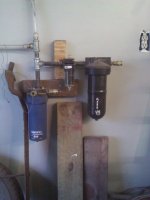
I got a nasty fish eye problem that I need some input on. I moved in and bought myself a big 80 gal C-Aire compressor and started tackling some paint projects. I noticed I had these really small fisheyes throughout the clearcoat. At first I thought it was solvent popping, but it would come back after sanding and re clearing. I figured I just needed more filtering (at this point I only had a Sharpe 606). I ran a brand new Pex from the compressor to some new filters and still got the same problem. I've tried multiple paint guns, regulators, and bought a new hose and still get the same result (obviously, different paints have been sprayed as well). At this point I believe it's one of three things: the Sharpe filter is contaminated, I need more filtering, or my garage is contaminated so bad, I can't spray there. I've included a couple pics of my current set-up. Thanks for any help.

Slim

WP_001247.jpg

WP_001248.jpg
 
To avoid these ads, REGISTER NOW!

58Yeoman

Well-known member
Joined
Oct 1, 2010
Messages
8,999
Location
Central IL
Years ago when I painted some cars, I used 'fish-eye' eliminator, mixed in with the paint. It came in a small can with a pump on top; can't remember how much I added, but the instructions were on the can. It was actually called fish-eye eliminator, and I bought it at the auto paint store.
 

Cheap5.0

Well-known member
Joined
Oct 19, 2011
Messages
487
Location
The thumb (Michigan)
This is something i picked up from an 'ol timer that owned his own shop for 40 years. He was grandfathered in, and did not need to use a paint booth...he would wet his shop floor before painting base/clear to keep dust down.

Worth a shot on a test piece to eliminate the dirty garage probability.
 
OP
S

slim53

Well-known member
Joined
Apr 30, 2006
Messages
67
Location
Bloomington, MN
Yeah, I forgot to mention both of those. i tried Fish Eye eliminator and always wet the floor down. I actually got bigger fish eyes using the eliminator too.
 

pcmeiners

Well-known member
Joined
Aug 13, 2009
Messages
7,826
Location
In the only town in Pennsylvania, Bloomsburg.
Unless your filters are removing approx 1/2 cup of water in a ten minute period, a good bit is reaching your gun, never used the fish eye eliminator, but have experienced fish eye with filters such as yours, especially in warmer weather. You could rig an aftercooler on your compressor which will take out most of the water vapor.
There are many post on the subject search aftercooler in this forum
 

countryroad82

Well-known member
Joined
Mar 18, 2011
Messages
3,447
Location
Kentucky
Are you trying to paint the same piece? If so the part itself may be contaminated. If it is multiple parts you are trying to paint, then you must be getting something inline your air travel. I never had a very big problem with fisheyes as I had more problems with water getting in my lines. I paint quite a bit so I stepped up to the Sharpe DryAir system and haven't looked back.
 

larry_g

Well-known member
Joined
Apr 28, 2007
Messages
16,866
Location
oregon
Hi all,

I got a nasty fish eye problem that I need some input on. I moved in and bought myself a big 80 gal C-Aire compressor and started tackling some paint projects. I noticed I had these really small fisheyes throughout the clearcoat. At first I thought it was solvent popping, but it would come back after sanding and re clearing. I figured I just needed more filtering (at this point I only had a Sharpe 606). I ran a brand new Pex from the compressor to some new filters and still got the same problem. I've tried multiple paint guns, regulators, and bought a new hose and still get the same result (obviously, different paints have been sprayed as well). At this point I believe it's one of three things: the Sharpe filter is contaminated, I need more filtering, or my garage is contaminated so bad, I can't spray there. I've included a couple pics of my current set-up. Thanks for any help.

Slim


WP_001248.jpg

I look at the picture above and it looks to me that the center unit here is an oilier? Is it? If so then you may have oiled the lines upstream of the oilier. What happens is that the Filter on the right acts as a small accumulator. When filter on the lower left is used to pressure your paint gun then the air from the filter on the right will backflow through the oilier carrying oil into the piping feeding it. Open the line feeding the paint filter and use a Q-tip to check for how clean the pipe is.

lg
no neat sig line
 

Rodhotz

Well-known member
Joined
Nov 3, 2011
Messages
348
Location
Where the wind never stops! The high desert of CA.
What he said, and you might check the compressor as it looks like it has a problem with oil in it, maybe bad rings. that oiler is a big nono! it will back feed, they are not supposed to but they will. if you check your lines i think you will find oil in them. also wipe the parts down with wax and grease remover with a new rag before painting, with the new paints you should not need fish eye eliminator, but if you use it follow the mix they recommend.
 
OP
S

slim53

Well-known member
Joined
Apr 30, 2006
Messages
67
Location
Bloomington, MN
There's no oiler there, it's another filter. The larger Arrow filter is my desiccant filter and I hook my air hose up there. My thought with having the Sharpe filter where it is was so I could catch more water there and drain it. I only hook up non paint guns at the Sharpe filter. I believe that's a coalescing filter which is meant for water removal and we all know water and air tools is bad. Maybe I need to place it more inline with the other filters?
 

evs1

Well-known member
Joined
Jul 2, 2006
Messages
50
Location
West Virginia.
While working in my father-in-laws body shop back in the 70's, he attributed fisheyes to contamination on the car body. Usually insufficient wax and grease removal. He also wet down the floor but that was to contain dust.
 

Falcon67

Well-known member
Joined
Jun 11, 2009
Messages
18,371
Location
Merkel, TX
I've shot single stage with a portable compressor running flat out and only a water trap and a small filter right at the gun and still not had a fisheye problem. I have been known to wet the floor, but that's just dust control and not fisheye control. Anytime I got a fisheye problem, it was contamination on the piece (oil, silicone, etc) or some issue between the paint and the primer.
 

bowtiepro3

Well-known member
Joined
May 29, 2012
Messages
76
Location
Northwest of Minneapolis
About the only time we ever had problems in the bodyshop was when someone used anything silicone based near by or on the interior. Amor all is a painters worst nightmare. Are you using washable rags from a linen service? They are full or contaminents.
 

nehog

Well-known member
Joined
Jan 2, 2010
Messages
7,935
Location
Jaffrey, NH
About the only time we ever had problems in the bodyshop was when someone used anything silicone based near by or on the interior. Amor all is a painters worst nightmare. Are you using washable rags from a linen service? They are full or contaminents.

Also, never use silicone carbide paper to sand stuff down! Even a microscopic particle from that paper will give a fish eye.
 
OP
S

slim53

Well-known member
Joined
Apr 30, 2006
Messages
67
Location
Bloomington, MN
I used to do paint work as a profession, so I know I'm cleaning things properly. I doubt it's the piece because I've painted a variety of pieces that all look the same. I never used silicone based products in my garage, but I know the previous owners did. We had a shop that experienced similar problems whenever a project sat too long in the shop, but it had to sit for months before we saw any issues.
 

Tim Kennedy

Well-known member
Joined
Oct 16, 2011
Messages
368
My bodyman is a great old -timer -- we talked one time about fish-eyes & other paint problems. He also used to wet the floor to take down dust & said the biggest cause of fish-eyes was oil in the air - not water. He never used air tool oil in any tool, when they wore out he bought new ones. Just a long time painters observation.
 

Dodge

Well-known member
Joined
Feb 8, 2008
Messages
557
Location
Illinois
Always use wax and grease remover BEFORE you even begin sanding. Using it after the sanding is too late, you actually grind the contaminate into the surface. I don't know if that is the problem, but fisheyes are usually contamination. They are a royal pain to painters!! They just seem to happen.
 

darkk

Well-known member
Joined
Dec 24, 2009
Messages
3,361
Location
Willimantic, Ct.
Fish eye is usually from surface contamination be it oil or other substance. If you have ever sprayed any silicone in the shop, you will get fish eye in your paint. It is not from dirt or debris in the paint. I use fish eye eliminator in everything just as insurance. Start with the first coat and everything after. You can let it dry, wet sand and spray a couple light coats on those areas then a light coat over everything, let it set then lay it on if there are no new fish eye in the light coat. Good luck...
 
To avoid these ads, REGISTER NOW!

sfckiddo

Well-known member
Joined
Jan 15, 2011
Messages
93
how long is the hard line from your compressor to the filter? if its too short the air still being hot and not having condensed will pass right through the filter and carry anything else along with it. and as a precaution the blue sharpe filter with the coupler pointed out needs to point to the side or down. the reason i say this i had one that was pointed out, the hose came out of the coupler when i bumped it and damn near put out my eye
 
Last edited:
OP
S

slim53

Well-known member
Joined
Apr 30, 2006
Messages
67
Location
Bloomington, MN
how long is the hard line from your compressor to the filter? if its too short the air still being hot and not having condensed will pass right through the filter and carry anything else along with it. and as a precaution the blue sharpe filter with the coupler pointed out needs to point to the side or down. the reason i say this i had one that was pointed out, the hose came out of the coupler when i bumped it and damn near put out my eye

It's about 25 feet from the compressor to the filters. It's plenty chilled judging by the water I'm able to drain from the sharpe filter. If the garage is contaminated, couldn't a guy make a plastic room inside it to spray?
 

Boomer343

Well-known member
Joined
Mar 19, 2012
Messages
519
Do you have a diesel powered vehicle running outside or has a diesel been run in the garage? Just a thought as I have seen small fisheyes caused by the diesel soot and it has happened even after wipe downs etc.
 

unslow1

Well-known member
Joined
Mar 3, 2012
Messages
7,879
Location
Illinois
About the only time we ever had problems in the bodyshop was when someone used anything silicone based near by or on the interior. Amor all is a painters worst nightmare. Are you using washable rags from a linen service? They are full or contaminents.

Silicone was what was causing it on a few we painted in a friend's garage. We couldn't figure it out and one guy said get everything silicone based out of the garage and that seemed to cure it.
 

Rodhotz

Well-known member
Joined
Nov 3, 2011
Messages
348
Location
Where the wind never stops! The high desert of CA.
Has anyone BBQ'd around it, had a guy once that wanted me to spray his hood, wiped it down good and as it was drying i noticed little fisheyes all over it, washed it down again new raga again same thing, then i notice his wife is cooking burgers on the grill. well turns out the smoke was carrying grease from the burgers and getting on the hood. that center one sure looks like a oiler, what is the clear cap on top for?
 

kwb

Well-known member
Joined
May 1, 2009
Messages
1,769
Location
PNW
if you are using a dessicant dryer it could be your source of issues.
 
OP
S

slim53

Well-known member
Joined
Apr 30, 2006
Messages
67
Location
Bloomington, MN
if you are using a dessicant dryer it could be your source of issues.

How is that? Everyone I know uses one and haven't had an issue. Why would this cause fish eyes? Also, thanks everyone for chiming in. I appreciate any/all suggestions.
 

Bruce4310TX

Well-known member
Joined
Nov 4, 2009
Messages
507
Location
Forth-Worth, TX
If you only have 25' from your compressor thats no where enough you need a minimum of 50' in order for the moisture to drop out of suspension, Use copper or black or aluminum pipe rubber air hose doesnt work. The more the pipe the better and dont forget to have a couple of line drops to help capture moisture without that all your water will end up in the filter and drier and overwhelm them. The farther you hook up your paint gun from the compressor the better, i had to do all this to solve the same problem and fixed it. Also that blue filter in your pic is installed at the wrong spot it shouldnt be at the bottom of the drop all the water goes straight into the filter. Always tee off a drop at least 18" above the bottom of the line this gives water a place to accumulate do a google search for proper hook up diagrams. Look at it this way drops are to catch water,,, filters are your last chance to stop its intrusion into your gun,,,,, your system sends it straight to the filter and no where else then to your gun
 
Last edited:

Kevin54

MEMBER EMERITUS
Joined
Jan 12, 2005
Messages
29,341
Location
Urbana, Ohio
Lots of good advice given, but not all accurate. You don't need 50' of hard piping with drops, so on and so forth to paint a vehicle and remain fish eye free. I've painted a few in my garage and have never had a problem with fish eyes. Back when I was painting quite a bit, my dad and I had a compressor in a basement, the line was piped up to the garage, and we had one small filter before the airhose. We only had problems with fisheyes, maybe one out of every 40 or 50 cars. Most of the time the problem was contamination from something like Armor All or from some dirt that may had some oil or silicone in with it. Also the old finish may have been contaminated to begin with. In that case, you would have to use a FEE to help alleviate the problem.

If it is an ongoing problem, then you need to look at everything systematically starting with your compressor and filters. You may have excessive oil contaminating the lines originating from the compressor. Drain your tank. Check the water and see if it looks like it may have oil in it. If it does, then everything after the compressor has been contaminated.

Not seeing what your garage looks like makes it difficult to really come up with a remedy. Are you running any fans while you are spraying? How large of an area are you spraying in? Has everything been cleaned prior to spraying or is your garage one that has a lot of dust in it? If you have a fan that draws air out, where is air coming in to the garage from?

It may be time to revamp and give the garage a thorough cleaning. If you are going to be painting quite a bit, I'd maybe think about putting in a proper line setup, paint the walls and ceiling, and eliminate most items that could possibly catch dust. To do that, make sure that you have adequate cabinets to put everything behind doors. Then under no circumstances, use any sprays in the garage that may have silicones or oils in them. If you think that your lines and hose may have been contaminated, you may have to either redo them or get some new.

I also see in the pic you posted, the compressor looks to have something running down the side. Is that some type of oil? If so, where did that come from?
 
OP
S

slim53

Well-known member
Joined
Apr 30, 2006
Messages
67
Location
Bloomington, MN
Lots of good advice given, but not all accurate. You don't need 50' of hard piping with drops, so on and so forth to paint a vehicle and remain fish eye free. I've painted a few in my garage and have never had a problem with fish eyes. Back when I was painting quite a bit, my dad and I had a compressor in a basement, the line was piped up to the garage, and we had one small filter before the airhose. We only had problems with fisheyes, maybe one out of every 40 or 50 cars. Most of the time the problem was contamination from something like Armor All or from some dirt that may had some oil or silicone in with it. Also the old finish may have been contaminated to begin with. In that case, you would have to use a FEE to help alleviate the problem.

If it is an ongoing problem, then you need to look at everything systematically starting with your compressor and filters. You may have excessive oil contaminating the lines originating from the compressor. Drain your tank. Check the water and see if it looks like it may have oil in it. If it does, then everything after the compressor has been contaminated.

Not seeing what your garage looks like makes it difficult to really come up with a remedy. Are you running any fans while you are spraying? How large of an area are you spraying in? Has everything been cleaned prior to spraying or is your garage one that has a lot of dust in it? If you have a fan that draws air out, where is air coming in to the garage from?

It may be time to revamp and give the garage a thorough cleaning. If you are going to be painting quite a bit, I'd maybe think about putting in a proper line setup, paint the walls and ceiling, and eliminate most items that could possibly catch dust. To do that, make sure that you have adequate cabinets to put everything behind doors. Then under no circumstances, use any sprays in the garage that may have silicones or oils in them. If you think that your lines and hose may have been contaminated, you may have to either redo them or get some new.

I also see in the pic you posted, the compressor looks to have something running down the side. Is that some type of oil? If so, where did that come from?

Lots to cover here, but here goes. I pressure washed the hell out my garage when I moved in and painted the walls. The ceiling needs to be still and I guess it could be an issue. The previous owner ran an automotive service business from the garage, so I'd imagine there was silicone products used during that time. In the pic you see a slight oil film on the compressor that's exaggerated by the dust build up. I bought the compressor from a friend that painted cars with this same compressor and they only used the Sharpe filter right at the compressor then hooked the hose to the filter. Super simple and worked fine I guess. A divorce forced the sale of the compressor. With that said, I really feel like the compressor isn't an issue, but I'm bringing a friend's over to paint with to see if it changes anything. My next step is to create a room inside the garage out of plastic. My only issue there is getting air in/out.

About the fish eyes themselves....These are not the typical fish eyes you're use to seeing. They mostly resemble solvent popping with no crater effect. You can sand the piece you've sprayed and it'll look totally fine until you buff it. The compound fills the pinholes and you get these little white specs all over you piece. On a black part, it just looks dusty. When I use fish eye eliminator, it just creates typical crater looking fish eyes.
 

kwb

Well-known member
Joined
May 1, 2009
Messages
1,769
Location
PNW
How is that? Everyone I know uses one and haven't had an issue. Why would this cause fish eyes? Also, thanks everyone for chiming in. I appreciate any/all suggestions.

If the dessicant gets out of the unit and into the air lines the particals are fine enough to be a PITA and screw with the surface tension creating fish eyes. We had a giant one for our paint department that filtered the air going to the booths and every time we had to change it out we fought fisheyes for a period of time afterwards. This is on an air system that has huge refrigirator dryer for general air.

Post picture of defects - based on the later descriptions you may be misdiagnosing the problem.
 

Kevin C

Well-known member
Joined
Aug 4, 2011
Messages
1,653
Location
Portland OR
My experiance was that the air coming from the gun cooled as it expands to create an occasional water particle. The humidity of the air in the lines has to be very low to prevent this from happening.

A refrigerated dryer or a desiccant helps a lot. The problem is worse if the air going into your compressor is humid. FEE works...


Oil gets past the piston rings on oiled compressors. Chilled air and a good filter is a must.
 

dragginbalz

Well-known member
Joined
Sep 19, 2005
Messages
197
Location
Illinois
I work for a paint supplier and from time to time customers complain about fish-eyes. I have to tell you, even for the most experienced painters, they can be very frustrating! I had a shop replace all of their filters to a 3 stage, switch with their other shop, etc to fight it for months! When we got them to start thinking out of the box, they realized with the road work they were doing 1/2 mile a way all the diesel fumes were getting pulled into their booth causing fisheyes.

I have to say probably most of the time, it is usually not the filter or compressor. Some of the things we have run across. Certain deodorants, aftershave, cologne; porter wiping the car with a contaminated rag prior to painting; brake cleaner used in the area, silicone products. Not sure if this helps, but reading the posts, I feel your pain trying to get rid of this problem.
 

Kevin C

Well-known member
Joined
Aug 4, 2011
Messages
1,653
Location
Portland OR
CAUSE_____________________________________________________
(A) Spraying over surfaces contaminated with oil, wax, silicone, grease, etc.
(B) Use of thinner/reducer in place of a solvent cleaner.
(C) Spraying over previously repaired areas containing "fisheye eliminator" additive.

----------

PREVENTION______________________________________________
(A) Thoroughly clean the surface to be painted with detergent and hot water, followed by the
recommended solvent cleaner. Wipe dry with clean rags.
(B) Use fisheye eliminator that is specifically recommended for the topcoat.
(C) Install an air filtering system that removes and prevents oil and moisture contamination.
(D) Maintain air supply by draining, cleaning and changing filter(s) on a routine basis.

http://www.sherwin-automotive.com/~/media/Sherwin-Williams-Files/Files/Reference/Trouble%20Shooting%20Guide/tsg.ashx

Direct from Sherwin Williams....
 

Kurn

Well-known member
Joined
Aug 15, 2007
Messages
1,066
Location
Ravenna, Oh
I've had problems with "correct" primers not being compatable with the color coat-seems that paint ingredients are all over the place these days.Fish eye eliminator,lotsa hardener,clean surface,don't seem to matter.However,DO get proper wipes from an auto body supplier.
 

Kevin C

Well-known member
Joined
Aug 4, 2011
Messages
1,653
Location
Portland OR
http://dpcprd.asp.dupont.com/dpc/en/ca/html/color/daf/doc/fish_eyes.html

Same info but from Dupont:

FISH EYES


Fish eyes, cissing, silicones, poor wetting, saucering, pits, craters

Description


Small, crater-like opening in the finish after it has been applied.

Causes / Origin


1. Improper surface cleaning or preparation. (Many waxes and polishes contain silicone, the most common cause of fish eyes. Silicones adhere firmly to the paint film and require extra effort for their removal. Even small quantities in sanding dust, rags, or from cars being polished nearby can cause this failure.)

2. Effects of the old finish or previous repair. (Old finish or previous repair may contain excessive amounts of silicone from additives used during their application. Usually solvent wiping will not remove embedded silicone.)

3. Contamination of air lines, by water or oil.


Prevention


1. Precautions should be taken to remove all traces of silicone by thoroughly cleaning.

2. Add Fish Eye Eliminator. (The use of Fish Eye Eliminator is in no way a replacement for good surface preparation.)

3. Drain and clean air pressure regulator daily to remove trapped moisture and dirt. Air compressor tank should also be drained daily.


Solution


After affected coat has set up, apply another double coat of color containing the recommended amount of Fish Eye Eliminator. In severe cases, affected areas should be sanded down and refinished.

Produced Due To Or During:


Maintenance of Equipment
Surface Preparation / Cleaning

My experiance doing home bodywork is that if your are using your compressor really hard to run a DA and then shoot some primer you can get surface contamination in the air line that affects the next coat.

Pro body shops will / should have a more sophisticated air system. Silicone carbide sand paper and a what we call silicone are not the same... Past having one element in common.

Silicone is not to be confused with the chemical element silicon, a crystalline metalloid widely used in computers and other electronic equipment. Although silicones contain silicon atoms, they also include carbon, hydrogen, oxygen, and perhaps other kinds of atoms as well, and have different physical and chemical properties than elemental silicon.

http://en.wikipedia.org/wiki/Silicone

polymerized siloxanes - what we call silicones (silicone as we know it was misnamed in 9101 or so) as others have commented can cause a lot of problems with paint adhesion. The issue is that the silicone compounds adhere to sufaces very well and then arraange themselves to increase the contact angle of any material that tries to wet out on top of that surface.

http://www.chemiedidaktik.uni-wuppertal.de/disido_cy/en/exp/prop01a.htm

Good read on contact angle. You can learn a lot about the surface you are trying to coat with a water break test. This is common industrial test and there are specialized machines made to measure the contact angle. There is a good correlation between contact angle and adhesion as well as fisheyes.

OEM car manfs will not allow any silicone product into a painting facility to prevent contamination of the paint.

In my experiance, to get consistent dry air, you need a refrigerated dryer or a desiccant, piping alone is not enough. I was responsible for a factory that did not have a functioning dryer, just a 6"diameter iron pipe distribution system with plenty of traps. They still got water in the lines and had a lot of adhesion problems. Once I installed a dryer ( 180 SCFM Ingersoll Rand Unit) and a good set of filters most of our adhesive problems were solved.

They remaining problems were from parts that were not properly cleaned after being machined.
 
To avoid these ads, REGISTER NOW!
Top Bottom