To avoid these ads, REGISTER NOW!

Fix or replace propane stove

R_C

Well-known member
Joined
Mar 6, 2018
Messages
144
Location
Wyoming
I have a 25-year-old Vermont Castings stove for supplemental heating in our home. A few years ago, I unnecessarily (long story, turns out problem was the regulator on the propane tank) replaced the gas valve and it was a real challenge to find a replacement part. Recently, when turning the stove on the initial ignition was becoming a bit violent but the stove ran ok. I should have first tried cleaning the top of the burner but I thought I would swap the gas valve with the original. When reinstalling the nut on the manifold's aluminum gas line the line severed right at the bubble flare as you can see in the pictures below. I haven't been able to find a replacement manifold assembly.

I do have a call into a plumbing and heating contractor for a replacement stove. But it is common around here for contractors to just ignore you if they are not interested in the job. So my backup plan is to repair the manifold, if possible. Could the broken aluminum line be replaced with copper? Or could I just re-flare the aluminum line? What type of flare is acceptable for a gas line? I would appreciate any comments or suggestions. Thanks.
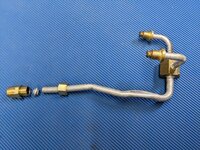
Manifold1.jpg

Manifold2.jpg
 
To avoid these ads, REGISTER NOW!

CoogarXR

Well-known member
Joined
Jan 11, 2016
Messages
6,856
Location
Ohio
I would take it in to a HVAC supply house and see what the old dudes at the counter say. We have a nice, old HVAC supply here, and they know their stuff. They helped me get my old 1970s furnace going.
 
OP
R

R_C

Well-known member
Joined
Mar 6, 2018
Messages
144
Location
Wyoming
I would take it in to a HVAC supply house and see what the old dudes at the counter say. We have a nice, old HVAC supply here, and they know their stuff. They helped me get my old 1970s furnace going.

That's a good idea. I will give that a shot tomorrow.
 
OP
R

R_C

Well-known member
Joined
Mar 6, 2018
Messages
144
Location
Wyoming
is it 1/2" OD?
I would be tempted to remake the pipes with soft copper & silver solder the brass connections to the copper. probably not code compliant but....

The long broken tube is 3/8" OD and the two short tubes feeding the burner are a bit smaller around .31" OD. My concern is compromising the short tube solder joints when heating the brass. If it was possible to re-flare the existing tube that would be an option. Then the tube would be maybe 1/2" shorter but I'm sure I can reposition the gas valve to accommodate. But I've only flared copper a few times and that was a simple single flare. I don't know if a single flare is sufficient for gas and I guess that would require a different fitting to mate with the flare.
 

Bert_

Well-known member
Joined
Dec 24, 2016
Messages
9,744
Location
NW Iowa
Compression coupling and a short piece of copper tube.

And quit messing with the gas valve! :)
 

Firebrick43

Well-known member
Joined
May 12, 2015
Messages
14,070
Location
West central Indiana
The long broken tube is 3/8" OD and the two short tubes feeding the burner are a bit smaller around .31" OD. My concern is compromising the short tube solder joints when heating the brass. If it was possible to re-flare the existing tube that would be an option. Then the tube would be maybe 1/2" shorter but I'm sure I can reposition the gas valve to accommodate. But I've only flared copper a few times and that was a simple single flare. I don't know if a single flare is sufficient for gas and I guess that would require a different fitting to mate with the flare.
The existing tube has work hardened at the end and fatigued/cracked. You are not going to reflate it. I have never seen that type of flaring tool. It looks to emulate a compression fitting without being a compression fitting.

I agree with cobbler. Replace the left hand fitting with an actual 1/4”nptf to 3/8 45 degree flare fitting. Solder and flare a new copper tube on. Jig it so even if it does reflow the solder the other two tube don’t go anywhere.

Next part is a little confusing

You can use silver solder. Silver solder is actually a form of brazing and melts at 1100-1150 degrees which is way to close the aluminum melting point of 1220.

Even more confusing is there is a good brazing alloy/flux for joining aluminum to copper and the ironic thing is it’s called AlumaBraze even though it has a lower melting temp of 900 f. It’s made by uniweld
 

Firebrick43

Well-known member
Joined
May 12, 2015
Messages
14,070
Location
West central Indiana
Isn't that picture showing a compression fitting?
No, it’s showing an aluminum line that has been put into two dies and move towards each other to upset the tube in a fashion that emulates the outside dimensions of a compression fitting. It may even use the same fitting and nut(hard to tell without measuring).

True compression fittings seal where the olive self swages/crimps on the line. This fitting seals on the face in a similar fashion to euro brake like bubble flares.
 
OP
R

R_C

Well-known member
Joined
Mar 6, 2018
Messages
144
Location
Wyoming
The existing tube has work hardened at the end and fatigued/cracked. You are not going to reflate it. I have never seen that type of flaring tool. It looks to emulate a compression fitting without being a compression fitting.

I agree with cobbler. Replace the left hand fitting with an actual 1/4”nptf to 3/8 45 degree flare fitting. Solder and flare a new copper tube on. Jig it so even if it does reflow the solder the other two tube don’t go anywhere.

Next part is a little confusing

You can use silver solder. Silver solder is actually a form of brazing and melts at 1100-1150 degrees which is way to close the aluminum melting point of 1220.

Even more confusing is there is a good brazing alloy/flux for joining aluminum to copper and the ironic thing is it’s called AlumaBraze even though it has a lower melting temp of 900 f. It’s made by uniweld

Thanks. This is very helpful. I read up on AlumaBraze and it appears to be for joining aluminum to aluminum and aluminum to copper. Since I would be joining the new copper tube to the brass junction I would need silver brazing and not AlumaBraze. I have some silver alloy brazing rod (56% Ag / 22% Cu / 17% Zn / 5% Sn), which is the identical composition of Silvaloy 560 used in a YouTube video I just watched. So if I jig as you suggested so there is no movement of the two short tubes should I be able to braze the new copper tube to the brass fitting?
 
OP
R

R_C

Well-known member
Joined
Mar 6, 2018
Messages
144
Location
Wyoming
I agree the OP should check with the more experienced advisors at the Wholesale HVAC Supply.

I agree and that is my plan for tomorrow. And the more I can learn beforehand the better I will understand their recommendations.
 

Firebrick43

Well-known member
Joined
May 12, 2015
Messages
14,070
Location
West central Indiana
Thanks. This is very helpful. I read up on AlumaBraze and it appears to be for joining aluminum to aluminum and aluminum to copper. Since I would be joining the new copper tube to the brass junction I would need silver brazing and not AlumaBraze. I have some silver alloy brazing rod (56% Ag / 22% Cu / 17% Zn / 5% Sn), which is the identical composition of Silvaloy 560 used in a YouTube video I just watched. So if I jig as you suggested so there is no movement of the two short tubes should I be able to braze the new copper tube to the brass fitting?

I am sorry didn’t spell that out quite right. If you use silver solder which would require bringing the brass manifold nut thingie up to 1150 it would possibly melt the other tubes.

If you cut off say an inch and a half of the original tube you can then use alumabraze to attach a copper tube to the end and flare the end of it with a standard 45 degree flare. The copper tube can be annealed and then expanded to fit over the aluminum tube for surface area. Jigging is just a safety to keep things from moving if the temp goes above the flow temp

Using silver solder/brazing is way to hot for those tubes and whatever form of solder they used

 
OP
R

R_C

Well-known member
Joined
Mar 6, 2018
Messages
144
Location
Wyoming
I am sorry didn’t spell that out quite right. If you use silver solder which would require bringing the brass manifold nut thingie up to 1150 it would possibly melt the other tubes.

If you cut off say an inch and a half of the original tube you can then use alumabraze to attach a copper tube to the end and flare the end of it with a standard 45 degree flare. The copper tube can be annealed and then expanded to fit over the aluminum tube for surface area. Jigging is just a safety to keep things from moving if the temp goes above the flow temp

Using silver solder/brazing is way to hot for those tubes and whatever form of solder they used


Thanks for clarifying. That makes much more sense. I have never used a swaging tool or annealed copper. But a little more reading and a few videos and I understand the process. It looks simple. Now I have some direction. Thanks again.
 
To avoid these ads, REGISTER NOW!

Bert_

Well-known member
Joined
Dec 24, 2016
Messages
9,744
Location
NW Iowa
No, it’s showing an aluminum line that has been put into two dies and move towards each other to upset the tube in a fashion that emulates the outside dimensions of a compression fitting. It may even use the same fitting and nut(hard to tell without measuring).

True compression fittings seal where the olive self swages/crimps on the line. This fitting seals on the face in a similar fashion to euro brake like bubble flares.
I think you might be right. The picture isn't clear enough for me tell easily
 
OP
R

R_C

Well-known member
Joined
Mar 6, 2018
Messages
144
Location
Wyoming
I woke up thinking about another option. What about removing the aluminum input tube at the brass hex junction, drilling and tapping for a fitting then using flexible metal gas line to connect the manifold to the gas valve. I don't know if there is enough meat in the brass hex junction for a fitting. But could this be a viable plan B if I fail on the plan A Firebrick described (swaging a short length of annealed copper over the aluminum)?
 
OP
R

R_C

Well-known member
Joined
Mar 6, 2018
Messages
144
Location
Wyoming
I made it into town today and visited two plumbing supply shops. The first didn't do anything with propane but the manager thought swaging a short length of copper tube over the aluminum and using a flare fitting on the other end would work. The second shop was more helpful, had the 3/8 NPT to 3/8 Flare fitting, and thought the proposed solution was worth a try. He also thought my plan B of cutting the aluminum tube from the brass hex, drilling and tapping for a 1/4 NPT fitting and using flexible gas line was another option depending on what is inside that brass hex junction. As long as the new hardware doesn't reduce the gas flow he thought that could also work. I have a swaging tool and the Aluma-Braze on order so I am hoping to give it a shot this weekend. I'll post my results. Thanks for all the help.
 
OP
R

R_C

Well-known member
Joined
Mar 6, 2018
Messages
144
Location
Wyoming
The plumbing and heating contractor finally got back to me and said the stove I had suggested (Napolean Arlington) was no longer available with the millivolt gas valve. I looked at the stove's parts list and saw that it uses the same SIT-820 Nova mV valve that I used when I replaced the Honeywell valve on my Vermont Castings a few years ago. That valve is still readily available. Whenever I do replace my stove, it is important that I have one that doesn't require electricity to run. Are such propane stoves still available?

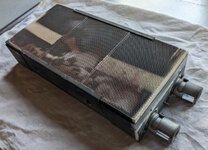
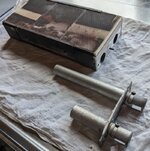
Meanwhile, while waiting for the supplies to repair the manifold I have been cleaning the stove. The debris on and in the burner may have been the real problem. Its been a few years since I cleaned the burner when I know I should do it annually. One of the faux log support brackets had mostly disintegrated on top of the burner. It's not the first and I'm sure not the last time I overlook the simple solution and head right for the more complex. I brushed then removed and inverted the burner box and an awful lot of debris fell out. I had never seen a propane burner up close and I am surprised how simple they are. The manifold doesn't even physically connect to the burner. The two tubes of the burner box just sit over the two gas orifices. I have been reading up on the theory of operation to learn more.

I have a couple of questions. Why would the stove owner's manual caution not to vacuum the burner to clean? If the faux logs and the lava rocks are removed I can't see the harm in vacuuming to clean. Is the current technology in gas burners significantly different and more efficient than this 25-year-old burner? Any thoughts or comments will be appreciated. Here are a couple pictures of the cleaned burner.

Propane burner1.jpg

Propane burner2.jpg
 
OP
R

R_C

Well-known member
Joined
Mar 6, 2018
Messages
144
Location
Wyoming
The manifold repair was a success! I couldn't have done it without the help from this forum. Thanks for the comments and suggestions. Here is the repaired manifold.
Manifold repair.jpg

The first copper swage was much too loose on the aluminum tube so I removed several thousandths from the swaging tool on the lathe until I got a snug fit. The Aluma-Braze worked like a charm. For confidence before installation, I pressure tested the repair at 30 psi, which is considerably more than the 11 inches water column pressure (0.4 psi) into the stove.
Manifold repair test.jpg

I also had to fabricate a faux log support bracket to repair the one that had disintegrated. Now that I have had the fire box disassembled, I see that there are just four main components: pilot assembly, gas valve, manifold, and burner. I already have the SIT-820 Nova mV gas valve, which is the replacement for the original Honeywell valve. I have replaced the pilot's thermocouple and thermopile before and I have backups. But I also ordered the complete compatible pilot assembly that SIT offers so I will have a spare. That leaves the manifold and burner. The manifold is good to go and the burner works fine. I did find replacement ceramic burner tiles so I may just order those for backups. Finally, I ordered a new carbon monoxide and propane detector. The stove now starts normally and works great. And the repair saved us several thousand for a new stove. Thanks again for the help.
 

Firebrick43

Well-known member
Joined
May 12, 2015
Messages
14,070
Location
West central Indiana
I think the caution of vacuuming is just so someone doesn't draw a cinder up into the vacuum and start a fire. It probably was pulled by the technical writers of the manual, from the wood burning version of your stove.
 
OP
R

R_C

Well-known member
Joined
Mar 6, 2018
Messages
144
Location
Wyoming
I think the caution of vacuuming is just so someone doesn't draw a cinder up into the vacuum and start a fire. It probably was pulled by the technical writers of the manual, from the wood burning version of your stove.

After re-reading the caution in the owner's manual below, I think the warning not to vacuum applies when the logs are in place. Now that I know the burner is just a 5-sided sheet metal rectangle capped with ceramic tile, I see no reason why I can't clean the burner with a vacuum after the logs and lava rocks are removed. Maybe they don't want people messing with the logs. To me, a proper cleaning requires removing the logs and lava rocks.

Do not vacuum.jpg
 
OP
R

R_C

Well-known member
Joined
Mar 6, 2018
Messages
144
Location
Wyoming
super job!

Thanks. I am very pleased with the results and with the awesome help from this forum. Saved three grand for a new stove plus the installation fees and kept a still nice looking stove out of the landfill.
 

trainer

Well-known member
Joined
Nov 28, 2005
Messages
2,019
Location
Northern Ontario, Canada
I have a Vermont castings NG fireplace that's the same vintage as yours .

A few years ago it quit so I had a technician look at it. He said the gas valve was bad and the parts were unavailable, I would need a new fireplace.
I dug around and sourced a SIT retrofit kit and had him install it. A week later it quit again. Same symptoms, the pilot would go out after a few cycles. He claimed the thermocouple and thermopile tested ok and I had a gotten a faulty valve.
I tried a new thermopile and that fixed it.
Lesson learned. The thermopile can get weak on a millivolt system and still test fine. I wasted $700 when a $20 fix was all I needed.
 

The Cobbler

Super Moderator
Staff member
Joined
Oct 24, 2013
Messages
25,913
Location
Niagara Region, Ontario, Canada
^^^ similar story , a buddy had problems with a gas fireplace. repair guy said bad gas valve, no longer available. have to buy a new fireplace.
all it was , was a bad wire connection on the t-stat ( millivolt )
 
OP
R

R_C

Well-known member
Joined
Mar 6, 2018
Messages
144
Location
Wyoming
Three years ago during a week of 20 below nights, the stove began shutting off but the pilot remained lit. The thermopile tested good but I swapped in a new spare with no luck I spoke with a technician who wouldn't come out because parts weren't available but he said it sounded like the gas valve. That's when I found the SIT valve and installed it but I still had the same problem. Then I went out to the propane tank, shoveled several feet of snow off the top to check the propane level and noticed the regulator was covered in ice. I had switched propane supplier the previous summer and they installed their own tank and hardware. When I described the iced regulator they acknowledged they installed the wrong regulator for this altitude. After they replaced the regulator the stove worked fine.
 

pieterw

New member
Joined
Jan 22, 2024
Messages
1
I am in the exact same boat as the OP. I replaced the defective millivolt gas valve on our Vermont castings propane stove and the line from valve to burner cracked on the aluminum tubing. I plan on replacing the full line with copper and flare fittings if I can find the right adapters to go from the 3/8” output from valve to a tee with 1/4 outputs
 
OP
R

R_C

Well-known member
Joined
Mar 6, 2018
Messages
144
Location
Wyoming
I am in the exact same boat as the OP. I replaced the defective millivolt gas valve on our Vermont castings propane stove and the line from valve to burner cracked on the aluminum tubing. I plan on replacing the full line with copper and flare fittings if I can find the right adapters to go from the 3/8” output from valve to a tee with 1/4 outputs

Please let us know your results and include a picture if you can.
 
To avoid these ads, REGISTER NOW!
Top Bottom