To avoid these ads, REGISTER NOW!

Fixed it

My Old Tools

Well-known member
Joined
Jun 4, 2014
Messages
5,424
Location
Hamrick Lake, TX
I had been noticing for awhile that we had an LED lamp that flickered or dimmed occasionally. Then I noticed it seemed to correlate to a change in frequency of the ice maker compressor noise. I started looking for it today. I pulled the front off our main panel (20 year old Square D). I immediately noticed one of the main feed wire looked discolored on one side and it felt warm. I killed the main and took a half turn on the lug. Thought that was it. Turned on the power and the light flickered again. Started to pull the breaker for that circuit when I saw sparks come from behind that main lug. I killed power again and pulled the incoming line off the lug and I could see the top of the buss bar discolored behind it. I worked the lug around a bit and got it freed up. Re-tightened the lug on the feed line and really cranked it down. I think i have it now. That panel has been in place at least 20 years.

 
To avoid these ads, REGISTER NOW!

mm08822

Well-known member
Joined
Jan 13, 2012
Messages
5,847
Location
NJ
Keep an eye on it once you have sustainable loads............electric heaters or more likely ac.
 

PCustoms

Well-known member
Joined
Jul 23, 2011
Messages
22,227
Location
VT
started looking for it today. I pulled the front off our main panel (20 year old Square D). I immediately noticed one of the main feed wire looked discolored on one side and it felt warm. I killed the main and took a half turn on the lug. Thought that was it. Turned on the power and the light flickered again. Started to pull the breaker for that circuit when I saw sparks come from behind that main lug. I killed power again and pulled the incoming line off the lug and I could see the top of the buss bar discolored behind it. I worked the lug around a bit and got it freed up. Re-tightened the lug on the feed line and really cranked it down. I think i have it now. That panel has been in place at least 20 years.

Wasn't this hot as you did the work?
 

PCustoms

Well-known member
Joined
Jul 23, 2011
Messages
22,227
Location
VT
Did you cut the smashed strands and start with fresh wire?

Did you use a torque wrench? Doesnt sound like it. Lugs have specific torque values. Under torquing is just as bad as over torquing.
I got up to grab a drink and when I got back you already posted my next thoughts. Cranking down on wire that was already fubar did more harm then good
 
OP
M

My Old Tools

Well-known member
Joined
Jun 4, 2014
Messages
5,424
Location
Hamrick Lake, TX
Did you cut the smashed strands and start with fresh wire?

Did you use a torque wrench? Doesnt sound like it. Lugs have specific torque values. Under torquing is just as bad as over torquing.
No. It tightened on the wire without fully clamping the buss bar. The lug was burred or binding somehow. After I loosened it completely and worked it around a bit to get it moving, I locked it back down. Wire is now cool and everything is stable. With a 5 inch Allen, I'm pretty comfortable that I didn't hurt it.
 

mm08822

Well-known member
Joined
Jan 13, 2012
Messages
5,847
Location
NJ
A pic would be good to see how far the heat traveled in both directions.

What color is the lug and what is the condition of the conductor insulation?
Is this Al or Cu conductor?
Was the set screw in the lug galling as you turned it?
 

wyliesdiesels

Well-known member
Joined
Aug 14, 2012
Messages
19,983
Location
Modesto, CA
No. It tightened on the wire without fully clamping the buss bar. The lug was burred or binding somehow. After I loosened it completely and worked it around a bit to get it moving, I locked it back down. Wire is now cool and everything is stable. With a 5 inch Allen, I'm pretty comfortable that I didn't hurt it.
That is not the proper procedure for torquing a lug….
 

Norcal

Well-known member
Joined
Mar 16, 2008
Messages
13,750
If it was the main panel, the conductors entering the main breaker have no overcurrent/short circuit protection at all, the consequences of a screw up is very high.
 

reader2580

Well-known member
Joined
Dec 31, 2014
Messages
14,514
Location
Minneapolis, MN
Did you use a torque wrench? Doesnt sound like it. Lugs have specific torque values. Under torquing is just as bad as over torquing.
I’m curious, do you actually look up the torque values for every single thing you tighten down, and use a torque wrench on them all? I think I would spend more time trying to find torque values for everything than actually doing the work.

My understanding is torque screwdrivers are required in the UK.
 

mike93lx

ALLIANCE MEMBER
Joined
Dec 9, 2013
Messages
37,356
Location
Richmond, VA
I’m curious, do you actually look up the torque values for every single thing you tighten down, and use a torque wrench on them all? I think I would spend more time trying to find torque values for everything than actually doing the work.

My understanding is torque screwdrivers are required in the UK.
Electrical stuff is often (always?) labeled with the torque spec
 
To avoid these ads, REGISTER NOW!

manwithtools

ALLIANCE MEMBER
Joined
Aug 24, 2015
Messages
13,639
Location
Lebanon, TN
I’m curious, do you actually look up the torque values for every single thing you tighten down, and use a torque wrench on them all? I think I would spend more time trying to find torque values for everything than actually doing the work.

My understanding is torque screwdrivers are required in the UK.
As @mike93lx said, the components (breakers, neutral and ground bars, bus lugs, etc.) are already labeled with the correct torque required. Technically every termination has a torque spec, including outlets and switches. Most electricians don't torque outlets and switches, but they should. Good electricians do torque breakers and panel terminations at the very least.
 
OP
M

My Old Tools

Well-known member
Joined
Jun 4, 2014
Messages
5,424
Location
Hamrick Lake, TX
When I said our main panel, it is a sub now. When the house was built it was the main, and still has 95% of the breakers. So yes, I killed power to the panel. I'm a EE and I've been doing my own electrical work for 50 years. Not a professional electrician, but adequate. I'll take a slightly over torqued set screw over a loose arcing connection all day, every day. As I said, the wiring is now cool (copper by the way) and the lights no longer flicker, so I'll claim success.

After my last house that was built by a professional electrical contractor that did high end subdivisions around Dallas, I think my skills are ok. That 1/2 million $ house had undersized breakers on one AC unit, a wire not even tightened on the breaker on another AC unit, and a couple of plugs he never bothered to connect at all, even though they were wired. It was his personal home and 2 years old. Bought it in 2009 when he went broke in the housing crash.
 

wyliesdiesels

Well-known member
Joined
Aug 14, 2012
Messages
19,983
Location
Modesto, CA
I’m curious, do you actually look up the torque values for every single thing you tighten down, and use a torque wrench on them all? I think I would spend more time trying to find torque values for everything than actually doing the work.

My understanding is torque screwdrivers are required in the UK.
I do and they arent hard to find.
 
OP
M

My Old Tools

Well-known member
Joined
Jun 4, 2014
Messages
5,424
Location
Hamrick Lake, TX
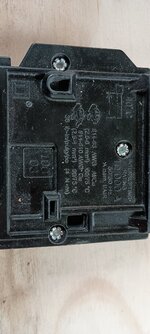
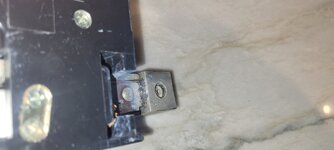
I ended up changing out the 200 amp main disconnect breaker that had the lugs. That one lug had heated, sputtered, and welded until it ultimately was no longer safe. It just wouldn't make a solid connection anymore. Fortunately HD had a QOM2200VH on the shelf, so I was there before 7 the next morning to get it. 30 minutes later I feel much better about it.
 

Attachments

  • resize1737044317405.jpg
    resize1737044317405.jpg
    198.7 KB · Views: 54
  • resize1737044317569.jpg
    resize1737044317569.jpg
    323.1 KB · Views: 54
  • resize1737044317749.jpg
    resize1737044317749.jpg
    282.8 KB · Views: 54
  • resize1737044317899.jpg
    resize1737044317899.jpg
    315.1 KB · Views: 55

dave*99

Well-known member
Joined
May 5, 2009
Messages
4,247
Location
Coastal NJ
I ended up changing out the 200 amp main disconnect breaker that had the lugs. That one lug had heated, sputtered, and welded until it ultimately was no longer safe. It just wouldn't make a solid connection anymore. Fortunately HD had a QOM2200VH on the shelf, so I was there before 7 the next morning to get it. 30 minutes later I feel much better about it.
I'm curious as to how you got from "fixed it" to reopening and changing the breaker? GJ guilt? Curiosity? Flickering?
 

mm08822

Well-known member
Joined
Jan 13, 2012
Messages
5,847
Location
NJ
Open the housing on the old main cb and see how far the heat damage traveled.

Try a 4" grinder with cutoff wheel to delicately open it up.
 

PCustoms

Well-known member
Joined
Jul 23, 2011
Messages
22,227
Location
VT
Pretty solid now. Why would you expect something else?
My industry experience and thermography certifications.

That little bit that looked bad in the first place was just the top of the damage that occurred due to the original loose connection. You got a little more of it by swapping the breaker, but you. Certainly haven't posted enough for anyone to tell if it ended there. Or if the wire upstream needs more work.

Frankly for what you paid for that main breaker it might have been easier/cheaper to swap the panel. Assuming the same panel is available it could have been as easy as swapping the guts.
 
OP
M

My Old Tools

Well-known member
Joined
Jun 4, 2014
Messages
5,424
Location
Hamrick Lake, TX
My industry experience and thermography certifications.

That little bit that looked bad in the first place was just the top of the damage that occurred due to the original loose connection. You got a little more of it by swapping the breaker, but you. Certainly haven't posted enough for anyone to tell if it ended there. Or if the wire upstream needs more work.

Frankly for what you paid for that main breaker it might have been easier/cheaper to swap the panel. Assuming the same panel is available it could have been as easy as swapping the guts.
Panel is fine. No sign of any heat beyond that one lug on the breaker. The way those breakers mount, the whole thing would have to melt down to pass any significant heat through to the rest of the panel.
 

PCustoms

Well-known member
Joined
Jul 23, 2011
Messages
22,227
Location
VT
Panel is fine. No sign of any heat beyond that one lug on the breaker. The way those breakers mount, the whole thing would have to melt down to pass any significant heat through to the rest of the panel.
I hope so.
 
Last edited:
To avoid these ads, REGISTER NOW!
Top Bottom