To avoid these ads, REGISTER NOW!

Framing interior walls with metal studs

branimal

Well-known member
Joined
May 31, 2016
Messages
1,938
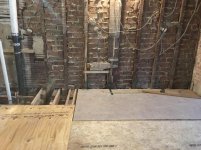
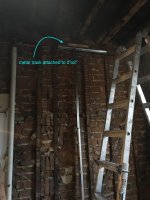
I am prepping to install metal studs around the internal perimeter of a gut reno job. The walls & ceiling were plaster and lathe and is now ripped down to brick and wood studs. This is a 100 year old attached home - internal measurement 18’ x 56’. It has a flat roof pitched downwards towards the back of the building. The bottom of the roof joists are 14’ higher than the subfloor in the front and 12’ higher in the back.

I have a few questions on the process.

1. Do I install the interior wall studs before the ceiling framing? Or vice versa?
2. Do I run the wall studs all the way to the roof joists? I couldn’t think of another way to get the top channel secured. What heights should I install blocking b/w the vertical studs?
3. Is there a minimum stud width I should run at different parts of the home? In the kitchen and bathrooms I’m going to run 3 5/8” to run the plumbing. On the party walls can I run thinner studs? Space is at a premium here in Brooklyn. What about the windowed walls that face the front and back of the home?
4. Is 20 gauge adequate for residential structures?
5. Do I need to screw my vertical studs into the existing wood framing b/w the brick party walls? Or will securing the studs to the channels suffice? I will install blocking at x feet. I’m worried the wood framing isn’t plumb after all these years.
6. How do I get the channels laid down square? I don’t think the existing walls are square so I’m not sure where to take a measurement from.


Thanks for the help!!
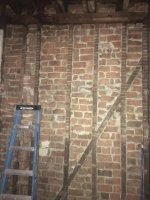
 

Attachments

  • IMG_4108.jpg
    IMG_4108.jpg
    101.9 KB · Views: 214
  • IMG_4111.jpg
    IMG_4111.jpg
    119.1 KB · Views: 182
  • IMG_4114.jpg
    IMG_4114.jpg
    150.8 KB · Views: 180
  • IMG_4109.jpg
    IMG_4109.jpg
    137.6 KB · Views: 154
To avoid these ads, REGISTER NOW!

acer66

Well-known member
Joined
Dec 4, 2010
Messages
4,418
Location
Western North Carolina
Those are some cool looking walls, never seen them done like that.

If you are going to insulate I would frame a wall before the exterior wall if not I would run horizontal 1x and shim them out unless the room is big enought for a separate wall anyway.

I am not sure if you can use metal studs if they are supporting a ceiling or are you going to use the existing ceiling joists?
 

Justind97

Well-known member
Joined
Oct 6, 2014
Messages
691
Location
Ottawa, Canada
1. Stud walls first. Then ceiling strapping.

2. Studs all the way to the joists. Block about half way.

3. There is no minimum stud width per say, but standard 2x4s would be in your best interest if you plan on running electrical in the walls. Allows for standard size electrical boxes and safe enough stand off for wires to be run through the studs and avoid getting clipped by a drywall screw.
Windowed walls need to be insulated. 2x4s definitely.

4. Steel is not generally used in residential, although I'm starting to see it more and more. It is more expensive in most cases, and a pain in the **** to screw into. Using thin gauge, screws can also push the stud sideways and give it the illusion the screw is in the stud.

5. Your new stud walls should fit just about snug floor to ceiling. Then screwed/nailed to the floor and joists. Make it plumb and away you go. There is no requirements that the wall has to be attached to another wall. As long as it is solid, rock and roll.

6. Build your stud wall and then raise it up to the wall and make it plumb. If your house is out of square, don't worry about making the walls perfectly square to each other if you're losing more than an inch or so to make it perfect. In the end, you won't really notice. And if you do, chalk it up to "an old house"
 

TRWham

Well-known member
Joined
Aug 11, 2017
Messages
1,961
Location
East Cobb County, Georgia
The following is based on my experience and observation. Practice may vary from area to area and contractor to contractor.

1. Usually metal studs are used in spaces with suspended ceiling so the walls go up first. You can support ceiling joists on metal stud walls.

2. In commercial, the walls are usually braced to the structure with diagonals and most studs do not go to the deck except as needed for bracing. The corners also get diagonal braces from wall to wall. The height of the wall is normally a little higher than the suspended ceiling, but if you are framing the ceiling with joists, the top of the track should be at the intended elevation of the ceiling plus the thickness of the ceiling cover (presumably drywall) and floor system. The exception would be firewalls that need to be sealed from floor to deck so every stud goes to the deck.

ETA You can span ceiling joists from stud to stud if the studs go to the deck or above the ceiling height.

Blocking is mostly a fire code question, so I would verify what your AHJ requires.

3. You might allow a thicker wall for pipe chases, but that depends on what you need to put into the wall. Don't forget to account for wall thickness when you select door frames. If you use steel frame commercial doors, they come in several sizes to account for total wall thickness (studs and drywall thickness vary by application). Residential doors are usually available for 3.5" and 5.5" stud walls and you may need to adjust the jambs to fit. Yes, you could simply furr out the existing common walls.

4. 20 ga should be adequate

5. You are going to have to choose space, stiffness or plumb walls. If you build a thin wall independent of the building wall it will flex. If you tie the wall to the building it will need to be shimmed to the structure to remain plumb. If you build a thicker independent wall then you lose a little space.

6. Old buildings are always skewed. The new walls cannot be square to everything so pick your poison. You can most easily make your new corners square and concentrate the error where the new walls meet the existing walls. The rule of thumb is "what looks right is right" when it comes to remodeling old buildings (and many other aspects of construction).

Clark Dietrich is a good reference for all things metal framing:

https://www.clarkdietrich.com/products/curtain-wall-framing/structural-studs/structural-stud-design-tools-and-tables
 
Last edited:
OP
B

branimal

Well-known member
Joined
May 31, 2016
Messages
1,938
2. Studs all the way to the joists. Block about half way.

5. Your new stud walls should fit just about snug floor to ceiling. Then screwed/nailed to the floor and joists.

My floor to ceiling height slopes due to the pitched roof all throughout the house. I measured from the roof joists to a leveled floor in one section.

Theres a 4" drop over 6'. Can I run the channel sloped on the joists and cut each stud to fit?

I can shim low spots on the channel if necessary.


Thanks!!!
 
Last edited:

Justind97

Well-known member
Joined
Oct 6, 2014
Messages
691
Location
Ottawa, Canada
My floor to ceiling height slopes due to the pitched roof all throughout the house. I measured from the roof joists to a leveled floor in one section.

Theres a 4" drop over 6'. Can I run the channel sloped on the joists and cut each stud to fit?

I can shim low spots on the channel if necessary.


Thanks!!!

As long as you don't mind sloped ceilings, no issues!
 

readhead

Well-known member
Joined
Dec 8, 2012
Messages
6,177
Location
Durango, Co.
If you want to use 20ga studs I would use a slip track under the rafters. When you have a snow load on the roof there can be a potential to crush the studs. Why steel instead of wood?
 
OP
B

branimal

Well-known member
Joined
May 31, 2016
Messages
1,938
As long as you don't mind sloped ceilings, no issues!

I didn't explain my problem appropriately.

My finished ceiling will be 10' off the finished floor. The bottom of the roof joists measure 12'.

What do I attach the top track to? I mistakenly called it a metal channel.

If I attach the top metal track to the joists, it's nice and sturdy.

Then I can shoot a laser level around the room at 10' to attach my ceiling framing.

Is there a better way?

Thanks
 

Attachments

  • IMG_4129.jpg
    IMG_4129.jpg
    64.8 KB · Views: 38
Last edited:

readhead

Well-known member
Joined
Dec 8, 2012
Messages
6,177
Location
Durango, Co.
I would frame all the walls so you have a place to land the joists. I'm presuming there are plans and permits in place. What do the plans call out for framing material?
 
OP
B

branimal

Well-known member
Joined
May 31, 2016
Messages
1,938
From what I've seen in NYC light gauge metal studs are pretty much standard practice for most renovations. Lightweight, always straight, doesn't warp, etc.

The studs I'm putting up are not structural or intended for carrying any load other than drywall, cement board, tile.

There are no plans in place. This my building that I'm renovating.

Good point on the snowload @readhead.
 

readhead

Well-known member
Joined
Dec 8, 2012
Messages
6,177
Location
Durango, Co.
Where I'm going with this is from what little I can see the rafters may be small for the span. It is possible that the interior walls were providing some support. I've worked on a lot of similar old brick structures where I installed steel support structures to be able to have large open spaces. I appreciate that this is your building but you may be exceeding your experience level here. From the tone of your questions you seem to be over your head on the structural issues and could be compromising the integrity of the building. Just because someone else is using metal studs doesn't mean it is the correct material for you to use.

I'm sensing that you may be avoiding plans, engineering and permits to avoid the cost which would put this project out of reach financially. I fully respect property rights but you may be setting yourself up for disaster down the road. If I'm wrong I apologize but please don't put yourself or others in harms way.
 

MushCreek

Well-known member
Joined
Jan 14, 2015
Messages
9,763
Location
Upstate South Carolina
In our house, I used steel studs, fastening the top track to the bottom chord of the truss; in other words- to the ceiling framing. Why steel? Starts straight; stays straight, light to carry bundles of studs, and in my case, slightly cheaper. I used 20 ga. from a good drywall supplier, and it was about $100 cheaper than equivalent wood. For a beginner, it was more labor intensive. I had too much trouble using the self-drilling screws, and switched over to pop rivets. There are lots of little things- grommets to protect wiring and plumbing, wood in doorways and other openings, wood blocks to attach things to such as wall cabinets, and using trim screws for trim instead of a finish nailer.
 
OP
B

branimal

Well-known member
Joined
May 31, 2016
Messages
1,938
readhead; said:
Where I'm going with this is from what little I can see the rafters may be small for the span. It is possible that the interior walls were providing some support. I've worked on a lot of similar old brick structures where I installed steel support structures to be able to have large open spaces.

Before I started demolition, I was concerned that the partition walls were load bearing.

- The perimeter walls were just plaster and lathe. No framing going up to the roof joists.


- 90% of the interior partition wall's top plates didn't touch the roof joists. I thought that was odd for a 19x57 building. Perhaps they sagged? Or maybe the original construction wasn't done properly. The joists vary in actual width from 3" to 3 3/4" wide.

- The roughly 10% where the top plate touches the joists I left in place and plan to add wood beams in those areas.
 
OP
B

branimal

Well-known member
Joined
May 31, 2016
Messages
1,938
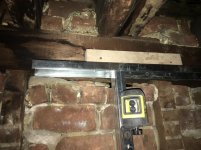
My new plan is to screw a 2”x3” wood stud into the wood frame of the house at the correct height all around the interior. I’m using a laser to level. And then attach the top metal track to the 2x3 stud. I did a test run in a small area and it seems to work no problem.

Is this method of attaching the top metal track acceptable?
 

Attachments

  • IMG_4139.jpg
    IMG_4139.jpg
    79.6 KB · Views: 40
  • IMG_4140.jpg
    IMG_4140.jpg
    150.4 KB · Views: 40
To avoid these ads, REGISTER NOW!

Tyberius

Well-known member
Joined
Nov 26, 2013
Messages
312
Location
Wilmette, IL
I used a suspended ceiling in my last metal studded build.

A laser level to sight the metal track on the stud as you did, and then begin building the metal grid to span from side to side. Wire supports the grid off of the ceiling joists (in my case, off of the concrete ceiling).

My new plan is to screw a 2”x3” wood stud into the wood frame of the house at the correct height all around the interior. I’m using a laser to level. And then attach the top metal track to the 2x3 stud. I did a test run in a small area and it seems to work no problem.

Is this method of attaching the top metal track acceptable?
 

GrayFlattop

Well-known member
Joined
Jan 18, 2018
Messages
1,039
Location
Chicago
I didn't explain my problem appropriately.

My finished ceiling will be 10' off the finished floor. The bottom of the roof joists measure 12'.

If I had 12' ceilings, I wouldn't want to lose that at all. 10' is nice, but unless you need the space for mechanicals, I would strongly reconsider lowering the ceiling - that's one of the things that make old buildings stand out and that people will ALWAYS comment on when seeing the space for the first time. The difference in cost is minor.
 

signcrafter

Well-known member
Joined
May 9, 2012
Messages
12,359
Your doing it the hard way with the 2x3s. Top track goes to deck, bottom track to floor. Layout using laser to get it square(ish) since it's an old building. Fill in measuring studs as you go. Cut the studs 1/2" shorter then would be tight between the bottom and top tracks. Screw the bottoms, if using the right screws there isn't an issue, I've screwed thousands of steel studs and never had an issue. If there is an issue buy a vice grips like these and clamp before you screw, https://www.toolup.com/Vise-Grip-11r-11-C-Clamp-Pliers-with-Regular-Tips-11R but think the smaller ones for what you're doing. Then I would crimp the tops with a stud crimper, this allows for expansion and contraction at different rates since you have different building materials.

Another option in your situation since your ceiling goes from 12-14' if I read right and your finished ceiling height is going to be 10' I would just run all the studs at 11'6" so there is no real measuring. You can build the walls first and stand or move into place and then use some angle(found where they sell studs) to screw the top plate of the wall to the wood every few feet. This will allow you to plumb the walls and no real measuring. If you do it this way don't crimp the top of the studs to the top plate, just screw like the bottom plates. If you don't go tight to a wood joist you don't have to worry about expansion and contraction at different rates between different materials.

For the ceiling look into metal track since you already using metal studs. It's just like a suspended ceiling but it basically frames out a ceiling you can drywall. Google it or ask your supply house about it. Use a laser to get it flat and straight.

Done. Steel studs are one of those things that after you know what you are doing they are so easy and quick it's not funny.
 

acer66

Well-known member
Joined
Dec 4, 2010
Messages
4,418
Location
Western North Carolina
If I had 12' ceilings, I wouldn't want to lose that at all. 10' is nice, but unless you need the space for mechanicals, I would strongly reconsider lowering the ceiling - that's one of the things that make old buildings stand out and that people will ALWAYS comment on when seeing the space for the first time. The difference in cost is minor.

Yes, having high ceilings makes a big difference.
 
OP
B

branimal

Well-known member
Joined
May 31, 2016
Messages
1,938
GrayFlattop; said:
If I had 12' ceilings, I wouldn't want to lose that at all. 10' is nice, but unless you need the space for mechanicals, I would strongly reconsider lowering the ceiling - that's one of the things that make old buildings stand out and that people will ALWAYS comment on when seeing the space for the first time. The difference in cost is minor.

I 100% agree with you on the ceiling height. But this is a rental in a 3-family house. As the landlord, I'm going to pay the additional heating cost. If the math is linear that's 20% more space I'd need to heat.
 
OP
B

branimal

Well-known member
Joined
May 31, 2016
Messages
1,938
signcrafter; said:
Another option in your situation since your ceiling goes from 12-14' if I read right and your finished ceiling height is going to be 10' I would just run all the studs at 11'6" so there is no real measuring. You can build the walls first and stand or move into place and then use some angle(found where they sell studs) to screw the top plate of the wall to the wood every few feet. This will allow you to plumb the walls and no real measuring. If you do it this way don't crimp the top of the studs to the top plate, just screw like the bottom plates. If you don't go tight to a wood joist you don't have to worry about expansion and contraction at different rates between different materials.

Thanks signcrafter! I'm going to build a small section of wall today using this method.

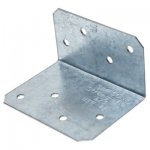
When you say metal angle you mean something like this?
 

Attachments

  • A23.01.jpg
    A23.01.jpg
    28.3 KB · Views: 3

signcrafter

Well-known member
Joined
May 9, 2012
Messages
12,359
Thanks signcrafter! I'm going to build a small section of wall today using this method.

When you say metal angle you mean something like this?

Yes those will work. Really anything would work, cut offs from tracks and studs. When we did commercial sometimes they would order the pieces like you had, sometimes we had longer 10-12' pieces of angle the same gauge as the tracks, sometimes we just used a piece of track flipped upside down on top of the top plate. We would get the wall built, and the nice thing with steel studs is you can easily build the wall in sections. Get the wall close to in position, set up a rotating laser, fasten the bottom track on the laser beam, set the piece of track your going to use to fasten to wall upside down on the top plate, screw to wall(studs in your case but we had all kinds of things we had to fasten to but mostly metal beams) then align the top of the wall with your laser line and screw the two sections of track together. Wall will be solid.

That's the nice part of steel studs. It's so easy to do things and there are many different ways to get it done. If you ever saw the behind the scenes of a metal stud building it usually doesn't look pretty. You will see all kinds of kickers and supports flying everywhere. But in the end, once the drywall is on and ceiling in, it's a thing of beauty.
 
Last edited:

GrayFlattop

Well-known member
Joined
Jan 18, 2018
Messages
1,039
Location
Chicago
I 100% agree with you on the ceiling height. But this is a rental in a 3-family house. As the landlord, I'm going to pay the additional heating cost. If the math is linear that's 20% more space I'd need to heat.

It's your property - of course you can do what you want. It likely won't matter when renting, but would matter if selling.
 

yeldogt

Well-known member
Joined
Jan 2, 2012
Messages
18,184
I 100% agree with you on the ceiling height. But this is a rental in a 3-family house. As the landlord, I'm going to pay the additional heating cost. If the math is linear that's 20% more space I'd need to heat.

That's not correct -- you are concerned about nothing. It's the top floor anyway.
 

yeldogt

Well-known member
Joined
Jan 2, 2012
Messages
18,184
What are you going to support the ceiling with?

Also those rubble brick fill in walls -- did you have them inspected? Depending on what is on the other side -- they may not meet code.

Not to be too harsh .. but, reading all your threads. I'm glad I'm not going to be living there.
 

readhead

Well-known member
Joined
Dec 8, 2012
Messages
6,177
Location
Durango, Co.
OP has refused to answer questions about plans, permits and structure. I suspect this is a case of hit and run remodel and collect the rent. Could bite him in the *** when the roof falls in.
 
OP
B

branimal

Well-known member
Joined
May 31, 2016
Messages
1,938
yeldogt; said:
What are you going to support the ceiling with?

Also those rubble brick fill in walls -- did you have them inspected? Depending on what is on the other side -- they may not meet code.

Not to be too harsh .. but, reading all your threads. I'm glad I'm not going to be living there.

Suspended ceiling with 12 gauge support wires off the joists above. I've been looking at the USG Drywall suspension system.

I had a masonry guy look at the brick wall. He suggested reinforcing it with mortar and wire-mesh.

Then two layers of 5/8 drywall.
 

Attachments

  • Screen Shot 2019-01-16 at 4.00.46 AM.jpg
    Screen Shot 2019-01-16 at 4.00.46 AM.jpg
    18.8 KB · Views: 10
OP
B

branimal

Well-known member
Joined
May 31, 2016
Messages
1,938
That's not correct -- you are concerned about nothing. It's the top floor anyway.
Heat rises so my assumption is the heat will move to the toward the ceiling. So on the margin it will cost more to heat a 12' space than a 10' space.
 
OP
B

branimal

Well-known member
Joined
May 31, 2016
Messages
1,938
signcrafter; said:
Yes those will work. Really anything would work, cut offs from tracks and studs. When we did commercial sometimes they would order the pieces like you had, sometimes we had longer 10-12' pieces of angle the same gauge as the tracks, sometimes we just used a piece of track flipped upside down on top of the top plate. We would get the wall built, and the nice thing with steel studs is you can easily build the wall in sections. Get the wall close to in position, set up a rotating laser, fasten the bottom track on the laser beam, set the piece of track your going to use to fasten to wall upside down on the top plate, screw to wall(studs in your case but we had all kinds of things we had to fasten to but mostly metal beams) then align the top of the wall with your laser line and screw the two sections of track together. Wall will be solid.

That's the nice part of steel studs. It's so easy to do things and there are many different ways to get it done. If you ever saw the behind the scenes of a metal stud building it usually doesn't look pretty. You will see all kinds of kickers and supports flying everywhere. But in the end, once the drywall is on and ceiling in, it's a thing of beauty.

Building on the ground made it quick. Put up the first short section of wall in 25 minutes. Only issue was the floor wasn't perfectly level so I shimmed up the floor. The studs were all plumb and flush with one another.

Thanks!
 
To avoid these ads, REGISTER NOW!
Top Bottom