To avoid these ads, REGISTER NOW!

Freeze protection for hot/cold outdoor hydrant

jmillican1983

Well-known member
Joined
Dec 23, 2018
Messages
52
Location
Behind my house
I installed this hydrant on the exterior of my shop and while it is a frost free hydrant, I would still like the option to cover it when it gets really cold out.


I can't find any covers that are big enough for this style hydrant. Any recommendations? Should I forget about it since it's already a frost free design?
 
To avoid these ads, REGISTER NOW!

Garcky

Well-known member
Joined
Sep 10, 2022
Messages
3,434
Location
Twin Cities Metro Area, Minnesota
It depends, I think, on how cold it gets where you are. In Minnesota, where it can go down to -25 degrees several times a year, no outdoor faucet is safe. Instead, there's a shut-off valve inside. Sometime in November, you turn off that valve and open the outside faucet to drain it and the pipe.

In my fourplex townhome, that valve is in my unit, in the utility room, It also has a separate valve that drains the pipe into the laundry sink. My unit's set-up drains the entire fourplex's outdoor faucets.

If you live in a relatively mild winter area, it might not be a concern with that particular faucet. But, below zero temps make any outdoor plumbing vulnerable.
 
OP
J

jmillican1983

Well-known member
Joined
Dec 23, 2018
Messages
52
Location
Behind my house
It depends, I think, on how cold it gets where you are. In Minnesota, where it can go down to -25 degrees several times a year, no outdoor faucet is safe. Instead, there's a shut-off valve inside. Sometime in November, you turn off that valve and open the outside faucet to drain it and the pipe.

In my fourplex townhome, that valve is in my unit, in the utility room, It also has a separate valve that drains the pipe into the laundry sink. My unit's set-up drains the entire fourplex's outdoor faucets.

If you live in a relatively mild winter area, it might not be a concern with that particular faucet. But, below zero temps make any outdoor plumbing vulnerable.
I live in Oregon. Sometimes is will get down into the single digits, but never below zero. Do you think it's fine as is down to the low teens?
 

mike93lx

ALLIANCE MEMBER
Joined
Dec 9, 2013
Messages
38,398
Location
Richmond, VA
I have frost free hydrants, and even in VA, I shut the feed off in the winter. It's critical to remove the hose as well.

In MA, I shut off the feed and blew out/drained the pipes.

Frost free is for protection in shoulder months, IMO. For single digit Temps, I would not trust them
 
OP
J

jmillican1983

Well-known member
Joined
Dec 23, 2018
Messages
52
Location
Behind my house
The first year I installed mine I left the hose hooked up and it froze and split. I replaced it and I removed the hose every winter since.
I do understand the need to remove the hose. I'll drain the lines instead of trying to find a suitable cover. Thanks for the replies.
 

mcbane

Well-known member
Joined
Jul 23, 2017
Messages
794
Location
California
I wouldnt use that valve in a single digit climate, and not even in low teens climate. Proper exterior hose bibs look like this: https://www.supplyhouse.com/Bluefin...ping&msclkid=5bb70176fda61729c78362ee560eb119

The main feature of a "frost proof" valve is that the valve is on the warm side of the wall, and the 12" of so of pipe from the valve to the hose threads self drains if you havent left a hose attached. As has been pointed out, even frost proof can fail. Ideally the valve part of the frost proof assembly is in a warm area and/or there is frequent water flow in the supply pipe it tees into.
 

mike93lx

ALLIANCE MEMBER
Joined
Dec 9, 2013
Messages
38,398
Location
Richmond, VA
I wouldnt use that valve in a single digit climate, and not even in low teens climate. Proper exterior hose bibs look like this: https://www.supplyhouse.com/Bluefin...ping&msclkid=5bb70176fda61729c78362ee560eb119

The main feature of a "frost proof" valve is that the valve is on the warm side of the wall, and the 12" of so of pipe from the valve to the hose threads self drains if you havent left a hose attached. As has been pointed out, even frost proof can fail. Ideally the valve part of the frost proof assembly is in a warm area and/or there is frequent water flow in the supply pipe it tees into.
What he linked is a "proper exterior hose bib". The shutoff are internal
 
OP
J

jmillican1983

Well-known member
Joined
Dec 23, 2018
Messages
52
Location
Behind my house
What he linked is a "proper exterior hose bib". The shutoff are internal
The reason I didn't go with a 12" long version is because my walls are not 12" thick and there is no crawlspace in my shop. I was limited to the space available inside a 2x6 framed wall. The walls are insulated to R19, and the pex lines running to the silcock are insulated also. I realize draining the line is the only way to prevent freezing once the temperature goes super low. especially if the building is not heated for an extended period of time. That being said, I do have a 3 zone mini split in there and could run it on freeze protect mode when I'm not out there.
 
To avoid these ads, REGISTER NOW!

PoorUB

Well-known member
Joined
Mar 29, 2021
Messages
11,900
Location
Fargo, ND
Balmy North Dakota, I have three frost free faucets on my house, none have frozen yet. We get about as cold as anywhere.

I installed this hydrant on the exterior of my shop and while it is a frost free hydrant, I would still like the option to cover it when it gets really cold out.
How long are the pipes into the wall? Only 4" like it appears on the link you posted, or longer? All of mine are 12".
 
OP
J

jmillican1983

Well-known member
Joined
Dec 23, 2018
Messages
52
Location
Behind my house
Balmy North Dakota, I have three frost free faucets on my house, none have frozen yet. We get about as cold as anywhere.


How long are the pipes into the wall? Only 4" like it appears on the link you posted, or longer? All of mine are 12".
They're only 4". Any longer and they'd stick through the sheetrock on the interior wall! I imagine most of the longer ones are installed into a crawlspace.
 

Bert_

Well-known member
Joined
Dec 24, 2016
Messages
9,870
Location
NW Iowa
The reason I didn't go with a 12" long version is because my walls are not 12" thick and there is no crawlspace in my shop. I was limited to the space available inside a 2x6 framed wall. The walls are insulated to R19, and the pex lines running to the silcock are insulated also. I realize draining the line is the only way to prevent freezing once the temperature goes super low. especially if the building is not heated for an extended period of time. That being said, I do have a 3 zone mini split in there and could run it on freeze protect mode when I'm not out there.
4" isn't much better than a regular sillcock as far as freeze protection goes. Common method is to put the valve were the extra depth can go into an interior wall.

Generally we don't run any water lines in an exterior wall
 

PoorUB

Well-known member
Joined
Mar 29, 2021
Messages
11,900
Location
Fargo, ND
They're only 4". Any longer and they'd stick through the sheetrock on the interior wall! I imagine most of the longer ones are installed into a crawlspace.
I would not trust them not to freeze.
Can you get back to some point where the pipes are exposed and cut in ball valves with drains, then blow out the lines and the faucets?

Something like this?
https://www.amazon.com/dp/B00MA9DW2W/?tag=atomicindus08-20

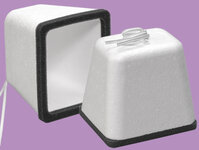
You might find a cheap foam cooler, toss the lid and make the opening fit the siding. Poke a couple holes for some wire, and wire it to the faucet. A little foam weather strip, and plug any holes with insulation.
 
Last edited:
OP
J

jmillican1983

Well-known member
Joined
Dec 23, 2018
Messages
52
Location
Behind my house
I would not trust them not to freeze.
Can you get back to some point where the pipes are exposed and cut in ball valves with drains, then blow out the lines and the faucets?

Something like this?
https://www.amazon.com/dp/B00MA9DW2W/?tag=atomicindus08-20

You might find a cheap foam cooler, toss the lid and make the opening fit the siding. Poke a couple holes for some wire, and wire it to the faucet. A little foam weather strip, and plug any holes with insulation.
I have water lines stubbed in upstairs in the loft for a future sink and dishwasher. I could just install a couple of stop valves up there as it's the highest point in the system. let the air in from there with the water to the shop shut off. Also, good idea with the cooler.

I do have a ball valve with a drain where the main pex line enters the shop through the slab. If I apply air pressure there with the water shut off and open the outside silcock hot/cold valves, I imagine it would at least drain the cold line to the silcock, but could it also drain the hot line via air pressure through the water heater?
 

PoorUB

Well-known member
Joined
Mar 29, 2021
Messages
11,900
Location
Fargo, ND
I have water lines stubbed in upstairs in the loft for a future sink and dishwasher. I could just install a couple of stop valves up there as it's the highest point in the system. let the air in from there with the water to the shop shut off. Also, good idea with the cooler.

I do have a ball valve with a drain where the main pex line enters the shop through the slab. If I apply air pressure there with the water shut off and open the outside silcock hot/cold valves, I imagine it would at least drain the cold line to the silcock, but could it also drain the hot line via air pressure through the water heater?
Think about the future. Are you planning on leaving the water on over winter at some point? Then you may as well set it up now to drain the faucet and get it over with.
 

flat350

Well-known member
Joined
Jan 1, 2009
Messages
1,006
Location
illinois
If the sillcock end isn't in real conditioned space you kind of defeat it's purpose, having it buried in the wall is not the way to do it.
 

toyotadriver

Well-known member
Joined
Dec 30, 2010
Messages
1,586
I have that same outdoor faucet. I do think mine might be a little longer but can't remember. They have been down to -15*F without issue but on the inside, it's all conditioned space. I don't shut mine off.
 

Wheelingit

Well-known member
Joined
Jul 28, 2020
Messages
330
Location
Maryland USA
IMHO I don't think the foam cover will do anything. Shutoff the inside valves and drain the thing. Can't ever freeze then.
 

fattogatto

Well-known member
Joined
Jan 29, 2008
Messages
167
Heat tape if you can access the pipe on the inside of the wall. Or, cut an access panel and cover with a grill that will allow interior air directly onto the pipe.
 

BombShelter

Well-known member
Joined
Nov 16, 2015
Messages
562
Location
State of Hockey
As a builder of backyard ice rinks over the years, I've had some experience with hose bibbs. Like Garcky said, we get extreme conditions here, -10F is common and the best time to flood the rink.

I keep spares of all parts, as long as you have an inside shut-off you'll be fine. The old 70's Nibcos are fine valves and were very popular but the internal rubber stopper gets chewed up, it might be a good idea to get extra "cartridges" for the unit your buying in case you have a failure.

I rarely shut my water off inside, one reason is the slow drip after shutting it off freezes everything up, even with the hose bibb open.

The foam boxes are worthless, mine got tossed years ago.

When it's really cold, I use my Harbor Freight Heat Gun to get things going, turn the valve slowly, let the water thaw it out otherwise you'll really destroy the rubber internals.

I'll also have some of those $5 brass hose valves around just in case it's really late but the water won't stop dripping out of the valve, then I can get a good sleep and fix it the next day.
 
To avoid these ads, REGISTER NOW!
Top Bottom