To avoid these ads, REGISTER NOW!

Fuel injection service

MDSPHOTO

Well-known member
Joined
Nov 10, 2011
Messages
2,396
Location
Oz
Took my Chevy SSR in for an oil change the other day and the service guy said I was due for a fuel induction service to clean out the fuel injectors. The cost was $250 probably due to my LS1 engine, which seems to cost more for every service. I'm not noticing any hesitation in the truck, but recognize the crappy fuel does gum up the injectors.

Anyone have any recommendations for a DIY product? I found this online and it says its compatible with my engine. But would like to hear from the experts before I try one of these products.

http://www.oreillyauto.com/site/c/d...30334_-1&pt=06293&ppt=C0126#compatibilityTab_
 
To avoid these ads, REGISTER NOW!

chruler

Well-known member
Joined
Oct 31, 2014
Messages
1,508
Location
Vermont
I have never done the "Fuel Injection Service" on any vehicle I have ever owned, and I have never had a problem. I think it's just the service department's way of "selling up" the sale.
 

rcktsled

Well-known member
Joined
Nov 28, 2007
Messages
355
Location
909 for Life
How many miles on your vehicle? Redline is a good product but the stuff the dealer uses is much stronger. If you're not having any issues with hard starting or poor running I wouldn't spend the $250. Dump a bottle of Redline in the tank once or twice a year and call it good.
 

fabjunkie

Well-known member
Joined
Jul 24, 2008
Messages
110
Location
Magnolia, TX
Although I haven't used the one you linked to, Redline makes good stuff. One I've always recommended is BG 44K. You will need to change your fuel filter after running it though.
 

1949 caddyman

Well-known member
Joined
Oct 5, 2010
Messages
1,778
Location
Arizona
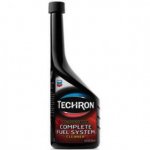
Thats an up sell, you probably don't need it if you use top tier fuel. If you want to add somthing I use Chevron Techron, comes in a black bottle.
 

Attachments

  • image.jpg
    image.jpg
    6.6 KB · Views: 49

MBfreak

MEMBER EMERITUS
Joined
Dec 10, 2010
Messages
2,301
Location
Linkoping , Sweden
For the DIYer with a bit of gumption this is not so hard.

Get a can of fuel injector testing liquid ( same viscosity as gas, non combustible and non corrosive) Used when flow testing injectors.

Rig up a filter, a fuel pump and suitable hoses connectors.
Get your ultrasound cleaner out and fill the tub with the test liquid. Let the pump **** from the tub , and the injector discharge there too. Make a simple pulsing device so that you can pulse the injector with 12 V on and off. Several pulses a second.

Start the setup and run the ultrasound cleaner at full power. The test liquid and the ultrasound will clean the outsode and the flow thru the injector and the ultrasound will clean the inside.
Works like a charm. Keep the test liquid at 75 C.

Another alternative is to take the injectors to a speed shop and ask them to do it.

Ola
 

joe_padavano

Well-known member
Joined
Feb 26, 2011
Messages
1,788
Location
Northern VA
It depends on the miles on the injectors and the quality of fuel you use. People who haven't done it and haven't had problems are lucky. I had a stuck open injector on my Chevy truck and had to replace the injectors.

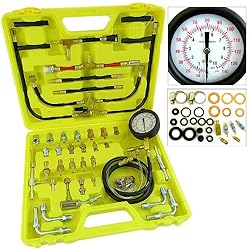
I have an injector cleaning kit that run solvent through the injectors while the engine is running. Pressurized solvent cans are available at NAPA. The kit attaches to the test port on the injector fuel rail. You have to plug the fuel lines to/from the tank and only run off the can of cleaner.

NWMDC


My kit is similar to this one:

61mC%2BjTA4tL._AA250_.jpg
 

matt_i

Well-known member
Joined
Mar 14, 2008
Messages
10,722
Location
SE Michigan
In running several vehicles well past 200k miles, I've never done *anything* to the fuel injectors. No cleaner no nothing.

I'd do something that goes in the tank (or just replace them all) long before I spent any time on trying to flow check them with a flammable vapor.

Keep in mind the most basic TBI vehicles with an oxygen sensor (we are talking primitive fuel injection, just a step above a carb) use a "fuel trim" to equalize what the ECM is commanding and what its getting back as far as feedback in the cycling in the O2 sensor. If its biased rich or lean the ECM has around 10% authority to change it over a long period of time.

This reminds me of my brother calling up saying the dealer wanted $600 to change the supercharger gear oil in his Pontiac Grand Prix GTP (L67 3.8L supercharged), because they had to remove the supercharger and turn it upside down. The solution absent any technology is to get a pump spray assembly from a spray bottle, remove the atomizer nozzle, and pump out the oil. Maybe $5 for a bottle and $20 for the OEM/GM oil refill.
 
Last edited:

theoldwizard1

Well-known member
Joined
Feb 22, 2011
Messages
43,076
Location
SE MI
Thats an up sell, you probably don't need it if you use top tier fuel. If you want to add somthing I use Chevron Techron, comes in a black bottle.

I am not knocking Techron, but its primary "active" ingredient is polyetheramine (a.k.a. poly etheramine or polyether amines or PEA) which is found in other products, including several Gumout products.

From Wikipedia, Techron consists of five components:


  1. Distillates, hydrotreated light at 40-70% weight
  2. Stoddard solvent at 15-40% weight
  3. Solvent naphtha (petroleum), light aromatic at 5-10% weight (a true carbon solvent)
  4. Benzene, 1,2,4-trimethyl at 1-5% weight
  5. PEA (detergent), polyether amines at 20-49% weight
 
Last edited:

camd64

Well-known member
Joined
Sep 7, 2015
Messages
151
Location
Cedar Park, TX
Unless you notice a problem that would lead you an injector issue (fuel trims, missfire codes, failed injector balance test, etc.,) I wouldn't bother with it.
 

crerus75

Well-known member
Joined
May 2, 2011
Messages
301
I worked in a fuel injection specialty shop for 5+ years and I've flowed and serviced many, many injectors. I also worked as both a dealership and independent mechanic, and I've used several different fuel injector cleaning systems and products. Please forgive the word-bomb I'm about to drop, but this information might be valuable to you or someone else.

The service that most dealerships offer is to connect a can of gasoline/cleaner mix to the fuel rail, disable the fuel pump, and start and idle the engine on this mix. There's a lot of different cleaners out there. Though this is called a "fuel injection cleaning," in my opinion it doesn't do much for the injectors themselves. It does help clean combustion chambers. I've found it to be beneficial on older vehicles, especially grandma cars that get puttered around town slowly, or those that burn a little oil. Probably not the case with your SSR.

Injectors usually get dirty from one of three things: "Stale" gas, baked-on external deposits, or debris. Stale gas (varnish, etc.) is most common on seasonal craft-- motorcycles, boats, jetskis, race cars, etc. They're usually run hard for a season and put away wet. Over the winter, the lighter fractions of the fuel evaporate, leaving behind waxes and heavy petroleum distillates. These foul the internal passages and valve mechanism of the injector. I used to see injectors that were either heavily fouled (reduced flow and poor spray patterns) or glued completely shut. Sometimes this could be fixed, other times it could not.

Baked-on deposits are usually caused by oil or crankcase vapors in the intake manifold. Sometimes this is the result of problems with PCV systems, but often it is caused by intake manifold design. Some late 90s/early 2000s BMWs were particularly bad about this for some reason. These deposits show up externally on the pintle of the injector and usually lead to poor spray patterns and decreased flow. A bad spray pattern can cause fuel puddling, high emissions, and even misfire if it's bad enough.

Debris is anything that won't dissolve in fuel, like sand, rust particles, whatever. Usually these are captured by the inlet sock on the fuel pump or by the main fuel filter, but sometimes they make it past and wind up in the inlet side of the injector. Sometimes they can be removed, other times they ruin the injector. The most common cases I saw were in race cars, when someone would forget to flush the bits of rubber out of the braided stainless fuel hoses they'd just made. I also saw a few fuel cells shed bits of fiber into the fuel system. On vintage fuel injected vehicles, it was not uncommon to have fuel lines shed flecks of rust into the fuel system.

What does this mean to you? If you drive your SSR fairly regularly and don't let it sit for months on end, you should be fine. The real test would be to monitor fuel trims and look for fuel being added by the PCM, but chances are if it runs OK, doesn't misfire, and isn't laying down on the top end, you're probably OK. Unless your fuel system has been modified, I highly doubt that you have much debris floating around. The LS engine is not, to my knowledge, known for baking deposits on the injectors.

The LS engines mostly use Delphi Multec 2 or Bosch injectors. The Bosch injectors are very good quality and usually very trouble free. The Delphi injectors weren't bad, but some years had a problem with the injector terminals fretting and making intermittent contact. This led to intermittent misfires that were sometimes misdiagnosed as defective injectors. If you haven't done so already, disconnect each injector's electrical connector, put a dab of silicone dielectric compound in the injector terminal, and reconnect the injector. This prevents fretting and was recommended by a GM TSB a few years back.

Unless the dealership pulls the injectors and cleans them in an ultrasonic cleaner (doubtful) and flows them on an injector flow bench, you're probably getting the miracle-in-a-can flush. They won't measure injector flow before and after, and they won't check the spray pattern for any deviations in flow. The flow-through cleaner isn't aggressive enough to remove heavy fouling and won't touch baked-on pintle deposits or debris. In some cases, the flow-through cleaning is a valid procedure, but in others it is known as the "wallet flush."

To those who say you can clean your injectors at home with an ultrasonic cleaner, you are absolutely correct-- you can, and you could well see an improvement in performance if your injectors are fouled. What most people cannot do is to determine whether the spray pattern and flow rates are correct because most people don't have a database of injector data. Internet numbers for static flow rate do NOT count, and I can't tell you how much bad injector information I've seen on the web. This is not to discourage anyone from doing it, but I want to make clear that a (good) fuel injection service company does use some specialized knowledge and equipment to do what they do.

Most reputable fuel injector companies will not only test the static (wide open) flow of an injector, but also the dynamic (cycling) flow at a given frequency and pulsewidth. This diagnoses whether the spring, electromagnetic coil, and orifice of the injector are in good working order, and I've NEVER seen a dealership do this. Not saying it doesn't happen, but I've never seen or even heard of it from a dealership. Cleaning injectors requires a very clean environment. The lab where I worked was spotless and temperature-controlled. A stray bit of rust or paint from the outside of the injector (or worse, a piece of bead-blasting media if you insist on bead blasting the outside of the injector to paint it) will clog the inlet screen of the injector and lead you on a diagnostic goose chase.

TL;DR-- If you suspect a fuel system problem and think it may be the injectors, pull them and send them in to a reputable company for service. PM me and I can recommend one if you'd like. An off-car service will probably make a small improvement in flow (probably not noticeable from the driver's seat, but noticeable on the flow bench) and get you a data sheet with flow numbers and injectors with new oring seals. I don't think it's absolutely necessary in your case, but it's your **** in the driver's seat and your call. Otherwise, I would politely decline the dealership's recommendation and instead use Techron periodically.
 

DC73

Well-known member
Joined
Dec 27, 2014
Messages
1,627
Location
Lubbock TX
Thats an up sell, you probably don't need it if you use top tier fuel. If you want to add somthing I use Chevron Techron, comes in a black bottle.

I like Techron as well. Recommended to me by an old school mechanic to cure a hesitation problem I had on a previous vehicle. One bottle and an out of town trip later, it was good as new.

I worked in a fuel injection specialty shop for 5+ years and I've flowed and serviced many, many injectors. . . . . Otherwise, I would politely decline the dealership's recommendation and instead use Techron periodically.

Thank you for your detailed write up. Good info to have.

DC
 

jask

Well-known member
Joined
Jul 4, 2009
Messages
314
Location
Gods Country, B.C.
+1 !! Thanks for a good write up!
I have had my diesel injectors serviced and flowed at a shop where I watched part of the process and I thought that for the work they did I got a great deal price wise.... they had almost 250K miles on them and needed some work but were in great shape for the age.
 

tfinniii

Well-known member
Joined
Aug 13, 2013
Messages
124
Location
Balto., Md.
I would do at first major service date 50-75,000 mile,whatever is in the book.Never noticed on my one truck ,BUT it was better after.
 
OP
M

MDSPHOTO

Well-known member
Joined
Nov 10, 2011
Messages
2,396
Location
Oz
Wow, some really great info provided! Thanks a lot! To answer more questions asked I've got 48,000 miles on it. It's mostly a weekend driver and can sit for 2-weeks at a time without being driven. I always use 93 octane gas and will put Sta-bil in when I know I am going to be out of town for a few weeks. Mostly goes just around town, but does get 5-6 long trips each year, drove to Nasville and back this week. I don't notice any performance drop offs or hesitation.

My take away is the Redline can't hurt and the service is only worth it if they are pulling the injectors to clean them and measuring the improvement, which at $250, I doubt they are going to that extreme.
 

Nexussian

Well-known member
Joined
Mar 12, 2014
Messages
639
Location
Alaska
On gas burners I have had good luck with Berryman's B12.

Don't let the fuel sit with it in the system (ie it's not something you pour in right before storage) but you don't have to burn it off immediately either.

Only diesel I've used a cleaner type product on was trying to crutch a worn out set of injectors on a Duramax.

That was a greenish goo you mixed with a specific amount of diesel and ran until it was almost out (as crerus75 said, bypassed the rest of the fuel system and ran at just above idle till it was gone).

I forget the GM part number for the goo, but the balance rates were better afterwards, even with the P0093 (from memory, code translated to bypassing too much fuel back to the tank).

It got me enough time for the injectors I had ordered to get here, and wasn't that expensive doing it myself. :)
 
Last edited:
To avoid these ads, REGISTER NOW!
OP
M

MDSPHOTO

Well-known member
Joined
Nov 10, 2011
Messages
2,396
Location
Oz
I worked in a fuel injection specialty shop for 5+ years and I've flowed and serviced many, many injectors. I also worked as both a dealership and independent mechanic, and I've used several different fuel injector cleaning systems and products. Please forgive the word-bomb I'm about to drop, but this information might be valuable to you or someone else.

The service that most dealerships offer is to connect a can of gasoline/cleaner mix to the fuel rail, disable the fuel pump, and start and idle the engine on this mix. There's a lot of different cleaners out there. Though this is called a "fuel injection cleaning," in my opinion it doesn't do much for the injectors themselves. It does help clean combustion chambers. I've found it to be beneficial on older vehicles, especially grandma cars that get puttered around town slowly, or those that burn a little oil. Probably not the case with your SSR.

Injectors usually get dirty from one of three things: "Stale" gas, baked-on external deposits, or debris. Stale gas (varnish, etc.) is most common on seasonal craft-- motorcycles, boats, jetskis, race cars, etc. They're usually run hard for a season and put away wet. Over the winter, the lighter fractions of the fuel evaporate, leaving behind waxes and heavy petroleum distillates. These foul the internal passages and valve mechanism of the injector. I used to see injectors that were either heavily fouled (reduced flow and poor spray patterns) or glued completely shut. Sometimes this could be fixed, other times it could not.

Baked-on deposits are usually caused by oil or crankcase vapors in the intake manifold. Sometimes this is the result of problems with PCV systems, but often it is caused by intake manifold design. Some late 90s/early 2000s BMWs were particularly bad about this for some reason. These deposits show up externally on the pintle of the injector and usually lead to poor spray patterns and decreased flow. A bad spray pattern can cause fuel puddling, high emissions, and even misfire if it's bad enough.

Debris is anything that won't dissolve in fuel, like sand, rust particles, whatever. Usually these are captured by the inlet sock on the fuel pump or by the main fuel filter, but sometimes they make it past and wind up in the inlet side of the injector. Sometimes they can be removed, other times they ruin the injector. The most common cases I saw were in race cars, when someone would forget to flush the bits of rubber out of the braided stainless fuel hoses they'd just made. I also saw a few fuel cells shed bits of fiber into the fuel system. On vintage fuel injected vehicles, it was not uncommon to have fuel lines shed flecks of rust into the fuel system.

What does this mean to you? If you drive your SSR fairly regularly and don't let it sit for months on end, you should be fine. The real test would be to monitor fuel trims and look for fuel being added by the PCM, but chances are if it runs OK, doesn't misfire, and isn't laying down on the top end, you're probably OK. Unless your fuel system has been modified, I highly doubt that you have much debris floating around. The LS engine is not, to my knowledge, known for baking deposits on the injectors.

The LS engines mostly use Delphi Multec 2 or Bosch injectors. The Bosch injectors are very good quality and usually very trouble free. The Delphi injectors weren't bad, but some years had a problem with the injector terminals fretting and making intermittent contact. This led to intermittent misfires that were sometimes misdiagnosed as defective injectors. If you haven't done so already, disconnect each injector's electrical connector, put a dab of silicone dielectric compound in the injector terminal, and reconnect the injector. This prevents fretting and was recommended by a GM TSB a few years back.

Unless the dealership pulls the injectors and cleans them in an ultrasonic cleaner (doubtful) and flows them on an injector flow bench, you're probably getting the miracle-in-a-can flush. They won't measure injector flow before and after, and they won't check the spray pattern for any deviations in flow. The flow-through cleaner isn't aggressive enough to remove heavy fouling and won't touch baked-on pintle deposits or debris. In some cases, the flow-through cleaning is a valid procedure, but in others it is known as the "wallet flush."

To those who say you can clean your injectors at home with an ultrasonic cleaner, you are absolutely correct-- you can, and you could well see an improvement in performance if your injectors are fouled. What most people cannot do is to determine whether the spray pattern and flow rates are correct because most people don't have a database of injector data. Internet numbers for static flow rate do NOT count, and I can't tell you how much bad injector information I've seen on the web. This is not to discourage anyone from doing it, but I want to make clear that a (good) fuel injection service company does use some specialized knowledge and equipment to do what they do.

Most reputable fuel injector companies will not only test the static (wide open) flow of an injector, but also the dynamic (cycling) flow at a given frequency and pulsewidth. This diagnoses whether the spring, electromagnetic coil, and orifice of the injector are in good working order, and I've NEVER seen a dealership do this. Not saying it doesn't happen, but I've never seen or even heard of it from a dealership. Cleaning injectors requires a very clean environment. The lab where I worked was spotless and temperature-controlled. A stray bit of rust or paint from the outside of the injector (or worse, a piece of bead-blasting media if you insist on bead blasting the outside of the injector to paint it) will clog the inlet screen of the injector and lead you on a diagnostic goose chase.

TL;DR-- If you suspect a fuel system problem and think it may be the injectors, pull them and send them in to a reputable company for service. PM me and I can recommend one if you'd like. An off-car service will probably make a small improvement in flow (probably not noticeable from the driver's seat, but noticeable on the flow bench) and get you a data sheet with flow numbers and injectors with new oring seals. I don't think it's absolutely necessary in your case, but it's your **** in the driver's seat and your call. Otherwise, I would politely decline the dealership's recommendation and instead use Techron periodically.
BTW-This should be a sticky here, there is so much great information provided.
 

TMcCay

Well-known member
Joined
Jun 5, 2011
Messages
1,056
Location
SW. Oklahoma
Great information that needs to be placed so that it doesn't get lost for sure! I am going to copy this on my computer just for future reference if you don't mind Cerrus.
 

crerus75

Well-known member
Joined
May 2, 2011
Messages
301
Thanks for the kind words, guys and gals. Glad I could help. TMcCay, by all means copy it. I posted with the hope that it would help someone down the line.
 
Last edited:

Kula

Member
Joined
Mar 1, 2011
Messages
5
Very informative answer from Crerus. In my case, the first time I did a Motorvac service on a car was a 1995 Subaru legacy 2.2 I bought used. It had about 100,000 miles. It ran so much better afterwards that I do one every 60K on my vehicles. The cost is much less than your dealer has quoted. I think I paid about $100 USD for the shop to run a mixture that bypassed my fuel pump for about 40 minutes. I suspect the removal of carbon from the combustion chamber and valves is the main benefit.
 

Cobra5150

Well-known member
Joined
Feb 2, 2008
Messages
1,951
Location
GA
CHECK THE MANUAL!!
If a writer told me I was "DUE" for a fuel injection cleaning I would ask what determined I was. If he couldn't give a definitive answer I'd be looking for another place for my service. It's fine to suggest but to imply that it's due when it's not is equal to lying to me. This shows they are mainly concerned with profit and not taking care of their customers. No problems with making a profit- that's why they are in business.

Oh yeah, very good info crerus75. I learned something today.
 

manwithtools

ALLIANCE MEMBER
Joined
Aug 24, 2015
Messages
13,642
Location
Lebanon, TN
crerus75 - great information which confirms my suspicion that the fuel injector service amounts to snake oil.

Having owned many fuel injected vehicles with over 300k on them without injector cleaning, I can not see any possible benefit in doing this without some diagnostic indication that the injectors need servicing.

Do you see any reduced performance or mileage? If not, at $250, I'd wager you will never get your money back in the entire time you own that SSR.
 

wssix99

Well-known member
Joined
Mar 2, 2011
Messages
5,155
Location
Chicago, IL
Wow, some really great info provided! Thanks a lot! To answer more questions asked I've got 48,000 miles on it. It's mostly a weekend driver and can sit for 2-weeks at a time without being driven. I always use 93 octane gas and will put Sta-bil in when I know I am going to be out of town for a few weeks. Mostly goes just around town, but does get 5-6 long trips each year, drove to Nasville and back this week. I don't notice any performance drop offs or hesitation.

My take away is the Redline can't hurt and the service is only worth it if they are pulling the injectors to clean them and measuring the improvement, which at $250, I doubt they are going to that extreme.

The LS1 will develop deposits in the combustion chamber, which will impact mileage. There is no worry for the injectors as long as you are using a good quality detergent gasoline, which is sounds like you are. (You may also get some good information at a LS1-specific site, but we also have a lot of garbage over there on this subject, also...)

I've had the treatment you describe done on my LS1 (it was $125 at the time) and it improved my mileage by 4-6 mpg. That improvement gradually waned over 50-60K miles. So... you can calculate the cost of gas over that time and see if it's "worth it" for you and given how much you pay for gas.

You'll hear people rave about Seafoam as a shadetree product to use, but the top end engine cleaner tools (like joe_padavano posted) are more precise delivery methods. They won't clean all of the fuel rails and lines that the $250 machine service might cover, but you don't really need that. As long as you get the combustion chambers cleaned and dissolve the carbon built up in them and on the valves, you'll get the benefit that you need.


... One other thing -> GM has warned in the past about doing these treatments and has recommended that only be done when there are driveability issues. I understand the concern was that deposits could beneficially seal slight leaks in gaskets, etc. in aging engines and that cleaning them out could spawn oil leaks. I haven't heard of anyone who has had this type of problem, though. My LS1 has 130K+ miles and I've had 2 carbon cleanings on it without issue.
 

joel63

Well-known member
Joined
Oct 9, 2012
Messages
1,907
Location
Central FL
I worked in a fuel injection specialty shop for 5+ years and I've flowed and serviced many, many injectors. I also worked as both a dealership and independent mechanic, and I've used several different fuel injector cleaning systems and products. Please forgive the word-bomb I'm about to drop, but this information might be valuable to you or someone else.

The service that most dealerships offer is to connect a can of gasoline/cleaner mix to the fuel rail, disable the fuel pump, and start and idle the engine on this mix. There's a lot of different cleaners out there. Though this is called a "fuel injection cleaning," in my opinion it doesn't do much for the injectors themselves. It does help clean combustion chambers. I've found it to be beneficial on older vehicles, especially grandma cars that get puttered around town slowly, or those that burn a little oil. Probably not the case with your SSR.

Injectors usually get dirty from one of three things: "Stale" gas, baked-on external deposits, or debris. Stale gas (varnish, etc.) is most common on seasonal craft-- motorcycles, boats, jetskis, race cars, etc. They're usually run hard for a season and put away wet. Over the winter, the lighter fractions of the fuel evaporate, leaving behind waxes and heavy petroleum distillates. These foul the internal passages and valve mechanism of the injector. I used to see injectors that were either heavily fouled (reduced flow and poor spray patterns) or glued completely shut. Sometimes this could be fixed, other times it could not.

Baked-on deposits are usually caused by oil or crankcase vapors in the intake manifold. Sometimes this is the result of problems with PCV systems, but often it is caused by intake manifold design. Some late 90s/early 2000s BMWs were particularly bad about this for some reason. These deposits show up externally on the pintle of the injector and usually lead to poor spray patterns and decreased flow. A bad spray pattern can cause fuel puddling, high emissions, and even misfire if it's bad enough.

Debris is anything that won't dissolve in fuel, like sand, rust particles, whatever. Usually these are captured by the inlet sock on the fuel pump or by the main fuel filter, but sometimes they make it past and wind up in the inlet side of the injector. Sometimes they can be removed, other times they ruin the injector. The most common cases I saw were in race cars, when someone would forget to flush the bits of rubber out of the braided stainless fuel hoses they'd just made. I also saw a few fuel cells shed bits of fiber into the fuel system. On vintage fuel injected vehicles, it was not uncommon to have fuel lines shed flecks of rust into the fuel system.

What does this mean to you? If you drive your SSR fairly regularly and don't let it sit for months on end, you should be fine. The real test would be to monitor fuel trims and look for fuel being added by the PCM, but chances are if it runs OK, doesn't misfire, and isn't laying down on the top end, you're probably OK. Unless your fuel system has been modified, I highly doubt that you have much debris floating around. The LS engine is not, to my knowledge, known for baking deposits on the injectors.

The LS engines mostly use Delphi Multec 2 or Bosch injectors. The Bosch injectors are very good quality and usually very trouble free. The Delphi injectors weren't bad, but some years had a problem with the injector terminals fretting and making intermittent contact. This led to intermittent misfires that were sometimes misdiagnosed as defective injectors. If you haven't done so already, disconnect each injector's electrical connector, put a dab of silicone dielectric compound in the injector terminal, and reconnect the injector. This prevents fretting and was recommended by a GM TSB a few years back.

Unless the dealership pulls the injectors and cleans them in an ultrasonic cleaner (doubtful) and flows them on an injector flow bench, you're probably getting the miracle-in-a-can flush. They won't measure injector flow before and after, and they won't check the spray pattern for any deviations in flow. The flow-through cleaner isn't aggressive enough to remove heavy fouling and won't touch baked-on pintle deposits or debris. In some cases, the flow-through cleaning is a valid procedure, but in others it is known as the "wallet flush."

To those who say you can clean your injectors at home with an ultrasonic cleaner, you are absolutely correct-- you can, and you could well see an improvement in performance if your injectors are fouled. What most people cannot do is to determine whether the spray pattern and flow rates are correct because most people don't have a database of injector data. Internet numbers for static flow rate do NOT count, and I can't tell you how much bad injector information I've seen on the web. This is not to discourage anyone from doing it, but I want to make clear that a (good) fuel injection service company does use some specialized knowledge and equipment to do what they do.

Most reputable fuel injector companies will not only test the static (wide open) flow of an injector, but also the dynamic (cycling) flow at a given frequency and pulsewidth. This diagnoses whether the spring, electromagnetic coil, and orifice of the injector are in good working order, and I've NEVER seen a dealership do this. Not saying it doesn't happen, but I've never seen or even heard of it from a dealership. Cleaning injectors requires a very clean environment. The lab where I worked was spotless and temperature-controlled. A stray bit of rust or paint from the outside of the injector (or worse, a piece of bead-blasting media if you insist on bead blasting the outside of the injector to paint it) will clog the inlet screen of the injector and lead you on a diagnostic goose chase.

TL;DR-- If you suspect a fuel system problem and think it may be the injectors, pull them and send them in to a reputable company for service. PM me and I can recommend one if you'd like. An off-car service will probably make a small improvement in flow (probably not noticeable from the driver's seat, but noticeable on the flow bench) and get you a data sheet with flow numbers and injectors with new oring seals. I don't think it's absolutely necessary in your case, but it's your **** in the driver's seat and your call. Otherwise, I would politely decline the dealership's recommendation and instead use Techron periodically.

Do the GDI injection systems change the process any?
 

Perroflojo

Well-known member
Joined
Dec 28, 2015
Messages
74
What a great conversation, I will like to add that more car companies are know moving the fuel injectors into the combustion chamber for better fuel economy. If I where to have a car with this set up, I will probably run a good fuel injector cleaner at least every 6 months. At this location the cleaner will probably help to clean the valves too. The intake some times it gets full of junk because the PCV gases are routed to it before they are burn by the engine.
 

crerus75

Well-known member
Joined
May 2, 2011
Messages
301
Do the GDI injection systems change the process any?

I was getting out of the business as GDI was becoming popular so my sample size is pretty small. I only saw it in some marine applications. The GDI systems I saw used much higher injection pressures, but the injectors still suffered from some of the same problems, IE deposit build-up when left sitting for too long. We successfully cleaned and tested them, and I remember one set that showed a very noticeable improvement in spray pattern, so the process is also valid for GDI injectors. I didn't see enough to establish a trend for GDI-specific problems, but I can't rule them out, either. Maybe someone who services or repairs these types of engines can chime in with any repeat problems they've seen...

The biggest complaint I've seen with GDI engines has been with coking or fouling of the back of the intake valves. Since they do not get hit with fuel the way they do on port fuel injection or TBI, they can accumulate deposits that never get washed away. I don't own a GDI car nor have I ever tried to fix that problem, but I understand it can be difficult to remove the deposits.
 

ghlkal

Well-known member
Joined
Jan 21, 2009
Messages
251
Location
Fredonia, WI
Good information here

This reminds me of my brother calling up saying the dealer wanted $600 to change the supercharger gear oil in his Pontiac Grand Prix GTP (L67 3.8L supercharged), because they had to remove the supercharger and turn it upside down. The solution absent any technology is to get a pump spray assembly from a spray bottle, remove the atomizer nozzle, and pump out the oil. Maybe $5 for a bottle and $20 for the OEM/GM oil refill.

This cracks me up. Like everything else, there are good dealers and then really bad dealers. I have one of these, and yup I used an old soap pump to remove the oil rather than removing the supercharger :D
 

Fueler

Well-known member
Joined
Jun 22, 2006
Messages
1,620
Location
Urbana, IL
Crerus nailed it I think.
I work on racing mechanical fuel injection for a living but rub elbows with the EFI stuff on occasion. Locally no dealer or independent has the bench cleaner equip. I gEt curious and I ask around about it now and then. Most of the dealers do it as an up sell.

I also find that if a dealer finds a bad injector they up sell a whole set. Necessary? Likely no. It could also be a cover the bases thing to avoid future grumpy phone calls. Then a couple of times I felt like they get an obvious misfiring injector but just shotgun a whole set in there rather than do an actual diagnosis.

The good independents are busy enough that they take a "if it ain't broke" view of it and only do the on car cleaner thing if the customer came in pre-conditioned by the internet that it must be done or the world will end at X miles.

One tech said with all the fancy computer OBD2 readouts we get these days pin pointing a bad injector is pretty easy as long as it's not an intermittent issue and then it's usually an electrical problem (chaffed wires, loose connector, etc.). He said it's not financially or time feasible to clean and rebuild the injector(s). Old one out, new one in, get paid, happy customer.

Personally, on the family vehicles I have only changed out 1 injector out of all of them. That was on a mid 80s caravan approaching 3K miles. It finally went to a new home when it hit 380K. Would changing all of them been a good thing? Maybe but there is no way I could tell if it did anything as it would not be going on a chassis dyno, mileage was still as good as it ever was. Any **** dyno improvement would have merely been a placebo effect.

Now, if I was racing an EFI then I would be all over match flowing a set with spray pattern analysis and a strict maintenance program.
 

czgunner

Well-known member
Joined
Oct 31, 2010
Messages
568
Location
WY
I'm an auto tech and we sell this service at my shop.
There is some good info in this thread.
I recommend the service at 100k as maintenance, or if it is direct injection, it needs an induction service every 30k. By the way, that price seems high. Like almost double what we charge.
 
Last edited:

Schurkey

Well-known member
Joined
Oct 27, 2011
Messages
2,366
Location
The Seasonally Frozen Wastelands
Took my Chevy SSR in for an oil change the other day and the service guy said I was due for a fuel induction service to clean out the fuel injectors. The cost was $250
You need a new "oil-change" place.
Thats an up sell, you probably don't need it if you use top tier fuel. If you want to add somthing I use Chevron Techron, comes in a black bottle.
Top Tier fuel, and Techron. Couldn't have said it better. GM sold--and maybe still sells--Techron as a custom-branded product; and suggested a bottle in the gas tank at each oil change.

Most folks don't know Top Tier fuel exists. Not much of a marketing campaign. Inevitably, someone thinks it has to do with "high octane" instead of "high detergent".
 

stimpy

Well-known member
Joined
Dec 25, 2005
Messages
289
Location
troy twshp IL
Thats an up sell, you probably don't need it if you use top tier fuel. If you want to add somthing I use Chevron Techron, comes in a black bottle.

this is what I been using for the last 20 years in my truck ( l-29) , just pulled the injectors ( original rochesters with 185K miles ) because one started to leak when cold ( which was a major point of failure on them at low miles ) I add the bottle 2x a year .
 
To avoid these ads, REGISTER NOW!
Top Bottom