To avoid these ads, REGISTER NOW!

Garage Ceiling Insulation Plan

bagsanthony

Well-known member
Joined
Sep 2, 2010
Messages
363
Hello All- recently I purchased a house with a 2 car 21'x22' attached garage with a "hip roof". There is currently no insulation on either the ceiling or the walls. I plan on tackling the ceiling first and had some questions, first off the ceiling is 2x6 16" on center construction. There is a soffit vent , however no ridge vent or any form of roof ventilation. Here is what I propose:
-Install rafter foam vents from soffit to ridge
-R19 battery faced insulation between studs, leaving an open loft area
-Cover the insulation with OSB plywood

My question is do I need a ridge vent, or could I use a turbine vent or some other ventilation? What else would you all suggest? The purpose is to comfortably control this space for a future gas heater :confused:
 
To avoid these ads, REGISTER NOW!

CNGsaves

Well-known member
Joined
Sep 26, 2012
Messages
13,233
Location
KS and OK
Too little information. Haven't a clue if you're in Delta congo or Antarctica.

Update GJ Profile with City/State/Country.

If cold climate, goal should be R14 to R20 in walls and R50+ in ceiling . . . . along with proper vapor barrier for your climate.

Roof needs to stay cold . . . . ceiling with insulation on top keeps heat down below. Sheetrock fully taped and sealed creates "air envelope" to hold all the expensive heat in the garage. Roof needs vents . . . . passive turtle vents, or rotary vents, or soffet coupled with ridge/gable vents. Half a dozen ways to skin the cat . . . . some better than others in different climates. Depends on your weather as driving rain/snow creates problems for potential water damage.

Good luck but you have to provide lots more information . . . and PIC's even better.
 

Firebird 1

Well-known member
Joined
Mar 11, 2015
Messages
624
Location
Maryland
Good info above, you only need the foam baffles where the insulation would touch the bottom of the roof plane. They are there to allow air to move. The facing of the insulation should be covered with a fire resistant material, not osb.
 
OP
B

bagsanthony

Well-known member
Joined
Sep 2, 2010
Messages
363
Just to clarify im in upstate new york, cold friggin winters!
Now how in the world would a make a ceiling as there are only 3 rafters spanning the entire garage ?
 

Rikert

Member
Joined
Jul 9, 2014
Messages
5
Im in same boat as my rafters are about 4 feet across. Posted to see what options you get.
 

jimbbski

Well-known member
Joined
Feb 5, 2009
Messages
67
Location
Chicago Area
Since your garage is attached I'm sure the ceiling is covered with sheetrock as most codes require it. Since you have 2X6 I would fill the space between the rafters with 5 1/2-6 inch faced fiberglass insulation. Then if you want to have some storage space above I would then cover the rafters with a layer of foam board insulation for additions R value. You can then cover that with your OSB for a hard surface to store stuff on. The wall if already covered will require a different approach. IF open then just add fiberglass and then cover with sheet rock.
 
OP
B

bagsanthony

Well-known member
Joined
Sep 2, 2010
Messages
363
Since your garage is attached I'm sure the ceiling is covered with sheetrock as most codes require it. Since you have 2X6 I would fill the space between the rafters with 5 1/2-6 inch faced fiberglass insulation. Then if you want to have some storage space above I would then cover the rafters with a layer of foam board insulation for additions R value. You can then cover that with your OSB for a hard surface to store stuff on. The wall if already covered will require a different approach. IF open then just add fiberglass and then cover with sheet rock.

Thanks for your input, currently no sheet rock on the ceiling. Isn't R19 6-1/4" thick? Also this would be going between the ceiling rafters so how would the osb act as storage as it would be along the hip ceiling? below are some pictures:

http://i1232.photobucket.com/albums/ff371/bagsanthony/Mobile Uploads/209.jpg


http://i1232.photobucket.com/albums/ff371/bagsanthony/Mobile Uploads/211.jpg
 
Last edited:
To avoid these ads, REGISTER NOW!

SwerveDriver

Active member
Joined
Jul 11, 2010
Messages
35
* Any ventilation is better than none. I've always had good luck with a typical ridge vent.
* The foam rafter chutes only need to extend past the upper plane of your attic insulation. Two or three feet of vent is typically enough to get past the insulation.
* Sounds like you want to lay some OSB on top of the insulation in the attic for storage. That works fine but compressing the insulation reduces its effectiveness.

I ran furring strips on the bottom of my trusses and attached the drywall to that filling the gaps in between the strips with 1/2" foamular insulation (pink board). Taking the time to tape/sand/prime/paint the drywall was worth it. Made the garage much brighter after lighting.
Once the ceiling is squared away the walls will seem easy-

Best-
S-D
 

bczygan

Well-known member
Joined
Nov 4, 2009
Messages
22,002
Location
DETROIT! Arsenal of Scrappers
I hate these kind of roof structures. They present the following problems.

First, they are designed to simply shed rain and snow and only support their own weight.

They are not designed to have finished ceilings installed.

And there is no way to properly ventilate the roof deck to prevent problems.

Using the baffles to keep insulation away from the deck and create an airspace can be done, but then you would need a continuous ridge vent to exhaust hot air at each rafter space. This works for a hip roof, but not a hip. The rafter spaces on the end of a hip would need an individual roof vent for each rafter space.

So what are your options?

If you want to use the volume in the roof for storage, you are going to have to install a system of ceiling joists, sized for the span and loads you anticipate. Then the only obvious solution is to foam the rafter spaces.

There is one other way I can think of to accomplish this with baffles and batt insulation.
Do the baffles and batts and ridge vent in the middle of the structure, where rafter spaces extend to the ridge. At the ends of the structure, where the hips are, install vertical framing and insulate at this and at the ceiling joists, using these 2 spaces as non storage attic spaces. Install a couple of roof vents on each hip.

One other problem with the middle section, is that the depth of insulation between rafters isn't adequate. So I would add rigid insulation board on the underside of the rafters to increase the R-value. And no sheetrock or drywall on those rafters. Too much additional weight.

Adding all this to a hip is a worry. I would make sure that there was never more than one layer of shingles and 3 tab, rather than dimensional.

And that system of ceiling joists are important, not just to support storage, but also to connect the exterior walls and prevent the rafters pushing and bowing them out and creating a swayback ridge.

Do you understand?

Bill (Architectural Designer/Builder)
 
Last edited:
OP
B

bagsanthony

Well-known member
Joined
Sep 2, 2010
Messages
363
I hate these kind of roof structures. They present the following problems.

First, they are designed to simply shed rain and snow and only support their own weight.

They are not designed to have finished ceilings installed.

And there is no way to properly ventilate the roof deck to prevent problems.

Using the baffles to keep insulation away from the deck and create an airspace can be done, but then you would need a continuous ridge vent to exhaust hot air at each rafter space. This works for a hip roof, but not a hip. The rafter spaces on the end of a hip would need an individual roof vent for each rafter space.

So what are your options?

If you want to use the volume in the roof for storage, you are going to have to install a system of ceiling joists, sized for the span and loads you anticipate. Then the only obvious solution is to foam the rafter spaces.

There is one other way I can think of to accomplish this with baffles and batt insulation.
Do the baffles and batts and ridge vent in the middle of the structure, where rafter spaces extend to the ridge. At the ends of the structure, where the hips are, install vertical framing and insulate at this and at the ceiling joists, using these 2 spaces as non storage attic spaces. Install a couple of roof vents on each hip.

One other problem with the middle section, is that the depth of insulation between rafters isn't adequate. So I would add rigid insulation board on the underside of the rafters to increase the R-value. And no sheetrock or drywall on those rafters. Too much additional weight.

Adding all this to a hip is a worry. I would make sure that there was never more than one layer of shingles and 3 tab, rather than dimensional.

And that system of ceiling joists are important, not just to support storage, but also to connect the exterior walls and prevent the rafters pushing and bowing them out and creating a swayback ridge.

Do you understand?

Bill (Architectural Designer/Builder)

Hey thanks for your help, yeah this is one challenging roof as you say, it was made to support the bear minimum load with only 3 2x6 ceiling joists spanning the garage. Therefore, adding a ceiling wouldn't work unless new joists were made 16 or maybe 24" OC.

So I think I'm leaning towards insulating between rafters and a continuous ridge vent. With 2x6 rafters 16" OC, can i do R19? Will simply insulating between the rafters make much of a difference? Again, I would love to build a ceiling and blow it in with a high R value but my structure could never support it and I do like the added storage.
 

bczygan

Well-known member
Joined
Nov 4, 2009
Messages
22,002
Location
DETROIT! Arsenal of Scrappers
Hey thanks for your help, yeah this is one challenging roof as you say, it was made to support the bear minimum load with only 3 2x6 ceiling joists spanning the garage. Therefore, adding a ceiling wouldn't work unless new joists were made 16 or maybe 24" OC.

So I think I'm leaning towards insulating between rafters and a continuous ridge vent. With 2x6 rafters 16" OC, can i do R19? Will simply insulating between the rafters make much of a difference? Again, I would love to build a ceiling and blow it in with a high R value but my structure could never support it and I do like the added storage.

Actually you need to do the ceiling joists regardless. They will tie the walls together to accommodate the extra load of the insulation etc.. What is your span?

And a ridge vent won't work for the entire roof, only the middle. So something else needs doing at the ends.

Do you need the storage above? Or are you wanting a more open ceiling for the height?

What uses are you making of the space?
 
OP
B

bagsanthony

Well-known member
Joined
Sep 2, 2010
Messages
363
Span is 20 ft
I did want the storage, but now that you say that I need more joists anyways maybe the way to go is a ceiling with an access cover with a pull down ladder. I'm confused as to why faced battery insulation requires a heftier set of ceiling joists, battery insulation doesnt weigh all that much?
 

bczygan

Well-known member
Joined
Nov 4, 2009
Messages
22,002
Location
DETROIT! Arsenal of Scrappers
OK,

Let's get down to brass tacks.

What is your budget? Exactly how much money do you have to spend?

And what is your first goal. comfortable temperatures? What are you going to heat it with?

Are you adding lighting and power?


Call me. I sent you an email. We can discuss your options.
 
Last edited:

bczygan

Well-known member
Joined
Nov 4, 2009
Messages
22,002
Location
DETROIT! Arsenal of Scrappers
Many people, when thinking of improving a building, have a vague idea that it is deficient, and want to improve it, but don't realize the work involved, or the ultimate cost. In a lot of these cases, I see owners wanting a great finished workspace, but they are very resistant to what the real cost is to get that. They want to throw up a little insulation and some sheet-rock, and boom, it's done. But looking at improving a building like this, and using it for higher purposes than it was originally designed for, requires a more overall approach.

The first thing that you must do, is decide what uses you want to make of the space.

Then you need to make a complete inspection to determine the existing conditions.

From this, you can then start to make a list of improvements that will take you to your goal.

One thing I didn't get to ask about this structure is, what are the existing shingles? 1 or 2 layers? Are they near to needing replacement?

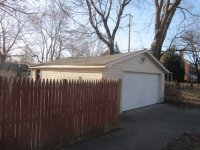
And the slab and foundation, what are their condition? Is water drainage a problem? Are sills rotting out? What about the exterior siding? Most of these garages were built with painted horizontal wood siding. Paint is usually flaking. Wood is usually rotting in places. No house wrap. No insulation. No metal connections between wall and roof. Usually there is little or no roof overhang. Many times no eave or roof venting. I am surrounded by these exact kinds of garages. They are designed to simply cover and protect and enclose cars, from the weather.

Hip roofs have additional problems because of the difficulty they present structurally. They are not designed for any additional loads, as would be imposed by insulating and finishing the inside. Frankly, if it were mine, and ready for re-shingling, I would re-frame it into a gable end roof. This would be especially true if wanting to insulate and finish at the rafters. If you don't use the space above the ceiling for storage, then you can place adequate insulation there, and the whole venting problem disappears.

I notice that the roof deck is boards, which are heavier than OSB. These are all things to take into consideration when contemplating improvements.

The other thing in these cases, is the resistance of the owner, to hiring work. Everyone wants to just do it themselves, to save money. In a case like this one, it may be just better cost wise, to have the rafter spaces foamed professionally. It solves the venting problems. Even when properly vented, there is just not enough depth in a 2x6 rafter to adequately insulate. And if you add rigid insulation board, then how do you finish it? If you then ad sheet rock or drywall, then you have weight problems to consider. And the cost has now probably exceeded foam now, too.

Let's discuss your options step by step, again.

If you simply insulate at the rafters and don't hang drywall, then you don't need a full set of ceiling joists, designed to support storage. But I would make sure I still had a few ceiling joists, especially in the middle of the structure, that were fastened to the outside walls securely, so they would resist outward pressure from the rafters. But if you are going to do this, why not size and space them so you can use the space for storage? If you do this, then you can also finish their underside with drywall for a nice ceiling and hang lighting. To get access to this storage, I recommend a large hatch be framed at one or both ends.

If money is short, simply install a few ceiling joists in the middle of the structure for now, for bracing. But size them for the future storage ceiling. Then insulate your rafters.

I discussed the insulation of a hip roof in a prior post. Read it. It gives you your options.

Here's my checklist for garage structures of this type.

Check roofing material type, number of layers and condition.
Check decking material and condition.
Check for roof overhang and venting at eave and peak or gable ends.
Check for damaged fascia and water damage to exterior walls from roof leaks at wall junction/fascia/gutter detail.
Note exterior siding type and condition and look for water damage to siding and structure from inadequate sealing between board siding and failing paint.
Check sill plates and look for damage from improper surrounding grade and/or level of slab being too low.
Check condition of slab and footings or foundations.
Examine garage door header for inadequate design and excessive deflection.
Check design of roof framing and note capacity for additional loads from finishing space. Also look for evidence of exterior walls bowing out and roof-line developing swayback from inadequate bracing from wall to wall. Check ridge board for splitting and failure.
Check garage door for insulating value and gasketing and sealing.
Check windows for insulating value.
Check all openings for security methods implemented.
Examine electrical service and determine future needs for power and light.
Check if other utilities are available and determine if needed.
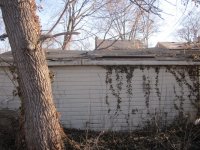
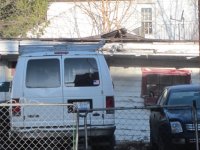
These are all areas in which these type of structures are inadequate and I have seen failures. In my neighborhood there are these exact same garages with bowed out side walls, sway backed roofs, rotted out exterior wall framing, rotting siding, deteriorating sill plates, tilting structures, failed and collapsed roofs, cracked and tilting slabs etc.

And I forgot to talk about footings and foundations and grading and excavation and compacted fill and setting the finish floor elevation.

Also, attention should be given to shear walls on either side of garage door openings. A neighbors garage is tilting and will collapse because of a combination of inadequate foundation, cracking and shifting slab parts and no shear wall protection for small walls on either side of the door.

Not to mention heating and cooling and de-humidification.

There are a lot of improvements needed to make some of these structures useful as finished workspaces.

Bill
 
Last edited:

bczygan

Well-known member
Joined
Nov 4, 2009
Messages
22,002
Location
DETROIT! Arsenal of Scrappers
Span is 20 ft
I did want the storage, but now that you say that I need more joists anyways maybe the way to go is a ceiling with an access cover with a pull down ladder. I'm confused as to why faced battery insulation requires a heftier set of ceiling joists, battery insulation doesnt weigh all that much?

You need more joists to keep the outside walls from pushing out at the top. These structures never had enough of them, and they weren't sized to support storage, but people throw stuff up there anyway. Secure them to the top plates of the outside walls with metal connectors. The garage across the street from me is an example. It is just like yours, and the ridge board is split and failed, the outside walls bow out so the garage door doesn't fit right and the ridge of the roof sags so the whole roof is swaybacked. Eye-bolts and a cable are attached from wall to wall, but haven't solved the problem.

If you want storage anyway, they need to be sized for that.
 

bczygan

Well-known member
Joined
Nov 4, 2009
Messages
22,002
Location
DETROIT! Arsenal of Scrappers
Some examples of neighbors garages that are failing because of inadequate design and maintenance. Note the swaybacked roof and bowed walls on the one, tilting walls and collapsed roof on another and almost completely demolished third one, courtesy of no maintenance and the ravages of mother nature.
 

Attachments

  • IMG_0875.JPG
    IMG_0875.JPG
    109 KB · Views: 40
  • IMG_0876.JPG
    IMG_0876.JPG
    94.9 KB · Views: 35
  • IMG_0877.JPG
    IMG_0877.JPG
    128.7 KB · Views: 35
  • IMG_0882.JPG
    IMG_0882.JPG
    112.8 KB · Views: 32
  • IMG_0881.JPG
    IMG_0881.JPG
    105.6 KB · Views: 28
  • IMG_0880.JPG
    IMG_0880.JPG
    131.9 KB · Views: 25
  • IMG_0879.JPG
    IMG_0879.JPG
    111.3 KB · Views: 23
To avoid these ads, REGISTER NOW!
Top Bottom