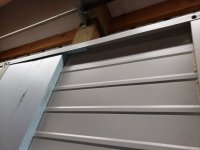
I apologize if this has been posted before, but I couldn't find much clear and direct information. I want to insulate my garage doors because it seems like the lowest hanging fruit as a next step in keeping my garage comfortable year round, especially keeping it warm in the Winter.
I have a 3 car garage that faces East. In the summer, it doesn't usually get above the 90s (°F) and the garage doesn't usually get all that hot. In the Winter though, it's regularly in the 20-40s outside.
The garage is finished with drywall on all walls and ceiling, but I don't think the walls are insulated, and I know the attic above the garage isn't insulated either. I have a gas powered furnace, which can heat the whole garage from 40° to 60° in maybe 20-30 minutes, but I shudder to think of all the energy I'm probably losing, especially through the uninsulated garage doors. Also, the floors are painted concrete, so there's another place heat is getting lost.
The question I have is, what kind of insulation should I use? The three options seem to be styrofoam board, fiberglass insulation or reflective roll insulation.
From what I gather, foam board is the cheapest option with the smallest R value and lowest insulation capabilities. Between fiberglass and reflective roll, it seems like the reflective roll is best for insulation against radiant heat outside from the sun in the Summer, while the fiberglass may be better for keeping the heat inside in the Winter. Is this true? I've kind of pieced this together from various product reviews and forums, but I've not been able to find any definitive comparison that says when each option would be the best choice.
The R values for all of these options seem small compared to what goes in your walls and attic. Is that a result of the system they're working within, being an open frame steel door instead of a closed wall, or is the insulation for garage doors just worse?
Sent from my Pixel 2 using The Garage Journal mobile app
I have a 3 car garage that faces East. In the summer, it doesn't usually get above the 90s (°F) and the garage doesn't usually get all that hot. In the Winter though, it's regularly in the 20-40s outside.
The garage is finished with drywall on all walls and ceiling, but I don't think the walls are insulated, and I know the attic above the garage isn't insulated either. I have a gas powered furnace, which can heat the whole garage from 40° to 60° in maybe 20-30 minutes, but I shudder to think of all the energy I'm probably losing, especially through the uninsulated garage doors. Also, the floors are painted concrete, so there's another place heat is getting lost.
The question I have is, what kind of insulation should I use? The three options seem to be styrofoam board, fiberglass insulation or reflective roll insulation.
From what I gather, foam board is the cheapest option with the smallest R value and lowest insulation capabilities. Between fiberglass and reflective roll, it seems like the reflective roll is best for insulation against radiant heat outside from the sun in the Summer, while the fiberglass may be better for keeping the heat inside in the Winter. Is this true? I've kind of pieced this together from various product reviews and forums, but I've not been able to find any definitive comparison that says when each option would be the best choice.
The R values for all of these options seem small compared to what goes in your walls and attic. Is that a result of the system they're working within, being an open frame steel door instead of a closed wall, or is the insulation for garage doors just worse?
Sent from my Pixel 2 using The Garage Journal mobile app