Hello GJ after a year and a half of procrastination I’m going to run some juice out to my new detached garage. I have a 200 amp main panel in my house basement (which is on the left front corner), and the garage is detached, 25’ off the right side of the house. So I will have to run out of my main panel, across the unfinished basement, then underground 25’ to the garage where I will put in a sub panel. Total run less then 100’. I read a lot of posts that suggest 2224 MHF but it must be in conduit indoors. I have conduit run underground to the garage already so that’s no issue. Is there a better choice then MHF so I do not have to run conduit in my basement and do not have to splice before going through the conduit out to the garage? As far as loads I will be doing nothing crazy out there, light welding, 2 post lift maybe some plazma cutting, compressor, one man show won’t be using all at the same time type thing. I figured from posts on here run the 2 gauge aluminum wire to a 60 amp breaker for the possible added capacity in the future. Anyhow wire is the first up item what do you all suggest?

You are using an out of date browser. It may not display this or other websites correctly.
You should upgrade or use an alternative browser.
You should upgrade or use an alternative browser.
Garage power time
- Thread starter flan
- Start date
sberry
Banned
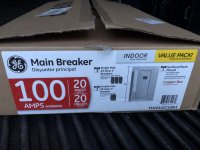
The number 2 was invented for this. Look at the value pak panels , about 65$ for 20 space main breaker, again ideal. You can use a 60 in the main. I have done a couple dozen of these,,, NEVER had one trip up a 60.
pattenp
Well-known member
If you don't want to use conduit inside you don't have much choice but to splice and use SER for the inside. The only cable I can think of that doesn't need conduit inside and can go underground other than UF is AlumaFlex™ Type MC Feeder PVC Jacketed cable, but I believe the smallest it comes is 1/0 in Al.
Edit: You can get Armorlite® Type MC PVC Jacketed cable in copper in #3 which is good to 100A. https://www.southwire.com/ProductCatalog/XTEInterfaceServlet?contentKey=prodcatsheet162
What size conduit did you use to garage? The Armor cable may be a pain to pull through.
*
Edit: You can get Armorlite® Type MC PVC Jacketed cable in copper in #3 which is good to 100A. https://www.southwire.com/ProductCatalog/XTEInterfaceServlet?contentKey=prodcatsheet162
What size conduit did you use to garage? The Armor cable may be a pain to pull through.
*
Last edited:
Falcon67
Well-known member
I used MHF, fused at 70A. No issues. I showed my inspector/AHJ the ratings on the Southwire cable I used and asked if I could run it in free air across the house attic - "no problem".
wyliesdiesels
Well-known member
I used MHF, fused at 70A. No issues. I showed my inspector/AHJ the ratings on the Southwire cable I used and asked if I could run it in free air across the house attic - "no problem".
Inspector was wrong.
MHF does not have an outer jacket and therefore is required by code to be ran in conduit.
The number 2 was invented for this. Look at the value pak panels , about 65$ for 20 space main breaker, again ideal. You can use a 60 in the main. I have done a couple dozen of these,,, NEVER had one trip up a 60.
Good to hear do any of the box stores carry the value pack panels? Specific brand/model #? Will it need a main breaker?
If you don't want to use conduit inside you don't have much choice but to splice and use SER for the inside. The only cable I can think of that doesn't need conduit inside and can go underground other than UF is AlumaFlex™ Type MC Feeder PVC Jacketed cable, but I believe the smallest it comes is 1/0 in Al.
Edit: You can get Armorlite® Type MC PVC Jacketed cable in copper in #3 which is good to 100A. https://www.southwire.com/ProductCatalog/XTEInterfaceServlet?contentKey=prodcatsheet162
What size conduit did you use to garage? The Armor cable may be a pain to pull through.
*
2 1/2” to make pulling easier. Maybe mhf will be the way to go, conduit is cheaper then the more expensive copper.
I used MHF, fused at 70A. No issues. I showed my inspector/AHJ the ratings on the Southwire cable I used and asked if I could run it in free air across the house attic - "no problem".
Interesting, that goes against what most have said here in the past since it’s individual conductors without a sheathing...
Last edited:
75gmck25
Well-known member
I ran 2-2-2-4 AL MHF from the garage panel up to the house in 2" conduit, and through the house wall to a 12"x12" junction box. I then spliced to 2-2-2-4 AL SER and ran that across the basement to the panel. I used a 60 amp breaker just because I could get one off-the-shelf at HD. I also decided to buy the expensive insulated connectors (Polaris?) to splice large gauge wire, since I only needed four. I found them on Amazon, and I think it was about $15/connector.
I used a 12"x12" junction box because I found a reference that said for large gauge wiring the junction box size was determined by the conduit size, not the number of wire splices or the gauge of the wire. It was a lot bigger box than I thought I needed, but did give me plenty of space to make the splices.
Bruce
I used a 12"x12" junction box because I found a reference that said for large gauge wiring the junction box size was determined by the conduit size, not the number of wire splices or the gauge of the wire. It was a lot bigger box than I thought I needed, but did give me plenty of space to make the splices.
Bruce
bobdole4u2
Member
Aluminum just for the price? I'd bump up to copper just because it's a one-time job, safer, and thinner per ampacity. 2-2-2-6 service entrance cable to a 100 amp sub panel and you'll be set for a lift, welders, plasma cutter, wood tools, etc. And you'll be safer, no noalox to deal with
Sent from my SM-G930V using Tapatalk
Sent from my SM-G930V using Tapatalk
sberry
Banned
1 1/2 inch minimum for 2 alum and 2 inch is a bit easier to go thru LB's. Price goes way up past 2 and you don't need it. Box ko's are a problem as is drilling any holes in larger sizes.
You need to add a ground bar kit to the shopping list for that panel. they have them in 20 and 24 I think, either fits. The run is from a 60 breaker,,, not to it,, the panel has a 100 main.
Yes, you need a main. They often have 20 and 24 space panels and the main difference is about 4 inches in length. Either works and the 24 comes with a couple more breakers but its a cost wash, even money. I use the 20 in garages and the 24 is ideal in modest homes with 100A service. This is Homeline,,, I forget the model numbers but saw both on the shelf at a Lowes a while back. I use a different panel but I started out way before Hom was a *********, today they are common in almost every store that sells electric and are priced right. I tend to use 60 in the main panel feeding these, its simply that I keep one on hand and after 60 the price goes up. I have never tripped a 60 feeding a common garage. The 2 alum wire leaves some headroom if it would ever happen, helps prop up voltage for a bit longer runs and for motor starts.Good to hear do any of the box stores carry the value pack panels? Specific brand/model #? Will it need a main breaker?
You need to add a ground bar kit to the shopping list for that panel. they have them in 20 and 24 I think, either fits. The run is from a 60 breaker,,, not to it,, the panel has a 100 main.
Last edited:
wyliesdiesels
Well-known member
Aluminum just for the price? I'd bump up to copper just because it's a one-time job, safer, and thinner per ampacity. 2-2-2-6 service entrance cable to a 100 amp sub panel and you'll be set for a lift, welders, plasma cutter, wood tools, etc. And you'll be safer, no noalox to deal with
Sent from my SM-G930V using Tapatalk
safer than what?

So Lowe’s by my house is closing so everything in the store is 10% off I picked up conduit to run the MHF in also picked up a 100 amp panel, ground bar kit, 2 ground rods, 60 amp breaker, some 20’s and 15’s, boxes, etc...good start for now I will be along with a few other questions along the way I’m sure. Thanks for the input it’s been helpful.
Attachments

wyliesdiesels
Well-known member
So wondering how this looks? Sorry for the 90’s Microsoft paint, it’s what I haveI didn’t put it on the picture but green bonding screws are removed from all neutral bars.
couple of things
The ground bar on the subpanel SHOULD be bonded to the enclosure. you wrote unbonded.
Its the neutral bar in the subpanel which should not be bonded.
Also, if you put in a second ground bar in the subpanel on the right it will help keep the panel a little less cluttered
and finally, you couldve saved yourself the time used on MS paint by checking out the drawings on the Electrical FAQ sticky here:
https://www.garagejournal.com/forum/showthread.php?t=356460
Last edited:
Bretny
Well-known member
You also dont put a new ground rod at the garage. Only one at the main it needed.
I did SER, junction box then some kind of DB wire for my 100a in the garage. I beleive its about 175ft from main to sub pannel.
I did SER, junction box then some kind of DB wire for my 100a in the garage. I beleive its about 175ft from main to sub pannel.
couple of things
The ground bar on the subpanel SHOULD be bonded to the enclosure. you wrote unbonded.
Its the neutral bar in the subpanel which should not be bonded.
Also, if you put in a second ground bar in the subpanel on the right it will help keep the panel a little less cluttered
and finally, you couldve saved yourself the time used on MS paint by checking out the drawings on the Electrical FAQ sticky here:
https://www.garagejournal.com/forum/showthread.php?t=356460
Thanks for the reply. I did use the sticky but wanted to make sure the way I tied in the ground and neutral going out to the garage sub panel was acceptable. The garage is a sub-sub panel I suppose. In my rendering the right panel is the 200a main panel. The one on the left is a sub directly off of it. The garage panel comes off the left (sub)
The ground bar on the first sub is one of the add on bars and is attached to the metal panel. The neutral bars (main and sub) had the green screws removed.
You also dont put a new ground rod at the garage. Only one at the main it needed.
I did SER, junction box then some kind of DB wire for my 100a in the garage. I beleive its about 175ft from main to sub pannel.
The garage is detached, I put 2 ground rods in.
wyliesdiesels
Well-known member
You also dont put a new ground rod at the garage. Only one at the main it needed.
I did SER, junction box then some kind of DB wire for my 100a in the garage. I beleive its about 175ft from main to sub pannel.
this is incorrect for detached structures.
ALL detached structures are required to have grounding electrodes. If using ground rods, code requires 2 spaced 6' apart.
Thanks for the reply. I did use the sticky but wanted to make sure the way I tied in the ground and neutral going out to the garage sub panel was acceptable. The garage is a sub-sub panel I suppose. In my rendering the right panel is the 200a main panel. The one on the left is a sub directly off of it. The garage panel comes off the left (sub)
The ground bar on the first sub is one of the add on bars and is attached to the metal panel.
ok, well on your diagram you have it labeled that the ground bar is unbonded. IF it is attached to the metal panel and not isolated then it IS BONDED. so your note on the diagram is incorrect.
The neutral bars (main and sub) had the green screws removed.
This may be incorrect for the main panel dependent on your setup.
What is before the main panel? Just a meter? or a meter and disconnect?
If the former, then you most assuredly should have the neutral bar bonded otherwise breakers will not be able to clear ground faults.
The neutral bar in main service panels are ALWAYS bonded.
A panel is NOT the main service panel if there is a panel or disconnect before it.
That was wrong terminology on my part, I was thinking bonded, as in bonded to the neutral bar. So yes, the ground bar is bonded to the sub panel.this is incorrect for detached structures.
ALL detached structures are required to have grounding electrodes. If using ground rods, code requires 2 spaced 6' apart.
ok, well on your diagram you have it labeled that the ground bar is unbonded. IF it is attached to the metal panel and not isolated then it IS BONDED. so your note on the diagram is incorrect.
This may be incorrect for the main panel dependent on your setup.
What is before the main panel? Just a meter? or a meter and disconnect?
If the former, then you most assuredly should have the neutral bar bonded otherwise breakers will not be able to clear ground faults.
The neutral bar in main service panels are ALWAYS bonded.
A panel is NOT the main service panel if there is a panel or disconnect before it.
As far as the main panel (right) the service goes into the meter box on the exterior of the house then from there into the main panel. I looked yesterday and saw the ground screw sitting on the bottom of the box, same as the sub panel along side of it. Incorrect?
wyliesdiesels
Well-known member
That was wrong terminology on my part, I was thinking bonded, as in bonded to the neutral bar. So yes, the ground bar is bonded to the sub panel.
As far as the main panel (right) the service goes into the meter box on the exterior of the house then from there into the main panel. I looked yesterday and saw the ground screw sitting on the bottom of the box, same as the sub panel along side of it. Incorrect?
yeah that is incorrect since all you have ahead of the main panel is a meter.
The neutral bar needs to be bonded to the enclosure.
Can you take a picture of your main with the cover off?
Can you take a picture of your main with the cover off?
Picture of the "meter box" would help too.
yeah that is incorrect since all you have ahead of the main panel is a meter.
The neutral bar needs to be bonded to the enclosure.
Can you take a picture of your main with the cover off?
Sure will, I will post it tomorrow. Come to think of it a service rated automatic transfer switch for generac generator is in between the meter and main panel. Not sure if that makes a difference either way.

wyliesdiesels
Well-known member
Sure will, I will post it tomorrow. Come to think of it a service rated automatic transfer switch for generac generator is in between the meter and main panel. Not sure if that makes a difference either way.
Well yeah that makes a huge difference.
Thats why i asked if there was anything between the "main" panel and the neter.
Since you have an ATS, what youre calling the main is NOT a main. It is a subpanel because the ATS is your main service panel.
So leave the neutral in the "main" unbonded as it is right now.
. And lets call the "maim" what it is, a subpanel, to stop the confusion.
Bretny
Well-known member
Ground rods at detached scructures is new to me. I ran 4 conductor to mine so i get the ground from the main.
Wouldnt you create a ground loop adding ground rods and only useing 3 conductor to a detache scructure?
Wouldnt you create a ground loop adding ground rods and only useing 3 conductor to a detache scructure?
wyliesdiesels
Well-known member
Ground rods at detached scructures is new to me. I ran 4 conductor to mine so i get the ground from the main.
The issue here is youre confusing different types of grounding.
Grounding electrodes main purposes are for grounding lightning and limiting voltage potential to earth.
EGCs/grounds on the other hand are for creating a low impedance fault current pathway so breakers can trip.
They also prevent metallic pathways such as plumbing and frames of appliances and motors from becoming energized.
2 completely different animals. NEVER confuse one for the other.
You need both for detached structure fed from another structure.
Theres a write up on exactly how to do this on the FAQ sticky. see #3.
https://www.garagejournal.com/forum/showthread.php?t=356460
Wouldnt you create a ground loop adding ground rods and only using 3 conductor to a detached structure?
no you wouldnt because of what grounding electrodes do. They shunt lighting.
And 3 wire feeds to detached structures have not been allowed since 2008 code cycle
Last edited: