To avoid these ads, REGISTER NOW!

Garage project -- advice encouraged!

Schmoke

Member
Joined
Nov 20, 2015
Messages
17
Location
Richmond VA (formerly of Pittsburgh PA)
Hi guys, Jay here.

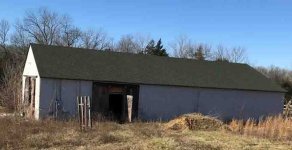
The property I bought includes what I believe would be called a 'pole barn'. (Pic 1) 72x56, no rooms within, though it appears the builder was beginning to add a wall or two.

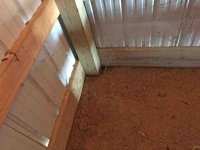
Just a dirt floor, no concrete, no stones. Kind of level but not exactly. The four walls: 6x6s every 12-14 feet are the verticals, four rows of 2x8s encircle the barn horizontally. The outside walls are pieces of corrugated aluminum, nailed to the 2x8s. Pic 2 shows one interior corner. You can see a 6x6, a couple 2x8's, and dirt floor (softened from a recent rainstorm).

My ultimate goal: I want a proper floor. Concrete, epoxy, whatever, just not dirt. I would also like some interior walls, to better manage the current hugeness of the room. My initial focus would be on a workshop, 24x48 perhaps, with floor, walls, insulation and a window-mounted air conditioner.

I'm overwhelmed. Is there a definitive first task I need to accomplish? In other words, how do I start?

Thanks everyone,

Jay.
 

Attachments

  • whse4.jpg
    whse4.jpg
    39.2 KB · Views: 132
  • whse3.jpg
    whse3.jpg
    44.3 KB · Views: 130
To avoid these ads, REGISTER NOW!

Jhoff310

Well-known member
Joined
Jan 2, 2012
Messages
876
Location
Perrysburg Ohio
1st thing I would do would do a very thorough inspection of the building. Dig down along one of the posts and make sure they are set in concrete, and not just in the dirt (i've seen in before). Then I would figure out a layout using graph paper, drawing everything out...power drop, interior walls, windows, lift if you're putting one in, etc... I would then get estimates for concrete. It may be a 2+ part pour depending on your budget. A building that size will require a ratwall, which will add to your concrete cost.

Thats my.02
 

ssdave

Banned
Joined
Apr 11, 2015
Messages
2,913
Location
Eastern Oregon
I would start by mowing around the building, cleaning up the junk, and figuring out how to drain it so the water stays away from the building. You want the bottom of your metal on the building to be 2 inches above dirt, and the dirt to slope away from the building by 6 inches of drop in 6 feet, minimum. If you've got that solved in good shape, the next step is to do a thorough inspection of the building as noted in the post above. If that is good, then you can proceed with getting a concrete floor, at least in the part you want to close in for the workshop.

Note that what you're really gaining in building a workshop in this building is the roof, and maybe some of the outside walls. All the rest of it will be essentially like a stand alone building, inside this building.
 

matt_i

Well-known member
Joined
Mar 14, 2008
Messages
10,723
Location
SE Michigan
The soft floor is something to take a look at, as you don't want to have water pooling under your future slab. As above, make sure water has a visible path away (lower) in every direction.

Its worth putting in some time researching the General and Flooring forum for prep tips that make a good concrete job. Quickly, my recommendations, Compact the base. Add washed crushed limestone base, compacted. Vapor barrier. Steel reinforcement (rebar or wire mesh mats). Determine the thickness, I'd shoot for a 4" minimum thickness. I recommend a 6 sack 4000psi mix. Call the local ready mix for recommendations on people who can do the rest of the finishing job for you. Wet-cure the concrete or use curing sealer. Saw cut the slab into 10-12 foot squares the next morning after the pour to control cracks.

Having a rotating laser level can really help out, borrow or rent as alternatives.
 

cdestuck

Well-known member
Joined
Nov 13, 2013
Messages
1,462
Location
Altoona, Pa
As to your shop, if you could take time to do a accurate layout of workbenches or tools. I did this to mine and before having the floor laid I put 1 1/2" pvc pipe from your electrical source to your tools. This is a good way to have electricity at your tools or walk around bench.
 

forAK

Well-known member
Joined
Nov 11, 2015
Messages
380
Location
Peters Creek AK
I would start by mowing around the building, cleaning up the junk, and figuring out how to drain it so the water stays away from the building. You want the bottom of your metal on the building to be 2 inches above dirt, and the dirt to slope away from the building by 6 inches of drop in 6 feet, minimum. If you've got that solved in good shape, the next step is to do a thorough inspection of the building as noted in the post above. If that is good, then you can proceed with getting a concrete floor, at least in the part you want to close in for the workshop.

Note that what you're really gaining in building a workshop in this building is the roof, and maybe some of the outside walls. All the rest of it will be essentially like a stand alone building, inside this building.

This is a good start, but before looking at concrete, you need to figure out your electric and or water situation. It's always good to bring it in under slab. Plan that out, then tackle the bids for concrete.
 
To avoid these ads, REGISTER NOW!

rburke65

Well-known member
Joined
Nov 10, 2007
Messages
12,349
Location
Canfield, Ohio
Saw them joints as soon as you can walk on the fresh concrete.....do notwaittil the next moning or day. You might have to dig out some of that dirt inside the bard before you compact anything in order to get the grade you want....just a thought. And establish your electrical entrance area THHN as said you can run 3/4" ....?.....larger?.....PVC conduit atop the dirt to different areas and to the far corners of the pole barn. This will save you on lots of labor. Easier than up and down a ladder pulling romex or whatever. Locate the work shop area close to the elec. panel for your loads. Heat? Your trusses are pretty far apart, so you will have to think about that when considering insulation, ceiling, lighting. Good luck.
 

tomroblee

Well-known member
Joined
Jan 11, 2006
Messages
446
Location
Indiapolis, IN
As others have said, first "appraise" what you have. I imagine that the metal on the building is steel rather than aluminum. Test it with a magnet.

A 4" concrete floor is going to take about 50 cubic yards of concrete. I doubt if you could buy the concrete for $5000---and that doesn't include any dirt work to level the floor, gravel base, or labor.

If you want to insulate the building you are probably going to want a ceiling. The trusses need to be engineered to carry the weight of the ceiling. It could be a deal breaker if your trusses are not engineered to support the weight of a ceiling and insulation. If your trusses are spaced too far apart, you will need to build some framing between them to support the ceiling. This will add weight, cost, and complexity.
 

Mike.VA

Well-known member
Joined
Jan 27, 2017
Messages
269
Location
Virginia (Lake Anna)
I agree with all the previous comments and here is one more.
Before pouring concrete, consider if you want water in the building.
Did you want a sink floor drains, hose bibs, toilet, a shower, and so on?
With this size, the sky is the limit and after concrete is poured, its hard to change.
 

John in OH

Well-known member
Joined
Jun 2, 2007
Messages
2,444
Location
SE Ohio & Eastern Virginia
All good advice here already, so I’ll just add my $0.02 worth.

1 – exterior drainage is paramount. No matter what you may do to the building, if the external drainage is screwed up, the building will always be screwed up. I don’t see any gutters so all the rain that falls off the eves must go somewhere …. quickly. As someone mentioned above, 6” in first 6’ is probably minimum. A builder once told me 90% of folks set their foundations too low.

If grade is too flat you may need to add gutters, downspouts, and downspout extensions.

2 – dig down and inspect the posts to make sure they are still sound. The posts should not be set “in” concrete, but they should be set “on” concrete. Setting posts in concrete creates a cup around the post that holds moisture and accelerates rot.

3 – evaluate the dirt floor. If the floor dirt is packed clay, you can probably use it as your sub-base. But if it is loam, or manure, or loose dirt, or a material heavy in organics, you’ll need to plan to remove this material before any gravel can be installed.

Steps 1-3 should give you a decent picture of what you have. Now, start planning.

4 – define your desired elevations for ceiling height and top-of-concrete (TOC) floor. Remember, for the floor design, you’ll need to plan on getting to a solid sub-base (maybe some excavation will be required), install a vapor barrier, cover barrier with gravel, pack gravel, install wire reinforcement, then pour desired depth of concrete over gravel. Also, remember the TOC must be several inches above the exterior grade.

5 – if you are going to heat or cool, you’ll need a ceiling at a minimum. Existing trusses may or may not be adequate for weight of insulation and ceiling material. You may need to add trusses for ceiling support. Or modify trusses if you want additional height for a lift.

6 – on paper at a scale of ¼” per foot, design your shop interior. Include location of electric service, water lines, etc. so concrete imbeds can be installed. Locate interior walls, locations of major equipment, windows, doors, etc. etc.

$5,000 isn’t going to get you very far.

I’m in King William County NE of Richmond, where are you?
 
Last edited:
To avoid these ads, REGISTER NOW!
Top Bottom