

You are using an out of date browser. It may not display this or other websites correctly.
You should upgrade or use an alternative browser.
You should upgrade or use an alternative browser.
Garage Spring
- Thread starter SkidooRider15
- Start date
coljar
Well-known member
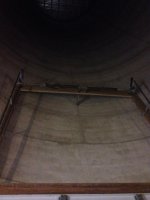
It looks like the spring broke in the center or the set screws on the piece where you adjust the spring tension let go. What kind of water tower has a garage door in the base? More pictures, please.
Last edited:
RunninOnEmpty
Well-known member
Not sure, but unless you have experience fixing those, call a professional. Torsion springs are more dangerous to work on than extension springs (the kind that run parallel to the tracks).
Those springs do need to be replaced from time to time, anyway, so I think now's a good time to call someone over. I definitely wouldn't leave it. Personally I wouldn't even want to use that door until they are fixed, but that could be a bit paranoid on my part.
If you do work on them yourself, make sure there is a safety cable running through them and securely attached on the sides to keep them from breaking your face.
A better pic would be helpful.
Those springs do need to be replaced from time to time, anyway, so I think now's a good time to call someone over. I definitely wouldn't leave it. Personally I wouldn't even want to use that door until they are fixed, but that could be a bit paranoid on my part.
If you do work on them yourself, make sure there is a safety cable running through them and securely attached on the sides to keep them from breaking your face.
A better pic would be helpful.
koditten
Well-known member
Is the door still easy to open?
I've never seen this, but I'm guessing the set screws are allowing the spring to tighten, but not loosen. I'm subscribed for answer.
I've never seen this, but I'm guessing the set screws are allowing the spring to tighten, but not loosen. I'm subscribed for answer.
upndown
Well-known member
Does the door still work?
Could it have been that way all along and you just didn't notice?
Some guys do that at installation. Stretch the spring.
I stretch all torsion springs I install or replace, not that much..haha
It eliminates the chance of spring bind.
If the door is still working smooth, I wouldn't sweat it.
You don't need any safety cables on torsion springs, they already have a shaft going thru them. Can't go anywhere.. Just scare the **** out of you when they break!
Could it have been that way all along and you just didn't notice?
Some guys do that at installation. Stretch the spring.
I stretch all torsion springs I install or replace, not that much..haha
It eliminates the chance of spring bind.
If the door is still working smooth, I wouldn't sweat it.
You don't need any safety cables on torsion springs, they already have a shaft going thru them. Can't go anywhere.. Just scare the **** out of you when they break!
RunninOnEmpty
Well-known member
You don't need any safety cables on torsion springs, they already have a shaft going thru them. Can't go anywhere.. Just scare the **** out of you when they break!
I meant for replacing them as I have always heard to do that when replacing both torsion and extension springs.
Or do you not think it necessary even when replacing torsion springs? Am I just repeating useless advice?
Everything I've heard about the two systems has said that torsion springs are much more dangerous to work on, so personally I tend to fix extension springs myself but call someone else to do torsion springs.
Last edited:
upndown
Well-known member
ROE, I agree..No extension spring door should be used without safety cables, unfortunately years ago the door mnfr's didn't see it that way, today they come as part of the hardware package, but not everyone uses them.
The cables don't aid at all replacing the springs. I personally install cables on any door that doesn't have them.
I've never used or seen anyone use a safety cable on a torsion spring. Again the shaft goes thru the spring, when they break they just unwind, can't go anywhere.
I always recommend staying away from ext spring doors, buy torsion! I wouldn't have one.
The cables don't aid at all replacing the springs. I personally install cables on any door that doesn't have them.
I've never used or seen anyone use a safety cable on a torsion spring. Again the shaft goes thru the spring, when they break they just unwind, can't go anywhere.
I always recommend staying away from ext spring doors, buy torsion! I wouldn't have one.
Steelhorse27
Well-known member
ive seen it before.....right before they break. From my understanding it has to do with the coils binding up and not unloading properly. (You are supposed to spray lube them periodically). A door guy might be able to fix them before they snap. I wasnt so lucky and paid $200 to replace both springs a few months ago
OP
SkidooRider15
Well-known member
the tower has a small room to which the water comes in from the well. but travels up to the storage tank up top via pipe. Entire inside is hallow up to the tank.
I informed the director of the door. I just never seen anything like it. And yeah it opens fine.
I informed the director of the door. I just never seen anything like it. And yeah it opens fine.
Attachments

RunninOnEmpty
Well-known member
ive seen it before.....right before they break. From my understanding it has to do with the coils binding up and not unloading properly. (You are supposed to spray lube them periodically). A door guy might be able to fix them before they snap.
Maybe a repairman could make them last longer than if he doesn't call one, but ultimately all springs wear out. Metal fatigue. Most people never give their garage door springs a thought even when they have worn to the point that you need to be a bodybuilder to lift the door up. You can get by with adjusting the tension for a while but eventually that solution is no longer good enough.
Cave Creek Ray
Well-known member
Looks like one may already have broken -or part is binding badly. That door appears to have side springs as well because of the long draw. Might be good to have that one done by the pros. Problem is, that one looks like its 30 feet away! Cherry picker anyone? If you can oil it you might get a little more life out of it but that kind of stress will take its toll quickly.
In 7' standard home doors, those are easy to replace. I taught my daughter to do it.
The key, as someone mentioned, is to replace both springs whenever one breaks. Another thing many don't know is, you can buy higher cycle life springs from most manufacturers. I put a brand new door on her house and one month after the warranty expired a spring broke. Ordering springs requires you tell the manufacturer the weight of the door and the diameter of the old spring rod material as well as the coil diameter of the old springs. Its been awhile but, I think they also wanted the length of the coils too.
I ordered the higher life springs for like $20 more bucks. Double the cycle life. I think they get double annealing to remove stress in the metal.
I got the 1/2 inch by 48" rod in the landscaping section of Home Depot. Cut it in half. Mark a line on both inner wheels. Get a good seat in the inner spring attach wheel. Keep good grip on the rod as you undo the spring attach bolts. On most openers, spring will pull toward ceiling. (Check yours to be sure) The tension on the still good spring is about 25 lbs at the end of a 2' rod. Firm but very manageable. Using the marks on the attach wheels, walk the attach wheel around counting revolutions. The tension will start to abate after 3-4 turns. In fact, the last couple of turns your can actually walk it around by hand with gloves on. Once spring is de-tensioned, the mildly complicated part starts.
Look at how our spring drive tube attaches to your actuator wheels on the end of the tube, and how the lift wires loop over the drive wheels. Take some phone pictures to remind yourself.
Take drive rod down, replace both springs. Reinstall drive rod and hook up the lift cables at each end correctly. Kind of tricky because if lift rod moves, the lift wires fall off the end wheels. You'll get it!
Re-tensioning: Wind the spring as many turns as your hands can manage, then switch over to the rods. Tension first spring half of number of turns you de-tensioned old spring and tighten lock bolts (to rod). Don't crush the pipe! Just firm tightened both bolts for now. Then move to other loose spring and tension it halfway and lock it down. Then go back and tension the first spring to the full number of turns. and snug down the nuts again. Then do the last spring.
My daughter was 27 and found she could manage the spring tension. Just take your time and make sure you have a good seat with the rod in the tensioning hole each time before removing the other rod. At any time, you can let the rod pin itself on the ceiling (or door, depending on direction) and let go and take a break for a minute. new springs may require different number of turns than the old spring you took off. The number you record is just a wag to get you close.
Tension check. lift the door about 2-3 feet off the floor and there should be no weight on door. If too heavy or too light, adjust springs +/- 1/4 turn each and recheck. Once door is correctly balanced, go up and firm up tensioning nuts to just where you deform the rod a little bit. That will help lock the rod and the spring.
Now go back and lubricate both springs with some good 30 wt. oil. They need to slip smoothly against themselves. Oil them once a year and your springs will last quite awhile. WD-40 is not a lubricant so use real oil.
My daughter was put off by the WARNING and DANGER signs but, once she figured out what the springs did, and how much they were tensioned, I am pretty sure she would tackle another repair on her own. Or at least have her hubby to the muscling while she directs him. On a home garage door, its really easy if you can locate the correct replacement springs. The only tough thing was getting the drive tube out of the track frames because in a standard garage, the rod is a biggee, as wide as the door.
Note: Tall narrow doors have springs that must rotate more than home garage doors. they are a booger. My shop has two 20' wide by 12' high doors which have FOUR springs on them. Same idea. Just de-tension them counting the number of turns for reassembly.
I probably missed a few things and your door may be different. The spring adjusting part is really no big deal and is trial and error once you get them installed. Wear gloves! Its definitely DIY if you are reasonably inclined and have a few tools.
Ray
In 7' standard home doors, those are easy to replace. I taught my daughter to do it.
The key, as someone mentioned, is to replace both springs whenever one breaks. Another thing many don't know is, you can buy higher cycle life springs from most manufacturers. I put a brand new door on her house and one month after the warranty expired a spring broke. Ordering springs requires you tell the manufacturer the weight of the door and the diameter of the old spring rod material as well as the coil diameter of the old springs. Its been awhile but, I think they also wanted the length of the coils too.
I ordered the higher life springs for like $20 more bucks. Double the cycle life. I think they get double annealing to remove stress in the metal.
I got the 1/2 inch by 48" rod in the landscaping section of Home Depot. Cut it in half. Mark a line on both inner wheels. Get a good seat in the inner spring attach wheel. Keep good grip on the rod as you undo the spring attach bolts. On most openers, spring will pull toward ceiling. (Check yours to be sure) The tension on the still good spring is about 25 lbs at the end of a 2' rod. Firm but very manageable. Using the marks on the attach wheels, walk the attach wheel around counting revolutions. The tension will start to abate after 3-4 turns. In fact, the last couple of turns your can actually walk it around by hand with gloves on. Once spring is de-tensioned, the mildly complicated part starts.
Look at how our spring drive tube attaches to your actuator wheels on the end of the tube, and how the lift wires loop over the drive wheels. Take some phone pictures to remind yourself.
Take drive rod down, replace both springs. Reinstall drive rod and hook up the lift cables at each end correctly. Kind of tricky because if lift rod moves, the lift wires fall off the end wheels. You'll get it!
Re-tensioning: Wind the spring as many turns as your hands can manage, then switch over to the rods. Tension first spring half of number of turns you de-tensioned old spring and tighten lock bolts (to rod). Don't crush the pipe! Just firm tightened both bolts for now. Then move to other loose spring and tension it halfway and lock it down. Then go back and tension the first spring to the full number of turns. and snug down the nuts again. Then do the last spring.
My daughter was 27 and found she could manage the spring tension. Just take your time and make sure you have a good seat with the rod in the tensioning hole each time before removing the other rod. At any time, you can let the rod pin itself on the ceiling (or door, depending on direction) and let go and take a break for a minute. new springs may require different number of turns than the old spring you took off. The number you record is just a wag to get you close.
Tension check. lift the door about 2-3 feet off the floor and there should be no weight on door. If too heavy or too light, adjust springs +/- 1/4 turn each and recheck. Once door is correctly balanced, go up and firm up tensioning nuts to just where you deform the rod a little bit. That will help lock the rod and the spring.
Now go back and lubricate both springs with some good 30 wt. oil. They need to slip smoothly against themselves. Oil them once a year and your springs will last quite awhile. WD-40 is not a lubricant so use real oil.
My daughter was put off by the WARNING and DANGER signs but, once she figured out what the springs did, and how much they were tensioned, I am pretty sure she would tackle another repair on her own. Or at least have her hubby to the muscling while she directs him. On a home garage door, its really easy if you can locate the correct replacement springs. The only tough thing was getting the drive tube out of the track frames because in a standard garage, the rod is a biggee, as wide as the door.
Note: Tall narrow doors have springs that must rotate more than home garage doors. they are a booger. My shop has two 20' wide by 12' high doors which have FOUR springs on them. Same idea. Just de-tension them counting the number of turns for reassembly.
I probably missed a few things and your door may be different. The spring adjusting part is really no big deal and is trial and error once you get them installed. Wear gloves! Its definitely DIY if you are reasonably inclined and have a few tools.
Ray
Last edited:
Jlbc212
Well-known member
Torsion springs stretch out as they are being wound. The set screws at the winding cone will hold it at that stretched out length. If off some reason the shaft or tube gets shifted, the spring can bunch up. However, you have two opposing springs that offset each other and should hold the shaft in position. The way to fix this one spring (it isn't broken) is to loosen the set screws (holding the spring tension with a properly sized torsion bar). The spring should go back to it's correct wound length unless there's a burr or deformation on the shaft or tube. It's best left to a pro. There's no need to replace both torsion springs when only one is broken.
upndown
Well-known member
Torsion springs stretch out as they are being wound. The set screws at the winding cone will hold it at that stretched out length. If off some reason the shaft or tube gets shifted, the spring can bunch up. However, you have two opposing springs that offset each other and should hold the shaft in position. The way to fix this one spring (it isn't broken) is to loosen the set screws (holding the spring tension with a properly sized torsion bar). The spring should go back to it's correct wound length unless there's a burr or deformation on the shaft or tube. It's best left to a pro. There's no need to replace both torsion springs when only one is broken.
That's like saying don't replace both front tires when both are bald!
If they're OEM, they have gone the same number of cycles, plus you do the same amount of work to replace one as you do for both. Replace them both and be done with it!
upndown
Well-known member
WOW C C Ray that even had me confused! 
If you guys want to try this yourself, watch a good tutorial. DDM has them.
You Tube as well.
If you guys want to try this yourself, watch a good tutorial. DDM has them.
You Tube as well.
Stuart in MN
Well-known member
May I ask if that water tower is part of a municipal water system, or does it serve a company? As it happens I work in the water industry, and have been involved in the design of a lot of water towers in the Twin Cities area, but have never seen that one before. Its construction is pretty unusual for this part of the country.
Jlbc212
Well-known member
That's like saying don't replace both front tires when both are bald!
If they're OEM, they have gone the same number of cycles, plus you do the same amount of work to replace one as you do for both. Replace them both and be done with it!
With all due respect, I worked as a garage door mechanic for several years. Spring steel can be somewhat unpredictable. Sometimes a quick change in temperature can cause a spring to snap. One may break and the other may take several more years to break. I've seen doors where the same spring broke before the other one let go.
upndown
Well-known member
I agree, no way to tell by looking at them. I've literally had them break the next day or so. My point is that on older springs my customers are money ahead by replacing both. Saves a service call.
upndown
Well-known member
It looks like the spring broke in the center or the set screws on the piece where you adjust the spring tension let go.
If you look closely at the photo, The springs are mounted to two separate center bearings instead of one. Also if the set screws in the winding cone let go he wouldn't be able to lift the door.
Last edited:
OP
SkidooRider15
Well-known member
May I ask if that water tower is part of a municipal water system, or does it serve a company? As it happens I work in the water industry, and have been involved in the design of a lot of water towers in the Twin Cities area, but have never seen that one before. Its construction is pretty unusual for this part of the country.
Municipal. I work for a city in WI.