To avoid these ads, REGISTER NOW!

Gargage Surge Supressor

zendriver

Well-known member
Joined
Dec 10, 2014
Messages
30,553
Location
Indiana
With circuit boards in the LED lights, garage door openers, cordless tool chargers etc. It would be nice to avoid spikes and surges in the incoming power.

Looking for reasonable priced suppressor solutions, that maybe can be wired in line where needed.
 
To avoid these ads, REGISTER NOW!

rlitman

Well-known member
Joined
Oct 18, 2010
Messages
24,744
Location
Long Island
Is this an attached or detached garage? Does it have it's own panel? It's own meter? It's own ground rod? Do you already have a whole house SPD?
 

fnieto

Well-known member
Joined
Aug 27, 2013
Messages
1,401
Location
Tucson,Arizona
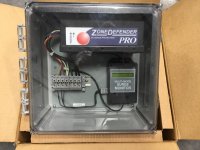
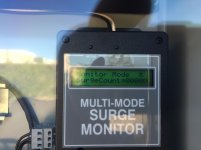
This would do the trick. It protects my home and shop as its connected to the main feeders at the panel. Straight forward wiring with a dedicated 60 amp breaker. It responds in a nano second to surges and lightening strikes. They are self contained with wire connection terminals, they need to be placed as close as possible to the main breaker box. They are now made by Cooper, it is the ZoneDefender Pro 120/240V single phase 80Kva with a strike counter.
Found on Ebay for $250 NOS. A good friend had purchased a lot of three and only used two. These units are commonly found in industrial settings for protecting different zones and now MY ZONE is protected.
 

Attachments

  • IMG_1396.jpg
    IMG_1396.jpg
    137.3 KB · Views: 94
  • IMG_1402.jpg
    IMG_1402.jpg
    136.1 KB · Views: 93
  • IMG_1403.jpg
    IMG_1403.jpg
    133.5 KB · Views: 79
  • IMG_1404.jpg
    IMG_1404.jpg
    144.8 KB · Views: 87

sberry

Banned
Joined
Jun 18, 2005
Messages
35,747
Location
Brethren, Michigan
I don't have anything but simple SQ D deal cost about 20$. Ground electrodes, incoming phone and antenna grounds are the big thing. The rest is total speculation.
 

fnieto

Well-known member
Joined
Aug 27, 2013
Messages
1,401
Location
Tucson,Arizona
Protecting VFD's CNC's and thousands of dollars worth of electronics is not speculation. I encourage you to google the the product. I could not link due to file size but if you understand what you read you'll agree that $250 is a drop in the bucket when protecting your investment. My post was to help the op in providing a possible solution for protecting his modern equipment. eBay can be a great place to start but you need to know what will work for your needs. I built my home with plenty of grounding rods and ufers at all panels/sub-panels but that is all useless when a surge comes from the feeders. Our Monsoons storms come with a ton of lightning strikes and with underground power and transformers at every other lot the risk is elevated. If you take a direct hit you might recover just fine but in my case one fried machine would leave me with a hefty bill in repairs. AC power is dirty as hell with voltage fluctuations. Agree that not everyone need this level of protection, but with the question at hand, anyone that asks should get a legitimate answer and can research further for themselves. To state its "speculation" is not helpful when comparing one facility to another.
 

Stuff

Well-known member
Joined
Aug 31, 2013
Messages
572
60 amp breaker.

You have a 60 amp breaker protecting 10 gauge wires? :shocking:

I like the plug in breaker style SPD/surge or whatever they are called these days. Cheap, easy, and most people like seeing the LEDs.

So how long have you had the ZoneDefender and what is the surge counter reading now?
 

fnieto

Well-known member
Joined
Aug 27, 2013
Messages
1,401
Location
Tucson,Arizona
You have a 60 amp breaker protecting 10 gauge wires? :shocking:

I like the plug in breaker style SPD/surge or whatever they are called these days. Cheap, easy, and most people like seeing the LEDs.

So how long have you had the ZoneDefender and what is the surge counter reading now?

Its been installed now for about three weeks, Last I checked the strike counter it was showing zero. It has a icon that shows flow for lack of a better word (like a hour meter).
The installation recommendations indicated a 60amp breaker with #10 (short as possible run).I'm no electrician but was a simple install. Do you see a problem with the breaker rating? I'm all ears. Thanks

Last monsoon season, my neighbor fell victim to a lightning strike and killed his TV's computers and stereo system as well as his outdoor lighting (12vdc).
 

sberry

Banned
Joined
Jun 18, 2005
Messages
35,747
Location
Brethren, Michigan
Install one sopressor and become an expert.
I built my home with plenty of grounding rods and ufers at all panels/sub-panels but that is all useless when a surge comes from the feeders.
I'm no electrician but was a simple install. Do you see a problem with the breaker rating? I'm all ears. Thanks
anyone that asks should get a legitimate answer and can research further for themselves. To state its "speculation" is not helpful when comparing one facility to another.
This whole site is living proof one can "research" and know less than when they started,,, it is not a substitute for the basic understanding and I have doubts about this equipment.
The 60 on a 10 here is not a problem but ,,,,,,,,,,,,,,
that is all useless when a surge
where do we figure the surge is sposed to go?
 
Last edited:

sberry

Banned
Joined
Jun 18, 2005
Messages
35,747
Location
Brethren, Michigan
I have a neighbor took a hit too. Knocked out the well, old pos anyway but they putit in , the insurance guy said it must have hit the well,, ok, I don't say anything but he doesn't know squat. There is a new well, it will be at risk the same way due to it hooked to the same poorly grounded electric and there were 2 original problems. Not exactly in order but,,,, the electric wasn't properly grounded to the casing, the rods were rotted off, the best ground in the place was down hole with th4e equipment ground to the well with the feeders.
There was other damage, if one wulod have drawn it on a map would have seen it came from a hit to a steel shed which was only grounded thru a branch circuit, followed that circuit, took a spin thru everything on it, finally headed for the well.
Mobile home it was in has no electrodes, the shed had none and it wasn't bonded to the casing. We would have to speculate about if other protection would have helped without a proper uffer or grounding means, didn't hit the supply side.
Hit a piece of ungrounded metal on one of the structures.
When there is gobs of stuff and it looks like a spider web the thing is likely searching for a ground.
A good read to start is article 880 of the code.
 

sberry

Banned
Joined
Jun 18, 2005
Messages
35,747
Location
Brethren, Michigan
That zone defender is a 20$ part in a fancy box. MOV I can be rude, it wasn't meant to attack one of our best members but there needs to be a shock to some threads.
You could put a million on at 20$ or 100, 000 at 250 and come out way ahead. There is no juice for the marketing people to enlage the sales or expand at 20 buck,we need a product with sales price 10X for that, a couple bean counters, am reengineer to design a new package around it and today its simple to add a couple blinky lights to amuse, an instruction sheet to check it every 2 months and not a single word about how it works with minor details copied from the code book for install and a lead off of,,,, you have just bought the best.
 
Last edited:

Dragfluid

ALLIANCE MEMBER
Joined
Sep 15, 2013
Messages
17,861
Location
Pillager, MN
As long as we're on this,,,,,,,,,,, would there be any advantage of grounding the tin making up the walls and roof? Certainly would be simple enough to do.
 
OP
Z

zendriver

Well-known member
Joined
Dec 10, 2014
Messages
30,553
Location
Indiana
Is this an attached or detached garage? Does it have it's own panel? It's own meter? It's own ground rod? Do you already have a whole house SPD?

Sorry, I guess i left out some details.

It is a 3 car detached, that will eventually have 100A sub,panel, underground service, from the 200A house main.

I have not other suppression, there than the strips.
 
Last edited:

fnieto

Well-known member
Joined
Aug 27, 2013
Messages
1,401
Location
Tucson,Arizona
Last edited:

fnieto

Well-known member
Joined
Aug 27, 2013
Messages
1,401
Location
Tucson,Arizona
Why is it when a fella wants to share information to a question, sberry or others want to find fault. I don't claim to be an expert in anything just want to continue to learn and share. I have seen many of sberry's post in the past pretty much telling other folks how they waist time and money according to his expertise , from welding table build to holes on said table to flamming a guy who wanted to install a hour meter on his compressor. Who are you to tell anyone how to spend their hard earned money.
And to stuff, I asked you for advice on on the 60 amp breaker you questioned and you came back with the same manual I used but failed to see the note at the bottom of the schematics portion, Again I ask whats the issue with the 60 amp breaker? I am all ears.
 

sberry

Banned
Joined
Jun 18, 2005
Messages
35,747
Location
Brethren, Michigan
I only really comment on places I have some direct knowledge. There are a 1000 posts I don't bother with but these are usually places I have done this several times and my point was a fly thru internet and grabbing a gadget may be what you did but you imply I should really go do some "research " like you did and then I would know something.
My point is that tossing 250 at it doesn't mean squat if one doesn't understand the fundamental principle. Same way it doesn't pay to spend big on a paint enclosure and try to blow air in it.
This leads to a warm feeling but usually doesn't do much and your neighbors experience doesn't have **** to do with anything if not followed up with accurate forensics.
This is my point about most of the stuff, simply that. 10 guys show up and endorse a faulty idea doesn't help it, its not discussion but a big,,, you go girl pat on the back.
 

DC73

Well-known member
Joined
Dec 27, 2014
Messages
1,631
Location
Lubbock TX
With circuit boards in the LED lights, garage door openers, cordless tool chargers etc. It would be nice to avoid spikes and surges in the incoming power.

Looking for reasonable priced suppressor solutions, that maybe can be wired in line where needed.

First, make sure the wiring is proper. Double check connections where possible and especially ground connections. When I moved into my current house, I was shocked at how loose some of connections were in both the main service panel and in the breaker box.

Make sure you don't have multiple grounding points. If so, all grounds need to be tied together.

Check the power company's system, especially if fed via nearby overhead poles. Thieves are notorious for stealing ground wires from the poles. If you find a ground rod near a utility pole that has no ground connection, notify the power company.

Then, install a whole panel surge protector, something like fnieto recommended - that appears to be a good one.

Finally, for any sensitive and expensive electronics, install point of use plug-in surge protectors.

DC
 
To avoid these ads, REGISTER NOW!

sberry

Banned
Joined
Jun 18, 2005
Messages
35,747
Location
Brethren, Michigan
I will add I was mainly referring to the opinion that the ground rods and grounding system were useless. They are the most important part, its not my amateur opinion but the people that wrote the code think so, theyare included,,, supressors are not.
Who are you to tell anyone how to spend their hard earned money.
I am not telling them that, what I am saying is a lot of other opinions are ******** and not usually close to fact. I am telling the guy with the hour meter to be wary of several code and safety violations ne may introduce to an engineered piece of equipment,,, a lot of which don't even occur to most of us and may bring more problems than it solves.
It isn't how much I know but some experience about where and what is worth fugging with. I am not a big fan of opening every bung on a pressure vessel for every used compressor start up.
We had a guy come on this forum, wants to use a used fan he has from an AC welder for some minor make shift venting. I waited till about 10 posts giving specifics till I really got to wonder if he needs to pipe a special circuit at 240 across the shop to be able to run a used fan as a window unit.
Whats amazing enough is even he asked at th beginning is this was a brain fart or should he put a small box fan in to an outlet was already there.
A guy wants to do something practical and save some money but we can feed him the idea he needs a blanch grind and that 250$ to drill some holes will somehow pay big returns in piece of mind. What a bargain,,, all kinds of theories why a welding shop would charge so much,,,, I didn't include my opinion this was a dumb **** tax.
You are right, I am contrary. I could be another flower with a pat on the back but my focus is usually would I do this again, did I find out it was as big as help as I thought to be when I did it, what is my perspective with some hindsight, this includes did I ever utilize the inch pipe for air I went to great trouble to install, found out a lot if it worked just fine on 1/2 for me and it probably will for you too.
 
Last edited:

sberry

Banned
Joined
Jun 18, 2005
Messages
35,747
Location
Brethren, Michigan
Found out a lot or most of the upsizing just in case was a waste. Found out I havnt needed another hole in the table for 20 yrs that it being flat didn't matter much where 95% of it is a joint and a weld at a time.
Yes, it is my view that today I would look for the easy way first on most matters unless there was a good payout on the other end or a guy gets it at the right price. A recent welding recept question comes to mind, cant power a 200 mig with less than a 6/3 cable.
The shining light that helped was the counterman giving him a deal on the 8/2, great,,,, no down side and even cheaper than buying a lighter wire but is it practical to endorse a circuit 3 steps bigger than it needs at every turn at great expense to the original poster,,,, what kind of professional advice is that?
On top of that there is no discussion and no argument and very little learning. We got lots of proof reading aout code quotes but often slim on why,,,,, and the code book isn't a why manual to start with. It isnt even an opinion as some seem to ellude to.
 
Last edited:

sberry

Banned
Joined
Jun 18, 2005
Messages
35,747
Location
Brethren, Michigan
Here is an opinion on the item at hand. I would tend to want to add a ground wire directly from it to the grounding system vs carrying it back to the buss bar inside the enclosure. The expert says increasing it in size doesn't have all that much help but I cant see how it would hurt, use an insulated wire or enclose it in a plastic pipe till it gets to ground, run it to uffer and or rods. Very similar to satelite dishes, phones and some cable installations where ground is ideally bugged on to the wire.
 

sberry

Banned
Joined
Jun 18, 2005
Messages
35,747
Location
Brethren, Michigan
And to stuff, I asked you for advice on on the 60 amp breaker you questioned and you came back with the same manual I used but failed to see the note at the bottom of the schematics portion, Again I ask whats the issue with the 60 amp breaker? I am all ears.

I believe my response was to someone else and I endorse the idea that the 60 you had it on was fine if I recall, I got no argument with that. I believe the question was why didn't the 10 wire require a 30.
If it has a 10 wire would say its legal on a minimum 30 and max 60. That is just a generalization, I know I need to add a disclaimer.
 
Last edited:

Stuff

Well-known member
Joined
Aug 31, 2013
Messages
572
Yes, I misread the document but I was also wrong to reference that document at all. Primarily because the instructions are for the surge device itself, not for the assembly you have. Secondly no mention of the wires feeding it so I don't see where the 10 gauge came from.

The NEC has a section on small conductors which states that 10 gauge copper can be protected at a maximum of 30 amps. There is no exception for SPDs like there is for motors and air conditioners.
 

rlitman

Well-known member
Joined
Oct 18, 2010
Messages
24,744
Location
Long Island
...The NEC has a section on small conductors which states that 10 gauge copper can be protected at a maximum of 30 amps. There is no exception for SPDs like there is for motors and air conditioners.

Sounds good, but I'd sooner defer to the UL rating of the device being installed, and it's instructions. That trumps the NEC every time.

I regularly see unprotected 18 gauge wires inside automatic transfer switches (with services of several thousand amps at 480V), and it's all to code.
 

sberry

Banned
Joined
Jun 18, 2005
Messages
35,747
Location
Brethren, Michigan
...The NEC has a section on small conductors which states that 10 gauge copper can be protected at a maximum of 30 amps.
I was just generalizing but the sheet posted said a minimum of 30, didn't list the max, if its 10 then generally the limit would be 60, if 12 then 50. Its not a current carrying conductor in the general sense but would have to be sized within the short circuit rating of the wire.
Same for control wires in a machine or in light fixture, lots of 16 wire connected to 20A. Another that comes to mind is ballast wire, if the fixture is hooked to circuit larger than 20 needs to have additional fuse.
 

fnieto

Well-known member
Joined
Aug 27, 2013
Messages
1,401
Location
Tucson,Arizona
Yes, I misread the document but I was also wrong to reference that document at all. Primarily because the instructions are for the surge device itself, not for the assembly you have. Secondly no mention of the wires feeding it so I don't see where the 10 gauge came from.

The NEC has a section on small conductors which states that 10 gauge copper can be protected at a maximum of 30 amps. There is no exception for SPDs like there is for motors and air conditioners.

Remember I stated the file size was too large for me to link? The wire size is found on said file. The link you posted was part of that large file I was unable to link.
Funny how it went from answering a guys question on surge protection to my inability to follow directions and install a "gimmick". I'm done! No wonder some of you have 17,*** posts. While your sitting there typing away, I'm learning and actually working on improving my 33 years of experience in fabrication and machining as well as striving to protect and improve my investments.
I make plenty of mistakes and have never stated I was an expert in anything. I am but a small bleep in the learning curve with a lot behind me but a lifetime ahead. You guys take care.;)
 

Stuff

Well-known member
Joined
Aug 31, 2013
Messages
572
NEC 240.4(d) talks about overcurrent protection for conductor sizes 18 through 10. Sized according to short circuit rating as stated by sberry makes sense but it is not there.

I did not mean to offend anyone, just to question when something seemed unsafe to me. And if the instructions appear to be unsafe then discuss why so as to learn.
 

sberry

Banned
Joined
Jun 18, 2005
Messages
35,747
Location
Brethren, Michigan
These units are commonly found in industrial settings for protecting different zones and now MY ZONE is protected
This is the point I had an argument with, this is only an assumption and is not insured by reading their web site.
While your sitting there typing away, I'm learning and actually working on improving my 33 years of experience in fabrication and machining as well as striving to protect and improve my investments.
I am sure this is accurate and true, its obvious from looking at your place. Its a thing of beauty.
Its modern and has modern footers, it probably has as good a grounding array as it can get. That is probably a fact. hat may be debatable about it is how effective it is? You feel better about it all is a fact, how effective is debatable.
 

sberry

Banned
Joined
Jun 18, 2005
Messages
35,747
Location
Brethren, Michigan
NEC 240.4(d) talks about overcurrent protection for conductor sizes 18 through 10. Sized according to short circuit rating as stated by sberry makes sense but it is not there.

I did not mean to offend anyone, just to question when something seemed unsafe to me. And if the instructions appear to be unsafe then discuss why so as to learn.

I am not sure if they treat this under capacitors etc?
 

MBfreak

MEMBER EMERITUS
Joined
Dec 10, 2010
Messages
2,301
Location
Linkoping , Sweden
A lightning strike can be anything from a rather mild electric discharge to strikes with energy levels that are almost impossible to "shunt off".

Some pointers.
A feeder need to be protected with arrestors at both ends. The rise time of the voltage surge is so fast that it reflects in a junction box ( due to mismatched impedances) and the reflective peak at the far end may well be twice the incoming.

A steel building is a great plus point, read up on " Farady Cage "

Several low impedance earth systems that can carry 15 kA for at least 10 microseconds without starting a fire/evaporate.

At each sensitive/expensive piece of equipment another arrestor is needed.

Install disconnecting/grounding switches at the infeed to expensive equipment. Only connect to the power grid when you plan to use the plant.

Pester your supplier so that they actually do something. Arrestors at both end of your incoming feeder. Get them to modernize by using as much cabled medium and low voltage supply grids as is possible ( ie 100%!!)

Ola
 

Pwrgeek

Well-known member
Joined
Oct 18, 2015
Messages
288
Location
Texas USA
Well here's the bad news. If your equipment (your transformer or any of the services connected to it including your neighbors) take a direct strike you're screwed. There is nothing in the world that is going to save your equipment. The energies involved are just too high. What SPDs can do is protect you from things that happen out on the grid (lightning on the transmission or distribution system, switching surges, LRC transients, etc). This is why they should be installed at the service entrance and bonded to both the service neutral and a properly installed GES. As for what to buy they all are pretty much the same. You're best looking for the ones that have the highest Joule rating per dollar spent but in the end you should view any SPD as sacrificial to the downstream equipment it is protecting.


Sent from my iPhone using Tapatalk
 
To avoid these ads, REGISTER NOW!
Top Bottom