To avoid these ads, REGISTER NOW!

Gas line extension questions

Mike1903

Well-known member
Joined
Jan 16, 2021
Messages
139
Location
Suburbs
Attached is the picture of the yard with gas meter on the left and the pipe entering the garage for furnace and the water heater.

I need an outlet close to the gas meter for the natural gas bbq. I also have a stand-alone generator that is on the the other end of the deck ( right hand side in the picture, about 25’ away from the meter).

to clarify: the work will be done by a certified person and not by me.

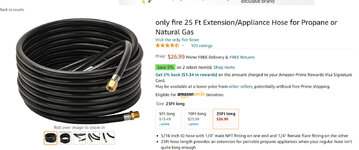
Should i just get one outlet by the meter and a run a 25’ flexible hose for generator when needed?
Or is 25’ too long for pressure drop and better to run one line along the deck and have one outlet closer to the generator (and also use it for oven).
Or have two outlets, one closer to the meter for the oven and one for the generator.

thx!
 

Attachments

  • CF883980-FFE3-4D71-B4B8-BE2206EE4F61.jpeg
    CF883980-FFE3-4D71-B4B8-BE2206EE4F61.jpeg
    131.6 KB · Views: 71
To avoid these ads, REGISTER NOW!

PoorUB

Well-known member
Joined
Mar 29, 2021
Messages
11,679
Location
Fargo, ND
Is the generator a permanent install or a potable? Permanent, run gas pipe to it.

For the BBQ I would get he proper shut off valve and disconnect and run a flex line to it.

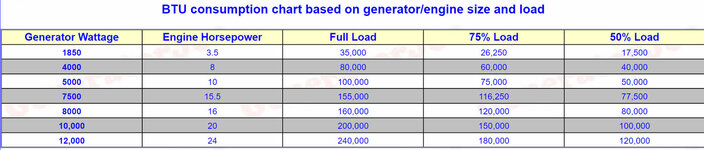
Make certain what ever you do you size the lines according to the BTU of the unit. Generators can be a gas hog and take more gas than people realize.

I did HVAC for years and saw many self installed generators that didn't work because the gas line was too small.
 

metlmunchr

Well-known member
Joined
Sep 10, 2011
Messages
1,278
Check first with your natural gas company to verify the existing service has the capacity to handle the generator plus the gas appliances in the house.

I'm not sure of code requirements for use of flex gas line in exterior applications, but, IMO, that stuff is far too fragile for any exposed exterior use, and particularly so in areas with foot traffic like around a deck. Simplest solution would be to run direct burial plastic gas line from the takeoff at the meter to a stub up near the generator. Steel pipe could be run along the perimeter of the deck, but in the long run that entails additional maintenance to keep the line painted and rust free.
 

Git

Well-known member
Joined
May 18, 2008
Messages
6,894
Location
S Cal
I think you need to 'do the math' first. Find out how many BTU's per hour the generator is going to require and then once you have them you can calculate how many BTU's per hour the 'flexible hose' can provide. Since your basically connecting at the gas meter, I would think the meter could certainly handle it

I found this one chart that may be helpful. In looking over some charts for natural gas lines using 1/2" pipe for example, they should easily be able to provide 73,000 BTU at 30'
T- 454.jpg
 

Git

Well-known member
Joined
May 18, 2008
Messages
6,894
Location
S Cal
Check first with your natural gas company to verify the existing service has the capacity to handle the generator plus the gas appliances in the house.

I'm not sure of code requirements for use of flex gas line in exterior applications, but, IMO, that stuff is far too fragile for any exposed exterior use, and particularly so in areas with foot traffic like around a deck. Simplest solution would be to run direct burial plastic gas line from the takeoff at the meter to a stub up near the generator. Steel pipe could be run along the perimeter of the deck, but in the long run that entails additional maintenance to keep the line painted and rust free.
I think he is talking about something like this and they usually put a quick disconnect on them
T- 455.jpg
 

yeldogt

Well-known member
Joined
Jan 2, 2012
Messages
18,184
You should be able to have a line run to the generator location with a "T" and line off for the grill in between. The line out to the generator is going to be larger than what the grill needs .... it may need a larger line to the grill "T" and then smaller out to the generator. It all depends on the load and locations.

At my suburban house we have a "T" after the meter before the line goes into the house. The "T" is then valved off before it goes to the line underground to my pool heater location. We have a "T" with a valve to the pool heater and the line goes about 150' to my outdoor kitchen. You have to be able to shut the whole line off and each item.

With generators -- it's all about the size and your pressure. Some need a 1" line even if close to meeter.

Frankly -- your plumber will give you the best options. Ideally you want the gas line hard piped to the generator and you want the line and valve close to the grill with a short hose.
 
OP
M

Mike1903

Well-known member
Joined
Jan 16, 2021
Messages
139
Location
Suburbs
Thanks for great information. To answer some questions and to clarify:
1. The line is sized for what I need including generator. It is rated at 250k and meets the current + future load.
2. The generator is not a permanent install. It will sit by the right side of the deck but will attach to the inlet with a flexible hose when needed (example in link #5).
 

yeldogt

Well-known member
Joined
Jan 2, 2012
Messages
18,184
Thanks for great information. To answer some questions and to clarify:
1. The line is sized for what I need including generator. It is rated at 250k and meets the current + future load.
2. The generator is not a permanent install. It will sit by the right side of the deck but will attach to the inlet with a flexible hose when needed (example in link #5).
Ideally -- you don't want 25' of hose around. Most grill installs have the hard pipe close to the final location .... have seen at the beach where people have a longer hose so they can pull it out of it's storage location up against the house. but, the valve is right there.

Those hoses are not w/o issues .... especially with small animals. In my neck of the woods you have to have a valve with quick connect. they can't be permanent with the hose.
 
Last edited:

rlitman

Well-known member
Joined
Oct 18, 2010
Messages
24,637
Location
Long Island
...Those hoses are not w/o issues .... especially with small animals. In my neck of the woods you have to have a valve with quick connect. they can't be permanent with the hose.
I have a similar hose on my NG grill, and I shut the valve at the end of the pipe when I'm done grilling. I don't disconnect the QD hose, because that risks getting dirt in the QD.

But anyway, that's fine for occasional use (which would include a manual transfer switch or manual interlock), but not fine for an auto-start generator, because you don't want to leave the valve on while unattended.
 

yeldogt

Well-known member
Joined
Jan 2, 2012
Messages
18,184
I have a similar hose on my NG grill, and I shut the valve at the end of the pipe when I'm done grilling. I don't disconnect the QD hose, because that risks getting dirt in the QD.

But anyway, that's fine for occasional use (which would include a manual transfer switch or manual interlock), but not fine for an auto-start generator, because you don't want to leave the valve on while unattended.

The gas grill outlet seems to be standard item today with the builders. Most of them are just a stub out w/ valve a few feet above the deck or patio. W/ quick connect. I'm with you -- they stay attached and just turn off the valve. The quicks I see have a rubber cover for the end. It's a nice thing to have as the tanks are a pain ...

My outdoor kitchen has it hard piped w/ the typical SS flex at the grill and another at the cooktop. Not correct where the grill will move
 
To avoid these ads, REGISTER NOW!

rlitman

Well-known member
Joined
Oct 18, 2010
Messages
24,637
Location
Long Island
The gas grill outlet seems to be standard item today with the builders. Most of them are just a stub out w/ valve a few feet above the deck or patio. W/ quick connect. I'm with you -- they stay attached and just turn off the valve. The quicks I see have a rubber cover for the end. It's a nice thing to have as the tanks are a pain ...
Yes, mine have an attached cap and plug to keep insects and debris out when disconnected, and I've seen those included with every kit out there.

In my case, I had a gas dryer on the opposite side of the wall, so I put in a tee and a 12" schedule 40 stainless steel ****** (no paint and no rust) through the wall with another valve outside with a street elbow pointing down so the hose isn't stressed at the end.
 

Terry D

Well-known member
Joined
Mar 25, 2015
Messages
2,202
Location
St. Louis, MO.
Is this generator a new install. At least here, when we do generator installs, the gas meter needs to replaced with a commercial one. You will never get the BTU's out of a normal one. They call them a "Red Face" because the dials are red.
 
OP
M

Mike1903

Well-known member
Joined
Jan 16, 2021
Messages
139
Location
Suburbs
Is this generator a new install. At least here, when we do generator installs, the gas meter needs to replaced with a commercial one. You will never get the BTU's out of a normal one. They call them a "Red Face" because the dials are red.
Sorry for the delay. Missed the notification. It is not a permanent standby generator but a 200+ lb “portable” generator that will be manually hooked up to the gas and inlet when power goes out. That’s why the gas hose works instead of running hard line.
 

HoosierBuddy

Well-known member
Joined
May 9, 2006
Messages
2,931
Location
Southern Indiana
Is this generator a new install. At least here, when we do generator installs, the gas meter needs to replaced with a commercial one. You will never get the BTU's out of a normal one. They call them a "Red Face" because the dials are red.
Disagree with this assessment. A red faced dial doesn't directly correlate to the BTU capacity of the meter. A red faced dial set indicates the meter is "corrected" for pressure above standard...meaning the regulator is delivering pounds through the meter (2 or more) rather than inches water column (Typically about 7 inches unless the meter is at altitude). Gas companies set small "residential" meters with white dials and red dials based on the pressure through the meter and they set larger "commercial" meters with white faces, red faces, or electronic instrumentation mounted based on the pressure through the meter.

Note that many times "commercial" customers have small meters and some homes have very large meters. It's all based on the btu capacity.

Finally....there is typically not a need to add up every gas appliance and compare it to the plate on the meter no more than you would add every electrical appliance and light up and compare it to the 200 AMP (or whatever) power service. The number that matters is the total btu/hour that would generally be required at the home or business. No one is going to be running every burner on the grill at max, every burner on their stove at max, the furnace at max, the water heater, the gas dryer, the gas log set, the wall heater, AND the backup generator also at max. With whole house generators, you can almost guarantee it will never happen as the generator will be sized to pick up the AC at max capacity...and the furnace and AC will never need to run at the same time.

Finally....gas meters can pass more gas then they are rated for. They just can't accurately measure the gas at above the rated plate capacity. If they are loaded past their certified capacity they will likely run faster (in the gas companies favor) by some small percentage as the meter's diaphragms may not be completely filled as they cycle...causing the meter dial to "speed up" slightly (maybe a percent or three) vs the capacity being delivered through the meter. While outlet pressure will drop in this situation, it will often not be enough to cause any appliance issue or be noticeable to the end user.

Phil
 

Terry D

Well-known member
Joined
Mar 25, 2015
Messages
2,202
Location
St. Louis, MO.
Disagree with this assessment. A red faced dial doesn't directly correlate to the BTU capacity of the meter. A red faced dial set indicates the meter is "corrected" for pressure above standard...meaning the regulator is delivering pounds through the meter (2 or more) rather than inches water column (Typically about 7 inches unless the meter is at altitude). Gas companies set small "residential" meters with white dials and red dials based on the pressure through the meter and they set larger "commercial" meters with white faces, red faces, or electronic instrumentation mounted based on the pressure through the meter.

Note that many times "commercial" customers have small meters and some homes have very large meters. It's all based on the btu capacity.

Finally....there is typically not a need to add up every gas appliance and compare it to the plate on the meter no more than you would add every electrical appliance and light up and compare it to the 200 AMP (or whatever) power service. The number that matters is the total btu/hour that would generally be required at the home or business. No one is going to be running every burner on the grill at max, every burner on their stove at max, the furnace at max, the water heater, the gas dryer, the gas log set, the wall heater, AND the backup generator also at max. With whole house generators, you can almost guarantee it will never happen as the generator will be sized to pick up the AC at max capacity...and the furnace and AC will never need to run at the same time.

Finally....gas meters can pass more gas then they are rated for. They just can't accurately measure the gas at above the rated plate capacity. If they are loaded past their certified capacity they will likely run faster (in the gas companies favor) by some small percentage as the meter's diaphragms may not be completely filled as they cycle...causing the meter dial to "speed up" slightly (maybe a percent or three) vs the capacity being delivered through the meter.

Phil
I merely said, that is how it is done here. I don't work for the gas company. I am a licensed electrical contractor. All I know, on pad mount generator installations on residential here, the gas company replaces the existing meter with a red face. I dont know if its for volume or pressure or both. They say that running one of those generators is like running a 100.000 BTU furnace wide open. What I do know, if a pad mount generator installed here was done right, it will have a red faced meter
 
Last edited:

HoosierBuddy

Well-known member
Joined
May 9, 2006
Messages
2,931
Location
Southern Indiana
I merely said, that is how it is done here. I don't work for the gas company. I am a licensed electrical contractor. All I know, on pad mount generator installations on residential here, the gas company replaces the existing meter with a red face. I dont know if its for volume or pressure or both. They say that running one of those generators is like running a 100.000 BTU furnace wide open. What I do know, if a pad mount generator installed here was done right, it will have a red faced meter
Yes...almost 30 years at the gas company I have learned a thing or three.

Red faced dial means they are delivery at least 2 pounds now. Perhaps the customer's piping was undersized to handle the generator load and they have asked the gas company to up pressure to "make it work". Typically I would tell them to upgrade their pipe size and leave the pressure alone as once you upgrade the meter pressure, you have to install additional regulators downstream. Appliances can't take 2 psi. They'd either have a flame 10 times too big or go into lockout (depending on the safeties they have or don't have.)
 
Last edited:

PoorUB

Well-known member
Joined
Mar 29, 2021
Messages
11,679
Location
Fargo, ND
In most areas a 2 PSI meter is common. In the city I live in the gas company installs 2 PSI meters as a standard. If you want a low pressure meter you have to ask! Twenty plus years ago it was normal to put in a low pressure meter.

As far as a generator compared to a 100,000 BTU furnace, well, maybe a small one. I installed generators and most were in the 200,000 to 300,000 BTU range. It take a fairly large pipe to move 300,000 BTU at low gas pressure so we had the meters changed to 2 PSI on all installs we did. Often we would put one regulator for the whole house, but usually we would regulate every appliance in the home. Then of course a regulator for the generator. A 16KW needs roughly 250,000 BTU at full load.
 

HoosierBuddy

Well-known member
Joined
May 9, 2006
Messages
2,931
Location
Southern Indiana
As far as a generator compared to a 100,000 BTU furnace, well, maybe a small one. I installed generators and most were in the 200,000 to 300,000 BTU range. It take a fairly large pipe to move 300,000 BTU at low gas pressure so we had the meters changed to 2 PSI on all installs we did. Often we would put one regulator for the whole house, but usually we would regulate every appliance in the home. Then of course a regulator for the generator. A 16KW needs roughly 250,000 BTU at full load.

1" pipe would handle it out to 50 feet. 1-1/4" would handle it out to 200 feet.
 
Last edited:

Walkers

Well-known member
Joined
May 17, 2021
Messages
3,912
Location
Cave Creek Az
That meter looks like an AL-175. It will move 175,000 btu max. Run a new line to the BBQ, put a tee at the top where it will be tied to the new meter they will install, most likely an AL-425 (yep 425,000 btu). This will get you an appropriately sized line for the genny, and an out let at the meter for the BBQ.
 
To avoid these ads, REGISTER NOW!
Top Bottom