I'm getting around to installing a backup generator for our house. We live in earthquake country and have a sump pump that keeps the garage from filling with water (up to 2 feet deep). The current electrical system is 100A/240V. The meter box has 2 100A breakers, one for each leg. The switched side of the breaker goes to my main panel. Because the house is 100 years old and has a power distribution system that is hopelessly intertwined due to remodels and KT replacement over the years, it seems like connecting the generator via a non-fused DPDT box is the way to go since a transfer switch with breakers would leave too many random things unpowered. The generator power plug would have a breaker built into it, to protect the generator. I'm thinking of using a Generac 6500W portable generator. Does anyone have any advice on the proposed system, experience with this exact build, tips on things to look out for, etc. I have seen some comments on grounding issues, which I do not quite understand yet. HD has a manual transfer switch for $215, and the fused plug is also from HD for $120.

You are using an out of date browser. It may not display this or other websites correctly.
You should upgrade or use an alternative browser.
You should upgrade or use an alternative browser.
Generator Transfer Switch Review
- Thread starter djoelt1
- Start date
Here are pictures of the main and breaker box - they are separate. The bottom door on the meter box has two 100 A breakers under the door. The main breaker panel obviously does not have the main breaker. The meter picture shows the location where I wish to place the new items. The conduit with the white paint in the lower left corner of the meter box goes to the main panel, which is about 10 inches from the meter box.Post a picture of your main breaker/panel
Attachments


Here's another question for those of you who have generators where power has been out for a long time (say a week to a month) - how do you use the generator? Our house is extremely efficient and we use about 8 kWh per day. Most hours we use 200-300 watts. But, the generator needs to run continuously to have that power available. Do you run your generators continuously (using a lot of fuel and making noise) or do you run them for an hour or two here and there during the day. Direct experience appreciated!
wyliesdiesels
Well-known member
thats actually 1 double pole breakerI'm getting around to installing a backup generator for our house. We live in earthquake country and have a sump pump that keeps the garage from filling with water (up to 2 feet deep). The current electrical system is 100A/240V. The meter box has 2 100A breakers, one for each leg.
you would install this in between the meter main and the subpanel.The switched side of the breaker goes to my main panel. Because the house is 100 years old and has a power distribution system that is hopelessly intertwined due to remodels and KT replacement over the years, it seems like connecting the generator via a non-fused DPDT box is the way to go since a transfer switch with breakers would leave too many random things unpowered. The generator power plug would have a breaker built into it, to protect the generator. I'm thinking of using a Generac 6500W portable generator. Does anyone have any advice on the proposed system, experience with this exact build, tips on things to look out for, etc. I have seen some comments on grounding issues, which I do not quite understand yet. HD has a manual transfer switch for $215, and the fused plug is also from HD for $120.
If youre not switching the neutral, you will need to run 4-wire to the generator inlet and unbond the generator.
if you do switch the neutral, you can run 3-wire to generator inlet, leave generator bonded.
theoldwizard1
Well-known member
Look into generator interlock for your main/first panel. Probably cheaper than a DPDT safety switch and it does the same thing.it seems like connecting the generator via a non-fused DPDT box is the way to go since a transfer switch with breakers would leave too many random things unpowered.
These are unique for each type of panel.
35Ford
Well-known member
Add a main breaker to your existing load center with a generator breaker under it. Use an interlock kit to fit, something like this:
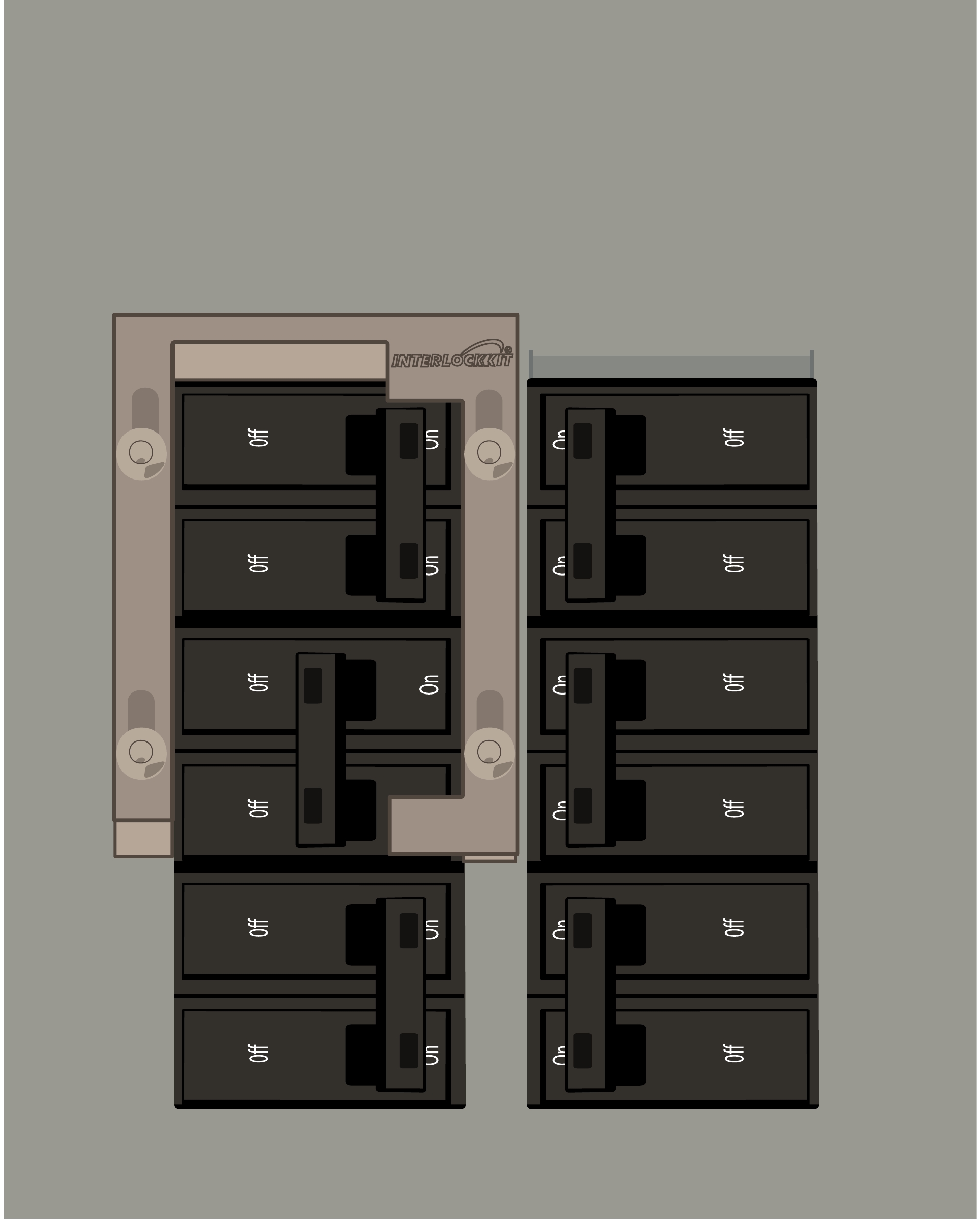
 interlockkit.com
Crouse-Hinds Feed Through Panel Kit K-9011 - 125 Amp
Buy high-quality Siemens / GE / Square D / Westinghouse / Crouse-Hinds Feed Through Panel Kit K-9011 – 125 Amp & Down at Interlock kit for best prices.
interlockkit.com
Denwood
Well-known member
If you use an inverter gen, it will have "Eco" mode which varies the unit rpm based on demand. I have a small unit, 2000 watts that run 11-12 hours on a gallon of fuel. At idle (low demand) it's in the 53 db range for noise. Max outage for us though has been in the 8 hr range. Keeping 4-5 gallons of fresh fuel on hand, in a longer outage I'd just run it during evening hours to keep the family happy. We have a high efficiency wood fireplace for backup heat, so the generator would only be running the fridge, internet etc.Here's another question for those of you who have generators where power has been out for a long time (say a week to a month) - how do you use the generator? Our house is extremely efficient and we use about 8 kWh per day. Most hours we use 200-300 watts. But, the generator needs to run continuously to have that power available. Do you run your generators continuously (using a lot of fuel and making noise) or do you run them for an hour or two here and there during the day. Direct experience appreciated!
dave*99
Well-known member
deleted
CJ7VFR
Well-known member
When Hurricane Sandy blew thru the north east back in October 2012, our power was out for 11 days here in my part of NJ....Do you run your generators continuously (using a lot of fuel and making noise) or do you run them for an hour or two here and there during the day. Direct experience appreciated!
I installed a 10 breaker 120/240V manual transfer switch to my load center and hooked it up to a power inlet box on the outside of the house so that we can attach our portable generator to it for powering the house. I have a 5500 running watt/8250 starting watt 30 amp Briggs and Stratton portable generator for reference.
I went with the manual transfer switch instead of an Interlock because our load center was already full, and we were already at the max for tandem breakers. So I could not move any breakers down to make room for a double pole Interlock breaker.
I had the same concerns as you about how long to run the generator in order to keep the house going as well as to save gas. Because the power was out all over the east coast, especially in NJ where I live, that meant that gas stations could not pump gas, so we had to use the gas for our generator very sparingly as the closest place to fill up our gas cans was almost 80 miles away in PA.
We used our generator to run our oil fired boiler for heat and hot water, our well pump, sump pump, two refrigerators, the septic pump, two kitchen receptacles for using a coffee maker and a toaster oven (but not at the same time), a receptacle and exhaust fan/light in one bathroom, power to the Fios box for internet, WIFI and one television and power to a few receptacles in our office room so that I could use my computer and to also have a receptacle to charge up phones, batteries for portable lights and stuff like that.
I would start our generator at midnight and let it run until 6:00am when I would shut it down when we went to work. Those 6 hours gave us time to shower in the morning, eat breakfast, clean up, let the refrigerators get cold, warm up the house and let the septic pump do its thing. It would also charge up the battery backup for the sump pump so that could run during the day if it had to.
Then when I got home from work around 4:00pm I would start up the generator and we would run it until 8:00pm when I shut it down. That gave us time to eat dinner, clean up, watch tv, use the internet, charge our phones and warm the house back up a bit.
Then I would start the generator back up at midnight and start the whole process all over again. We did a similar schedule on the weekends too.
Because we didn't have any real high load items running a lot, we were able to get about 13 hours of run time on 5 gallons of gas. I figured we were running the generator about 10 hours a day and using just a bit over 3 gallons of gas a day.
Overall we were lucky, and we were able to stay in our home for those 11 days. We knew many people/neighbors who did not have a backup generator that ended up having to stay in hotels in PA for that entire time.
Jim
If I understand correctly, these require the main breaker to be on the same panel as the individual breakers. But, my main breaker is part of the meter box, and the individual breakers are on a separate panel downstream of that.Look into generator interlock for your main/first panel. Probably cheaper than a DPDT safety switch and it does the same thing.
These are unique for each type of panel.
All that panel space and it uses double pole twin breakers?
I agree with the suggestion of 35Ford to change the panel to a main breaker panel and install a gen interlock kit.
As to fuel usage - if you don't use all that much power, it might be worth it to consider both a small backup gen and a battery system. Use the gen during the day to run some of the bigger loads, use the battery at night to keep the fridge and some other things going.
I agree with the suggestion of 35Ford to change the panel to a main breaker panel and install a gen interlock kit.
As to fuel usage - if you don't use all that much power, it might be worth it to consider both a small backup gen and a battery system. Use the gen during the day to run some of the bigger loads, use the battery at night to keep the fridge and some other things going.
Thank you, great information!When Hurricane Sandy blew thru the north east back in October 2012, our power was out for 11 days here in my part of NJ.
I installed a 10 breaker 120/240V manual transfer switch to my load center and hooked it up to a power inlet box on the outside of the house so that we can attach our portable generator to it for powering the house. I have a 5500 running watt/8250 starting watt 30 amp Briggs and Stratton portable generator for reference.
I had the same concerns as you about how long to run the generator in order to keep the house going as well as to save gas. Because the power was out all over the east coast, especially in NJ where I live, that meant that gas stations could not pump gas, so we had to use the gas for our generator very sparingly as the closest place to fill up our gas cans was almost 80 miles away in PA.
We used our generator to run our oil fired boiler for heat and hot water, our well pump, sump pump, two refrigerators, the septic pump, two kitchen receptacles for using a coffee maker and a toaster oven (but not at the same time), a receptacle and exhaust fan/light in one bathroom, power to the Fios box for internet, WIFI and one television and power to a few receptacles in our office room so that I could use my computer and to also have a receptacle to charge up phones, batteries for portable lights and stuff like that.
I would start our generator at midnight and let it run until 6:00am when I would shut it down when we went to work. Those 6 hours gave us time to shower in the morning, eat breakfast, clean up, let the refrigerators get cold, warm up the house and let the septic pump do its thing. It would also charge up the battery backup for the sump pump so that could run during the day if it had to.
Then when I got home from work around 4:00pm I would start up the generator and we would run it until 8:00pm when I shut it down. That gave us time to eat dinner, clean up, watch tv, use the internet, charge our phones and warm the house back up a bit.
Then I would start the generator back up at midnight and start the whole process all over again. We did a similar schedule on the weekends too.
Because we didn't have any real high load items running a lot, we were able to get about 13 hours of run time on 5 gallons of gas. I figured we were running the generator about 10 hours a day and using just a bit over 3 gallons of gas a day.
Overall we were lucky, and we were able to stay in our home for those 11 days. We knew many people/neighbors who did not have a backup generator that ended up having to stay in hotels in PA for that entire time.
Jim
If I change the main panel to have the main breaker, do I just leave the breaker on the meter box as is? No harm, no foul with having two breakers on each leg in series before the distribution to the individual breakers?All that panel space and it uses double pole twin breakers?
I agree with the suggestion of 35Ford to change the panel to a main breaker panel and install a gen interlock kit.
As to fuel usage - if you don't use all that much power, it might be worth it to consider both a small backup gen and a battery system. Use the gen during the day to run some of the bigger loads, use the battery at night to keep the fridge and some other things going.
I dismissed the idea of changing the main panel since it seemed really complicated...maybe that is a better approach. I can reuse the expensive part - the breakers. There are a lot of conduits coming out of main panel though - it's like a porcupine.
Meter box has no spaces for anything except the 2 main breakers.You might be able to change the panel you have to one with a main breaker.
I assume there are no other spaces in the panel below the meter?
Innovate1
Well-known member
No problem having a main in the panel and another by the meter. Depending on if it's allowed where you are to do it yourself it would probably be cheaper than the generator panels and give you more flexibility. Might want to check if this would trigger the AHJ wanting you to bring anything up to current code depending on the age of the installation.If I change the main panel to have the main breaker, do I just leave the breaker on the meter box as is? No harm, no foul with having two breakers on each leg in series before the distribution to the individual breakers?
I dismissed the idea of changing the main panel since it seemed really complicated...maybe that is a better approach. I can reuse the expensive part - the breakers. There are a lot of conduits coming out of main panel though - it's like a porcupine.
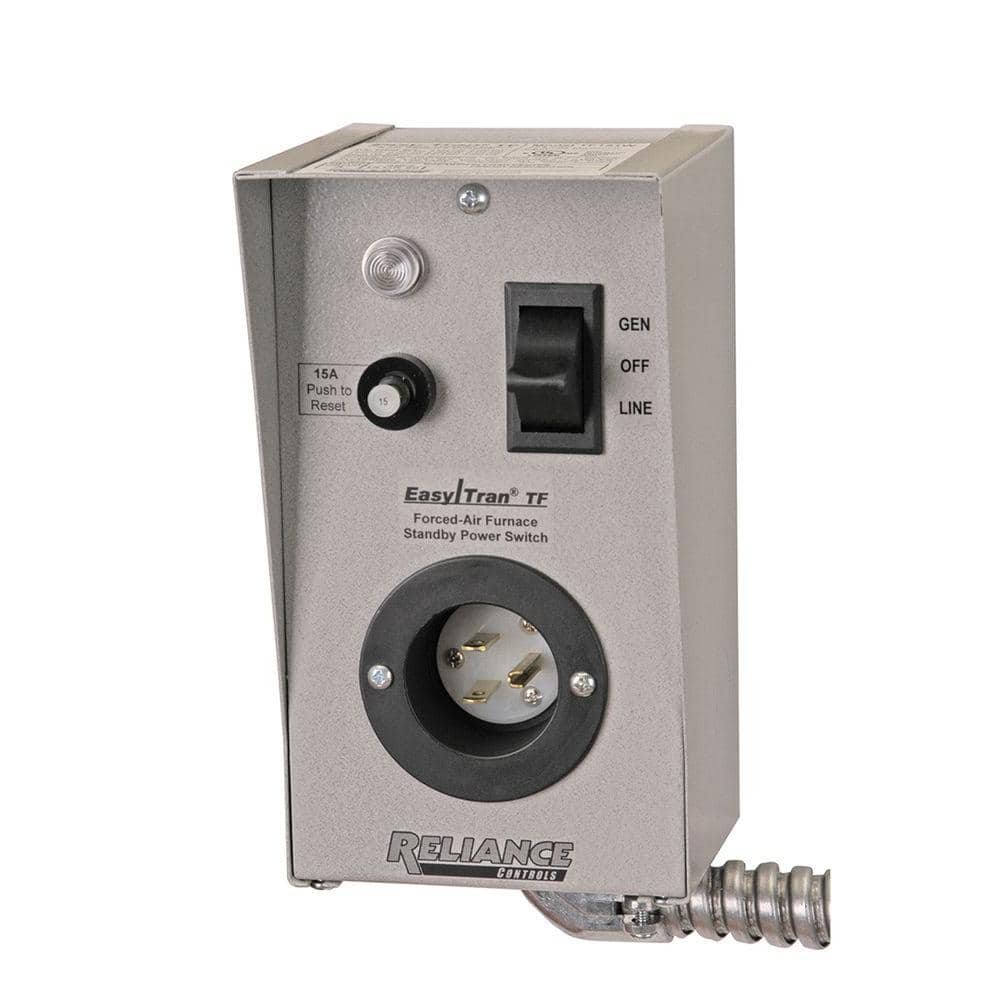
I'm using a Honda EU2200i as my backup generator, with a transfer switch only for the furnace..
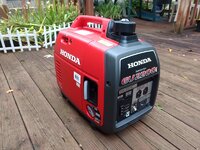

The transfer switch:
I have a detailed thread about my experience here:

 www.snowblowerforum.com
As for the grounding question, I also found a ton of conflicting information on line.. here is how I resolved it in my case, with a Honda generator. (quote from the link above)
The transfer switch:
Reliance Controls Furnace Transfer Switch TF151 - The Home Depot
Reliance Controls - Furnace Transfer Switch - This single-circuit 15 AMP furnace transfer switch is designed for use with generators equipped standard 5-15, 15 AMP power outlets.
www.homedepot.com
I have a detailed thread about my experience here:
Log in
www.snowblowerforum.com
As for the grounding question, I also found a ton of conflicting information on line.. here is how I resolved it in my case, with a Honda generator. (quote from the link above)
As I was researching this project, I read quite a lot about the potential issue/problem of grounding. I read on a few forums that modern "high efficiency" furnaces (which mine is) need to be properly grounded to operate correctly, the furnace needs to "sense" the ground in order to run, and some generators might not be grounded right for this use, which might be a problem..its the whole generator "floating neutral" vs. "bonded neutral" debate.
The Honda EU2200i has a "floating neutral". I have read a TON of conflicting info..
some people said you must literally pound a metal stake into the ground and attach a wire from your generator's ground screw to the stake, or your furnace wont work.
I can confim you do NOT need to pound a stake in the ground!because the transfer switch is grounded to the house ground..
which means (if I understand it correctly) that the furnace is properly grounded with both methods: regular house current use, and also when using the generator. So, when using this transfer switch, the grounding question is solved, and the generator powers the furnace just fine without pounding a metal stake into your back yard. just wanted to add that detail!
So..success! I can now heat my house if power goes out in the winter..and we can have temporary electricity if power goes out at any time of year..
thanks for all the help and advice everyone!
much appreciated.
Scot
Last edited:
manwithtools
ALLIANCE MEMBER
Again as @wyliesdiesels said; your meter base has one double pole 100 amp breaker. Not two 100 amp breakers.
Innovate1
Well-known member
What generator do you have and would you buy it again? I have a cheap non-inverter one and want to upgrade - it's very loud and not very efficient. Would be good to have a little bigger one for the house - gas furnace for heat is the biggest essential load so 2 KW would probably be enough. Have thought about getting about 1 kW for RV/camping and a 3-4 kw for home.If you use an inverter gen, it will have "Eco" mode which varies the unit rpm based on demand. I have a small unit, 2000 watts that run 11-12 hours on a gallon of fuel. At idle (low demand) it's in the 53 db range for noise. Max outage for us though has been in the 8 hr range. Keeping 4-5 gallons of fresh fuel on hand, in a longer outage I'd just run it during evening hours to keep the family happy. We have a high efficiency wood fireplace for backup heat, so the generator would only be running the fridge, internet etc.
Innovate1
Well-known member
Link doesn't work - it just goes to a login screen. I poked around trying to find the thread but no luck... Would be interested in reading about your experience.I'm using a Honda EU2200i as my backup generator, with a transfer switch only for the furnace..
I have a detailed thread about my experience here:
Log in
As for the grounding question, I also found a ton of conflicting information on line.. here is how I resolved it in my case, with a Honda generator. (quote from the link above)
35Ford
Well-known member
OP should be able to add a main breaker to existing panel. No need to change it.
dave*99
Well-known member
If the part in post #7 works for your existing panel you can add a main breaker and hold down kit to that panel. Feed it from the meter main.If I change the main panel to have the main breaker, do I just leave the breaker on the meter box as is? No harm, no foul with having two breakers on each leg in series before the distribution to the individual breakers?
I dismissed the idea of changing the main panel since it seemed really complicated...maybe that is a better approach. I can reuse the expensive part - the breakers. There are a lot of conduits coming out of main panel though - it's like a porcupine.
83VillageRepair
Well-known member
A generlink would seem to fit your needs well. You would need to turn off all unnecessary loads.
Warning though some utilities don't accept them.
Warning though some utilities don't accept them.
Denwood
Well-known member
What generator do you have and would you buy it again? I have a cheap non-inverter one and want to upgrade - it's very loud and not very efficient. Would be good to have a little bigger one for the house - gas furnace for heat is the biggest essential load so 2 KW would probably be enough. Have thought about getting about 1 kW for RV/camping and a 3-4 kw for home.
Champion 2000 watt inverter. It’s been fine, inexpensive and enough to run everything we need. It charges our EV as well with a neutral bonded plug. I was using a generator previously but our newer Lennox furnace (ECM motor with communicating thermostat) and any UPS units would not fire up on the generator. Furnace works fine with the inverter as do all of the computer UPS units. My only “complaint”… it won’t run my 110V MIG welder, the one time I tried to use it for a roadside trailer repair. If I was shopping for one now, I’d get the slightly larger 2500 or 3400 watt dual fuel inverter so we could run it on propane or gasoline…and power the welder which needs closer to 20amps @120V.
That said, the unit sits 99.9% unused, with fuel drained out. Not worth upgrading given infrequent use.
Last edited:
wyliesdiesels
Well-known member
not gonna work here since his load center doesnt have a main disconnect and he only has 1 breaker space in the meter mainLook into generator interlock for your main/first panel. Probably cheaper than a DPDT safety switch and it does the same thing.
These are unique for each type of panel.
wyliesdiesels
Well-known member
your load center is NOT a main panel. it is a subpanel since you have a disconnect below the meter. yes you would leave the meter main aloneIf I change the main panel to have the main breaker, do I just leave the breaker on the meter box as is? No harm, no foul with having two breakers on each leg in series before the distribution to the individual breakers?
I dismissed the idea of changing the main panel since it seemed really complicated...maybe that is a better approach. I can reuse the expensive part - the breakers. There are a lot of conduits coming out of main panel though - it's like a porcupine.
if you switch the load center to one with a main disconnect, you could then go the interlock route
wyliesdiesels
Well-known member
naw. only way to do so would be via a backfed breaker which then takes up one of the branch breaker spaces. this also requires a hold down kit which might not be availableOP should be able to add a main breaker to existing panel. No need to change it.
I see a decent amount of load, looks like 3 subpanels fed from that subpanel. Maybe replacing the metermain with a new one that can be fitted with an interlock and upgrade the service to 200 amps would be a good plan.
I have a 4200sqft house, 2-1/2 story. The half-story is the finished attic, about 800sqft. Half game room, half home theater.Here's another question for those of you who have generators where power has been out for a long time (say a week to a month) - how do you use the generator?
Generator is a Honda eu6500 with an APC UTS-10BI interconnect panel. The panel is programmable and load shedding, it's pretty nifty.
That generator can power everything essential. The only thing we're limited on is 220v power. The 220v circuit is wired to our well pump. So no other 220v like central air, clothes dryer, wall oven.
The longest we've lost power in winter was 7 days. In summer 8 days. The Eu6500 is a ridiculously quiet generator so noise isn't an issue. For the longer outages we have had gas supply issues, with the local gas stations running out.
What typically works for us in the winter (I'm in New England) is we wake up and fire up the generator in the morning. Radiant floor heat and hot water follow. Warm house, hot shower, hot meal. We'll typically run it for a few hours. Office/computer work, etc. Mid-morning we shut it off. We play board games or cards by natural light.
After noon it might get fired up for a couple more hours. Or maybe not. The house does stay comfortable. Afternoon it gets shut off again.
When the sun goes down the generator comes back on. Eat dinner, maybe watch a movie in the home theater (not fancy theater, just a large screen w projector). More games. When we go to sleep I turn the generator off.
The schedule works really well for us. It conserves gas for the generator. We get nice chill time playing games. I'll sometimes have a fire going in the fireplace. Very quaint.
Summertime the schedule is similar, but typically we'll be outside by the pool, sitting under the metal roofed pool pergola.
We kept an eye on freezer and fridge temps and learned there was no worry.
Gas supply. I have three 5 gallon jugs for the generator. With a storm on the way I'll fill them up. If the gas doesn't go in the generator I use it in the yard equipment, and eventually I'll put them in the tank of my car. Then before the next storm, fill them again.
The gas in the generator has Stabil, etc. I run it once a month for a bit while I'm outside to exercise the electronics.
The generator/interconnect panel combo I have can be rigged to auto start the generator when the grid goes down, but I choose to not use that function. It starts with the turn of a key, and yup, it's so easy my wife is comfortable doing it on her own when I'm out of town.
1-1/4 rigid conduit from the drop to the meter, through an attic, two floors of the building then 8 feet of concrete garage wall...wish I could upgrade to 200, or even 150.I see a decent amount of load, looks like 3 subpanels fed from that subpanel. Maybe replacing the metermain with a new one that can be fitted with an interlock and upgrade the service to 200 amps would be a good plan.
RoadBeater
Well-known member
6 circuit manual transfer switch with 6000W generator. When the power goes out, there's minimal things that are "required" Well pump, sump pump outlet, which has the deep freeze on it, fridgerator and microwave circuit, and the family room. For us, if the power is out, there's a storm or something going on, so we probably aren't going anywhere. I plug the generator into the plug on the back of the house and let it go, as long as someone is home. Has done pretty good for us when needed.Here's another question for those of you who have generators where power has been out for a long time (say a week to a month) - how do you use the generator? Our house is extremely efficient and we use about 8 kWh per day. Most hours we use 200-300 watts. But, the generator needs to run continuously to have that power available. Do you run your generators continuously (using a lot of fuel and making noise) or do you run them for an hour or two here and there during the day. Direct experience appreciated!
I wish to thank everyone for taking the time to reply. A lot of useful information. An early response - don't switch the neutral, 4 wire cord from generator, unbonding the generator (will need to reverse if we take the generator for a portable application) makes the most sense. The cheapest disconnect that has 3 poles was $945. Cheapest 2 pole was $215. However, thinking about it more, this makes the system "non-standard" so if someone else comes along and uses it at a later date, they may not know they need to unbond the generator. If I do the 3 pole, it seems like that is the most foolproof thing for subsequent owners.
Last edited:
I'm lost.I wish to thank everyone for taking the time to reply. A lot of useful information. I've studied the responses and read as much as a I could find on the 'net and my best option is a non-fused disconnect. However, I believe that I need to switch both power legs AND the neutral. Is that correct? The ground for the generator can run through cable from the generator to the house and thus to the existing house ground. But I need to take the neutral from the generator and make it my new neutral after power is switched to the generator. That would be a 3 pole double throw disconnect. Unfortunately, going from two pole to three pole means the disconnect is no longer $200 but is close to $1,000. First, is there a way to avoid needing to switch the neutral; and second, is there a lower cost 3 pole double throw disconnect then something like this ($945):
Siemens DTGNF323R 100-Amp, 3 Pole, 240-volt, 3 Wire, Non-Fused General Duty, Double Throw, Type 3R
What is just below your meter, a breaker? Apologies if this was answered already.
2 options I see:
Swap your meter for a new meter/main and add an interlock. Will need a new 4 wire feed from this panel to the next sub.
Add a dedicated generator panel for critical loads at the sub panel. Not sure on details here as I've never looked far into one.
dave*99
Well-known member
I wish to thank everyone for taking the time to reply. A lot of useful information. I've studied the responses and read as much as a I could find on the 'net and my best option is a non-fused disconnect. However, I believe that I need to switch both power legs AND the neutral. Is that correct? The ground for the generator can run through cable from the generator to the house and thus to the existing house ground. But I need to take the neutral from the generator and make it my new neutral after power is switched to the generator. That would be a 3 pole double throw disconnect. Unfortunately, going from two pole to three pole means the disconnect is no longer $200 but is close to $1,000. First, is there a way to avoid needing to switch the neutral; and second, is there a lower cost 3 pole double throw disconnect then something like this ($945):
Siemens DTGNF323R 100-Amp, 3 Pole, 240-volt, 3 Wire, Non-Fused General Duty, Double Throw, Type 3R
I'm not sure I understand your entire plan......but....
I'm going to make a general statement here:
If you are able to UNBOND the ground and neutral IN THE GENERATOR, you can use a 2 pole switch and do not need a 3 pole.
Before I took that approach:
I'd make damn sure you can not put an interlock on your subpanel, install a main breaker with a hold down and wire a generator inlet to that panel making sure to UNBOND neutral and ground in the generator. All the details to do this are already in this thread. Particularly post #7

The main breaker is part of the meter box. The breaker panel does not have a main breaker. So I can't use an interlock kit. Generator makers are coy about unbonding the neutral from the ground; if I do that to enable the use of a two pole switch, the next person that comes along and owns the house needs to understand that their generator needs to be unbonded. And I need to remember to bond my generator if I take it off site to use it.
dave*99
Well-known member
I'd make damn sure you can not put an interlock on your subpanel, install a main breaker with a hold down
Understood. Are you sure you can't add a "main breaker" It would technically just be a disconnect but if you can put one in your subpanel, you can use an interlock.The breaker panel does not have a main breaker. So I can't use an interlock kit.
As for the generator bonding, my Champion generator comes from the factory unbonded. It is labeled as such right on the control panel. You can't assume generators are bonded or unbonded. It varies from model to model and manufacturer to manufacturer. With a generator like mine, when using it stand alone, some folks insert a plug into one of the receptacles with ground and neutral connected together. You can make one or purchase one.
The next person will have that issue no matter what you do.
Straight shot of conduit? Fill chart allows for 3 # 1/0 copper, that should get you 150 amps.1-1/4 rigid conduit from the drop to the meter, through an attic, two floors of the building then 8 feet of concrete garage wall...wish I could upgrade to 200, or even 150.
No path to run new riser?
Got a pic of the subpanels sticker? I suspect that a main breaker and interlock could be installed in it.
wyliesdiesels
Well-known member
Look at the dead front on his subpanel. there is no dedicated space for a main breaker. he would have to do a backfed branch breaker with a hold down kit, which i already explained in post #28Understood. Are you sure you can't add a "main breaker" It would technically just be a disconnect but if you can put one in your subpanel, you can use an interlock.
dave*99
Well-known member
I did. And you are right. And I explained it in post #23. Great minds think alike.Look at the dead front on his subpanel. there is no dedicated space for a main breaker. he would have to do a backfed branch breaker with a hold down kit, which i already explained in post #28