so in the UK we have the insignia with the dodgy M32 gearbox bearings, a mate of myn has decided he wants me to try, depsite telling him ive never worked on a gearbox, to change the 3 end bearings, you can do this without removing the gearbox fully , just removing the case from the side of the box and lowering the engine down will expsode the input and both out put shafts, but im stick as to how to get the bearings back on , sure i can remove them with a puller, would a 2000w heatgun heat bearings up enough to allow them to slide back on or would a blow torch be a better idea?

You are using an out of date browser. It may not display this or other websites correctly.
You should upgrade or use an alternative browser.
You should upgrade or use an alternative browser.
getting gearbox bearings on without a press
- Thread starter ozaudio
- Start date
ez-duzit
Well-known member
Take it to a pro.so in the UK we have the insignia with the dodgy M32 gearbox bearings, a mate of myn has decided he wants me to try, depsite telling him ive never worked on a gearbox, to change the 3 end bearings, you can do this without removing the gearbox fully , just removing the case from the side of the box and lowering the engine down will expsode the input and both out put shafts, but im stick as to how to get the bearings back on , sure i can remove them with a puller, would a 2000w heatgun heat bearings up enough to allow them to slide back on or would a blow torch be a better idea?
Wrench97
Well-known member
Pop the bearings in the oven heat to 400f.
Depending on the interference fit tolerance you may be able to knock them on with a brass punch cold.
Depending on the interference fit tolerance you may be able to knock them on with a brass punch cold.
speed bump
Well-known member
I've installed bearings after heating with a heat gun. Just realize once they warm up they hit temp really fast. 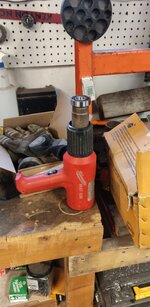
ive already pre warned him if it doesnt work out it will be a box of job or a second hand box from a breakers yard for £100 or so
have both heat gun and a gas torch with MAP gas
this pic is from google images but shows what has to be done

have both heat gun and a gas torch with MAP gas
this pic is from google images but shows what has to be done
RoninB4
Well-known member
-The torch would certainly heat the bearings up enough. The problem would be how hot it would get them. Heating to 400° F is right on the edge of the tempering range for most metals. What does that mean? That you'd be changing the hardness of the bearings and perhaps making them softer if you go much beyond that temperature. How will you know? If the metal changes color from silver to yellow you're changing the hardness. If you go from yellow to purple you're changing the hardness even more. Going to full blue (royal or light blue) it's already too late. A lot of people heat the bearings successfully and that's fine provided you don't overheat as described above. Heating will also cook any lubricant in the bearings the factory put in, just be aware of that. Throwing any cooling liquid on the bearing immediately after heating, or overheating, runs the risk of risk of thermal shock creating tiny stress fractures you may not see but discover when it self destructs weeks/months later.
If you're going to heat the bearings don't use the torch, use the heat gun. Use an oven if you can trust the controls at 400° F. Less chance of ruining the bearing metallurgy. Do you know how to install a bearing? There's right and very wrong ways to install a bearing. Even using a soft brass/aluminum drift can ruin a bearing by Brinelling if you use the wrong technique.
If the bearing goes on a shaft the force needs to applied to the inner race. If it goes into a housing driving force is applied to the outer race. If it goes into both a special tool needs to be made so it contact inner/outer simultaneously. Any force that drives the balls/needles/rollers into the race (inner or outer) will micro dimple the surface or create tiny flats (Brinelling). This causes the bearing to be effectively ruined and will have a much shorter service life than it should.
Bearing installation is not always a simple thing, I've worked with (supposedly) professionals that didn't know the right/wrong way to install bearings. Not just my opinion either, I've confirmed techniques with a NSK field representative and several trade journals.
If you're going to heat the bearings don't use the torch, use the heat gun. Use an oven if you can trust the controls at 400° F. Less chance of ruining the bearing metallurgy. Do you know how to install a bearing? There's right and very wrong ways to install a bearing. Even using a soft brass/aluminum drift can ruin a bearing by Brinelling if you use the wrong technique.
If the bearing goes on a shaft the force needs to applied to the inner race. If it goes into a housing driving force is applied to the outer race. If it goes into both a special tool needs to be made so it contact inner/outer simultaneously. Any force that drives the balls/needles/rollers into the race (inner or outer) will micro dimple the surface or create tiny flats (Brinelling). This causes the bearing to be effectively ruined and will have a much shorter service life than it should.
Bearing installation is not always a simple thing, I've worked with (supposedly) professionals that didn't know the right/wrong way to install bearings. Not just my opinion either, I've confirmed techniques with a NSK field representative and several trade journals.
joe49
Well-known member
Cheap kind of accurate way. Electric fry pan and digital temp gun. At or under 400f degrees for unsealed or 250f for sealed. In oil or keep checking the bearing if just dry pan.
bcschief
Well-known member
300 Degrees is what I have always heard on heating bearings for install, a toaster oven would suffice for that.
I've wrapped a large bearing in moist paper towels and microwaved, slid right on.
alfadan
Well-known member
I can't imagine doing that without taking the transmission out. Sounds like it would be halfway there anyway. If nothing else, even if the bearings cool too fast and only go halfway on, just pull the damn thing and press them all the way. You don't have to get a new gearbox.
RoninB4
Well-known member
At or under 400f degrees for unsealed or 250f for sealed.
^A good point in the above post that I neglected to mention. I'd be very hesitant to heat a bearing that had any non metal components to it. Sealed bearings usually have some sort of plastic/rubber shield or sealing ring in them that won't do well with heat above the material designed limits (operation temperature). I've even seen a few bearings that had a plastic cage holding the rollers/balls/needles. You can't always see them either, especially if it's a sealed bearing. In this age of hiding sub-standard materials I wouldn't trust heating a bearing if I couldn't see ALL the components used. If there's any type of rubberized sealing I wouldn't heat it at all. JMO
JSGAuto
Well-known member
Oh geeze, I need to do the same. Added to the problem is the bearings for that gearbox are not available in the USA...need to buy them from you guys and get them shipped over.
I was reading the M32 was made by Fiat? Crazy how it ended up in a chevy. I need to see if I can get to it from the side, or if I should just pull the thing....or buy a new car!
Buy a press...or maybe stop by a shop with lunch with the shafts?
Jim
I was reading the M32 was made by Fiat? Crazy how it ended up in a chevy. I need to see if I can get to it from the side, or if I should just pull the thing....or buy a new car!
Buy a press...or maybe stop by a shop with lunch with the shafts?
Jim
txvwnut
Well-known member
For those tapered roller bearings a few minutes on a hot plate and they will slip right on. Since the OP already stated he has a mapp torch that will get the job done as well. When I've had to use a torch to heat a bearing I'll get heavy piece of steel plate and set the bearing on the plate then center the flame in the ID of the bearing and heat away.
quadrcr87
Well-known member
If you go with a torch or heat gun, I would buy a cheap 300* F temp stick to verify that you dont get it too hot. The stick melts when it gets to the temp so you know when to stop heating. A temp gun is another good option to measure the exact temp as you heat.
homebuilt burner
Well-known member
Deep fryer
dutchgray
Well-known member
You can also rig up an incandescent lamp and carefully sit the bearing on it, they run hot but no so hot it will damage the bearing.
American Locomotive
Well-known member
In addition to heating thr bearing, you can also take computer "duster" cans, flip them upside down, and freeze the shafts. When you flip them, liquid refrigerant comes out when you pull the trigger and gets very cold.
Whatever you do, make sure you rehearse it. You basically have to get it perfect first try.
Whatever you do, make sure you rehearse it. You basically have to get it perfect first try.
firebirdparts
Well-known member
Putting those on, I suspect, will be pretty easy. Assuming here a typical interference fit. Getting them off is the hard part.
My dad was a machinist, and so most of my experience installing interference-fit stuff was the way he did it. Temperature does make it easy, but the truth is, it's not really that hard to begin with.
If you want to do it in the car (no press), you'll need to hit that with a hammer and a ring of appropriate diameter, and of course the inner race you take off is a good option for that ring. I just mention that because nobody else has. When it seats you can hear it easily.
If for some reason I had to do it with everything at the same temperature, I would not be afraid to.
My dad was not a fan of using hot and cold. Just one or the other. I don't know that I agree with him, but he was the machinist.
My dad was a machinist, and so most of my experience installing interference-fit stuff was the way he did it. Temperature does make it easy, but the truth is, it's not really that hard to begin with.
If you want to do it in the car (no press), you'll need to hit that with a hammer and a ring of appropriate diameter, and of course the inner race you take off is a good option for that ring. I just mention that because nobody else has. When it seats you can hear it easily.
If for some reason I had to do it with everything at the same temperature, I would not be afraid to.
My dad was not a fan of using hot and cold. Just one or the other. I don't know that I agree with him, but he was the machinist.
ez-duzit
Well-known member
Good way to crack the housing....
If you want to do it in the car (no press), you'll need to hit that with a hammer and a ring of appropriate diameter...
Wrench97
Well-known member
If you use olive oil instead of hydro oil the chicken will taste better next time you fry chickenElectric frying pan, we use hydraulic oil and heat unshiejded bearings to no more than 375F, they just slide on.

gahrajmahal
Well-known member
You are in the UK and I suppose the bearings might be metric. If not, you can get more detailed information of just how much of an interference fit you have by accurately measuring the shaft diameter and the inside bore of your bearings. Here in the USA a person could look up interference fits in their “Machinists Handbook”. It varies depending on how small or large those diameters are.
Early on in my engineering career rebuilding machine tools the guys would freeze the shaft instead of heating the bearings. You have got to be fast as the components will equalize quickly.
Early on in my engineering career rebuilding machine tools the guys would freeze the shaft instead of heating the bearings. You have got to be fast as the components will equalize quickly.
Last edited:
How did the metal do in the microwave?I've wrapped a large bearing in moist paper towels and microwaved, slid right on.
Firebrick43
Well-known member
Thats the truth. One day I came into putting a large dual spindle Lamb line milling head. The knuckle head on days beat the cones on 4 bearing 50,000 dollars of precision tapered roller bearings (20" OD) with a brass drift and a 2 lbs hammers. It looked like gold glitter in the spindle box.If the bearing goes on a shaft the force needs to applied to the inner race. If it goes into a housing driving force is applied to the outer race. If it goes into both a special tool needs to be made so it contact inner/outer simultaneously. Any force that drives the balls/needles/rollers into the race (inner or outer) will micro dimple the surface or create tiny flats (Brinelling). This causes the bearing to be effectively ruined and will have a much shorter service life than it should.
Bearing installation is not always a simple thing, I've worked with (supposedly) professionals that didn't know the right/wrong way to install bearings. Not just my opinion either, I've confirmed techniques with a NSK field representative and several trade journals.
The other second shift mech and I declared them junk upon seeing it causing outrage with the mech and the day shift supervisor. We left the damaged bearings on the dayshift supervisors desk which really made him lose his mind
We always heated the bearings on a SKF induction heater and froze the shaft with liquid nitrogen. If you put a blue powerade in liquid nitrogen for 15 secs, remove shaker vigorously, 15 secs, shake vigorously, and 15 more secs you have an instant slushy. One of the apprentices would go get the dewar of liquid nitrogen before first break. We called it the Microfreeze.You are in the UK and I suppose the bearings might me metric. If not, you can get more detailed information of just how much of an interference fit you have by accurately measuring the shaft diameter and the inside bore of your bearings. Here in the USA a person could look up interference fits in their “Machinists Handbook”. It varies depending on how small or large those diameters are.
Early on in my engineering career rebuilding machine tools the guys would freeze the shaft instead of heating the bearings. You have got to be fast as the components will equalize quickly.
RoninB4
Well-known member
Thats the truth. One day I came into putting a large dual spindle Lamb line milling head. The knuckle head on days beat the cones on 4 bearing 50,000 dollars of precision tapered roller bearings (20" OD) with a brass drift and a 2 lbs hammers. It looked like gold glitter in the spindle box.
Fine, the moist towels shield any metal arcing.How did the metal do in the microwave?
Seriously? I did not know that. I didn’t know that could be done. I’ve always heard don’t put metal in the microwave.Fine, the moist towels shield any metal arcing.
ez-duzit
Well-known member
I am skeptical.Seriously? I did not know that. I didn’t know that could be done. I’ve always heard don’t put metal in the microwave.
**** language....
Last edited:
quattroman
Active member
I have heated a crown wheel up in an oven to make it a slip fit instead of a press fit.
Best done when your wife/GF/mother is out.
Best done when your wife/GF/mother is out.