To avoid these ads, REGISTER NOW!

Getting ready for electrical in new building

Usafexplorer

Well-known member
Joined
Dec 26, 2013
Messages
71
Location
Coastal North Carolina
Our 40x65 Cold Formed Steel Building should be wrapped up this week, I'm just starting to research the electrical and not gonna lie feeling a little overwhelmed. With the extreme cost of materials and labor I see no way to complete this short of doing it myself, I have done electrical work in the past and have no issues pulling permits and following the code. Our local county has an owner/builder exemption that allows the owner to perform the work although it must still meet the building code requirement.

When I call the county, I don't get the warm fuzzies the local (rural) inspector has a much experience and will not likely be a good resource for information. I was advised to lookup UPCodes online for reference to the 2023 NEC with Amendments.

If there a resource to assists (like a DIY for Dummies) reference that someone can suggest for the general code requirements outside of dissecting the 2023 NEC? Thanks!
 
Last edited:
To avoid these ads, REGISTER NOW!

sparky 1971

Well-known member
Joined
Oct 9, 2018
Messages
7,967
Location
Central Iowa
It won't be anything difficult. You'll probably have a sub panel, size the feeder appropriately, have a disconnect which is almost always a main breaker panel, and plant two ground rods. Decide on a wiring method, whether it be conduit, MC cable, or romex. Get the proper boxes and go. Make sure all receptacles, even the on the ceiling, are GFCI protected and take your time.
 
OP
U

Usafexplorer

Well-known member
Joined
Dec 26, 2013
Messages
71
Location
Coastal North Carolina
It won't be anything difficult. You'll probably have a sub panel, size the feeder appropriately, have a disconnect which is almost always a main breaker panel, and plant two ground rods. Decide on a wiring method, whether it be conduit, MC cable, or romex. Get the proper boxes and go. Make sure all receptacles, even the on the ceiling, are GFCI protected and take your time.

Thanks Sparky, is there a minimum amperage for the sub-panel or receptacle count (or spacing requirement) for an accessory building?
 

sparky 1971

Well-known member
Joined
Oct 9, 2018
Messages
7,967
Location
Central Iowa
Thanks Sparky, is there a minimum amperage for the sub-panel
No. Most people use either a 60 or 90 amp feeder. 90 is probably going to be the most bang for the buck. 2-2-2-4 or 2-2-4-6 MHF can be direct buried with conduit used out of the ground to protect it and is good up to 90 amps. It will fit most 60 amp breakers and all 90's. A 90 will cost a little more, but not enough to be a deal breaker.
or receptacle count (or spacing requirement) for an accessory building?
If it's going to be considered a garage, which will be up to the AHJ, you will need to have one receptacle per parking stall and those are required to be on a 20 amp circuit. You can have as many as you want, but the circuit considered the garage can't share with anything other than outside receptacles. Basically, don't put your lights on the same breaker. Beyond that, you can do pretty much whatever you want. You do want to watch what you do with 240 volt receptacles though, those are supposed to be GFCI protected as well and they get pricey.
 
OP
U

Usafexplorer

Well-known member
Joined
Dec 26, 2013
Messages
71
Location
Coastal North Carolina
In regards to wiring methods, I'm leaning towards EMT conduit but I just noticed Romex has come down a bit in pricing. Is there a price comparison I should consider in terms of EMT with separate conductors vs Romex? I plan on sheathing 8ft from the floor so all receptacle wiring will be protected regardless of running EMT or Romex behind the sheathing.
 

sparky 1971

Well-known member
Joined
Oct 9, 2018
Messages
7,967
Location
Central Iowa
EMT is going to cost considerably more and if you don't have experience with a bender, it's gonna get even more expensive due to all the screw ups, might look like **** when you stand back and look at it, as well as take a lot more time. But if you take your time, can look like artwork. Romex is fast, easy, relatively inexpensive, and when the wallboard goes up, looks good.

For a rough comparison in price: Two duplex receptacles (no GFCI) 10' apart with romex will be about $12 in material. Using 1/2" EMT will cost about $24 if the conduit is used for a ground. Use a ground wire instead and add another couple of bucks. #12 stranded wire is running around 21¢ per foot, a 500 foot roll costs me $105.
 

Ultradog MN

Well-known member
Joined
Jan 20, 2024
Messages
749
Location
Twin Cities
Our 40x65 Cold Formed Steel Building should be wrapped up this week, I'm just starting to research the electrical and not gonna lie feeling a little overwhelmed. With the extreme cost of materials and labor I see no way to complete this short of doing it myself, I have done electrical work in the past and have no issues pulling permits and following the code. Our local county allows has an owner/builder exemption that allows the owner to perform the work although it must still meet the building code requirement.

When I call the county, I don't get the warm fuzzies the local (rural) inspector has a much experience and will not likely be a good resource for information. I was advised to lookup UPCodes online for reference to the 2023 NEC with Amendments.

If there a resource to assists (like a DIY for Dummies) reference that someone can suggest for the general code requirements outside of dissecting the 2023 NEC? Thanks!
I have wired/rewired several additions, houses, cabins and garages. Service entrances, panel upgrades, meter socket swaps, etc.
I just pull the elec permit and go about it as I can.
Here they have a basic charge for the permit which includes the rough-in and final inspections. If they have to come back to reinspect it's like $45 per trip.
I consider that $45 money well spent because they will tell you what's right or wrong.
Try to find a electrician who will come to your place to advise you for $45... You won't.
I keep a pen and note pad handy and write what he tells me down.
And I Never argue with him.
I suppose if you are a complete electric retard he will bug out after 4 or 5 reinspects but for "non retards" - which you probably are if you are considering doing this yourself, it is a good deal. The inspector is a well paid bearucrat. Get your money's worth out of him.
 
Last edited:
OP
U

Usafexplorer

Well-known member
Joined
Dec 26, 2013
Messages
71
Location
Coastal North Carolina
I have wired/rewired several additions, houses, cabins and garages. Service entrances, panel upgrades, meter socket swaps, etc.
I just pull the elec permit and go about it as I can.
Here they have a basic charge for the permit which includes the rough-in and final inspections. If they have to come back to reinspect it's like $45 per trip.
I consider that $45 money well spent because they will tell you what's right or wrong.
Try to find a electrician who will come to your place to advise you for $45... You won't.
I keep a pen and note pad handy and write what he tells me down.
And I Never argue with him.
I suppose if you are a complete electric retard he will bug out after 4 or 5 reinspects but for "non retards" - which you probably are if you are considering doing this yourself, it is a good deal. The inspector is a well paid bearucrat. Get your money's worth out of him.

Sound advice, and I agree it's best to not argue as it's a losing battle. I will say though, after going through the stamped drawings and having the pre-pour slab inspection that I question what he actually knows in terms of construction and code knowledge. I have stressed to him I am not interested in meeting the minimum code as there are certain things we want done better than code and he struggles to answer the simplest of questions. Diving into the codes on my own is likely the best way to educate myself, I will certainly use him for the intended purposes of inspection sign-off requirements as it's ultimately his signatures that keeps the building progress moving.
 
OP
U

Usafexplorer

Well-known member
Joined
Dec 26, 2013
Messages
71
Location
Coastal North Carolina
Spent some time last night reading posts on MC cable and although I have no experience with it I'm leaning towards using it. Certainly not the least expensive wiring method but it looks easier for a DIY'r to use as sparky 1976 pointed out EMT mistakes can get costly. Additionally, the rodent protection benefit over using Romex is something worth considering, as all of my wiring will be behind walls the wiring will be 2x protected from damage.


Ultradog MN

Well-known member
Joined
Jan 20, 2024
Messages
749
Location
Twin Cities
EMT is going to cost considerably more and if you don't have experience with a bender, it's gonna get even more expensive due to all the screw ups, might look like **** when you stand back and look at it, as well as take a lot more time. But if you take your time, can look like artwork. Romex is fast, easy, relatively inexpensive, and when the wallboard goes up, looks good.

For a rough comparison in price: Two duplex receptacles (no GFCI) 10' apart with romex will be about $12 in material. Using 1/2" EMT will cost about $24 if the conduit is used for a ground. Use a ground wire instead and add another couple of bucks. #12 stranded wire is running around 21¢ per foot, a 500 foot roll costs me $105.
Rereading your post here...
I agree with using emt in a garage/shop build.
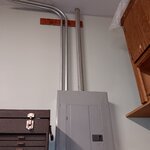
I surface mounted my 100A panel and ran most of my wiring in emt.
To the OP, buy a couple of conduit benders - 1/2 and 3/4 and watch a couple of youtube videos on making offsets, 90s, etc. Expect to make a few mistakes and waste a bit of conduit but you'll get the hang of it pretty quick. About 80% of my shop is on the wall.
For the romex in the ceiling and the outlets in the walls in my shop office, I used a left over chunk of 2" pvc conduit for a chase up into the attic and pulled the romex through that.
Looks much better than a bunch of wires stapled to a board.
Edit:
Oops, looking at my photo, I never did get the straps on the conduit up by the ceiling. One of these days...
 

Attachments

  • 37202594330.jpg
    37202594330.jpg
    733.4 KB · Views: 43

75gmck25

Well-known member
Joined
Jul 21, 2014
Messages
1,317
Location
Alexandria, VA
I don't know how you plan to run your wiring, but Romex running below about 6 feet is considered subject to damage and it must be protected. You can run it through stud bays like you do in a house, add vertical ledger boards to protect the Romex, etc. MC cable is considered just as vulnerable as Romex (for code compliance), so that doesn't help you. That is one reason folks like EMT and metal boxes, since they are considered to be sufficient protection from damage. One hybrid solution is to use EMT on the walls, but run Romex along the ceiling joists or attic area where it's not considered subject to damage.

I have brick/block walls in my garage interior and no wall studs, so EMT and metal boxes worked out fine. When I started out I didn't have many circuits, so I used 1/2" conduit for 120 volt workbench and wall receptacle circuits . If I was going to do it again I would probably run 3/4" to most of the boxes, just so it's easier to add future circuits. I might also run a 1" conduit as a main "bus" around or across the ceiling at the joist level and then add break-out boxes at logical locations. Figuring out where to run conduit begins to cross over your skills between electrical needs and physical equipment layout, since the conduit can get in the way of effective use of wall space.
 
OP
U

Usafexplorer

Well-known member
Joined
Dec 26, 2013
Messages
71
Location
Coastal North Carolina
In my mind when I say MC is better protected I'm thinking in terms of rodents. In my current garage I had rodent chew damage on the Romex outer jacket, seems doubtful a rodent would damage MC but I guess anything is possible.
 

sparky 1971

Well-known member
Joined
Oct 9, 2018
Messages
7,967
Location
Central Iowa
In my mind when I say MC is better protected I'm thinking in terms of rodents. In my current garage I had rodent chew damage on the Romex outer jacket, seems doubtful a rodent would damage MC but I guess anything is possible.
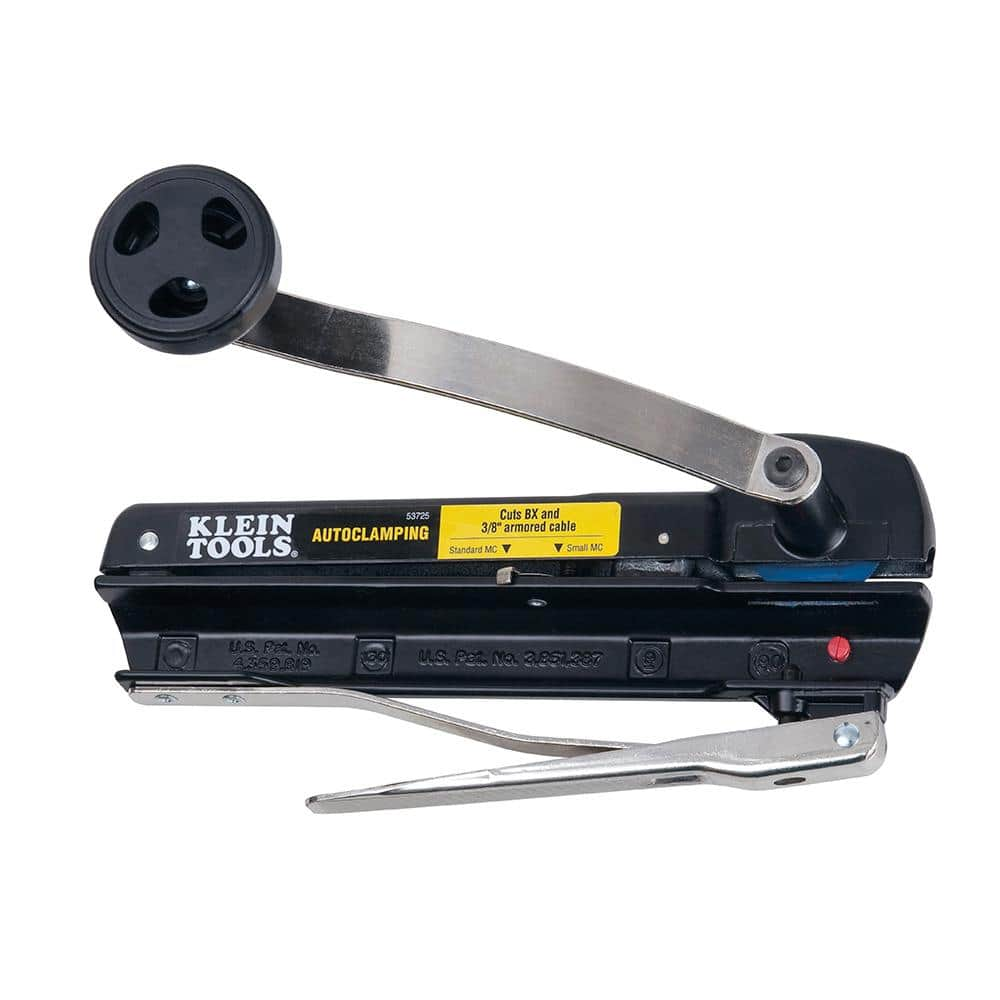
Mice won't chew on MC, so it's better in that perspective. There are a few do's with MC. Even though it's not a code requirement, do use the red anti short bushings. Do buy a Roto-split type tool. I like the Klein better than the Roto-split version, but everyone is different. And do spend a little more and get the aluminum jacket instead of steel; the aluminum is heavy enough but a 250' roll of steel jacketed 12/2 almost requires a forklift to move it. You'd probably be well served by one of those cable dispensers as well. I actually spend a little more on top of everything else and get stranded wire MC, but that's probably going to be a supply house item, I doubt it's available in the box stores.


To avoid these ads, REGISTER NOW!

WildBill

ALLIANCE MEMBER
Joined
Aug 20, 2021
Messages
1,984
Location
PNW
The on great thing about EMT is if you go up a size (like use 3/4" everywhere) its pretty easy to pull more wires later. I did that and within a year I had added a couple of circuits that I didn't think about initially.
 

Norcal

Well-known member
Joined
Mar 16, 2008
Messages
13,752
Mice won't chew on MC, so it's better in that perspective. There are a few do's with MC. Even though it's not a code requirement, do use the red anti short bushings. Do buy a Roto-split type tool. I like the Klein better than the Roto-split version, but everyone is different. And do spend a little more and get the aluminum jacket instead of steel; the aluminum is heavy enough but a 250' roll of steel jacketed 12/2 almost requires a forklift to move it. You'd probably be well served by one of those cable dispensers as well. I actually spend a little more on top of everything else and get stranded wire MC, but that's probably going to be a supply house item, I doubt it's available in the box stores.


Redheads are not required for MC cable, only AC, that being said I use them.
 

rharman

Well-known member
Joined
Apr 22, 2012
Messages
8,741
Location
SoCal
My first thought was "Why would someone NOT use the bushings?" That just seems like a mandatory to me.
 

strength_and_power

Well-known member
Joined
Apr 26, 2015
Messages
1,393
Im using all MC in my shop, I picked up 1,000ft of 12/2mc on FB marketplace for $500, roughly half the price of Home Depot. The rolls even came with a bag of the red bushings although I started using a push in style connector at the boxes and they have a red bushing pre installed.
 

sparky 1971

Well-known member
Joined
Oct 9, 2018
Messages
7,967
Location
Central Iowa
Im using all MC in my shop, I picked up 1,000ft of 12/2mc on FB marketplace for $500, roughly half the price of Home Depot. The rolls even came with a bag of the red bushings although I started using a push in style connector at the boxes and they have a red bushing pre installed
The bushings on the snap in connectors don't do anything to protect the wire against the end of the metal jacket, which is what anti shorts are for
 

75gmck25

Well-known member
Joined
Jul 21, 2014
Messages
1,317
Location
Alexandria, VA
In response to post #16, we do not have a specific height listed for wiring requiring protection from damage, which is why I said "about 6 feet". It's all up to the inspector.

The exact wording for 2023 is 334.15(B) Protection from Physical Damage. "Cable shall be protected from physical damage where necessary by rigid metal conduit, intermediate metal conduit, electrical metallic tubing, Schedule 80 PVC conduit, RTRC marked with the suffix -XW, or other approved means."
 
OP
U

Usafexplorer

Well-known member
Joined
Dec 26, 2013
Messages
71
Location
Coastal North Carolina
Ordering my supplies and trying to educate myself on the MC cable differences. I see MC Steel Amorcable and MC Aluminum Armorlight. For long home runs I've seen people mention in the forums it's much easier to pull the aluminum stuff for the weight savings, any other advantages or anything I should be considering?

Am I required to ground the outer sheath/cover when using MC cable?
 

sparky 1971

Well-known member
Joined
Oct 9, 2018
Messages
7,967
Location
Central Iowa
Ordering my supplies and trying to educate myself on the MC cable differences. I see MC Steel Amorcable and MC Aluminum Armorlight. For long home runs I've seen people mention in the forums it's much easier to pull the aluminum stuff for the weight savings, any other advantages or anything I should be considering?
The only difference is the weight, and it's a pretty significant difference. The only time I use steel jacket is when the aluminum is out of stock. Post #15.
Am I required to ground the outer sheath/cover when using MC cable?
No
 

eejack

Well-known member
Joined
May 18, 2021
Messages
166
Location
the garden state
Ordering my supplies and trying to educate myself on the MC cable differences. I see MC Steel Amorcable and MC Aluminum Armorlight. For long home runs I've seen people mention in the forums it's much easier to pull the aluminum stuff for the weight savings, any other advantages or anything I should be considering?

Am I required to ground the outer sheath/cover when using MC cable?

I only order steel jacketed cable when I want to abuse my apprentices. Go with the aluminum and pick up a rotosplit tool as mentioned above.

Personally I would avoid snap in style connectors. You will make changes/mistakes and standard connectors are more forgiving.

The outer jacket of mc cable does not need to be bonded as the ground path is in the green wire in the cable. It is strictly physical protection.
 
OP
U

Usafexplorer

Well-known member
Joined
Dec 26, 2013
Messages
71
Location
Coastal North Carolina
Thanks for all of the rapid fire replies, really appreciate the assistance. Additionally, are there any prefered suggestions were to source boxes, connectors and supplies. We have limited options locally and figured it might be easier to order most of everything online.
 

sparky 1971

Well-known member
Joined
Oct 9, 2018
Messages
7,967
Location
Central Iowa
Thanks for all of the rapid fire replies, really appreciate the assistance. Additionally, are there any prefered suggestions were to source boxes, connectors and supplies. We have limited options locally and figured it might be easier to order most of everything online.
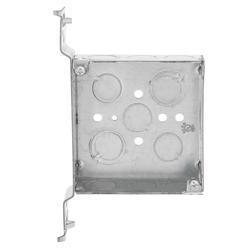
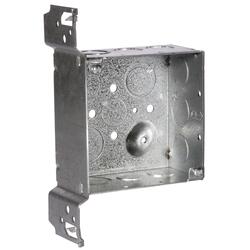
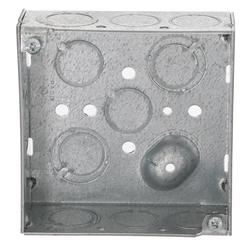
I'd get 4X4 boxes like a Raco 196 (1-1/2" deep) or a Raco 235 (2-1/8" deep)


If not, a regular 4X4 will do but getting it set flush with the stud is a little more time consuming even though it does cost less. I like Raco 189's for most things, Raco 232 when more depth is needed like a 30 or 50 amp 240 volt receptacle or when there will be multiple splices


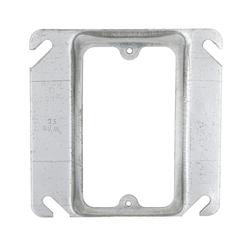
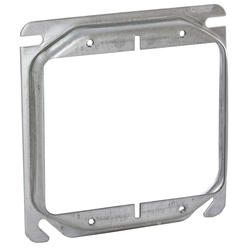
For mud rings, get a size larger than your depth. 1/2" plywood will get a 5/8" mud ring, 5/8" sheathing, get a 3/4" ring. They come in single or two gang. You'll want two gang for a 30 or 50 amp receptacle.


Other brands like Steel City make the same thing, I just happen to know the Raco part numbers.
 

Norcal

Well-known member
Joined
Mar 16, 2008
Messages
13,752
I'd get 4X4 boxes like a Raco 196 (1-1/2" deep) or a Raco 235 (2-1/8" deep)


If not, a regular 4X4 will do but getting it set flush with the stud is a little more time consuming even though it does cost less. I like Raco 189's for most things, Raco 232 when more depth is needed like a 30 or 50 amp 240 volt receptacle or when there will be multiple splices


For mud rings, get a size larger than your depth. 1/2" plywood will get a 5/8" mud ring, 5/8" sheathing, get a 3/4" ring. They come in single or two gang. You'll want two gang for a 30 or 50 amp receptacle.


Other brands like Steel City make the same thing, I just happen to know the Raco part numbers.
If the wall material is 1/2" thick, use a 5/8" ring, that way things are flush with the finished surface.
 

sparky 1971

Well-known member
Joined
Oct 9, 2018
Messages
7,967
Location
Central Iowa
If the wall material is 1/2" thick, use a 5/8" ring, that way things are flush with the finished surface.
Yep.
For mud rings, get a size larger than your depth. 1/2" plywood will get a 5/8" mud ring, 5/8" sheathing, get a 3/4" ring. They come in single or two gang. You'll want two gang for a 30 or 50 amp receptacle.
 
To avoid these ads, REGISTER NOW!
Top Bottom