To avoid these ads, REGISTER NOW!

Getting Started as a Machinist

Techniker

Well-known member
Joined
Jan 18, 2011
Messages
551
To all you machinists out there, hobbyist or professional alike, how did you get started in machining? What advice would you have for someone who wants to get started?

I assume one of the best things I could do is find a machinist to apprentice under. Until I do that though, I think it would help to at least have a basic understanding of machining. Are there any books/websites/forums you would recommend?

Thank you in advance,
Techniker
 
To avoid these ads, REGISTER NOW!

zmotorsports

ALLIANCE MEMBER
Joined
Oct 20, 2009
Messages
21,327
Location
Northern Utah
I am not a professional machinist by any means but I love machining and fabricating things. I would suggest the website mentioned above. I subscribed to their magazine for a year and it was pretty informative.

I got to a point where I wanted to start machining many of my own parts on my builds and bought a small mill/lathe and then learned myself. If I had it to do all over again I think I would have spend a little money and took some classes at the local communitiy college instead, at least to learn the basics. Mike.
 

unclemoak

Well-known member
Joined
Nov 14, 2010
Messages
213
Location
Wisconsin
Personally, I learned things as I needed them. In college I wondered over to the College of Engineering machine shop and want to learn how to do basic things, then that evolved into more and more complex things. Now I have a pretty good understanding of how to machine most things, but am obviously far from being an expert on the subject.

There is a lot to learn on the web for free, but nothing is a substitute for hands on experience. I would look into taking some classes at a local vo-tech or community college. It's nice to learn from someone that has been down the road before, because when it comes to machining, mistakes can be costly and deadly.
 
OP
T

Techniker

Well-known member
Joined
Jan 18, 2011
Messages
551
Thanks for your advice, everyone. My undergraduate was in biomedical engineering and I took classes on drafting/technical drawing (hand-drawn blueprints, AutoCAD, and SolidWorks), but that is as close as engineering got to machining. We just sent off the plans to our machine shop and they built it.

I went and talked to our machinist a few weeks ago (I'm now a medical student at the same university) and he offered to teach me if I was interested. I was just looking for some resources before I went there so I can learn more from the experience.

Thanks again,
Techniker
 

MTBob

Member
Joined
Nov 20, 2010
Messages
6
Techniker: I'm impressed, you are one of the few people in higher educations that wants to work with your hands. Americans are, in general, losing the trade skills.
Here's a couple of quick recommendations:
1) Check out the videos available on Smartflix.com. As an example, here's a link on basic lathe operation: http://smartflix.com/store/video/52/Fundamentals-of-Machine-Lathe-Operation There are a host of other videos available. I've watched a bunch of them and most are really helpful.
2) If you want to work with metals, find information (text books) about basic metallurgy. Understanding the composition and characteristics of various metals is very important in machining and fabricating. Also, find a basic book on Mechanics of Materials. That will help you understand how materials behave in various conditions. I didn't look, but there may be some of this information in SmartFlix.

And, finally, if you have the opportunity to find a mentor that is willing to share his experience with you, jump on the chance to learn from him. I'm guessing he will see you as one of the few people in a university that is willing to get their hands dirty and learn a hands-on skill.

Keep us posted on your journey.
Bob
 

GarageEnvy

Well-known member
Joined
Nov 17, 2009
Messages
1,282
Location
Fresno
Techniker: I'm impressed, you are one of the few people in higher educations that wants to work with your hands.

Really? I don't find that to be true. I have a master's degree and I'd bet 2/3 of my class had some sort of DIY hobby ranging from home repair to gunsmithing to automotive repair and metal work.
 

MotoDave

Well-known member
Joined
Jul 1, 2009
Messages
505
Location
Ventura, CA
I learned the basics at college, while getting my engineering degree. Once we took a basic shop safety class we had full reign of the school's machine shop. Involvement in the Formula SAE program taught me lots about designing parts to be producible with my limited machining skills, a lesson I still keep in mind.

Now that I'm out of school and working, I've been setting up a small home shop. I find machining/fabricating a great way to unwind after sitting at a desk staring at CAD programs all day. I really think having at least some machining background is a huge benefit to being a good design engineer. I have a lot of colleagues that have never operated any machinery, and have very limited ideas on how to make what they design all day.
 

PhilR1957

Well-known member
Joined
Jul 14, 2009
Messages
86
Location
Beacon Falls, CT
I started out Deburring parts in a Factory, and now 32 Years later I am in charge of the CNC Machine area of a large Factory. I was always willing to learn whenever a new oppertunity came up.
 

larry_g

Well-known member
Joined
Apr 28, 2007
Messages
16,872
Location
oregon
Your offer to be shown some techniques is invaluable. If your going to hook this skill to your medical work then I would suggest some materials science, specifically machineability of metals. Any time you can get on a machine it will be a learning experience. Our local community college used to have an open shop in the evenings for access to machines. I belong to a group of Model Engineers. Our common connection is doing machining. If you can hook up with one of these groups around the world, ( This is why your location is important to the group!) you will a wealth of people who have a common skill. If you have the room, buy a lathe. One that runs and cuts will serve as a training tool. Look at the money spent as the same money you would spend on classes and textbooks. You will leatn how to sharpen bits, learn how metals cut, learn what a lathe is about and what the failings of your new lathe are. Now with this knowledge you will be able to best judge what you need in your next machine tool. Also during this new tools phase you will be acquiring measuring tools, cutting tools and other bits and pieces that go to support the machining trade. These tools will stay with you a lifetime. Odds are if you didn't way over spend on this first lathe and then break it you can recoup your investment. I am now on lathes 5&6 mills 3&4 and a shop full of support tools. Have fun

lg
no neat sig line
 

Steve from Socal

Well-known member
Joined
Jan 27, 2009
Messages
3,491
Location
Hutchinson Ks.
I have a friend who is an ophthalmologist; he has taken several classes at the local Community College. I have a few other MD friends that are ********* fabricators and tinkerers. Mechanics and this includes machine work is an allied art for all the sciences. The old high school and CC text books for machine shop have a lot of information and are actually a quick read.

As mentioned the intellectual understanding is one aspect, hands on training is where the chips meet the cutting tool. Like learning to fly; understanding the correct methods is only part of it, the process. The sensory feed back and insight to make adjustments or changes come from sight, sound, feel and, even smell.

The above mentioned text books often had a companion work book. These have several small tools that you made during the class. They are simple building block steps that give you the basics of machine tool processes and are great intros to each aspect of a machines function. Once you are comfortable using the machine more elaborate set ups and processes are not as daunting.

Learning to use machine tools is a very satisfying endeavor that will strengthen your skills in many areas and impart wisdom that transcends the object at hand.

Steve
 
To avoid these ads, REGISTER NOW!

chief ben

Well-known member
Joined
Sep 7, 2010
Messages
618
Location
Hot Springs, Arkansas
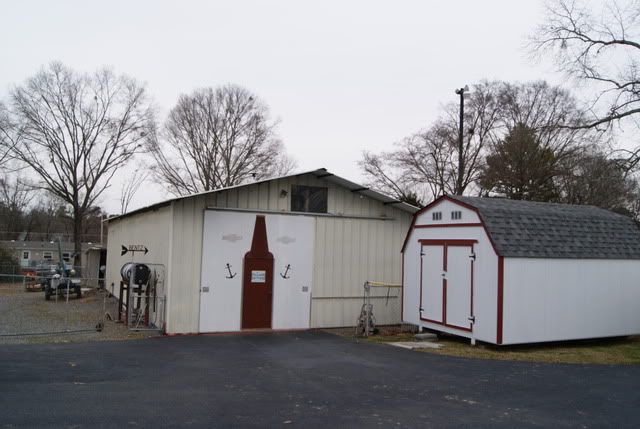
Like Larry G said if you have the room buy a lathe, and I will add to that a small milling machine, and to show you how much room you need here is some pictures of what i'm doing, I have a big shop 26 X 50 but I can't cool or heat it and at 64 i'm starting to need that LOL anyway i'm making a new smaller machine shop and it is only 11.5 X 15.5
we moved the Lathe in yesterday, and the new small milling machine will be here on 20 Feb 2011 the big milling machine was to big to go in the new shop. and I will have the rest of the floor down today, and it is looking Good. the wife thinks i'm spending a little to much on it, but I can't take it with me, so I say spend it are the Kid Will. LOL
Shops2003.jpg

shop3010.jpg

shop3011.jpg
 

hydramatic

Well-known member
Joined
Jun 26, 2009
Messages
510
Location
Alabama
Machine tool technology classes are at most trade schools..18 month class, and have good math skills, the sky is the limit..Hyundai pays well..
 
OP
T

Techniker

Well-known member
Joined
Jan 18, 2011
Messages
551
Thanks for the advice everyone. Ben, your shop there is incredible!

I actually have already had classes on mechanics (we call it strength of materials here and it's a two part class consisting of statics and mechanics). I was the multivar/diff eq. TA. My focus in engineering was more on the pharmaceutical biotechnology/ChemE and EE side though.

The metallurgy suggestion is something to definitely look into though. Are there any basic technique books? I'm looking for something like the machinist equivalent of Duffy's "Modern Automotive Technology" which covers the theoretical, as well as the practical, aspects of automotive service.

Thanks again,
Techniker
 

motoguy

Well-known member
Joined
Dec 8, 2010
Messages
157
Location
MO
I didn't know anyone that would tutor / apprentice me. I ended up taking classes at a local vocational / tech / trade school. Instructor was an "old school" machinist who started making parts manually decades ago. He talked about the first "tape" nc machines, then moving to CNC control, the changes that have happened, watching the industry get outsourced to China, etc.

I learned a lot, he had lots of tips / tricks / stories, and I had access to lots of good equipment (manual mill / lathe, cnc mill / lathe, grinders, CAD, Solidworks, "free" material (as far as the instructor was concerned, our tuition payed for our use of materials, within reason), etc.

~$1200 per semester. I've attended 3 of the 4 semesters required for a certificate, though that's not really my goal. I have an unrelated job; I have just always wanted to learn the machines. I'm currently shopping for a CNC mill to put in my home shop.
 

bobadame

Well-known member
Joined
Dec 26, 2007
Messages
1,124
Take the instructor up on his offer to teach you. To make the experience relevant come up with a project to build. Probably start with something that requires milling then move on to turning and single point threading. Be sure to put the tools away and clean up after your self when your finished. If you don't you won't be welcomed back.
 

willy3486

Well-known member
Joined
Jan 14, 2010
Messages
1,593
Location
Middle Tennessee
Like Larry G said if you have the room buy a lathe, and I will add to that a small milling machine, and to show you how much room you need here is some pictures of what i'm doing, I have a big shop 26 X 50 but I can't cool or heat it and at 64 i'm starting to need that LOL anyway i'm making a new smaller machine shop and it is only 11.5 X 15.5
we moved the Lathe in yesterday, and the new small milling machine will be here on 20 Feb 2011 the big milling machine was to big to go in the new shop. and I will have the rest of the floor down today, and it is looking Good. the wife thinks i'm spending a little to much on it, but I can't take it with me, so I say spend it are the Kid Will. LOL

Nice shop you got there. I agree do what you want to. When my dad was alive I tried to get him to enjoy life after he retired and cut back. He continued to work so hard to make a buck. But after he passed away I found out why. My mother nagged him to keep my sister up until he no longer could. So enjoy yourself, were only here a short time on this place. Your place reminds me of my FIL stuff he made. He was a navy guy in WWII. The BIL was as well. If I could have joined I would have been Navy or Air Force. My lungs wouldn't let me go.

Anyway to the original poster are you wanting to do it for a living or a hobby? The reason I ask when I was younger I would go and make friends with people who were doing something for a living I was interested in. I got to be friends with a older guy my uncle knew and I would go over there. He was a auto bodyman and all the bodywork I have done on my stuff I can trace back to him showing me. Same with electronics. I work in computers and all my knowledge has its roots in the old TV and radio repair shops that I hung around. I got all the old junk they would give me and drug it home. If you don't have time to go to classes make friends with a machinist.
 
Last edited:

Griff93

Well-known member
Joined
Jul 25, 2009
Messages
1,121
Location
Huntsville, AL
This is a pretty decent series of videos for machine shop stuff. http://techtv.mit.edu/genres/24-how-to/videos/142-machine-shop-1

I agree with MTBob, there's not many people I've run across in professional fields that want to get their hands dirty. I'm going back to school myself for mechanical engineering but I was turning wrenches prior to that. I was trying to help a guy next to me in my CAD class with a circular part. He didn't even know what a lathe was. Neither did the other two guys sitting on my row. These guys are pretty much all engineering students. Now of course the guys in Baja SAE and Formula SAE want to get their hands dirty.
 

Wildfire1

Well-known member
Joined
May 11, 2010
Messages
86
Location
Newfoundland, Canada
Hi Techniker . I'm going to give you a simple bit of advise here. How I got started at the machinist trade was I went out and got myself a book called "How To Run a Lathe" And went through it over and over again and I had the basics on running a lathe. That was back 25 years ago when the internet wasn't around. I've mentioned that book to many machinists and they tell me they still read that same book from time to time. My son is also a Biomedical engineer in the Forces presently deployed in Afghanistan right now. Good luck!
 

Ign

Well-known member
Joined
Jul 7, 2006
Messages
12,769
Location
Butte Peak ND
Yep, if you're just wanting to mess around then grab a book and go for it.

If you're wanting to become more proficient quickly then school is just about the only way.

They busted my *** in school, and it's just like a job 'cause you've only got a limited amount of time to get it done, and you're graded on it.

Once my instructor figured out I wasn't stupid he wouldn't accept anything less than A quality work from me.

Most feared acronym in school: SO. Start Over!

Got to start w basic lathe, then basic mill, then built a single cylinder 4 stroke, then last final (4th) semester is more specialized like surface grinding.........stuff like sine vise +/- .0002" flat and square.

I had and have WAY more pride in my degree from trade school than I ever will for my business degree from a reputable 4 year college.
 

cnc-me

Well-known member
Joined
Jan 6, 2010
Messages
1,183
Location
MI
Search on YouTube for Tubal Cain or mrpete222 (Its the same guy).
He is a retired teacher, and has some very good videos on all kinds of machining and
metal casting. I have run a lathe & mill for 25+ years and can still pick up a few things
from his videos.
 

Bigpigdave

Well-known member
Joined
Jan 2, 2010
Messages
321
Location
Camden, IN
I worked as a mechanic at a farm tractor and implement dealer when I was younger. They had an in-house machine shop for general fabrication and repair. I was able to apprentice under one of the machinists for a period of time. This was a great way to learn practical knowledge and general operation of the shop. He would also give me books on design, metallurgy and machining. I was expected to read and understand the concepts and he would verbally quiz me. He didn't just want to show me how to perform an operation, he wanted me to have an understanding of why it was done a certain way. Really a great teacher.
Dave
 
To avoid these ads, REGISTER NOW!
Top Bottom