To avoid these ads, REGISTER NOW!

GFCI questions

Bigredford

Well-known member
Joined
Oct 31, 2018
Messages
193
Location
Hull Ga
Do 50 amp 240v welder outlets in a garage need to be gfci?

Do any 240v three phase outlets fed by a rotary phase converter need to be gfci protected?
 
To avoid these ads, REGISTER NOW!

Terry D

Well-known member
Joined
Mar 25, 2015
Messages
2,202
Location
St. Louis, MO.
It looks like Georgia adopted the 2020 NEC beginning this year, so yes, all 125 and 250 receptacles in garages, single phase 150 volts or less to ground, need to be GFCI protected. There is no amperage limitations

210.8(A) Dwelling Units. All 125-volt through 250-volt receptacles installed in the locations specified in 210.8(A)(1) through (A)⁠(11) and supplied by single-phase branch circuits rated 150 volts or less to ground shall have ground-fault circuit-interrupter protection for personnel.

(1) Bathrooms

(2) Garages and also accessory buildings that have a floor located at or below grade level not intended as habitable rooms and limited to storage areas, work areas, and areas of similar use

(3) Outdoors

Exception to (3): Receptacles that are not readily accessible and are supplied by a branch circuit dedicated to electric snow-melting, deicing, or pipeline and vessel heating equipment shall be permitted to be installed in accordance with 426.28 or 427.22, as applicable.

(4) Crawl spaces — at or below grade level

(5) Basements

Exception to (5): A receptacle supplying only a permanently installed fire alarm or burglar alarm system shall not be required to have ground-fault circuit-interrupter protection.

Informational Note: See 760.41(B) and 760.121(B) for power supply requirements for fire alarm systems.

Receptacles installed under the exception to 210.8(A)⁠(5) shall not be considered as meeting the requirements of 210.52(G).

(6) Kitchens — where the receptacles are installed to serve the countertop surfaces

(7) Sinks — where receptacles are installed within 1.8 m (6 ft) from the top inside edge of the bowl of the sink

(8) Boathouses

(9) Bathtubs or shower stalls — where receptacles are installed within 1.8 m (6 ft) of the outside edge of the bathtub or shower stall

(10) Laundry areas

Exception to (1) through (3), (5) through (8), and (10): Listed locking support and mounting receptacles utilized in combination with compatible attachment fittings installed for the purpose of serving a ceiling luminaire or ceiling fan shall not be required to be ground-fault circuit-interrupter protected. If a general-purpose convenience receptacle is integral to the ceiling luminaire or ceiling fan, GFCI protection shall be provided.

(11) Indoor damp and wet locations
 
Last edited:

slik560

Well-known member
Joined
Oct 5, 2009
Messages
787
Location
Kansas, USA
I had some work done by an electrician at the house [built 1962], and he found an issue with two outlets, replacing them with GFCI. It was a good education, as Tann Electric told me that GFCI's are required for all areas where a bare concrete floor or water usage exists: garage, laundry, kitchen. SO, I have an even dozen outlets to replace with GFCI's.

Shopping the local Home Depot online, there are dozens of GFCI outlets. I know you get what you pay for, but for these general household outlets, should I use 15A or 20A units? Should the amps be the same as the corresponding breaker in the panel?

Elemental for you electricians out there, but asking here is easier for my eyesight than going through the NEC.

Thanks very much for any feedback.
 

mike93lx

ALLIANCE MEMBER
Joined
Dec 9, 2013
Messages
37,641
Location
Richmond, VA
I had some work done by an electrician at the house [built 1962], and he found an issue with two outlets, replacing them with GFCI. It was a good education, as Tann Electric told me that GFCI's are required for all areas where a bare concrete floor or water usage exists: garage, laundry, kitchen. SO, I have an even dozen outlets to replace with GFCI's.

Shopping the local Home Depot online, there are dozens of GFCI outlets. I know you get what you pay for, but for these general household outlets, should I use 15A or 20A units? Should the amps be the same as the corresponding breaker in the panel?

Elemental for you electricians out there, but asking here is easier for my eyesight than going through the NEC.

Thanks very much for any feedback.
You only need a 20a receptacle if the circuit only has a single receptacle. A duplex covers this, so the reality is that unless you are plugging in a 20a appliance, the 20a receptacle is unnecessary
 

slik560

Well-known member
Joined
Oct 5, 2009
Messages
787
Location
Kansas, USA
Thanks. HD carries mostly Leviton, so maybe I can get a price break on a dozen! The house was wired with ungrounded outlets, but the electrician said that using GFCI's in the critical areas would satisfy the code when the time comes to sell the place. I'll probably have them go through the place to check all the electrical before then just in case. If I have to do the bedrooms and other living areas, this is going to get expensive. :)
 

sparky 1971

Well-known member
Joined
Oct 9, 2018
Messages
7,974
Location
Central Iowa
We got lucky. "through 250 volt" was taken out of 210.8(A), and it does specifically say single phase.
 
Last edited:

nadogail

Well-known member
Joined
Jan 23, 2009
Messages
31,979
Location
Coronado, CA
I avoid the lowest priced receptacles and cautiously selec something in the "Better" grade, very seldom do I spend money on the "Best" grade.
 

Norcal

Well-known member
Joined
Mar 16, 2008
Messages
13,763
GFCI requirements do not have anything with concrete, it has everything to do with the location, if concrete triggered GFCI requirements, every tract home out here would require GFCI's on everything.
 

Meursault74

Well-known member
Joined
Apr 1, 2019
Messages
22,004
Location
Southern California
Curious about the grandfather clause. Say you have a bad old outlet and replace it with another normal outlet yourself instead of a GFCI because the code says you have to "now", how's anyone really to prove otherwise. I'm not talking safety, just rules.

I put in a GFCI in my laundry room for safety, but kept the old normal outlet in case I ever have some code issue and can just put it back. The old wire had some daisy chain neutral going to that outlet so a GFCI couldn't be used as it was. I had to disconnect that neutral and cap it and that put an outlet out or service in another room (which isn't used anyway). I believe an electrician had seen this set up and didn't convert the outlet for that reason (as other outlets had been converted to GFCI in the house). Still code since it wasn't removed.
 

rlitman

Well-known member
Joined
Oct 18, 2010
Messages
24,624
Location
Long Island
...The old wire had some daisy chain neutral going to that outlet so a GFCI couldn't be used as it was. I had to disconnect that neutral and cap it and that put an outlet out or service in another room (which isn't used anyway)...
Huh? Worse case scenario, you make all your splices behind the LINE connections, and don't remove the yellow tape covering the LOAD terminals. That still protects whatever is plugged into the outlet, even if not the downstream wiring.
 

Meursault74

Well-known member
Joined
Apr 1, 2019
Messages
22,004
Location
Southern California
Huh? Worse case scenario, you make all your splices behind the LINE connections, and don't remove the yellow tape covering the LOAD terminals. That still protects whatever is plugged into the outlet, even if not the downstream wiring.
The laundry room has two outlets. They are both now protected as one is the GFCI and the other is downstream of that one. One runs the laundry machines and the other is by the sink. If I connected that other neutral, it would trip the outlet. I'm not sure what they did exactly in the 1960's but that other neutral is from an outlet in another room. Guess they didn't want to pull it all the way to the panel and just attached it to that outlet and its neutral. That downstream outlet also had another neutral attached to it from another outlet in another room. I forgot about that one. That outlet isn't needed either.

I think what I set up is ok as both outlets in a wet area are protected and two outlets in other rooms are blocked and don't work as they don't have a neutral return but the hot is still there. If I put back a standard outlet and connect all neutrals every outlet will work, but no GFCI protection. Pulling neutrals all the way to the panel isn't going to happen now. That's kind of why I asked.
 

Terry D

Well-known member
Joined
Mar 25, 2015
Messages
2,202
Location
St. Louis, MO.
The laundry room has two outlets. They are both now protected as one is the GFCI and the other is downstream of that one. One runs the laundry machines and the other is by the sink. If I connected that other neutral, it would trip the outlet. I'm not sure what they did exactly in the 1960's but that other neutral is from an outlet in another room. Guess they didn't want to pull it all the way to the panel and just attached it to that outlet and its neutral. That downstream outlet also had another neutral attached to it from another outlet in another room. I forgot about that one. That outlet isn't needed either.

I think what I set up is ok as both outlets in a wet area are protected and two outlets in other rooms are blocked and don't work as they don't have a neutral return but the hot is still there. If I put back a standard outlet and connect all neutrals every outlet will work, but no GFCI protection. Pulling neutrals all the way to the panel isn't going to happen now. That's kind of why I asked.
Are you sure you sure you don't have two circuits sharing a neutral. when you turn off power to the laundry room receptacles, do the ones in the other room go dead also.
 

u2slow

Well-known member
Joined
Nov 20, 2011
Messages
3,599
Location
BC
Curious about the grandfather clause. Say you have a bad old outlet and replace it with another normal outlet yourself instead of a GFCI because the code says you have to "now", how's anyone really to prove otherwise. I'm not talking safety, just rules.
If you're pulling a permit, then you're obliged to meet the local adopted Code edition.

Existing (old) work only has to comply with the Code edition in place at the time it was legitimately installed.

If you realize there's some big gaps/holes as far as undocumented DIY-improvements in between... its because there is. Most just blame such things on previous owners, or pass it off as 'original'.
 
Last edited:

sparky 1971

Well-known member
Joined
Oct 9, 2018
Messages
7,974
Location
Central Iowa
I believe the circuits are sharing neutrals. The hots are on different breakers.
I think you need two gfci's in the laundry room, one in each location. Connect everything to the line side of both, the "extra" neutrals included, forget the load side and your other two outlets will start working. If it were mine, I wouldn't have a gfci in the laundry room at all (I don't), but if my wife got on me about it because of some **** she saw on a home improvement show, I might consider one at the sink, but forget about the washing machine. That one would be easy, just connect everything to the line side of the gfci at the sink, you will have protection there, but nowhere else on the circuit and the other two recept's will magically start working again.
 
Last edited:

Meursault74

Well-known member
Joined
Apr 1, 2019
Messages
22,004
Location
Southern California
I think you need two gfci's in the laundry room, one in each location. Connect everything to the line side of both the "extra" neutrals included, forget the load side and your other two outlets will start working. If it were mine, I wouldn't have a gfci in the laundry room at all (I don't), but if my wife got on me about it because of some **** she saw on a home improvement show, I might consider one at the sink, but forget about the washing machine. That one would be easy, just connect everything to the line side of the gfci at the sink, you will have protection there, but nowhere else on the circuit and the other two recept's will magically start working again.
Thanks for the reply as well as @Terry D . I'll think about trying that. I know the box where the machines are plugged into is fairly tight. I likely need to extend the box out if I use pig tails.

The reason I installed the GFCI in the first place is that the washing machine had a leak and water got on the floor right where we stand, sometimes barefoot and we lean against the metal machine as we load it.
 

sparky 1971

Well-known member
Joined
Oct 9, 2018
Messages
7,974
Location
Central Iowa
Thanks for the reply as well as @Terry D . I'll think about trying that. I know the box where the machines are plugged into is fairly tight. I likely need to extend the box out if I use pig tails.

The reason I installed the GFCI in the first place is that the washing machine had a leak and water got on the floor right where we stand, sometimes barefoot and we lean against the metal machine as we load it.
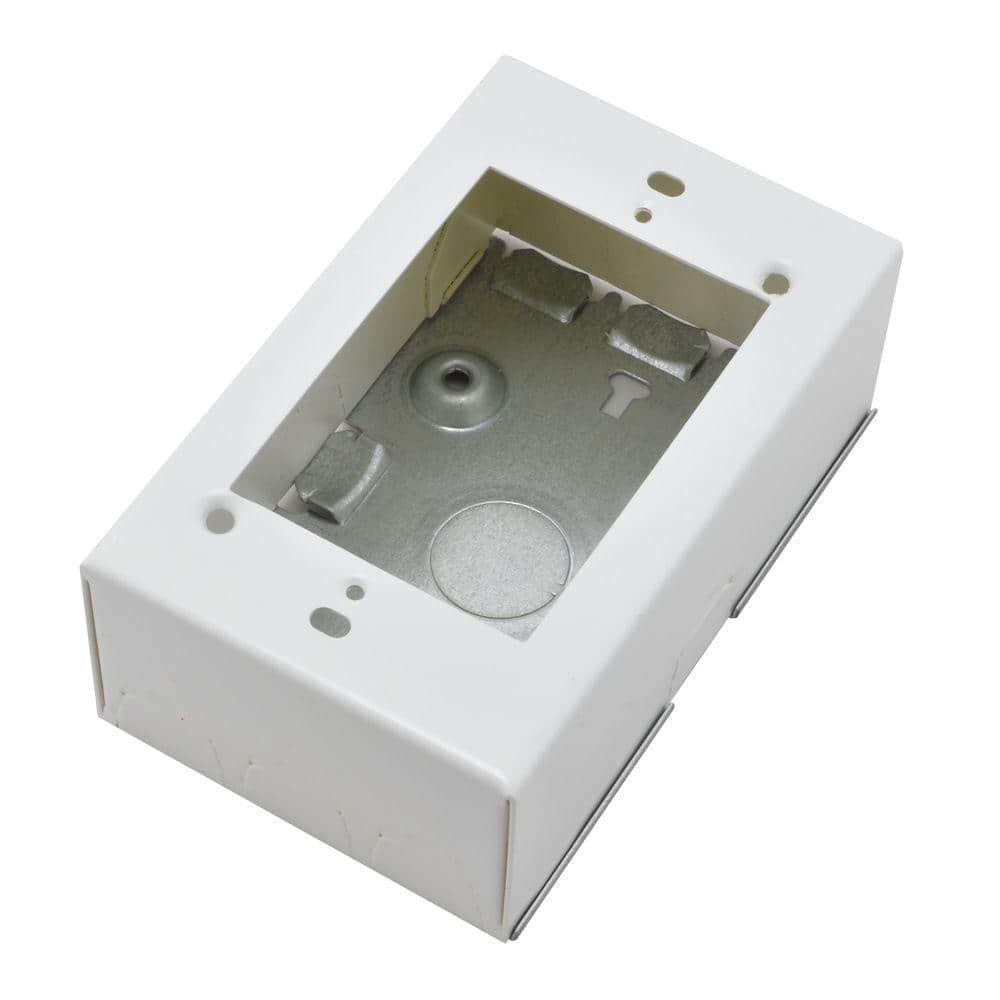
You can probably throw a wiremold box on the washer receptacle. The regular starter boxes don't work very well for gfci's though. There is a little tab on the mounting plate that the gfi will hit when you go to install it. I've cut that tab off with tin snips before, but it's easier to just use something else. Check the other single gang wiremold boxes. Some, though not all, will have a punch out on the back plate that will match up to the existing box.
 
To avoid these ads, REGISTER NOW!

sparky 1971

Well-known member
Joined
Oct 9, 2018
Messages
7,974
Location
Central Iowa
Georgia's on the 2020 NEC so the rule is in effect:cry:
I love the fact that Iowa deleted 250 volt receptacles from the gfci protection. It started out as being delayed because the manufactures couldn't supply the breakers, but promised they would be readily available by Jan. 1, 2022. That didn't happen, so the Eboard gave them a big F U.
 

Meursault74

Well-known member
Joined
Apr 1, 2019
Messages
22,004
Location
Southern California
You can probably throw a wiremold box on the washer receptacle. The regular starter boxes don't work very well for gfci's though. There is a little tab on the mounting plate that the gfi will hit when you go to install it. I've cut that tab off with tin snips before, but it's easier to just use something else. Check the other single gang wiremold boxes. Some, though not all, will have a punch out on the back plate that will match up to the existing box.
Thanks for the advice. I'll visit this project in the future.

I was thinking of something like this, but your boxes would look better and provide more room for sure.

I'll definitely look into the boxes you suggested and see what will work with that 1960's metal box. Is this what you're suggesting?


sparky 1971

Well-known member
Joined
Oct 9, 2018
Messages
7,974
Location
Central Iowa
Thanks for the advice. I'll visit this project in the future.

I was thinking of something like this, but your boxes would look better and provide more room for sure.

I'll definitely look into the boxes you suggested and see what will work with that 1960's metal box. Is this what you're suggesting?


Those are the boxes. In the bottom picture you can see the tab that the gfci will hit. The box in the top pic doesn't have the punch out that matches up to the existing box. In a pinch, I've purchased two different boxes. One like the bottom to get the starter plate, and another, deeper box. The deeper box allowed the gfci to fit in all the way before it hit that effing tab. And, as I stated above, I've also taken the tin snips to the tab. The tab is actually there for a place to put a grounding screw, but I didn't care.
 

Meursault74

Well-known member
Joined
Apr 1, 2019
Messages
22,004
Location
Southern California
Those are the boxes. In the bottom picture you can see the tab that the gfci will hit. The box in the top pic doesn't have the punch out that matches up to the existing box. In a pinch, I've purchased two different boxes. One like the bottom to get the starter plate, and another, deeper box. The deeper box allowed the gfci to fit in all the way before it hit that effing tab. And, as I stated above, I've also taken the tin snips to the tab. The tab is actually there for a place to put a grounding screw, but I didn't care.
Thanks. I watched part of the video on the HD website to get a better idea of how those boxes/bases go together. From the specs, I think that starter box will give plenty extra space for the pigtailing needed. I'll cut/grind that grounding screw tab off to make things fit. Dremel rotary tool to the rescue ;) .The boxes in my house are metal and the ground is bonded when I screw in the outlets anyway, so I won't use that tab either. Thanks again for the advice.
 

rlitman

Well-known member
Joined
Oct 18, 2010
Messages
24,624
Location
Long Island
Thanks for the reply as well as @Terry D . I'll think about trying that. I know the box where the machines are plugged into is fairly tight. I likely need to extend the box out if I use pig tails...
Shop around. Modern low profile GFCIs can be found that hardly take up more space than an outlet. And with two wires allowed under the clamps, you might not need to pigtail so much.
 

Innovate1

Well-known member
Joined
Jul 28, 2014
Messages
4,289
Location
Illinois near St. Louis, Missouri
Shop around. Modern low profile GFCIs can be found that hardly take up more space than an outlet. And with two wires allowed under the clamps, you might not need to pigtail so much.
The versions with clamp plates that take two wires are very handy in this situation and much easier than bending wires for the screws heads. I paid only a little more for them than the cheaper, lower quality ones and thought it was well worth it.
 

sparky 1971

Well-known member
Joined
Oct 9, 2018
Messages
7,974
Location
Central Iowa
Shop around. Modern low profile GFCIs can be found that hardly take up more space than an outlet. And with two wires allowed under the clamps, you might not need to pigtail so much.

The versions with clamp plates that take two wires are very handy in this situation and much easier than bending wires for the screws heads. I paid only a little more for them than the cheaper, lower quality ones and thought it was well worth it.
You do not want to use the two wires under the screws in this situation, where he has two circuits sharing the neutral. If for some reason, he were to lose the connection on the neutral, there is a good chance that 240 volts will be sent through 120 volt equipment.
 

Meursault74

Well-known member
Joined
Apr 1, 2019
Messages
22,004
Location
Southern California
Shop around. Modern low profile GFCIs can be found that hardly take up more space than an outlet. And with two wires allowed under the clamps, you might not need to pigtail so much.
I have one of the low profile GFCI in there now and it's tight. There are other wires in there.

It's been a few years since I did this, but from what I remember this will need to be pigtailed and I'll need to extend the box out. I remember even wrapping electrical tape around to cover the screws downs for the wires as there wasn't much gap to the sides either. The old outlet I had removed was wrapped with tape as well to cover the screws. I think an undersized box was installed way back then. Thinking now, putting on that box extender will be good for several reasons.

I'll get to this project in the future. Thanks again for all the replies.
 

Innovate1

Well-known member
Joined
Jul 28, 2014
Messages
4,289
Location
Illinois near St. Louis, Missouri
You do not want to use the two wires under the screws in this situation, where he has two circuits sharing the neutral. If for some reason, he were to lose the connection on the neutral, there is a good chance that 240 volts will be sent through 120 volt equipment.
Maybe you misunderstood what I was saying or maybe my suggestion is a bad idea, I'm not sure at this point... What I was suggesting is rather than have to put a wire nut and pig tail in the back of the box so the wires only attach to the line side of the GFCI use a GFCI that has a clamp plate (not sure how else to describe it) for the wires to do the same thing. The wires do not go UNDER the screw heads. Some may say that a wire nut is better but these style of wire clamps are very secure. They look somewhat like back stab but rather than rely on a spring the screw pulls a plate, clamping the wires. They provide two holes for each screw so 1 or two wires can be used.

I suppose if someone were working on this wiring and only turned off one breaker you could interrupt the neutral and be exposed to high voltage. Maybe with wire nuts this is less likely but if they are sharing a neutral for two circuits I think code says the breaker handles need to be linked so they both are shut off at the same time.
 

mcbane

Well-known member
Joined
Jul 23, 2017
Messages
794
Location
California
Curious about the grandfather clause. Say you have a bad old outlet and replace it with another normal outlet yourself instead of a GFCI because the code says you have to "now", how's anyone really to prove otherwise. I'm not talking safety, just rules.
The manufacture date is usually on the device, even if it is a code rather than what looks like a date. The same is true for most wire and cable that you might buy. So if there is an accident and someone is trying to link it to a code violation, it may be possible to prove the violation.
 

wyliesdiesels

Well-known member
Joined
Aug 14, 2012
Messages
20,031
Location
Modesto, CA
Maybe you misunderstood what I was saying or maybe my suggestion is a bad idea, I'm not sure at this point... What I was suggesting is rather than have to put a wire nut and pig tail in the back of the box so the wires only attach to the line side of the GFCI use a GFCI that has a clamp plate (not sure how else to describe it) for the wires to do the same thing. The wires do not go UNDER the screw heads. Some may say that a wire nut is better but these style of wire clamps are very secure. They look somewhat like back stab but rather than rely on a spring the screw pulls a plate, clamping the wires. They provide two holes for each screw so 1 or two wires can be used.

I suppose if someone were working on this wiring and only turned off one breaker you could interrupt the neutral and be exposed to high voltage. Maybe with wire nuts this is less likely but if they are sharing a neutral for two circuits I think code says the breaker handles need to be linked so they both are shut off at the same time.
what you describe (pressure plate) is found on all GFCIs. at least all the GFCIs ive bought in the last 5yrs
 

sparky 1971

Well-known member
Joined
Oct 9, 2018
Messages
7,974
Location
Central Iowa
Maybe you misunderstood what I was saying or maybe my suggestion is a bad idea, I'm not sure at this point... What I was suggesting is rather than have to put a wire nut and pig tail in the back of the box so the wires only attach to the line side of the GFCI use a GFCI that has a clamp plate (not sure how else to describe it) for the wires to do the same thing. The wires do not go UNDER the screw heads. Some may say that a wire nut is better but these style of wire clamps are very secure. They look somewhat like back stab but rather than rely on a spring the screw pulls a plate, clamping the wires. They provide two holes for each screw so 1 or two wires can be used.

I suppose if someone were working on this wiring and only turned off one breaker you could interrupt the neutral and be exposed to high voltage. Maybe with wire nuts this is less likely but if they are sharing a neutral for two circuits I think code says the breaker handles need to be linked so they both are shut off at the same time.
I know exactly what you are stating and it's a bad idea. It's not a good idea when it's a normal circuit, and it's a horrible idea when it's a mwbc. If the gfci quits, how is anyone supposed to know the correct breaker is off unless every breaker gets turned off? I'm the guy that going to pull the gfi out without turning off any breakers, it's hard to use a meter on a dead circuit. Say one of the wires isn't landed perfectly. If I pull that gfi out hot and a neutral pulls out, something might let the smoke out.

I'm not going to go looking, mostly because I don't care, but, I think code says that neutrals of a mwbc have to be pigtailed. I know that stab wiring isn't allowed for neutrals of mwbc's because of the reason I listed above.


Also, the handle tie rule hasn't been around long enough for a house with the old metal boxes to be included. It's been in the last 10 or so years that rule hit the books. And, if only one of the two breakers gets turned off, it will eliminate the potential for the higher voltage to be present when the neutral is broken but someone could get knocked right on his *** from the neutral. It's happened to me. Getting bit by the neutral is not only an unexpected surprise, but it hurts worse than getting nailed by the hot.
 
Last edited:

sparky 1971

Well-known member
Joined
Oct 9, 2018
Messages
7,974
Location
Central Iowa
Maybe cut the box out and install a deeper old work box?
If it's behind the washing machine, why bother? Nobody's going to see it. Some of those boxes are a real *****. They have a bracket that goes across the face of the stud. Other times, there were two 16d nails through the box which isn't so bad, but by the time the box comes out, there isn't enough wall left for the ears of an old work box to grab. You wind up screwing a plastic box to the stud or risk pushing the whole thing through the wall when installing the device. Being in the laundry, there might be something behind the existing box which will keep a deeper box from fitting.
 
Last edited:

wyliesdiesels

Well-known member
Joined
Aug 14, 2012
Messages
20,031
Location
Modesto, CA
I know exactly what you are stating and it's a bad idea. It's not a good idea when it's a normal circuit, and it's a horrible idea when it's a mwbc. If the gfci quits, how is anyone supposed to know the correct breaker is off unless every breaker gets turned off? I'm the guy that going to pull the gfi out without turning off any breakers, it's hard to use a meter on a dead circuit. Say one of the wires isn't landed perfectly. If I pull that gfi out hot and a neutral pulls out, something might let the smoke out.

I'm not going to go looking, mostly because I don't care, but, I think code says that neutrals of a mwbc have to be pigtailed. I know that stab wiring isn't allowed for neutrals of mwbc's because of the reason I listed above.


Also, the handle tie rule hasn't been around long enough for a house with the old metal boxes to be included. It's been in the last 10 or so years that rule hit the books.
thats correct
 

Meursault74

Well-known member
Joined
Apr 1, 2019
Messages
22,004
Location
Southern California
So is one of the morals of this story so far is that pigtails are always an ok options?

I like pigtails, they seem like a secure option to me and easier to push the outlet back in with only 2 #12wires on it vs 4.

I put in a remote light switch and did pigtails, whereas the 1960's electrician didn't and asked about it here:


@Innovate1 No I'm not going to cut out the box. That would be waaaaaaaay too much work in so many different ways it's not even funny. Those wiremold boxes @sparky 1971 suggested will look just fine and they are visible, but it's above the laundry machines, so even if it didn't look ok I wouldn't care. Hell, I have one outlet in each of two different rooms that isn't operational, and I don't care. I will fix this now that I know what needs to be done and it's fairly painless. I wasn't on GJ when I did this years ago. This thread brought this back to my memory, so I asked. You can learn a lot hanging out here.
 

sparky 1971

Well-known member
Joined
Oct 9, 2018
Messages
7,974
Location
Central Iowa
So is one of the morals of this story so far is that pigtails are always an ok options?

I like pigtails, they seem like a secure option to me and easier to push the outlet back in with only 2 #12wires on it vs 4.
Pigtails are always a better, more secure connection with less chance of failure. The people that don't use them either 1) don't care, 2) don't know any better (it works doesn't it? and since I did it, there's no way it's going to be a bad connection, right?), 3) are too lazy to pigtail, 4) are too cheap for a wire nut, or wago for that matter, or 5) think that since it's a code approved method that it must be ok. I will admit that it's easier and I have been known to put two wires under the pressure plate, but every time I've done it, it's been in a commercial install using stranded wire and it's been from one duplex to another for a quadplex receptacle. There's no way I would feed through a box using them.
 

Meursault74

Well-known member
Joined
Apr 1, 2019
Messages
22,004
Location
Southern California
You can probably throw a wiremold box on the washer receptacle. The regular starter boxes don't work very well for gfci's though. There is a little tab on the mounting plate that the gfi will hit when you go to install it. I've cut that tab off with tin snips before, but it's easier to just use something else. Check the other single gang wiremold boxes. Some, though not all, will have a punch out on the back plate that will match up to the existing box.
Wow, been almost a year. I got around to this today. I bought one of those wiremold boxes and a second GFCI outlet for the sink. I did have to cut off a little of the grounding tab on the wiremold box to allow the GFCI to fit, but left enough to connect a grounding wire with a screw to the receptacle. The box I bought seems to have some type of coating on the outer portion, it seemed to insulate a bit so I wanted to use a grounding wire as well instead of just relying on the screws going into the box.

Came across the box and an odd color GFCI for the sink outlet for cheap on ebay. The color works fine I suppose. I don't care as it's in the laundry room.

I pigtailed everything as you suggested and now all the receptacles work throughout the house. As I was going through the other receptacles, I found 2 that were just dual polarized prong, but the metal boxes are grounded so I swapped those out to grounded outlets. I also found one outlet that the neutral and hot were switched. We never noticed as I think only a lamp was plugged in at one time. That wasn't anything I had done, but I fixed it.

Thank you for the advice @sparky 1971 , it most certainly helped me complete this project up and have everything work.

IMG_0054.jpg

Yeah, I know this other outlet/plate are a little weird color-wise, but the outlet is Pass & Seymour UL listed TR etc in Antique Brass. I didn't even try to find a plate to match.

IMG_0055.jpg
 

sparky 1971

Well-known member
Joined
Oct 9, 2018
Messages
7,974
Location
Central Iowa
Wow, been almost a year. I got around to this today. I bought one of those wiremold boxes and a second GFCI outlet for the sink. I did have to cut off a little of the grounding tab on the wiremold box to allow the GFCI to fit, but left enough to connect a grounding wire with a screw to the receptacle. The box I bought seems to have some type of coating on the outer portion, it seemed to insulate a bit so I wanted to use a grounding wire as well instead of just relying on the screws going into the box.

Came across the box and an odd color GFCI for the sink outlet for cheap on ebay. The color works fine I suppose. I don't care as it's in the laundry room.

I pigtailed everything as you suggested and now all the receptacles work throughout the house. As I was going through the other receptacles, I found 2 that were just dual polarized prong, but the metal boxes are grounded so I swapped those out to grounded outlets. I also found one outlet that the neutral and hot were switched. We never noticed as I think only a lamp was plugged in at one time. That wasn't anything I had done, but I fixed it.

Thank you for the advice @sparky 1971 , it most certainly helped me complete this project up and have everything work.

IMG_0054.jpg

Yeah, I know this other outlet/plate are a little weird color-wise, but the outlet is Pass & Seymour UL listed TR etc in Antique Brass. I didn't even try to find a plate to match.

IMG_0055.jpg
Looks like you get around home projects about as fast as I do. Unless it's something I want, then it's top priority.
 
To avoid these ads, REGISTER NOW!
Top Bottom