To avoid these ads, REGISTER NOW!

Ground rod at a CNC Plasma table ( good idea or nasty ground loop??)

Ground rod ( possible ground loop) or potential for EMI?

  • Try it without the rod?

    Votes: 0 0.0%
  • Install the recomended rod

    Votes: 2 100.0%

  • Total voters
    2

W-Cummins

Well-known member
Joined
Jan 9, 2006
Messages
1,641
Location
Iowa
So I'm finally nearing the end of my control system retrofit of my Mastercam 3000 plasma table. With the original control panel Mastercam suggested the table's star ground point be connected to a ground rod installed at the table ( or as close as possible ). This means that the output from the plasma power source via the work ground, and the controller cabinet potentially could have ground loops between the building ground and this new ground rod. Ground rod (possible loop) or potential EMI? I'm going to use a Hypertherm Powermax 125 cutter and every thing should be well shielded ....

Thanks William.....
 
To avoid these ads, REGISTER NOW!

CapriMikeC

Well-known member
Joined
May 31, 2019
Messages
420
Location
AZ
Generally, equipment should either be well grounded at the panel or at the equipment. The conductivity of earth and concrete vary with moisture content but the big copper wires are pretty consistent.
 

wyliesdiesels

Well-known member
Joined
Aug 14, 2012
Messages
20,031
Location
Modesto, CA
Why do you think you need a ground rod bonded to your plasma table?

Not sure where people come up with this but there is no such thing as a ground loop in electrical systems. In audio systems there is but not electrical systems.

Why? Because under normal operation, no current is flowing on the grounding system or GES/grounding electrode system.

Your plasma table should already be bonded to the grounding system via an EGC.

If it isnt and you install a ground rod, youve created a difference in potential which you dont want

Also, grounding electrodes are for shunting lightning, limiting voltage potential to earth, shunting surges, and shunting primary voltage when primary lines contact secondary lines

You dont need any of that for a plasma table
 

mm08822

Well-known member
Joined
Jan 13, 2012
Messages
5,988
Location
NJ
Why do you think you need a ground rod bonded to your plasma table?

Not sure where people come up with this but there is no such thing as a ground loop in electrical systems. In audio systems there is but not electrical systems.

Why? Because under normal operation, no current is flowing on the grounding system or GES/grounding electrode system.

Your plasma table should already be bonded to the grounding system via an EGC.

If it isnt and you install a ground rod, youve created a difference in potential which you dont want

Also, grounding electrodes are for shunting lightning, limiting voltage potential to earth, shunting surges, and shunting primary voltage when primary lines contact secondary lines

You dont need any of that for a plasma table
Also the electrical system is already connected to a grounding electrode....either by water pipe, ground rod, buried metallic conduit, ufer.

If a separate building, it probably has 1 or 2 rods already in close proximity.

The rods will simply dissipate any static charge buildup but there should not be any since the equipment is already grounded through all of the egc's run back to the existing grounding electrode.
 

CapriMikeC

Well-known member
Joined
May 31, 2019
Messages
420
Location
AZ
Why do you think you need a ground rod bonded to your plasma table?

Not sure where people come up with this but there is no such thing as a ground loop in electrical systems. In audio systems there is but not electrical systems.

Why? Because under normal operation, no current is flowing on the grounding system or GES/grounding electrode system.

Your plasma table should already be bonded to the grounding system via an EGC.

If it isnt and you install a ground rod, youve created a difference in potential which you dont want

Also, grounding electrodes are for shunting lightning, limiting voltage potential to earth, shunting surges, and shunting primary voltage when primary lines contact secondary lines

You dont need any of that for a plasma table

Emphasized. Ground loops do happen constantly in electrical systems. If you've ever worked around CNC equipment, especially on painted/epoxied/tiled floors which provide good insulating characteristics, you'd be amazed how much current leakage can be "discovered" when you become the ground. I've measured 30VAC with a Fluke scopemeter from machine frame to a known ground. Makes a tingle that even @PelicanPines would not enjoy.

The big grounds are not there for "normal" operation. They are there for faulty operation such as insulation that's breaking down and leaking angry pixies, loose connections at the equipment or panel, etc.

You are correct that properly installed and maintained machines should not need grounds.
 

dave*99

Well-known member
Joined
May 5, 2009
Messages
4,269
Location
Coastal NJ
Emphasized. Ground loops do happen constantly in electrical systems. If you've ever worked around CNC equipment, especially on painted/epoxied/tiled floors which provide good insulating characteristics, you'd be amazed how much current leakage can be "discovered" when you become the ground. I've measured 30VAC with a Fluke scopemeter from machine frame to a known ground. Makes a tingle that even @PelicanPines would not enjoy.

The big grounds are not there for "normal" operation. They are there for faulty operation such as insulation that's breaking down and leaking angry pixies, loose connections at the equipment or panel, etc.

You are correct that properly installed and maintained machines should not need grounds.
Wouldn't that mean the machine frame was not connected to a ground wire that was in turn connected the panel ground? A missing or open ground connection to a piece of equipment is not a ground loop.
 

mm08822

Well-known member
Joined
Jan 13, 2012
Messages
5,988
Location
NJ
Grounding conductors running between different pieces of metallic equipment are expected to be in place. That includes maintenance of them just as if they were power conductors.

That is very different than driving another ground rod. If the OP wants to drive another grd rod, go for it. But it should also be bonded to any grounding electrodes that exist.

Ground loops can exist between different points on the earth due to soil content, moisture content and mineral/salt content. It can change throughout the seasons/rain patterns. I doubt it would be measurable/significant in the close proximity around a single small shop.
 

CapriMikeC

Well-known member
Joined
May 31, 2019
Messages
420
Location
AZ
Wouldn't that mean the machine frame was not connected to a ground wire that was in turn connected the panel ground? A missing or open ground connection to a piece of equipment is not a ground loop.
Yes. Or just poorly connected. Electrical connections are not always on or off. Loose wires, broken strands, and corrosion can cause variable paths to ground, both voltage and current.

My point is that when everything is right, the grounds should never see any current or voltage by design. However, when something is iffy, we don't want the human to be the device which discovers the faulty wiring.

If the OP has ground to the panel and ground rod in the earth at the equipment, leaky current might favor one path or the other which can vary.
 

dscheidt

Well-known member
Joined
Apr 26, 2017
Messages
2,904
Wouldn't that mean the machine frame was not connected to a ground wire that was in turn connected the panel ground? A missing or open ground connection to a piece of equipment is not a ground loop.

There are two possiblities here. One is the equipment manufacturer expects your electrical set up to be **** (looking at some of the facilities I've been in, it isn't a crazy assumption). The other is that they're admitting their equipment is ****.
 

u3b3rg33k

Well-known member
Joined
Dec 18, 2017
Messages
4,048
Why do you think you need a ground rod bonded to your plasma table?

Not sure where people come up with this but there is no such thing as a ground loop in electrical systems. In audio systems there is but not electrical systems.

Why? Because under normal operation, no current is flowing on the grounding system or GES/grounding electrode system.

Your plasma table should already be bonded to the grounding system via an EGC.

If it isnt and you install a ground rod, youve created a difference in potential which you dont want

Also, grounding electrodes are for shunting lightning, limiting voltage potential to earth, shunting surges, and shunting primary voltage when primary lines contact secondary lines

You dont need any of that for a plasma table
another key function of the groundING rods/system is a common voltage reference point. you want one of those.


wyliesdiesels

Well-known member
Joined
Aug 14, 2012
Messages
20,031
Location
Modesto, CA
Emphasized. Ground loops do happen constantly in electrical systems. If you've ever worked around CNC equipment, especially on painted/epoxied/tiled floors which provide good insulating characteristics, you'd be amazed how much current leakage can be "discovered" when you become the ground. I've measured 30VAC with a Fluke scopemeter from machine frame to a known ground. Makes a tingle that even @PelicanPines would not enjoy.
but that isnt a ground loop. youre calling it the wrong thing. that is a machine leaking to ground but since the machine isnt connected to ground like it should be and/or the ground fault current wasnt high enough, the breaker didnt trip. By your own admission the equipment was faulty since it had no proper connection to ground and thus there couldnt even be a so called ground loop since there was no connection to ground.

if you repair it, it will no longer leak to ground. if it was on a GFCI protected circuit, the GFCI would trip if the current is above 5ma.

a ground loop is an issue in audio systems where you hear a 60hz buzz. you get rid of it by removing the instrument or other equipments connection to ground. hence why DI boxes have ground lift switches on them.
The big grounds are not there for "normal" operation. They are there for faulty operation such as insulation that's breaking down and leaking angry pixies, loose connections at the equipment or panel, etc.

what "big grounds" are you referring to?

insulating that is breaking down would allow current to flow on the EGC/ground wire and if large enough amount of current would cause the magnetic trip portion of the break to trip. but again, this isnt a ground loop. this is a ground FAULT. big difference.
You are correct that properly installed and maintained machines should not need grounds.
that isnt what i said. all equipment needs to be properly grounded/bonded because of the very scenario you mentioned. this is also required by the NEC.
 
To avoid these ads, REGISTER NOW!

wyliesdiesels

Well-known member
Joined
Aug 14, 2012
Messages
20,031
Location
Modesto, CA
Wouldn't that mean the machine frame was not connected to a ground wire that was in turn connected the panel ground? A missing or open ground connection to a piece of equipment is not a ground loop.
bingo.

if the machine wasnt connected to ground (and hence the reason the breaker didnt trip in the first place)
 

wyliesdiesels

Well-known member
Joined
Aug 14, 2012
Messages
20,031
Location
Modesto, CA
Yes. Or just poorly connected. Electrical connections are not always on or off. Loose wires, broken strands, and corrosion can cause variable paths to ground, both voltage and current.

My point is that when everything is right, the grounds should never see any current or voltage by design. However, when something is iffy, we don't want the human to be the device which discovers the faulty wiring.

If the OP has ground to the panel and ground rod in the earth at the equipment, leaky current might favor one path or the other which can vary.
that ground rod should be connected to the panel thus making it at nearly the same potential. you do not want an isolated ground rod and code does not permit this.
 
OP
W

W-Cummins

Well-known member
Joined
Jan 9, 2006
Messages
1,641
Location
Iowa
1st CNC cutting with a plasma power source is about as close to a EMI **** storm as you will get. Some power sources are better than others but they are all still nasty. Most manufactures I have seen call for a ground rod at the table, not just Mastercam ( btw they have over 80k machines in the field running their controller, but I'm sure not all of them are plasma systems )

2nd A "ground loop" is exactly what I'm describing and probably how the term originated, 2 connected rods driven in the ground, and a return path between them through the ground! Many years ago I was talking to an EE at Montana Power, and he mentioned that in some locations in the state, he had seen ground electrodes less than 100' apart that when connected tougher would light a incandescent light bulb! Now I'm not saying that I have soil conditions that would do that, but it can and does happen. In my setup (grounding system, 2, 8' rods and about 100' or tied rebar in the west footing) I would have about 30' from the new driven rod and the footing with the ufer ground running in it.

What system did you retrofit it too ? What do they say ? I would think that would be the most important answer.
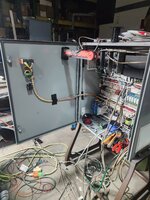
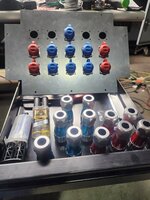
Well I designed the system but it's using a FlashCut CNC controller to provide servo control to clearpath servos. Its almost complete ( still have to wire the disconnects for all the wiring into the control cabinet)
1000007889.jpg

So far as I have been testing the system it appears to be free if EMI problems, but I have not pushed it hard yet... I suppose that I will try it before I add the ground rod. In an install I was involved with 30+ years ago, the system refused to run at all, until a $$$ 20' 1.5" Cu grounding electrode was installed.
 
Last edited:

ripperd

Well-known member
Joined
Jul 2, 2014
Messages
2,048
Location
Twin Cities, MN
2nd A "ground loop" is exactly what I'm describing and probably how the term originated, 2 connected rods driven in the ground, and a return path between them through the ground! Many years ago I was talking to an EE at Montana Power, and he mentioned that in some locations in the state, he had seen ground electrodes less than 100' apart that when connected tougher would light a incandescent light bulb! Now I'm not saying that I have soil conditions that would do that, but it can and does happen.

Interesting story related to this. Circa 2010 I was doing IT for a construction company. We had a project in a power substation and we wanted our job trailer to have internet.

Practically no-one wanted to touch it, except for the local phone company, who could provide us a traditional T1 copper line. It all was reasonable until they spec'd out the protective equipment they'd need for the Ground Potential Rise that could result if one of the substation's high voltage lines hit the ground and all the grounded equipment at one end of the link suddenly had an elevated ground voltage. Turns out protecting a T1 line and associated equipment from tens of thousands of volts is very, very expensive. We ended up finding a point-to-point wireless provider that could do a link. That worked well until the power company paid to have fiber run to the substation for their own needs.
 

wyliesdiesels

Well-known member
Joined
Aug 14, 2012
Messages
20,031
Location
Modesto, CA
Interesting story related to this. Circa 2010 I was doing IT for a construction company. We had a project in a power substation and we wanted our job trailer to have internet.

Practically no-one wanted to touch it, except for the local phone company, who could provide us a traditional T1 copper line. It all was reasonable until they spec'd out the protective equipment they'd need for the Ground Potential Rise that could result if one of the substation's high voltage lines hit the ground and all the grounded equipment at one end of the link suddenly had an elevated ground voltage. Turns out protecting a T1 line and associated equipment from tens of thousands of volts is very, very expensive. We ended up finding a point-to-point wireless provider that could do a link. That worked well until the power company paid to have fiber run to the substation for their own needs.
Yup T1s require a lot of protection in substations
 

u3b3rg33k

Well-known member
Joined
Dec 18, 2017
Messages
4,048
So far as I have been testing the system it appears to be free if EMI problems, but I have not pushed it hard yet... I suppose that I will try it before I add the ground rod. In an install I was involved with 30+ years ago, the system refused to run at all, until a $$$ 20' 1.5" Cu grounding electrode was installed.
I'm hearing "low impedance" here.

Hypertherm has a document on plasma table grounding, they recommend a ground rod.

so they want you to bond the two grounds through the table. if code allows that it's probably fine. their diagram shows star grounding (bus bars).

Yup T1s require a lot of protection in substations
seems it'd be easier to get a T1 nearby and use fiber media converters to give you isolation. depends how far back you go in time i guess.
 

wyliesdiesels

Well-known member
Joined
Aug 14, 2012
Messages
20,031
Location
Modesto, CA
I'm hearing "low impedance" here.


so they want you to bond the two grounds through the table. if code allows that it's probably fine. their diagram shows star grounding (bus bars).


seems it'd be easier to get a T1 nearby and use fiber media converters to give you isolation. depends how far back you go in time i guess.
yes that would be easier
 

RPH

Well-known member
Joined
Dec 17, 2006
Messages
4,190
Location
Michigan Thumb
It was common for the induction power supplies to have a ground rod at the inverter. Even though the machine and inverter was attached to the building ground. Usually when the frequency increased the noise from switching the transistors could cause trouble with other equipment. Then the ground rod was installed. That usually took care of the noise. I suspect that is the issue here.
With all RF tube generators they were mandated to have ground rod at the generator.
 

dave*99

Well-known member
Joined
May 5, 2009
Messages
4,269
Location
Coastal NJ
I found this post interesting in light of this thread. It was posted by someone from Hypertherm.

I can't vouch for its accuracy, but high frequency energy will be impacted by the presence or absence of a local ground rod. So if a system generates lots of HF or radio frequency energy, the grounding conductor back the the service panel likely has enough inductance to present a high impedance to that energy. YMMV


In actuality, ground rods are not generally required by the plasma manufacturer as our plasma cutters are designed to operate under extremely noisy electrical conditions. Older technology air plasma systems as well as the latest technology industrial plasma cutting systems use a high voltage, high frequency starting technology to ionize the plasma gas inside the torch, starting the plasma process.

This high frequency start pulse can easily couple through lower voltage control cables (computer cables, drive system cables, etc.), so earth grounding systems were devised in order to lead stray voltages away from components (cnc controls, drive electronics, even some height control electronics)and direct these voltages to earth through proper design of shielded cables and chassis grounding connections. On industrial high frequency start systems of older design with older technology cnc controllers the grounding schemes were complex and critical in order to keep the start pulse of the plasma from affecting sensitive electronics.

Today's industrial plasma cnc machines all use industrial hardened cnc controls and electronics (no PC's or Laptops) that have filtration, optical isolation as well as digital isolation of virtually all wiring and signals.

Fast forward to the relatively low cost "Entry Level" and "Light Industrial" plasma cnc machines that have been available for the last 12 to 15 years. These machines (for the most part) use standard office computers or laptops as the cnc control (instead of the purpose built industrial CNC's used on industrial machines). At about the same time these PC based machines were being introduced, plasma manufacturers developed a starting technique called "Blowback" that uses a short circuit arc inside the torch to ionize gases (instead of the high frequency).....which certainly minimized electrical noise at the beginning of each start cycle. This, in many cases allows the use of a PC or Laptop, sensitive electronics, a plasma cutter on systems with no complex earth grounding schemes. Many of these machines operate day to day without earth grounding without issues.

Keep in mind that there still is electrical noise generated on todays low cost cnc machines....as Tom said, the plasma cutters are now inverter based. These systems operate by producing Pulse Width Modulated outputs at fixed frequencies and varying on/off duty cycles to control torch cutting current. PWM modulated power can couple to sensitive, low voltage cables, and occasionally does have an effect on the operation of these systems. Just like the plasma, the stepper and servo drivers also produce PWM power to control the speed and torque of the drive motors.....these cables can also produce energy that can couple to sensitive cables within the electronics and PC or Laptop. In many cases, even with a Blowback start plasma there have been incidents involving electrical noise that locked up the PC (Laptop) and disrupted cutting with these machines, and often the fix is to install an earth driven ground and improve the cable layout and overall grounding scheme of the cutting machine components.

Safety? I disagree for the most part with Tom that the Earth ground is there for safety. We (Hypertherm) have over 300,000 hand held plasma cutters operating in the world. None of these units require an earth driven ground. We, of course, do not recommend holding the torch in one hand and the work cable in the other, and we certainly recommend following normal safety procedures, but earth grounding is definitely not a requirement for safety with these systems. I have used hand plasma cutters for over 35 years in virtually every possible environment, including laying on my back on wet ground under a car cutting. Never once even felt a tingle.

My opinion? Every cnc machine should be installed with an earth driven ground rod. I don't care if it is a lathe, a mill, a router or a cnc plasma cutter. Especially vulnerable are cnc machines that use a standard office PC or a laptop as the cnc control. In my experience the earth driven ground is an easy deterrent to future problems.

Jim Colt Hypertherm
 

RPH

Well-known member
Joined
Dec 17, 2006
Messages
4,190
Location
Michigan Thumb
So I'm finally nearing the end of my control system retrofit of my Mastercam 3000 plasma table. With the original control panel Mastercam suggested the table's star ground point be connected to a ground rod installed at the table ( or as close as possible ). This means that the output from the plasma power source via the work ground, and the controller cabinet potentially could have ground loops between the building ground and this new ground rod. Ground rod (possible loop) or potential EMI? I'm going to use a Hypertherm Powermax 125 cutter and every thing should be well shielded ....

Thanks William.....
Sir,
What was the outcome?
 
OP
W

W-Cummins

Well-known member
Joined
Jan 9, 2006
Messages
1,641
Location
Iowa
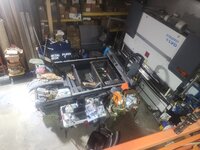
So I have been working on finishing up the conversion, and also setting up the dust collector to run the table. For now I'm going to wait and see how it performs with out the grounding rod and if needed I will add it. I can just drill a hole through the floor and drive the rod down and crimp on a short lead to the star ground on the table. The last time I ran the control and cut some stuff to test it out, it was all laying on a table, and it seemed to run ok.


20250519_043543.jpg

The next time it will run its going to be in the enclosure, with the shielded and grounded control wiring installed.
 

Attachments

  • 20240123_005925.jpg
    20240123_005925.jpg
    648.8 KB · Views: 10
Last edited:
To avoid these ads, REGISTER NOW!
Top Bottom