To avoid these ads, REGISTER NOW!

Grounding

threeputt

Well-known member
Joined
May 18, 2012
Messages
607
Location
Next to a very busy 4 lane
I had asked about this in another post but will make sure in this one.

I remember last year my ground cable was broke and the water pipe was just hanging. I didn't have my power on at the time so in a hurry I put a ground rod in. I just about know it is not over 5 feet. I sure don't remember driving one 8 foot long in the ground plus there are lots of rocks here.

This building has galvanized water pipes run under the slab in all corners .

So being I could not remember if I put the ground rod in deep enough today I dug down to where to water pipe goes under slab and made an extra ground connection.

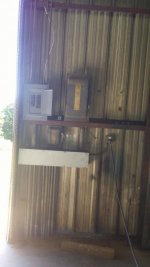
I should be covered for lighting protection ??? with the ground rod and water pipes ? I included a picture after I did this today . This ground cable is coming from inside of meter. Should I have the power company come out and check the connection on the inside of meter box. They have tamper wires on the meter so I sure am not going to look . See what you think. Tom
 

Attachments

  • 0602181542a.jpg
    0602181542a.jpg
    161.4 KB · Views: 104
Last edited:
To avoid these ads, REGISTER NOW!

Stuff

Well-known member
Joined
Aug 31, 2013
Messages
572
If you are using a grounding rod you normally need two to make inspectors happy.
Do you have an UFER connection to your concrete slab?
 

ForceFed70

Well-known member
Joined
Apr 27, 2010
Messages
3,441
Location
BC, Canada
I can't see how good grounding of your electrical system would protect against damage from lightning strikes. Can anyone help me connect the dots?
 

wyliesdiesels

Well-known member
Joined
Aug 14, 2012
Messages
20,073
Location
Modesto, CA
I had asked about this in another post but will make sure in this one.

I remember last year my ground cable was broke and the water pipe was just hanging. I didn't have my power on at the time so in a hurry I put a ground rod in. I just about know it is not over 5 feet. I sure don't remember driving one 8 foot long in the ground plus there are lots of rocks here.

This building has galvanized water pipes run under the slab in all corners .

So being I could not remember if I put the ground rod in deep enough today I dug down to where to water pipe goes under slab and made an extra ground connection.

I should be covered for lighting protection ??? with the ground rod and water pipes ? I included a picture after I did this today . This ground cable is coming from inside of meter. Should I have the power company come out and check the connection on the inside of meter box. They have tamper wires on the meter so I sure am not going to look . See what you think. Tom

Current code is 2 ground rods spaced 6' apart...
 

wyliesdiesels

Well-known member
Joined
Aug 14, 2012
Messages
20,073
Location
Modesto, CA
I can't see how good grounding of your electrical system would protect against damage from lightning strikes. Can anyone help me connect the dots?

Lightning is looking for a path to earth.

Having grounding electrodes tied to the electrical system with a low impedance path to earth directs the lightning tpwards the earth...
 

ForceFed70

Well-known member
Joined
Apr 27, 2010
Messages
3,441
Location
BC, Canada
Lightning is looking for a path to earth.

Having grounding electrodes tied to the electrical system with a low impedance path to earth directs the lightning tpwards the earth...

Totally understand that, but still don't see how a good path to ground protects from damage. Lightning only goes to earth. A counter argument could be made that providing a good path to ground/earth would attract lightning as the most desirable path.
 
OP
T

threeputt

Well-known member
Joined
May 18, 2012
Messages
607
Location
Next to a very busy 4 lane
All I did was connect ground wire coming from inside meter to the under slab water pipe that was used when this building was built in 1961. Like I had mentioned I found it broke and just hanging last year.


The only difference is I had to install the ground clam lower down because the pipe they had it on had broke and the 90 elbow would not turn for hitting rock so I just connected it to the 3/4 inch pipe heading under the slab.

I can remove the clamp to the water pipe and attempt to drive another ground rod down 8 feet from where I put the ground rod in last fall. I just know I didn't get the rod I put in then very deep. Now that I think about it what I did yesterday was sort of dumb. The galvanized pipe I connected the ground clamp to has a coating on it to protect it under ground .

When I was working in the building I had my doubts about how this this was done in 1961. I also have always thought what if lighting were to hit ? Would it blow my concrete out of building because it was always grounded to the metal pipes under slab. Never happened but I doubt lighting has ever hit this building.


I do understand grounding electrodes rods main function is to ground lightning. The metal conduit under the 6 inch slab with rebar is my ground to clear ground faults.

I am in the process of getting this building ready to maybe rent so I want to make things safe.

I think I will remove the copper wire to water pipe it today and drive another ground rod in 8 foot from where I put the first one last year. No big deal except I am not sure I can get it in the entire 8 foot without hitting rock. I will try. Tom
 
Last edited:

Stuff

Well-known member
Joined
Aug 31, 2013
Messages
572
Totally understand that, but still don't see how a good path to ground protects from damage. Lightning only goes to earth. A counter argument could be made that providing a good path to ground/earth would attract lightning as the most desirable path.

If you don't have a good path to ground then lightning will take a bad path to ground. That usually includes the building structure which has a tendency to catch fire.

Lightning actually doesn't care much if you have a good ground or not. Notice how trees get struck all the time and wood is a decent insulator. No matter what you do a structure conducts enough to give lightning a ground target.
 

ForceFed70

Well-known member
Joined
Apr 27, 2010
Messages
3,441
Location
BC, Canada
If you don't have a good path to ground then lightning will take a bad path to ground. That usually includes the building structure which has a tendency to catch fire.

Lightning actually doesn't care much if you have a good ground or not. Notice how trees get struck all the time and wood is a decent insulator. No matter what you do a structure conducts enough to give lightning a ground target.

So you're saying that in a lightning strike situation it's better to have the current travel through the electrical system vs through other building materials. I'm a little skeptical here because 14ga romex in the attic area will also burn if it takes the full brunt of a strike and that energy still needs to travel through some building materials to get there. There may be some benefit here, but it doesn't seem significant.

Agree with why trees are struck. As is often said - electricity takes the path of least resistance. Trees are struck because they're a better conductor than free air especially when wet with rainfall.
 

sberry

Banned
Joined
Jun 18, 2005
Messages
35,747
Location
Brethren, Michigan
Back to post 7. The pipe is a good electrode, coating is irrelevant but it is NOT to carry faults. It's function is lightening I and to reduce some step potentials between everything else and the ground you are standing on. A wire back to neutral at service main is the only way to clear a fault. A gfci will interupt it, not sure it would be classified the same.
 
OP
T

threeputt

Well-known member
Joined
May 18, 2012
Messages
607
Location
Next to a very busy 4 lane
sberry, the only problem I seem with connecting ground wire to water pipes is they are under ground and I would never know if the rusted out and broke lose .

I just removed the ground rod today because I knew it was not long enough. Sure enough I was right. It was only in the ground 3 and 1/2 foot :(

I installed a new 8 foot rod today with another one 6 foot from it. Made this 70 year old sweat but I got it. A backhoe would have been nice :)

As of now I just left the water pipes out of the picture. There would be no way I would know if it rusted into because it is buried underground 18 inches. That is what happened to me before. Now things are in sight .

As for clearing the ground faults. My conduit does that. The building has a 6 inch slab with lots of rebar in it. From what I have been told that is ok.
 

wyliesdiesels

Well-known member
Joined
Aug 14, 2012
Messages
20,073
Location
Modesto, CA
sberry, the only problem I seem with connecting ground wire to water pipes is they are under ground and I would never know if the rusted out and broke lose .

I just removed the ground rod today because I knew it was not long enough. Sure enough I was right. It was only in the ground 3 and 1/2 foot :(

I installed a new 8 foot rod today with another one 6 foot from it. Made this 70 year old sweat but I got it. A backhoe would have been nice :)

As of now I just left the water pipes out of the picture. There would be no way I would know if it rusted into because it is buried underground 18 inches. That is what happened to me before. Now things are in sight .

As for clearing the ground faults. My conduit does that. The building has a 6 inch slab with lots of rebar in it. From what I have been told that is ok.

Only if the conduit is metal all the way between panels AND is properly bonded.

Rebar and grounding electrodes have nothing to do with clearing ground faults.

They arent equipment grounding conductors...
 

sberry

Banned
Joined
Jun 18, 2005
Messages
35,747
Location
Brethren, Michigan
Water pipe is sposed to be the primary ground, a stel well casing is the best. Ground rods are often called suplemental if other means are present.
As for the lightening going thru building wiring,,, this is what it is designed to prevent. By proving a better path with a larger wire at service the intent is to reduce the "searching".
The neighbors got a hit. It blew up an old well. There was a service at a pole. Ground rod rusted off. The insurance and owners said,, it hit the well. It did not. It hit a metal sided building that was ungrounded except for a circuit connected thru an outdoor outlets from mobile home. They said,, it hit the well and this. It was reverse, hit the tin, want fromn there, chased aound the house, finally found it's way out to the main pole, then thru the wire feeding the pump downhole. End result. Ideally the detatched building would have had a rod and it should have electrode at service was broke and really ideally should be connected from main service to the steel well casing with an 8 or better. Intead it went to sell pump. Juiced everything on one circuit in the house. Better electrode in proper spot would have improved the odds.
 
Last edited:

sberry

Banned
Joined
Jun 18, 2005
Messages
35,747
Location
Brethren, Michigan
Back in the day strikes came thru poor phone service and hit grounded computer modems. What does a surge supressor do,,, shunts it to ground. One a power strip one for branch circuits it stunts from tiny phone wires to equipment grounds, on a while panel one it's connected to ground bar at service.
 
To avoid these ads, REGISTER NOW!
OP
T

threeputt

Well-known member
Joined
May 18, 2012
Messages
607
Location
Next to a very busy 4 lane
So I should have left it grounded to the water pipe no longer being used that is 18 inches under the ground ?
I am confused. I thought installing two 8 foot ground rods 6 feet apart would be what I would want. ?
 

sberry

Banned
Joined
Jun 18, 2005
Messages
35,747
Location
Brethren, Michigan
This is obviously a little **** shoot and playing the odds as lightning isn't totally predictable but the code says if there is buried pipe for more than 10 ft leaves the building that is the primary electrode. Rods suplemental should this become interupted.
 
Last edited:
OP
T

threeputt

Well-known member
Joined
May 18, 2012
Messages
607
Location
Next to a very busy 4 lane
I assume you meant buried pipe ?? if not then what is hurried pipe ?
code says if there is hurried pipe for more than 10 ft leaves the building that is the primary electrode.

Again I am confused.

This is all I was asking and I apologize if I got it wrong.

My ground wire that comes out of my meter outside of building was detached. It was once connected to a water pipe .

I had trouble connecting it back because it was broke from rust but I was able to do it .

I just thought being it would be under ground and no longer visible and to make sure it stayed connected I would just install the ground rods. Did I do wrong ?

These rods I installed seems to be just for lighting anyway . Something that has never happened to this building in 57 years is being hit by lightning. Not saying it won't happen and if it did I need a little protection even though nothing would help a direct hit.
 
Last edited:

Copymutt

Well-known member
Joined
Sep 3, 2016
Messages
3,407
Location
Colorado
In any of the discussed theories keep those ground rod soils damp. Dried out soil doesn't **** lightning away from your other circuits.
Jim
 

sberry

Banned
Joined
Jun 18, 2005
Messages
35,747
Location
Brethren, Michigan
Yes, burried pipe. On the phone. Yes to wet rods. I always try to get them in eve trip etc. I have rod deep in loading dock footer too along with heavy resteel. I have steel building with a super utter and electrode in water table, had to dewater to pour footer.
 
OP
T

threeputt

Well-known member
Joined
May 18, 2012
Messages
607
Location
Next to a very busy 4 lane
Nobody has really told me if I can connect the wire coming from inside of power meter that was connected to my water pipe before it broke to a ground rod drove 8 foot in the ground next to my building.

Would it help to also connect it to my water pipe also that go under the concrete slab for extra protection? I have a little room to still connect it to the pipe and run a copper wire back to ground rod. Would this be a waste of my time. I am just learning about all this.

I get a little confused thinking of both grounding and bonding. Maybe someone can tell me in easy form what the difference is.

I was told I am grounded by my metal conduit. The more I think about all this the more confused I get.
 
Last edited:

sberry

Banned
Joined
Jun 18, 2005
Messages
35,747
Location
Brethren, Michigan
A circuit can be grounded thru a metal conduit. A service may be grounded to a buried metal pipe. A metal pipe may need to be grounded or bonded to a service. These are really 3 different things.
So,, different words, grounded with it, grounded to it and grounding it to. Ha. Bonding would be grounding it to,,, in case it would become energized, this would be water or gas line, duct work, anything internal in the structure someone could come in contact with.
Bonding may also be described as being all hooked together so everything is at the same potential.
There is no difference between any 2 things due to them being connected together by a wire.
 
Last edited:

75gmck25

Well-known member
Joined
Jul 21, 2014
Messages
1,328
Location
Alexandria, VA
I ran across this info on this site, and I think the two quotes provide a good explanation. http://www.adamselectric.coop/wp-content/uploads/2015/02/Grounding-Bonding.pdf

"a typical electrical installation will require the electrician to connect the house’s wiring to the earth. This practice is called “grounding” and it is done to limit the voltage imposed by lightning, line surges, or unintentional contact with higher-voltage lines and to stabilize the voltage to earth during normal operation as documented by 250.4(A)(1) of the Code."

" The Code defines “bonded” or “bonding” as connected (connecting) to establish electrical continuity and conductivity"

Where the confusion comes is that when we electrically "bond" a piece of equipment to the grounded house wiring we refer to it as "grounding" the equipment, not bonding the equipment to ground.

My understanding of the above references is that a house is only grounded once (water pipe, ground rods, etc.), and then all electrical items are bonded to that house ground. Does this sound right?

Bruce
 

bczygan

Well-known member
Joined
Nov 4, 2009
Messages
22,002
Location
DETROIT! Arsenal of Scrappers
I ran across this info on this site, and I think the two quotes provide a good explanation. http://www.adamselectric.coop/wp-content/uploads/2015/02/Grounding-Bonding.pdf

"a typical electrical installation will require the electrician to connect the house’s wiring to the earth. This practice is called “grounding” and it is done to limit the voltage imposed by lightning, line surges, or unintentional contact with higher-voltage lines and to stabilize the voltage to earth during normal operation as documented by 250.4(A)(1) of the Code."

" The Code defines “bonded” or “bonding” as connected (connecting) to establish electrical continuity and conductivity"

Where the confusion comes is that when we electrically "bond" a piece of equipment to the grounded house wiring we refer to it as "grounding" the equipment, not bonding the equipment to ground.

My understanding of the above references is that a house is only grounded once (water pipe, ground rods, etc.), and then all electrical items are bonded to that house ground. Does this sound right?

Bruce

Unless there is a detached building with a sub, fed from the house???

Bill
 

sberry

Banned
Joined
Jun 18, 2005
Messages
35,747
Location
Brethren, Michigan
On a detached sub everything is tied to the 4th wire which lands on service neutral main. All the grounds get bonded to N at that point. On 4 wire all the neutrals are insulated. All the equipment is connected via ground wire to the service it came from. Main, sub, same, including the boxes in both.
 

sberry

Banned
Joined
Jun 18, 2005
Messages
35,747
Location
Brethren, Michigan
In old 3 wire bonded multi voltage applinces, like a dryer a metal gas line could actually be a pathway for neutral currents and fault returns. With 4 wire all the operating currents on neutrals are now insulated all the way back to main. No chance for this current to stray.
 
OP
T

threeputt

Well-known member
Joined
May 18, 2012
Messages
607
Location
Next to a very busy 4 lane
I installed the wire coming out of meter to a ground rod and my old water pipes under the concrete slab. That's how it was before the water pipe broke.
Like sberry suggested

A circuit can be grounded thru a metal conduit. A service may be grounded to a buried metal pipe. That's how mine is.
 

Attachments

  • 0604181506.jpg
    0604181506.jpg
    67.1 KB · Views: 15
  • 0604181507.jpg
    0604181507.jpg
    50.8 KB · Views: 13
Last edited:

tapered-pin

Well-known member
Joined
Sep 12, 2017
Messages
277
Location
Alpharetta, GA
On a detached sub everything is tied to the 4th wire which lands on service neutral main. All the grounds get bonded to N at that point. On 4 wire all the neutrals are insulated. All the equipment is connected via ground wire to the service it came from. Main, sub, same, including the boxes in both.
Detached requires electrodes as well.

But fault current still travels on EGC back to main

I was under the impression that any SUB which is not within the same dwelling as the main/entrance will require it's own grounding electrode (if in the same dwelling, 4 wire feeder is "now required" and has always been preferred).
?


if OP connects his ground to his water pipe, it's still only as well grounded as it was "before" but it's not as well grounded as IS NOW required by code.. (?)
 
To avoid these ads, REGISTER NOW!
Top Bottom