Any tool of mine that needs the grips replaced now gets double wall adhesive shrink tubing. I tried plasti-dip on a couple tools and it was just too much of a hassle for my liking. It would probably work better if you wanted to do a bunch of tools at a time. Multiple coats were always required, the smell was strong, they had surface imperfections no matter how careful I was, it left a porous flat sheen surface that always looked dirty, etc. My plasti-dip container also dried out on its' own (within 1-2 months) as soon as more than 20% of the dip was gone, even though the lid was closed the whole time. As a result, I just got tired of hassling with it.
I have a pair of Proto 11" high leverage diagonal cutters that came from the factory with very thin semi-translucent red handle dip (I could see through it) for some reason. Instead of exchanging them I added a second layer of black adhesive heat shrink to the handles. They are now nice and comfortable during use and the heat shrink is holding up very well. If you get double wall thickness tubing with a 3 or 4 to 1 shrink ratio, and then buy tubing that is larger than needed (just to fit over the handles), you can get nice thick handles with only one layer of heat shrink because the more it shrinks down the thicker the wall of the tubing becomes. Having the adhesive inside also eliminates slipping and/or liquid penetration issues. I left mine short by about a half inch at the handle ends and that works just fine. If you want to try it out for yourself, cut your pieces a little bit long because the heat shrink will shorten some as it shrinks.
I'm thinking of also getting a small assortment of colored adhesive heat shrink tubing so I can cut small rings and put them on all my custom modified and/or specialty pliers to more easily identify them visually from my regular pliers in my plier drawers.
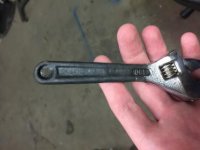
I'm not a big fan of coated handles in general on my most used tools. I find them to be too slippery when my hands are greasy or wet, or else they are a hassle to keep clean (textured Knipex grips). I can tolerate slipperiness related to my chrome ratchet handles, but not for my pliers. I now only leave the original dipped handles on my lesser used hand tools, and/or on any tools that I never use around grease or liquids. I also leave the dipped handles intact if the bare handles would end up too thin to be comfortable during use. Almost everything else gets stripped bare and modified. After stripping them bare I smooth the forging seams out with a flap wheel on my angle grinder, and then I add a little bit of DIY surface cross hatching to provide good grip under all conditions without tearing or catching nitrile gloves. I make the cross hatch texture by simply scraping across the metal surface with the side of a 14tpi bimetal hacksaw blade. When finished, I give the metal a quick coating of rust preventative and that's it. Good to go for a lifetime and it makes the tools basically bulletproof. I no longer need to hassle with cracking handle ends, handles that want to slip off the tool, melting handles around torches or welders or soldering irons, no slippery handles when wet, no more bulky handles in tight work areas, its' easy to instantly identify my tools when working with others, etc.
Here is a picture of my Proto long diagonal cutters with shrink handles, as well as a couple pictures of some of my bare handled tools.


 )
)