To avoid these ads, REGISTER NOW!

Handplane iron sharpening

Joined
Nov 17, 2023
Messages
21
Location
Eastern Maine
Anyone care to share their preferred method of sharpening their plane irons?

I have a pair of Stanley Bailey planes (type 10, 13) I've been using but I can't seem to get the irons dialed-in well enough to handle hardwoods. They both shave pine paper thin like butter, but having some issues with ash. The No. 4 is less fussy than the No. 5, but still problematic. From all that I've read/watched from Sellers to Cosman and everyone in between, I'm led to believe I'm not just getting the sharpness I need.

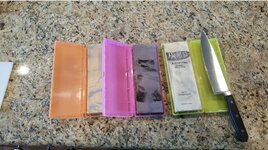
I've got a couple stones I use for the kitchen, which I also used to restore the irons to begin with. But I feel like if Sellers can just bust out sandpaper on glass, then proceed to shave oak with his eyes closed...
 
To avoid these ads, REGISTER NOW!

cgrutt

Well-known member
Joined
Mar 4, 2016
Messages
8,259
Flatten back on a stone before sharpening bevel. Run through all the same grits on back as you would bevel. Closer to mirror finish the better. Don't need to do entire back about 1/2" to bevel is fine. This will ensure bevel will make a perfectly straight line. Sharpen bevel paying attention to maintaining a consistent angle. Can put a small micro bevel on edge after it's sharp. Same for chisels.
 

Dave455

Well-known member
Joined
Mar 19, 2013
Messages
5,805
Location
Sussex, England
I use regular Norton oilstones in 3 grades, combined with (at present) a Veritas honing guide.

Hardwoods can be a problem, and your problem might be the pitch of the plane.

Traditionally, these have tended to be a bit of a compromise (45 degrees) with low angles sometimes performing better on softwoods.

But for hardwoods you might need a bigger angle - historically 50 degrees (York pitch) was considered standard, with 55 and even 60 degrees available.

Veritas offer their custom planes with frogs up to 55 degrees.
 
OP
T
Joined
Nov 17, 2023
Messages
21
Location
Eastern Maine
...Run through all the same grits on back as you would bevel. Closer to mirror finish the better....
Yeah I didn't quite run though all the same on the back. Thanks, I'll try this.

...Hardwoods can be a problem, and your problem might be the pitch of the plane.

Traditionally, these have tended to be a bit of a compromise (45 degrees) with low angles sometimes performing better on softwoods.

But for hardwoods you might need a bigger angle - historically 50 degrees (York pitch) was considered standard, with 55 and even 60 degrees available....
I've heard of ways to get a taller angle via back beveling. But I imagine it's not as stable as a dedicated frog? I have a couple other irons I can try this with. Thanks.
 
OP
T
Joined
Nov 17, 2023
Messages
21
Location
Eastern Maine
Are you using a honing guide? Any slight angle difference can have huge adverse affects on edge sharpness. An angle guide helps too.
Honing Guide
Angle Guide
Yes. Honing guide is in use, not a Veritas but none the less. And I've one of the stop-block type angle jigs for consistency. These alone have unexpectedly and surprisingly recently turned the chisel into my favorite tool.
 

flyingblind

Well-known member
Joined
Aug 16, 2011
Messages
624
Location
Washington
Yes. Honing guide is in use, not a Veritas but none the less. And I've one of the stop-block type angle jigs for consistency. These alone have unexpectedly and surprisingly recently turned the chisel into my favorite tool.
If the blade isn't holding an edge or won't sharpen it could be the metal itself. I have read in FWW that many older blades are just High carbon and a better blade steel can help. New blades are available from Lee Valley but are pricy. But D2 is available, you will need to polish them even when new. I use sandpaper on glass with mineral oil up to 1000 and then strop with green and it works for me.

Found the article
 
Last edited:

RTM

Well-known member
Joined
May 13, 2019
Messages
13,145
Location
SF Bay Area
Once I get them sharp, I use Scary Sharp (sandpaper up to 2000 grit on glass), with a Eclipse type blade holder, tho Millers Falls, Veritas, and many others hold them sturdy enough.

When starting from scratch, or repairing a fouled up job, I use the Veritas Mk II powered disk, same idea but powered Scary Sharp.

The thing I would think about is: are you really getting them sharp? I use a Sharpie as my Dykem, and mark up both back and front, and then use a magnifier to look at the bevel, to make sure I am removing the “rounded dull edge”. As you zoom in closer and closer, the point should become rounder, which you need to make a point. I look at the edge from the side of the blade, easiest to see rounding. A magnifying glass is ok, but I keep a 6x magnifier for tough cases.

Usually higher angles are used to fight tear out, not to get it to cut, I think it’s just a dull edge right now.

I would not rush to back bevel. I save that for irons with pitted surfaces, where the blade back surface is sad, it makes them more usable in the future. Swap them in for tear out issues.

Polishing the back as well as the bevel is always a good idea.
 

strutaeng

Well-known member
Joined
Dec 12, 2011
Messages
2,269
Location
Dallas, TX
What is the method you use to hone them? What grit?

I started with a guide but found it too cumbersome and too slow. I prefer to do it by hand.

I've got a Northon water stone, I forget the grit. I also use wet sandpaper from the local parts store. Simple #600, #1000, #1500 and #2000 gets it mirror finished. Unless you have to grind to re-establish the angle, it should go rather fast.
 

alinc100

Well-known member
Joined
May 26, 2013
Messages
3,027
Location
Dearborn,MI
I use Shapton waterstones up to 8000 grit and a Lee Valley honing guide. Once the bevels are established and the back is flat ,honing goes quick and the LV guide allows for a micro-bevel. Alternatively at work(since the Shaptons are too pricey,and I didn't handplane alot at work) I bought water soluble diamond paste and charged MDF plates with the grits. Hardest part was getting the technique of dragging the blades backwards so they didn't dig into mdf,and not getting the guide wheel into the paste/contaminating finer grits. But it was a cheap,relatively quick method to hone/touch up. And my source of mdf was kinda unlimited. http://www.amazon.com/dp/B08F56VW9M/?tag=atomicindus08-20
 

Nutria

Well-known member
Joined
Jun 23, 2015
Messages
798
Location
Eastern Sierra
I would not rush to back bevel.
I agree, though lots of people seem to love "the ruler trick." I've preferred to just get the back polished and concentrate on the front bevel.

I generally use a honing guide on waterstones, but I use a sandpaper series on some or all of certain projects. I have a Tormek that I love for quick turnaround on turning tools, but I think that the waterstones or sandpaper create a better edge for plane irons or chisels.
 
OP
T
Joined
Nov 17, 2023
Messages
21
Location
Eastern Maine
The thing I would think about is: are you really getting them sharp? I use a Sharpie ...
I'm assuming that this is my issue.

Usually higher angles are used to fight tear out, not to get it to cut,
So I guess this is also what I'm not able to discern. At times it almost seems like I'm just scraping. Other times, I get tear out.

What is the method you use to hone them? What grit?
Using a Rockler honing guide, I've been starting with 600 grit paper on a piece of quartz, to a 1000 waterstone (flattened with a 400 diamond plate). Finishing off on a leather strop with green compound. I know it's not ideal, but I was just trying to repurpose some of my kitchen kit. And as I'm typing this, I'm realizing it's likely insufficient for working hardwood with handplanes.
 
To avoid these ads, REGISTER NOW!
OP
T
Joined
Nov 17, 2023
Messages
21
Location
Eastern Maine
Were your planes (or at least irons) new? If not, you would probably need to start with coarser grits.
Irons were not new. I'm not 100% certain they were original to the planes, but if not, likely piecemealed from planes give or take a few years (1900-1930). I know it's not saying much, but they at least do shave pine as good as any youtube vid or guide otherwise, so I didn't think they were in horrible condition. How coarse would you recommend?
 

Nutria

Well-known member
Joined
Jun 23, 2015
Messages
798
Location
Eastern Sierra
How coarse would you recommend?
For me it's just however coarse I need to go to get nicks or other damage removed from the edge or pits from the back. I might have to go as low as 80-- I hate to start too high and go back. Or if things are really boogered up, straight to the dry grinder to get a clean start. But it sounds like yours were in much better shape when you bought them, so that's great.
 

Pexto

Well-known member
Joined
May 5, 2018
Messages
638
...
Using a Rockler honing guide, I've been starting with 600 grit paper on a piece of quartz, to a 1000 waterstone (flattened with a 400 diamond plate). Finishing off on a leather strop with green compound. I know it's not ideal, but I was just trying to repurpose some of my kitchen kit. And as I'm typing this, I'm realizing it's likely insufficient for working hardwood with handplanes.

Unless the edge is already well-formed, 600 grit might be too fine to start with. Suggestion: mark the edge with a Sharpie (like RTM proposed, lots of good info in his post), take maybe 10 passes on the 600, and look at the edge carefully under magnification (I like 15X minimum but my eyes aren't great). If you see any traces of Sharpie remaining, or deep scratches, you probably need to drop back to 220 or 400 to form the edge properly.

Once you get the edge formed properly (two surfaces that meet in a line; that line is the cutting edge), then move up through the grits to polish that edge. I'd recommend going higher than 1000 - I like my 6000 grit waterstone for final polish.

Also, I'm not a fan of stropping plane irons. Some folks have success with stropping, but for me it just rounds the edge and messes up the cutting angle. I strop carving chisels and knives, because it is fast and easy, but I don't like to strop my bench chisels and plane irons, where I really don't want a rounded edge.
 

RTM

Well-known member
Joined
May 13, 2019
Messages
13,145
Location
SF Bay Area
Actually, if you want to know if your blade is sharp, use it out of the plane, like a chisel, and try to pare end grain pine.

Paring is hand driven use of a chisel in my world, bevel up, and try to take a translucent shaving.

I don’t own a strop, but friends recommend one mounted on a stiff surface, (not a flexible one like old barbers had hanging on the chair) for plane blades and chisels.
 

flyingblind

Well-known member
Joined
Aug 16, 2011
Messages
624
Location
Washington
Low angle planes are designed to cut end grain, and they are best used on plywood and man made materials. FWW Issue 119 July-August 1996.
 
OP
T
Joined
Nov 17, 2023
Messages
21
Location
Eastern Maine
Actually, if you want to know if your blade is sharp, use it out of the plane, like a chisel, and try to pare end grain pine.
I'll try this and come up with a plan accordingly. It works in a 'shooting board' type set-up, but I imagine out-of-the-plane usage isolates the effectiveness of the edge and it only.

Unless the edge is already well-formed, 600 grit might be too fine to start with. Suggestion: mark the edge with a Sharpie (like RTM proposed, lots of good info in his post)
I believe my original restoration process started with around 200 grit or so, but being my first attempt at such a project, I was just trying to get the planes to an overall usable state. I did mark with Sharpie, but only to verify the edge was square and flat to the naked eye. I was lacking the attention to detail of verifying elimination of deeper scratches under magnification and was progressing solely based on the presence of burrs. So, I'll definitely add this step.

I'd recommend going higher than 1000 - I like my 6000 grit waterstone for final polish.
I think my original plan (for kitchen knives) was to go up to a 3000-5000 grit waterstone. But I ended up putting it on hold after seeing how well just 1000 grit did to maintain the edge our every day chef's knife--nearly sharper than it was brand new (although I know that's not the highest standard). I suppose now's a good time to add another stone.

I don’t own a strop, but friends recommend one mounted on a stiff surface, (not a flexible one like old barbers had hanging on the chair) for plane blades and chisels.
I have a paddle type. Basically, leather backed by a 1" strip of ash, a tad bit larger than the size of an average waterstone. Again, this was primarily for the kitchen kit, but I figured the overall sharpening concept was similar for plane irons and chisels. And it seemed to have worked wonders for my bargain barn finds to work with softwoods, but obviously not quite enough for hardwoods.

I'll see what I can do and report back. Thanks, everyone, for the input.
 

PossumDog

Well-known member
Joined
Jan 21, 2012
Messages
58
Location
SC
I currently have a grinder and a series of three diamond stones. The grinder and the coarsest stone are rarely necessary, so I mostly use the medium and fine stones. Prior to this I used sandpaper and glass.

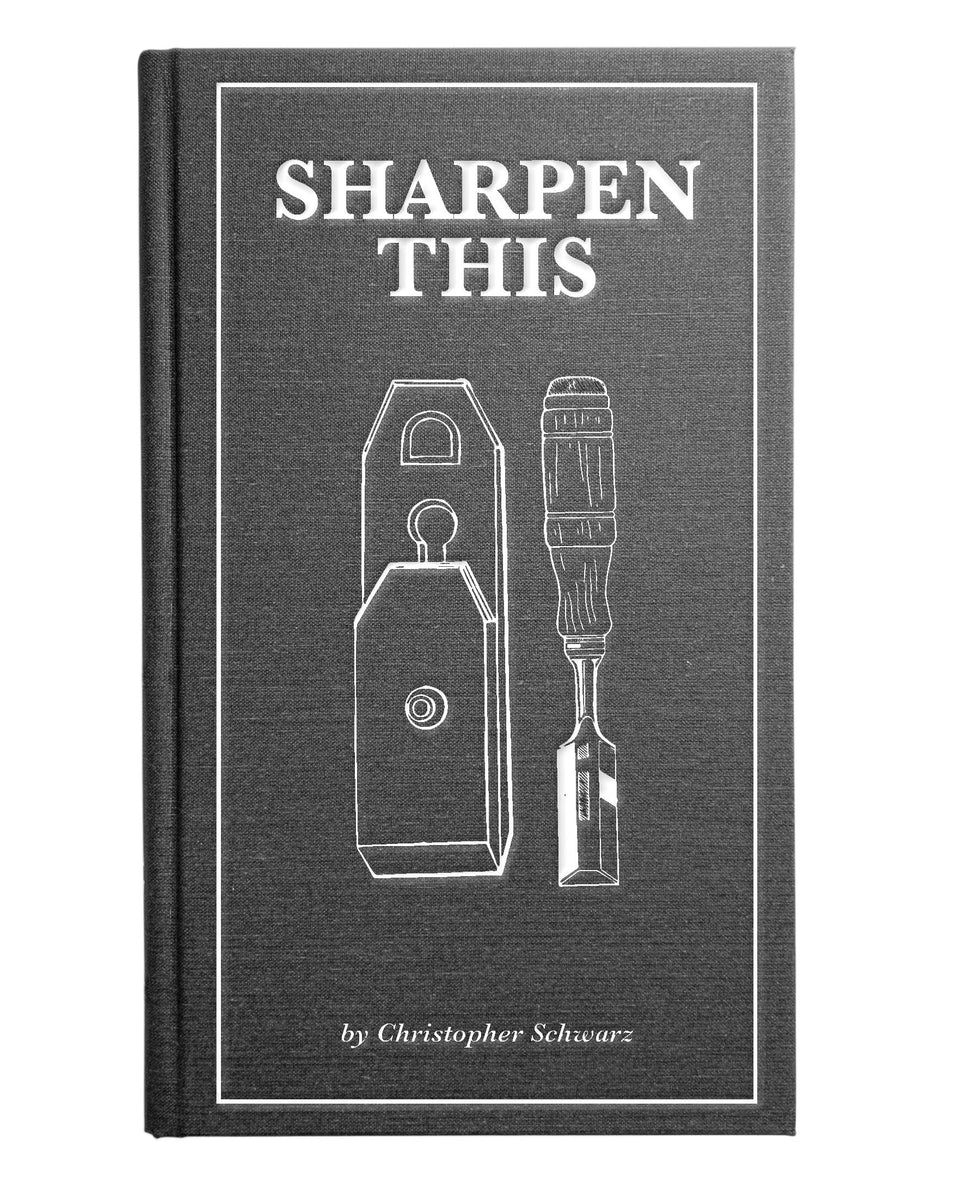
I read Chris Schwarz guide and will probably adapt most of the recommendations. Convinced me to use a guide and the angle setters. Kind of a reminder to keep things simple and what is and isn't worth worrying about:

 
To avoid these ads, REGISTER NOW!
Top Bottom