To avoid these ads, REGISTER NOW!

HDMI and Electro Static Discharge?

mpire

Well-known member
Joined
Nov 21, 2008
Messages
1,856
Location
Florida
I am blowing out my HDMI ports left and right.

This is happening only on the long run 50 foot HDMI cables.

Last weekend we had a bit of lighting, which is normal for Florida.

I lost the HDMI ports in my Security DVR, my Surround Sound Reciever, my Projector, and my HDMI splitter.

Everything else is fine, the other ports work, and the HDMI ports that have short run 6 foot wires were not affected.

Everything was off.

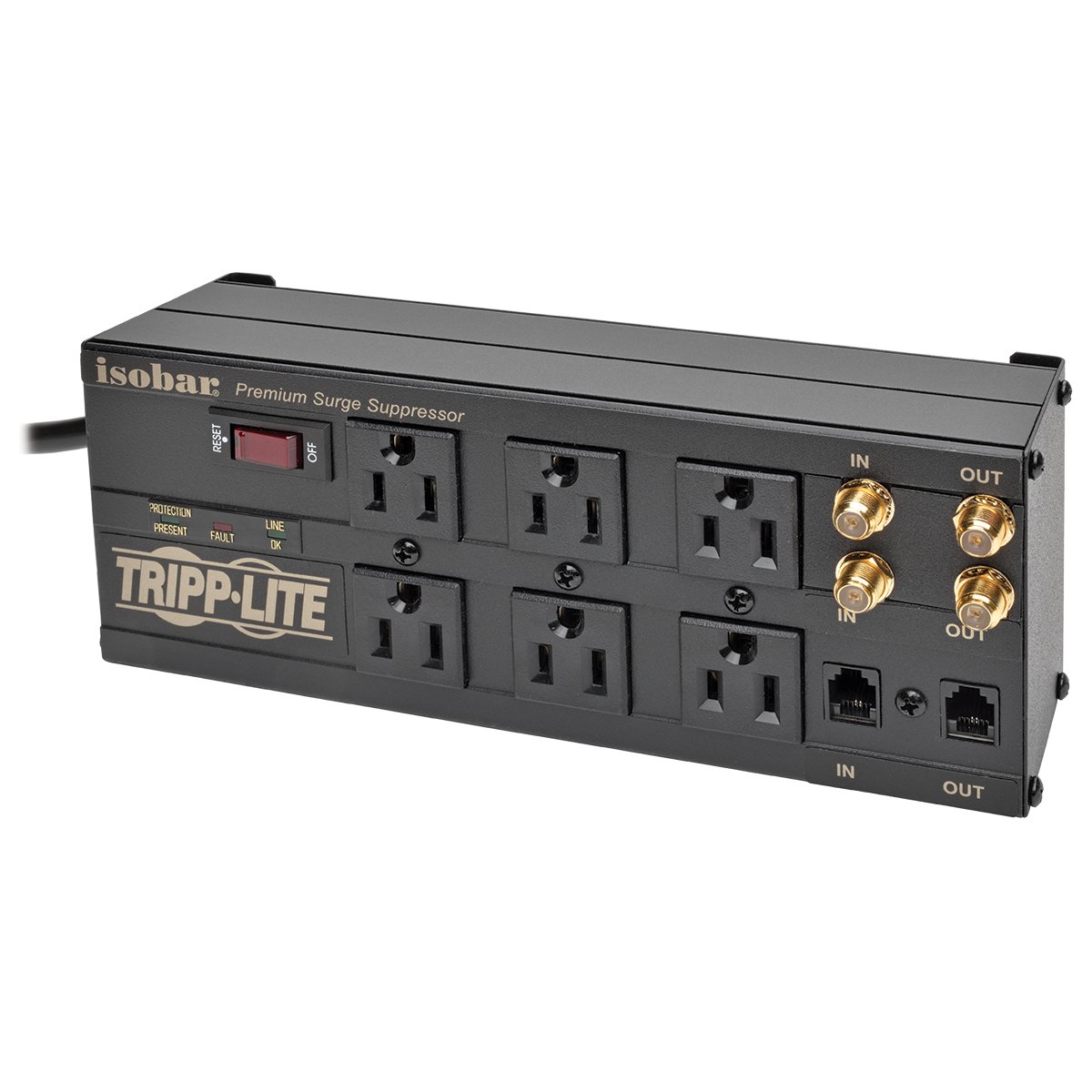
I have tripp lite ISOBAR Ultra surge protectors on the cable/power going into everything. I have cable broadband Lightning surge protectors connected directly to the house ground rod outside to protect the incoming cable wires.

I also have a belkin PureAV line conditioner after the surge protector to keep the power clean and a sinewave UPS on the projector power.

This was all implemented and double checked after I lost the first receiver and projector.

So it just happened again, so I am thinking that its got something to do with static electricity as I never got a direct hit or had any power fluctuations.

These HDMI ports must be extremely sensitive.

Anyone have some ideas on how to prevent this?

Maybe recommend some way to protect me?

Think these little HDMI Surge Protectors are anything but junk?

https://www.amazon.com/dp/B00YFSPXP0/?tag=atomicindus08-20

This is not only a huge expense, but also a giant hassle.
 
Last edited:
To avoid these ads, REGISTER NOW!

CoogarXR

Well-known member
Joined
Jan 11, 2016
Messages
6,856
Location
Ohio
In my experience, lightning comes in through the phone line and cable more than anything. I once lost an entire room of expensive high-speed serial printers because lightning came in through the cable modem, jumped to the ethernet, blew the network switch, blew all ports on the serial concentrator and every serial device connected. I replaced it all thinking it was a freak thing. Well, it happened again a year later! Then I put lightning suppressors on the incoming cable, and the outgoing ethernet, and opto-isolators on all serial devices. Never happened again.

Same with my current house, I had a lightning strike come in over the cable modem and blow the router and my magic jack.

So if you have a cable modem, I would start with suppressors on the incoming cable and the outgoing ethernet from it. If you really want to spend cash, they make opto-isolators for HDMI, but they are really expensive.
 

captaindiode

Well-known member
Joined
Jul 8, 2013
Messages
371
Location
NC
Search for in-line hdmi surge protectors. You may need one at each end of the long hdmi cables. I had a similar problem with my garage door openers getting blown out. The surge was being picked up on the optical sensor wires. I added surge protectors to the wires going to them and havent had a problem since. I have also seen problems on long cat5 runs, especially between buildings (even underground). I also had a radio blown out that was sitting on a window stool, and it was unpluged from the wall at the time.
 
OP
M

mpire

Well-known member
Joined
Nov 21, 2008
Messages
1,856
Location
Florida
In my experience, lightning comes in through the phone line and cable more than anything...

Same with my current house, I had a lightning strike come in over the cable modem and blow the router and my magic jack.

So if you have a cable modem, I would start with suppressors on the incoming cable and the outgoing ethernet from it. If you really want to spend cash, they make opto-isolators for HDMI, but they are really expensive.

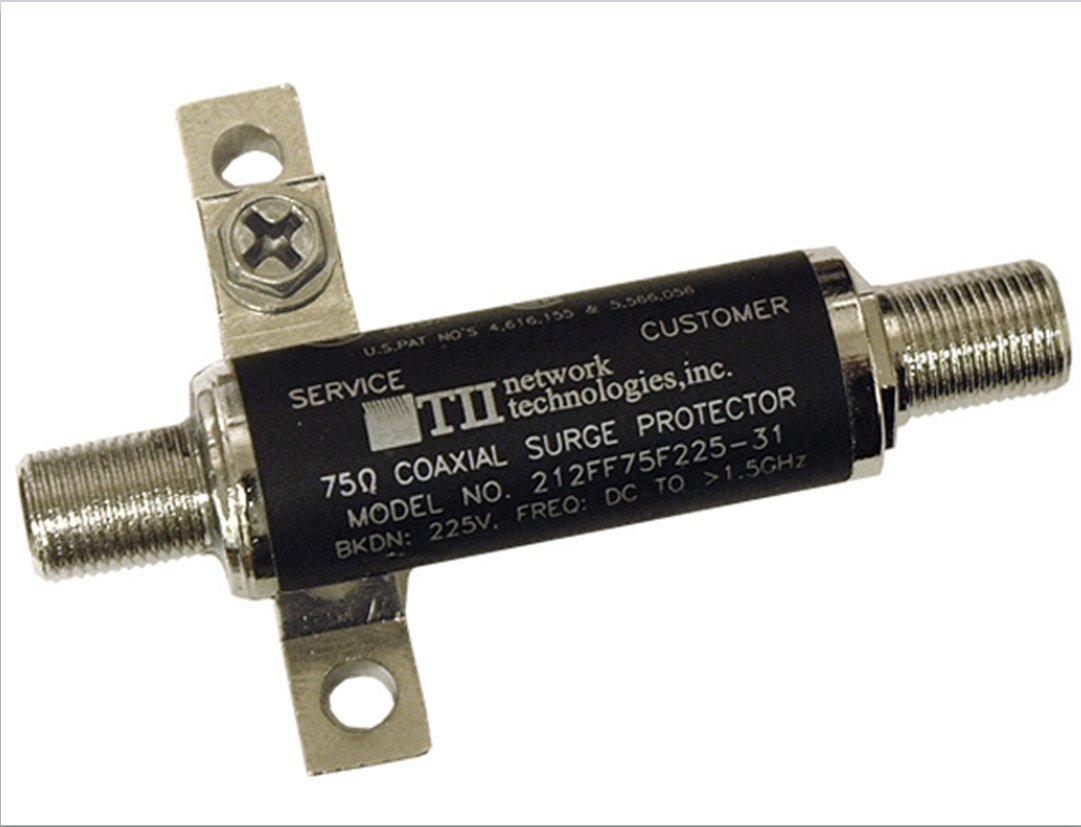
I have coaxial surge protectors on the coax lines before they come into the house:

61Jd5Q8hvwL._SL1081_.jpg


Plus I have the coax protection built into the Tripp Lite surge bar:

61ti5avcGlL._SL1200_.jpg


I am pretty sure that its the 50 foot HDMI cables that are picking up static electricity during lightning storms. Its not a direct strike. Everything except the HDMI ports work just fine. I can even swap the HDMI cable to the empty HDMI port and it works, however this doesn't seem to help me.

The projector is at the back of the room, other than wireless HDMI for $300, or these HDMI over fiber channel I am not sure what else I can do.
 
To avoid these ads, REGISTER NOW!

westom

Well-known member
Joined
Aug 16, 2009
Messages
221
I am pretty sure that its the 50 foot HDMI cables that are picking up static electricity during lightning storms. Its not a direct strike. Everything except the HDMI ports work just fine.
That is a classic example of a direct strike.

Once a surge is anywhere inside a house, then it goes hunting for earth ground. Due to code requirements and industry standards, your coax and telephone will already have best possible protection. You describe a hardwire that connects coax to an earth ground electrode (I hope) less than 10 feet, no sharp wire bends, separated from other non-grounding wires, etc. That means TV cable has best protection.

Telephone cannot connect directly to earth. So your telco installed a 'whole house' protector in the NID for free - with a hardwire also connected low impedance (ie less than 10 feet) to that same earth ground electrode. That protector is doing only what a TV cable hardwire does better. Critical is that all earth grounds connect to the same electrode.

How many AC wires in your incoming AC? Three? All must also connect low impedance to that same earth ground. If not, that is a direct connection from a lightning strike far down the street and incoming to every household appliance. If any one AC electric wire does not connect low impedance (ie hardwire not inside metallic conduit) to earth, then all protection has been compromised.

That direct strike far down the street is now inside hunting for earth destructively via appliances. One excellent path is incoming to a TV and outgoing to earth via the HDMI port and coax cable. Damage is often on the outgoing port. As another demonstrates, many only assume that is the incoming path. HDMI port damage is often due to a direct strike to AC wires maybe far down the street.

A surge was incoming to everything. Was everything damaged? Of course not. A surge typically only damages one or two appliances - that make the best and destructive connection to earth. It is electricity. If both an incoming and outgoing path do not exist, then damage cannot happen.

No way around this. If you did not properly earth every incoming AC utility wire (either in the breaker box or behind the meter), then damage is directly traceable to your mistake. Unfortunately most advertising (ie for that Tripplite) is to keep us ignorant. To buy obscenely profitable devices that do not even claim to protect from destructive surges - lightning being one example. In some cases, that Tripplite can even make appliance damage easier. That is obvious once one learns what that Tripplite really does.

Anyone can read Tripplite spec numbers. Its protection is near zero. Where does it claim to 'block' or 'absorb' a surge that is hundreds of thousands of joujles? It does not have that always required, low impedance (ie less than 10 foot) connection to the earthing electrode. It does not provide effective protection for a long list of reasons - including numbers. Tripplite avoids discussing any of this to protect sales.

Effective protection comes from other companies with integrity. APC, Tripplite, Panamax, Monster, and Belkin are not on that list. 'Whole house' protectors, that cost about $1 per protected appliance, are sold even in Lowes and Home Depot. Since lightning is typically 20,000 amps, then minimally sufficient 'whole house' protectors are 50,000 amps. Since direct lightning strikes (and other surges) must not even damage a protector.

Some questions must be answered. That starts by defining how every utility wire enters and how it connects (low impedance) to the item that defines all protection - single point earth ground.

Your damaged items do not have effective protection products. Isobar and Belkin do not claim to protect from typically destructive surges - if you read their spec numbers. Worse, those can even make appliance damage easier IF a 'whole house' solution is not properly earthed.

Protection is always defined by this question. Where do hundreds of thousands of joules dissipate. A protector is only as effective as its earth ground (which is not a wall receptacle safety ground).
 
OP
M

mpire

Well-known member
Joined
Nov 21, 2008
Messages
1,856
Location
Florida
That is a classic example of a direct strike.

OK, so what should I do to fix/prevent the issue going forward?

We had a lightning storm today and it blew out my TV. I was walking around unplugging everything and I guess I wasn't fast enough.

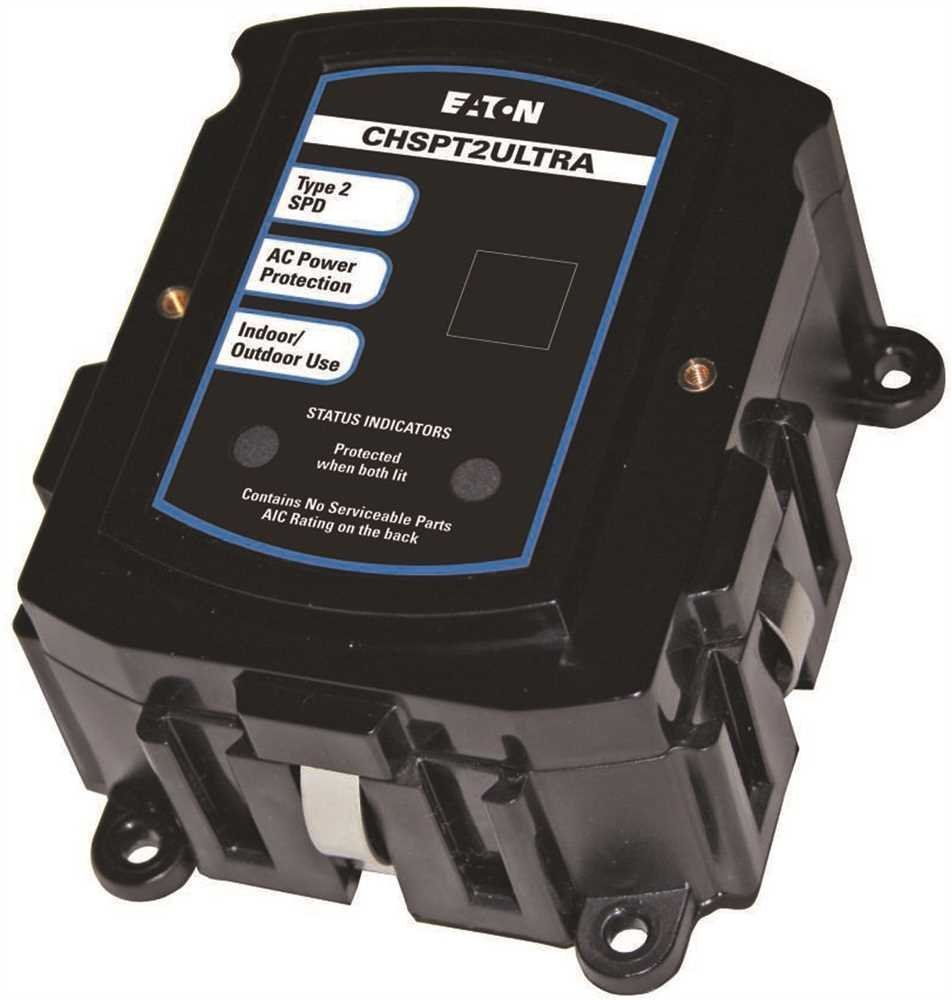
Is this thing any good?

612-zw2X-5L._SL1000_.jpg


They also have a cable version.

315RDpJbJyL.jpg


I have lived in this house since 2008. I have never had any issues before, but something must have changed somewhere in the system. I have no idea at this point what is going on.
 

westom

Well-known member
Joined
Aug 16, 2009
Messages
221
OK, so what should I do to fix/prevent the issue going forward?
That question was already answered:
'Whole house' protectors, that cost about $1 per protected appliance, are sold even in Lowes and Home Depot. Since lightning is typically 20,000 amps, then minimally sufficient 'whole house' protectors are 50,000 amps.
Some questions must be answered. That starts by defining how every utility wire enters and how it connects (low impedance) to the item that defines all protection - single point earth ground.

That Cutler-Hammer may be sufficient; may be at least 50,000 amps. Since direct lightning strikes (and other surges) must not even damage a protector.

What does that Cutler-Hammer (Eaton) protector do? Protection is always about an answer to this question: Where do hundreds of thousands of joules harmlessly dissipate?

Destructive surge occur once every seven years. (Ignore the naive who advocate a protector to avert daily anomalies.) Best protection at any appliance is already inside that appliance. Your concern is that rare transient that might overwhelm existing protection - as you witnessed. Direct lightning strikes without damage are routine. Even that protector (rated at least 50,000 amps) must not fail.

Cable already has best protection - installed for free. A hardware must connect the incoming cable, low impedance (ie less than 10 feet), to what does the protection. Single point earth ground. No protector required. Cable company has installed what is required by National Electrical code, industry standards, and many other reasons. Protection is defined by what does protection - single point earth ground. Only you are responsible for providing and maintaining that critical 'system' component. What provides good earthing can be discussed later.

Many layman simple details apply. This only introduces relevant concepts - completely unknown to many educated by advertising, hearsay, wild speculation, and no numbers.

That is cable has protection. Telephone cannot connect direct to earth. So a telco installs (for free) a 'whole house' protector inside an NID. That protector is only doing what the above hardwire does better. Again, it must connect low impedance (ie no sharp wire bends) to that single point ground - what you provide.

Same must exist on a dish and OTA antenna. In every case, only one 'system' part defines all protection - single point earth ground.

AC electric is not required to have protection. You must install it. How many AC wires enter the building? Three? Then all three must make a low impedance (ie hardwire not inside metallic conduit) connection to earth.

View your AC electric box. A quarter inch bare copper wire must connect to that box. Trace it. That should be your earth ground connection. If that wire goes up over a foundation and down to earth, then that connection has excessive impedance. Hardwire too long. Sharp bends going over a foundation. Bundled with other non-grounding wires. That hardwire must go through the foundation and down to the single point earth ground. Only then does a 'whole house' protector make what defines protection - a low impedance connection to earth.

So again, start by defining how every utility wire enters and how it connects (low impedance) to the item that defines all protection - single point earth ground. All is layman simple. Inspect what a homeowner is responsible for. Every homeowner should know of their earth ground, if it exists, and if it is still intact.

If any wire inside any incoming cable does not make that low impedance connection, then all protection may be compromised. That even includes automatic sprinkler system, remote gate, power to a detached garage, and invisible dog fence. Protection is always about a surge current not anywhere inside the structure.

You had damage because a current was inside hunting for earth destructively. That surge may have been incoming to everything on AC. It found a best path to earth destructively via TVs - maybe because a cable company installed effective protection. Inspection starts to know why damage happened. Only then can specific recommendations be provided. Demonstrated above is why that information must be known and what to look for. That current was inside because it was not earthed. We know that much.

Lightning found earth ground destructively via wooden church steeples. So Franklin connected lightning to earth on a path that was not destructive - lightning rod.

Lightning found earth ground destructively via your TVs. So you connect lightning to earth on a path that is not destructive - a properly earthed 'whole house' protector.

Neither lightning rod nor protector do protection. Protection has always been about connecting that current to what does protection - earth ground. What's in/on your house?
 
To avoid these ads, REGISTER NOW!
Top Bottom