Without knowing our location a couple of general comments. First the code required vapor barrier on the warm side is likely outdated and should be adhered to with caution. Current code regulation talks to vapor retarders and drywall with latex paint, OSB, or spray foam (or combination thereof) often complies. The poly sheet vapor barrier of the past is now known to do more harm than good if not executed properly (e.g. when coupled with exterior OSB), but most codes enforcement is clueless and still requires it, even in a garage where moisture is likely of no concern. "Excess moisture" comes from cooking, showering, breathing, very little of which goes on in a garage. Exception is a heated garage with a lot of snow melt on the majority of days.
Along the same lines, a bathroom vent which is usually installed to remove interior moisture is of little use in a typical garage, as CNGsaves suggests. His question of what you might be doing to create excess moisture is a good one. Likely nothing. A ventless heater in a spray foamed building would be a different story. If you are in an area of a lot of snow and are parking in a heated garage, the bathroom vent is likely not a good solution. It's an energy hog.
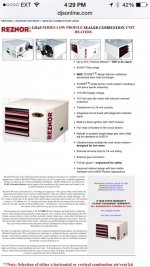
The separate combustion unit in your case I feel is a good choice. Your spray foamed building is likely fairly tight, though if you have an overhead door probably not so much a regular unit wouldn't work. The truth is separate combustion units are more efficient. They don't **** combustion air from the air they just heated. They use outside air for combustion which doesn't negatively pressurize the building, sucking cold outside air in through all the leaks.