To avoid these ads, REGISTER NOW!

Help electricians!!!!!!

laser3kw

Well-known member
Joined
Nov 17, 2012
Messages
7,276
Location
northen IL
Or people who upsize the line breaker w/o upsizing wiring
that would be my guess.
I talk with a guy in Menards that was trying to figure out what breaker to buy. He said the 10 amp breaker kept popping so he was looking for a 20 amp to replace it. :scared:
I know back from the screw in fuse days, it was common to "up fuse" when the original blew.
 
To avoid these ads, REGISTER NOW!
OP
S

STICandy

Well-known member
Joined
Jul 1, 2016
Messages
175
that would be my guess.
I talk with a guy in Menards that was trying to figure out what breaker to buy. He said the 10 amp breaker kept popping so he was looking for a 20 amp to replace it. :scared:
I know back from the screw in fuse days, it was common to "up fuse" when the original blew.
Omg! My biggest concern is even when I upsize the wire to 10 gauge and a 30 amp breaker, I'm still plugging in a 110v plug into an outlet designed for 15A and running through a 14 gauge cord to the motor. In what world does this all work together and how and the hell does it pas CSA approval?

Sent from my D6603 using Tapatalk
 

sberry

Banned
Joined
Jun 18, 2005
Messages
35,747
Location
Brethren, Michigan
Where did some of you learn to do this work ? 1st, the Mohawk and probably the others come with a 14 cord and allow a 30A breaker. The run time is only 50 seconds. It will probably work fine with the 20A and some cord on it, if it trips use a 14 cord.
This machine should have a dedicated wire and a dedicated outlet for it. 12 cable is fine as is a 30A breaker as long as it runs this unit and there are not other available outlets for use with equipment that is limited to 20A If this was a single circuit in pipe it could be 14, with a cable it needs to be 12w or better but 10 wont help anything but mke the breaker trip easier.
Omg! My biggest concern is even when I upsize the wire to 10 gauge and a 30 amp breaker, I'm still plugging in a 110v plug into an outlet designed for 15A and running through a 14 gauge cord to the motor. In what world does this all work together and how and the hell does it pas CSA approval?
Because they know what they are doing and you don't. Its about as simple as that and that is not a stab at you but some of the other guys that basically keep repeating something they don't fully understand.
 
Last edited:

sberry

Banned
Joined
Jun 18, 2005
Messages
35,747
Location
Brethren, Michigan
In fact Mohawk doesn't even put thermal on the motor, its got a manual switch with an operator and a local disconnect. Before some genius types decide this isn't right consider there are basically millions of hoists like this in service under highly certified design and inspection under about 3 or 4 different agencies and codes and we all of a sudden figure they are stupid and put the wrong wire on it and left it for Joe DIY to straighten it out.
I would agree that given th4e nature of the diy installer for some of these units, same for small welders they should have a simple lay recommendation and it could be a step above the minimum which wouldn't hurt anyone and save a lot of confusion for those not familiar with code, nema and Ul etc. The owners manual is written for an electrician, cant see how some additional explanation could hurt.
 
Last edited:

sberry

Banned
Joined
Jun 18, 2005
Messages
35,747
Location
Brethren, Michigan
I saw one of these plugged in to a general circuit 25 yrs with 25 ft of 16 cord. He has a chop saw, a grinder, a band saw, mill , lathe, sander, table saw, all plugged in to 1 circuit. If someone would happen to saw 2 at the same time it would likely trip but there isn't any continuous or automatic load on it.
In fairness the Mohawk I have is 240 so it changes the math a little. You can design a piece of equipment to allow it to be plugged on to a 30A with a 14 cord, if we go above that we would need to add additional protection.
This is a rather simplification and generalization but think of your heavy circular saw, 13 or so run down a 15 end and a 16 cord.
I saw a unique piece the other day. It was a little staple gun for carpet guys, has a 14 cord and longer, long enough to reach in a house with code legal wiring. The installer says you cant use a cord, it wont work right.
But,,,,,,,,,,,,,,,,,,,,,,,,, an item like a chop saw, a small compressor and even welding machines could be safely ram on circuits higher than 20 provided the cord was sufficient. The modern power strip protects the cord on itself with the additional CB, lots of guys got those little blowers, got a duplex on them, have a 16 cord followed by a 10A breaker then to the outlet, circuit protected by applied load.
I did a house reno a while back and found the kitchen light switch loop was with a lamp cord. I tried to decide who/how it was done.
 

bczygan

Well-known member
Joined
Nov 4, 2009
Messages
22,002
Location
DETROIT! Arsenal of Scrappers
Seems like the OP was initially thinking that 110V was a rating that meant he could plug a 110V (Really 120V) item into any 120V circuit and be fine.

Because of plug strips, my wife thinks you can plug in as many things as you want, as long as there is an empty spot. No consideration is given for the total wattage used, nor that some items need their own circuit.
 
OP
S

STICandy

Well-known member
Joined
Jul 1, 2016
Messages
175
Seems like the OP was initially thinking that 110V was a rating that meant he could plug a 110V (Really 120V) item into any 120V circuit and be fine.

Because of plug strips, my wife thinks you can plug in as many things as you want, as long as there is an empty spot. No consideration is given for the total wattage used, nor that some items need their own circuit.
Yes you can consider me an idiot. A "hobbyist lift" touted as a 110V (really 120V) hoist should by all rights be plug and play. Otherwise if it had've been a 240V motor I would have gauged accordingly and the wire would already have been run and in the walls, this wouldn't have been an issue.

It is also worth noting that I live in Canada. I bought it from atlas Canada. No where on their site does it mention the electrical requirements. I also read the manual (online) where again no statement about electrical exists. Yesturday was the first time I had seen any literature supporting the electrical requirements albeit on the US Greg Smith Equipment website someone posted on this thread.

I know the requirements now and will take the necessary steps.

Thanks everyone for the help.

Sent from my D6603 using Tapatalk
 
Last edited:

Blk88GT

Well-known member
Joined
Mar 16, 2009
Messages
1,062
Location
Manitoba
I find it bizarre that it comes with a 15amp plug but requires a 30A breaker. You'd think it would come with an L5-30 on it.
 
OP
S

STICandy

Well-known member
Joined
Jul 1, 2016
Messages
175
I find it bizarre that it comes with a 15amp plug but requires a 30A breaker. You'd think it would come with an L5-30 on it.
Yet another anomaly and reason why I thought the way I did.

Sent from my D6603 using Tapatalk
 

sberry

Banned
Joined
Jun 18, 2005
Messages
35,747
Location
Brethren, Michigan
This is true Bill. In some sense the power strips could be plugged in to a 10 wire 30 circuit much the same way a travel trailer with 120/30 is wired. It isn't that I am advocating it but this is somewhat the way a "spider box" may be wired.
My explanation leaves a lot to be desired but we got some smart fellas here, makes it a bit frustrating on my behalf cause they way smarter. It can be a slow process to get how some of it works.
A pop up camper is different than an RV or could be. It has 15 end allowing it on 15 A as well as 20 and 12 wire for additional outlets including light and no additional protection other than the branch circuit it is plugged in to.
Can provide it with either 15 or 20A service, if you want to bring 30 would need to add breakers to 15 or 20 before it went to branch circuits or additional equipment.
 

aka Larry

Well-known member
Joined
May 2, 2012
Messages
8,026
Location
Eastern, NC
It is also worth noting that I live in Canada. I bought it from atlas Canada. No where on their site does it mention the electrical requirements. I also read the manual (online) where again no statement about electrical exists. Yesturday was the first time I had seen any literature supporting the electrical requirements albeit on the US Greg Smith Equipment website someone posted on this thread.

I didn't realize you didn't buy it from GSE (where I bought my Atlas lift) so I apologize for sounding like an ***. Their website has answers to almost any question you could think of before buying a lift so I read all of it before I bought mine, thus I assumed you would have done the same. You know what happens when you assume, so I shouldn't have been so quick to comment.
 

sberry

Banned
Joined
Jun 18, 2005
Messages
35,747
Location
Brethren, Michigan
As I mention, the manuals and the code assume you know something about it in some sense. While it can work its not designed to go on a general circuit and that is kind of evident from it listing 30A.
They don't splain it all and why at every turn and neither does the code which is where we get some problem. I say this from a viewpoint that I don't know squat about electric theory and if we were locked in a prison and had to escape from what I knew we would be screwed.
They assume a guy who reads 30 will understand this is a dedicated piece of equipment. If you want to run it now try adding 25/16 and see if it trips. If there is a local 20 get an appliance cord to reach it ideally, its a 14 and it will provide a bit of choke for starting and probably work fine on a 20, at least wont trip on start.
 

sberry

Banned
Joined
Jun 18, 2005
Messages
35,747
Location
Brethren, Michigan
I find it bizarre that it comes with a 15amp plug but requires a 30A breaker. You'd think it would come with an L5-30 on it.

Someone explained the detailed reasoning behind that but I cant quote it. There are exception for special equipment and they get there by providing the info to a "qualified installer" which basically amounts to doing it the way we tell you and don't hinge a engineering career on this one project which really include the real fundamentals of design/install/ in regards to equipment and wire protection.
I want to get around the idea you are going to prove it all wrong and understand at least why in principle its safe if there are no missed steps and get just a bit past the rudimentary theory that everything wired 14 needs to be on a 15a circuit.
 

sberry

Banned
Joined
Jun 18, 2005
Messages
35,747
Location
Brethren, Michigan
I can see where at some point ity may have made sense to start over and add protection to the plug in everything. If one notices,,,,,,,,,,,,,, the new DVI 200 welders now come with a 14 cord, this is why,,, don't fuk with the ends. The 50A adapter has protection. It doesn't need it on 120V, has the building circuit for protection.
There may be mention somewhere of not changing the wire on problem circuits. A 12/30 for the specials due to trips. The only place for a 10 wire is V drop and 30A outlet on 120V,,, and some light circuits not found in residential.
The reason we need a different breaker isn't the need for more current but less.
The plug design is normally the limit of the over current but there is exception for this due to the fact we cant let it trip all the time.
If you get something with a 16 cord that trips a 20 then there is a problem. If it has a 14 cord factory it may be dealt with a breaker change provided it is on a dedicated circuit.
 
Last edited:

bjcouche

Well-known member
Joined
Sep 11, 2010
Messages
509
Location
Ohio
The CSA rating might be a safety rating, not a "will it work" rating. Maybe the 14awg cord with the 5-15 end was added after the hydraulic power unit shipped from China. I tried to look up the power unit part number on the manufacturers web site, but I cannot read Chinese.
The first thing I would do is cut the 5-15 end off that cord (unplug it first). The NEC (I'm assuming the CEC too) allows a maximum of a 20A breaker on 15 and 20A "outlets". You cannot use a 30A breaker even on a single dedicated 5-20 outlet.
I would hardwire this using 10awg wire and a 30A breaker. If you must use a cord and plug setup so that you can move the 4 post lift, then I'd install a NEMA L5-30 plug and receptacle.
As an Electrical Engineer I do not rely solely on the equipment manufacturer or government agencies to protect me, or give me good advice. I'll read the manufacturers recommendation and then grab my calculator and see if that recommendation meets NEC code and is safe. Case in point you called the equipment manufacturer and they told you to upsize the breaker. Ask them to say that in writing so that you can show it to your local electrical inspector...

Brian
 

sberry

Banned
Joined
Jun 18, 2005
Messages
35,747
Location
Brethren, Michigan
Do you figure they are shipping these everywhere in the country and depending on every homeowner and installer to decide how to wire it.
Buy a single outlet, hook it to a 12 wire, put a 30 on it and plug in. This is done all the time for specialty equipment. It is not for a general use circuit.
As an Electrical Engineer I do not rely solely on the equipment manufacturer or government agencies to protect me, or give me good advice. I'll read the manufacturers recommendation and then grab my calculator and see if that recommendation meets NEC code and is safe.
Electrician would have hooked it up without a calculator and calling someone.
 

Attachments

  • chop saw only.JPG
    chop saw only.JPG
    30.3 KB · Views: 39
Last edited:

sberry

Banned
Joined
Jun 18, 2005
Messages
35,747
Location
Brethren, Michigan
I go with the mfg on this one vs someone from the internet telling me to start by cutting the plug off and increasing the wire 2 sizes to a listed certified piece of equipment. I got 2 neighbors, both veteran masters, one a master among masters, in his own house would do it like I said in this thread to plug it in and they could have any piece they wanted for free.
I followed the one some time later on another addition to a church and the handyman was looking at the panel and didn't understand what was up. It was a congested deal with a lot of stuff from way back till current and before I second guessed it all I took a good hard look over some of it, figured out which oeder the installs came in and even some history of the wiremen and then I came to the recent master I know bee thru there and he is in no means a perfectionist and doesn't look to do any extra work but I know he didn't leave it wrong.
The handyman didn't understand why a 12 was on a 30 and it was a wire to a sump pump enclosure probably installed before him possibly but an outlet concealed from general use he left and the reason he has some 15 breakers on some new 12 wire was at some point there were parts of the circuit on mwbc that were connected to 14 if they looked a bit down the line, the only real error was minor in the whole deal considering the amount of snot and rather irrelevant considering it was on lights and not available outlets.
 

sberry

Banned
Joined
Jun 18, 2005
Messages
35,747
Location
Brethren, Michigan
What frustrates me is that the guy/guys I am pecking at here are way smarter than I am and could almost bet they understand electrical theory way beyond my own limited mind.
I know this about like the average second year apprentice but it can be difficult to get around its not a 30A load but a 20, on top of that mine is on for 43 seconds at a time on a momentary switch are whole different issues. The equipment it is going thru, a 15 is really designed for 20, 16 continuous as a pass thru when on a circuit with 20a wire and 100% non continuous.
Its not a matter of overloading any of this,,,,,,,,,,,,,, it is simply a matter of limiting access to that circuit. On a general with multiple outlets the breaker protects the wire from thermal overload and in fact is about the only time its the case as all other load is to be calculated or dictated by the plug design that gives it access to that circuit Same for installing a 20a recept, says the circuit is 20 and the end on the machine is to simply prohibit any unintended use of it on a circuit has only 15's on it. Doesn't prohibit the pass thru of 20A or even more in surges such as starts.
 

sberry

Banned
Joined
Jun 18, 2005
Messages
35,747
Location
Brethren, Michigan
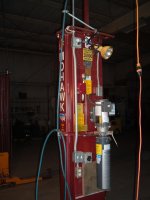
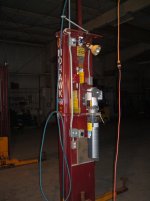
The breaker is in here to protect against short circuit, the motor load is calculated and the plug is a safety and serviceman's disconnect. You will not burn any of it up, the wire, the plug. it just needs a bump up in the breaker threshold a bit to eliminate tripping on this good size motor load when it starts. You could take the recept and plug out I spose if the breaker was local enough. Wire nut it to the building wire in a box. I took the one off mine and did this and will install a DP switch, didn't have one handy when I did it.
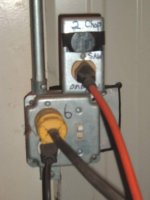
Ok, this one is a 10 wire 30 install and a big reason was I had the wire and had more than 12 in hand and it makes it easy to identify, had plenty of pipe space and used a 30 and added a welder outlet to the same circuit. The outlet on the bottom comes from cfci 20A and the outlet on the top is 15 and part of the light circuits with switches installed in this same raceway.
While the double layer of black tape over the chop outlet is kind of farmer the intent was to limit the outlet. It has its own set of conductors to it and the other one has its own and on 20A for common equipment. The saw will trip a 20 on good service, I am not chopping the cord off and replacing it.
 

Attachments

  • Hoist wiring.jpg
    Hoist wiring.jpg
    139.1 KB · Views: 34
  • Hoist wires.jpg
    Hoist wires.jpg
    140.5 KB · Views: 27
Last edited:

ard

Well-known member
Joined
Feb 16, 2015
Messages
4,391
Location
Sierra Foothills... California
Do you figure they are shipping these everywhere in the country and depending on every homeowner and installer to decide how to wire it.
Buy a single outlet, hook it to a 12 wire, put a 30 on it and plug in. This is done all the time for specialty equipment. It is not for a general use circuit.
Electrician would have hooked it up without a calculator and calling someone.

I go with the mfg on this one vs someone from the internet telling me to start by cutting the plug off and increasing the wire 2 sizes to a listed certified piece of equipment. I got 2 neighbors, both veteran masters, one a master among masters, in his own house would do it like I said in this thread to plug it in and they could have any piece they wanted for free.

First, a lot of respect for the electricians here, as well as experienced and skilled contractors and individuals...but I really dont care what a "real electrician" would have done.

I am more interested in how a mfg gets away with putting a 15A plug (I am not speaking to wire size) on a unit and failing to provide acceptable installation instructions. THIS is the part that I am not getting....


Ive been the lead on a few products getting through UL/CSA/IEC listing.

You need to provide specific installation instructions if said installation is any kind of departure from "plug it in an outlet rated to handle the load on the rating plate"

So while there may be all sorts of departures from what one typically sees, Im still waiting to see how this mfg provides this info to the end user/installer.

My guess is someone is pulling a fast one here.
 
To avoid these ads, REGISTER NOW!

sberry

Banned
Joined
Jun 18, 2005
Messages
35,747
Location
Brethren, Michigan
I have used a 16 as a choke on saws with manual switch. I used 50 ft of 14 for a little air comp a while back and it was just enough to keep it together. It was running unattended so I used a bigger longer wire, bigger so the motor couldn't thermal overload it if it malfunctioned and ran continuous which it actually did.
 

sberry

Banned
Joined
Jun 18, 2005
Messages
35,747
Location
Brethren, Michigan
They really assume the installer is familiar with the exception for this, they assume the installer is a lic journeyman that understands this circuit may need special consideration, that's what it means when its listed a different breaker, they don't splain how and why.
This is why they say,, qualified installer, don't say, get engineer with a calculator to redesign it all. The 30A breaker tells me it needs its own supply wire,,, why,,, due to the fact it may have special requirements not able to be built in to another circuit that shares outlets.
 
Last edited:

sberry

Banned
Joined
Jun 18, 2005
Messages
35,747
Location
Brethren, Michigan
My guess is they design it right on the hairy edge of 20 run amps to squeak it in under a 20 outlet. Back in the day this would have also been the place for the famous 30A fuse and slow blows.
In this hoist the 14 cord actually protects the building wire to some extent, if it is equal to or netter than the cord it wont overheat the building wire, if it is smaller than the building wire does not overheat it.
The AC225 welder has a 12 cord listed for connection to a 50A circuit, no one ever burned the shack down with one using a 10 wire despite the fact it was connected to 50A.
 

bjcouche

Well-known member
Joined
Sep 11, 2010
Messages
509
Location
Ohio
There is a difference between what you can get away with, and what meets the National Electrical Code (or CEC). I'll be the first to admit that the NEC sometimes is over protective and overkill but it's better than the opposite. I will not recommend to someone on a public forum to do anything that might be unsafe or violates code, that's just me.

NEC 210.21 (B) Receptacles (1) Single receptacle on an individual Branch Circuit. "A single receptacle installed on an individual branch circuit shall have an ampere rating not less than that of the branch circuit."

There are exceptions to 210.21 but your lift is not less than 1/3hp and it isn't a welder.

If the power unit shipped with a 14awg pigtail with a L5-30 installed, then that would be OK. That 14awg cord would be protected by (hopefully) a thermal overload inside the motor, or some other method, but would be considered in it's CSA / UL listing.

IMHO, for those that are wondering how the power unit or lift was certified... I usually start reading at the bottom and go up. When I see "Made in China" I immediately consider all other information questionable or outright fake.

Brian
 

sberry

Banned
Joined
Jun 18, 2005
Messages
35,747
Location
Brethren, Michigan
Think of it this way in regards to the wire although the plug combo is different. The 12 wire on the welder is listed for 48A for 2 minutes Running 20 on 12 over 20 pass thru equipment isn't a problem especially for 50 seconds at a time and operator controlled, let off the switch if you see flames.
 

lakeroadster

Well-known member
Joined
Jan 19, 2015
Messages
5,166
Location
Central Colorado
... let off the switch if you see flames.

Sage advice :thumbup:

Well until, worse case scenario, the fire / insurance investigator finds out the manufacturer specified a 30 amp breaker (which implies the associated wire size and receptacle for 30 amp)... and you were running it through a 20 amp circuit.

Bottom line: If you take it upon yourself to not follow the manufacturers specification, you void the warranty and you assume responsibility in the event of a problem.
 

bczygan

Well-known member
Joined
Nov 4, 2009
Messages
22,002
Location
DETROIT! Arsenal of Scrappers
Yes you can consider me an idiot. A "hobbyist lift" touted as a 110V (really 120V) hoist should by all rights be plug and play. Otherwise if it had've been a 240V motor I would have gauged accordingly and the wire would already have been run and in the walls, this wouldn't have been an issue.

It is also worth noting that I live in Canada. I bought it from atlas Canada. No where on their site does it mention the electrical requirements. I also read the manual (online) where again no statement about electrical exists. Yesturday was the first time I had seen any literature supporting the electrical requirements albeit on the US Greg Smith Equipment website someone posted on this thread.

I know the requirements now and will take the necessary steps.

Thanks everyone for the help.

Sent from my D6603 using Tapatalk

I don't.

You're catching on to all this way faster then I did.

There are a lot of things manufacturers do, to make hooking equipment up, less than straightforward.

Bill
 

sberry

Banned
Joined
Jun 18, 2005
Messages
35,747
Location
Brethren, Michigan
Isnt it amazing that the guys that make, build, certify this all can be such dumb fukkers for spo0 long till a genius that comes along on the internet that doesn't understand some basic wiring principles comes along and straightens it out? I got to wonder how come they all don't go up in flames? How did they ever manage before?
 

-Brent-

Well-known member
Joined
Dec 23, 2009
Messages
4,709
Location
Utah
Can I jump in as the voice of reason here?

STI, I like your threads and enthusiasm. As well, I get that this issue ***** and rectifying it will take a bit of re-work but that is the nature of getting things done right. Sometimes we have to go back and redo something.

In fairness to all of the posters here, you did ask for help (with 6 exclamation points! :D) and they gave it to you. So, take what they say in stride, get it fixed, and move on to the next item in your build.
 
Last edited:

sberry

Banned
Joined
Jun 18, 2005
Messages
35,747
Location
Brethren, Michigan
I don't remember all the language but suspect it's getting mixed up. A 1/3 may need thermal, I doubt the hoist has it. The Mohawk doesnt. the reason being that the motor has internals rated for 30 short circuit, the limited load is the thermal and the breaker is a service switch and fault protection.
A mention of welders, the 14/15 combo on a 140 mig can handle the real rates output of 23.8 amps,,,, 30 percent. The hoist in question is 20A with a 50 second run, significantly less load and 1/3 the duty. The wire is downsized in this but the hardware can well handle the 20A feed thru.
The engineer that designed it may have selected this minimum wire for a reason,,,,,,,, it is acting as a choke for start loads.
 

sberry

Banned
Joined
Jun 18, 2005
Messages
35,747
Location
Brethren, Michigan
another thing, the conversation may have been incomplete with the mfg and the breaker change may have been the short answer? Did they indicate it shold be on its own wire? Did they suggest cutting the cord off and replacing it, does it suggest this in any instructions? I would like to see some from a mfg,,,,,,, first, make sure you are half informed and don't understand a cord to a machine, then proceed to cut it off and wire it the way you think it should be despite a whole industry doing it this way for decades.
Then process to tell others how to do it and the rest of the engineers that design it are stupid.
 
Last edited:

sberry

Banned
Joined
Jun 18, 2005
Messages
35,747
Location
Brethren, Michigan
I am not they smart but the thing I do in trouble shooting is figure the guy that designs it is sharper than I am and that I am there to fix it, not re invent.
I was able to shoot out a job the other day, several people jump to conclusions which were guesses, this kind of thinking that a blinking light fixture may be caused by a 15 a breaker on a 12 wire, maybe that's it?
 

mm08822

Well-known member
Joined
Jan 13, 2012
Messages
5,873
Location
NJ
Atlas is being deceptive. Vibo-Hydraulics and Gregsmithequipment are not to blame.

Vibo indicates the load on the motor n/p. Their website shows their equipment w/o a cord connection. Without any cord and cap included, they got the CE rating with no deception or omission of info for the motor/pump combo.

Atlas, the purchaser of this combo unit is to determine the electrical requirements for their finished product. This is where Atlas blew it. Connecting a 5-15P plug is just wrong as per NEC 210.21 and 210.23 A as also previously stated many replies ago. Atlas only indicated 110V for electrical requirements. (As useful as telling you to fill your pool with wet water.) The manual on the Atlas website still does not specify complete load requirements. Since this load is extremely large for 110vac, this is a serious omission. I am sure this is intentional. The motor n/p indicates 2.5kw, so you’re at ~23A load and that only fits on a 30 amp 120VAC circuit. Not even specifying a dedicated circuit or minimum circuit size is nothing but deceptive. They leave the prospective buyer with a plug and play illusion – one less hurdle to get in their way of making a sale. Of course the end-user figures out this fine detail – many the hard way-right STI?
Gregsmith website mentions the load requirement b/c they probably got tired of getting caught in the middle of this problem too many times. After they solved it a 100 sales ago, they tried to put an end to p.o.’d customers and filled in this gap in their spec’s webpage.

Atlas customer service telling people to upsize breakers, just shows that they have no understanding of code. You do not use 25A cb’s on #14 or #12 ga branch circuits feeding convenience receptacles. (If they were smart, they would offer a 120/240 or straight 240vac unit.)

Check out the trip curve for a 15A and 20A cb. Depending on the mfg. tolerance of the cb and other possible loads on the convenience receptacle circuit, a tripped cb is all but guaranteed.

Testing the unit without a vehicle on it is also a little fishy.

Just b/c a component of a system is CE and/or ETL rated does not mean it is being utilized properly, nor the entire system has achieved that rating either.
Atlas does not state any final certification on the finished product. If they had it, they would state it. They would not have gotten it with this 5-15P cap installed and the problem would have been detected/fixed before it went out to the consumer on a certified product. This is where they would have learned the full electrical spec to state.

No address for Atlas on website. Seems shady again.
 

Norcal

Well-known member
Joined
Mar 16, 2008
Messages
13,752
The pump is a cheap ChiCom POS that the manufacturer can not even be bothered to build to the standard of the countries the product is intended to be used in, 110V is a prewar voltage & always a very good sign on new equipment that your buying sh*t, just run a 30A 120V circuit for the lift & be done with it.
 

sberry

Banned
Joined
Jun 18, 2005
Messages
35,747
Location
Brethren, Michigan
How they explain it may be deceptive, maybe you are right. We agree this is not to a convenience recept but to one dedicated to the wire and the machine. There is a max standard that can be put on a 14 wire, I don't recall the exact math but its on the 140 welder which can output more than its rated at 20A. I think its like 23. 8 or something, some nema stuff.
Driving to the box store and getting a new cord is dangerous, my point is that this install is not a problem from a safety angle. The motor is heavy enough it doesn't even need additional thermal. They are on momentary switches.
We have some equipment we allow 48A load on a 50A breaker.
I realize we got some engineers get lathered up over this but there are about a dozen masters that look in on this forum, I would think a couple of them would chime in and tell me I don't know what the fugg I am talking about.
 

sberry

Banned
Joined
Jun 18, 2005
Messages
35,747
Location
Brethren, Michigan
48A on a 12 with no additional internal or thermal.
Most of it is hard wired but millions of installs done every day for air cond qquipment with 30/15 circuits, 40/12 is common, lot of cooking equipment wire 14 on 30 and 12 on 50 and not only part of the appliance but the circuit wire.
You can wire a 3 hp comp with a 40A (maybe a 50) with a 12 wire to a 50a recept.
 
Last edited:

mm08822

Well-known member
Joined
Jan 13, 2012
Messages
5,873
Location
NJ
When it is sold with a 5-15p cap, hard-wired scenarios are irrelevant. And the max load is 12amps PERIOD.
 

sberry

Banned
Joined
Jun 18, 2005
Messages
35,747
Location
Brethren, Michigan
No it isn't . Thousands of welding machines sold every day with this cord. But,,, where did you learn all of this? Millions of 3 ways with 15 ends on them designed for 20 pass thru.
We should all get together and call the welding machine types, even some of the small compressor builders and tell them we decided they didn't know what they are doing.
Now I really don't know squat about electric but I know Norcal is one of the sharpest code guys on this forum and he doesn't particularly like me, him and Ace would take a free shot to tell me I was fos here. They wouldn't let it pass. Wylie either.
 
Last edited:
To avoid these ads, REGISTER NOW!
Top Bottom