To avoid these ads, REGISTER NOW!

Help electricians!!!!!!

mm08822

Well-known member
Joined
Jan 13, 2012
Messages
5,875
Location
NJ
There is a receptacle/OCP exception for receptacles dedicated to the exclusive use of welders. Last time I checked, a lift is not a welder.
The OP already stated he had the lift plugged into a branch circuits feeding multiple convenience receptacles. So does that sound exclusive, look like a welder, smell like a welder?
This post is about a piece of equipment that does not have exceptions listed in the code. All of this extraneous b.s. about welders, ac units, air compressors, motor circuits do not apply here. That is the point.

20amp pass thru rating is for receptacles.
How do you equate receptacles with cord caps?
How does 20a equal 23 amps?
Read section 210.
 
To avoid these ads, REGISTER NOW!

sberry

Banned
Joined
Jun 18, 2005
Messages
35,747
Location
Brethren, Michigan
This is about like trying to train a cat. The reason I brought up the welder is because you said period, which makes all this obvious. The 15 end or the cap is rated for 20 pass thru is how it relates and the discussion about welders is to give a general idea that always, period and o0ther rudimentary statements do not always apply. I didn't feel like ferreting out the book but there are exceptions for this equipment. They cant cut the end off of every welder, chop saw or air comp that trips a breaker.
That is the point.
The statement was made 12A period which is far from accurate. That is the point. We have a case where we have read a few code lines here without reading the rest and do not fully understand circuit design beyond 14 wire and 15 breaker.
Btw, no one told him to use a general circuit, its what he did and we told him it needed to be dedicated.
The OP already stated he had the lift plugged into a branch circuits feeding multiple convenience receptacles. So does that sound exclusive, look like a welder, smell like a welder?
Again if you want to read more than a couple lines look where he was told not to do this.
 
Last edited:

sberry

Banned
Joined
Jun 18, 2005
Messages
35,747
Location
Brethren, Michigan
I have a chop saw, pulls 15, got a microwave, 14.5A, all these on a 15 end. My Bud services micros from the prison, monsters, come factory 15 end. There is a lot of it and the point I was making was,,,,,,,,,,,,,, again,,,,,,,,,,,, some of it near 24A on a 14 with 15 end for a limited time. Simple as that. 15 ends come on a lot of equipment that needs a 20A breaker.
As a practical matter, they would have been sued out of business if 1 or 2 of these burned up, as a practical matter the parts are not overheated, well within the thresholds from a pure design point of view all the way to the doing they do not add thermal but this is a heavy motor and its basically impossible to exceed the duty cycle.
I believe Bendpak or Challenger offers these in the same set ups, want better instructions we could look at that. The only manual I have is Mohawk and they operate on 240. Its enough more power it would have start issues on 120V
They list a 30 for the 14 and do provide a 30 plug and they had some logic for it being 4 pole, I forget now.
 
Last edited:

mm08822

Well-known member
Joined
Jan 13, 2012
Messages
5,875
Location
NJ
When a mfr puts a 5-15p on the end of a cord and does not provide any end-user requirements for dedicated circuits or need for increased ocp, then one is to assume the default that it can plug into any general purpose receptacle branch circuit – whose max load of any device is only 12 amps. My point only and this is where Atlas screwed the consumer.

All the early advice of a dedicated 30 Amp circuit needed (10 awg, 30A cb, 30A recept) in this thread is correct for this equipment due to the nameplate load and lack of instructions otherwise for a piece of non-listed (=untested) equipment.

Making stuff just work is one thing.
Providing solutions to others that are up to current code is another.
 

sberry

Banned
Joined
Jun 18, 2005
Messages
35,747
Location
Brethren, Michigan
whose max load of any device is only 12 amps. My point only and this is where Atlas screwed the consumer
This is not correct. Many items draw more than 12, they however are not continuous and often have manual control. In the case of a microwave a limited timer. Something else incorrect is the early statements about not being able to put a 12 on a lager breaker. While it may not apply in every detail it is faulty to the point that not only can you do it but its not just a 30 but even up to 50 in some cases.
100% in error. A 12 in pipe is good for 30 for motor rating anyway. You are not protecting motors from thermal with the breaker anyway.
Providing solutions to others that are up to current code is another.
Nothing about any of this has changed for decades.
 
OP
S

STICandy

Well-known member
Joined
Jul 1, 2016
Messages
175
Is this a non certified lift? Lets pick a Bendpak and see what they list for giggles.
Certified Danmar. 7000 bd5a04e12863a86221dc276c2b2777eb.png

Here's another one with a choice of 110 or 220 7ff39b4f495b2890eaa55ab740c10d94.png

Note either one of these would work on a standard 110v 15a circuit.

My point being this is what I looked at when I built the garage. If I had've know this to be an issue, I would have wired differently and gone right to 220v motor.

Now I am well aware of the requirements, but if I'm to run 10 gauge wire over to feed the 30 amps for the circuit I most definitely will not be able to use the standard plug or the 14 gauge chord. Which means modifications to the unit to which I shouldn't have to do. Also if I'm going there anyways, I might as well go 220v and they should supply me with the correct motor.

Sent from my D6603 using Tapatalk
 

Attachments

  • bd5a04e12863a86221dc276c2b2777eb.png
    bd5a04e12863a86221dc276c2b2777eb.png
    117.6 KB · Views: 0
  • 7ff39b4f495b2890eaa55ab740c10d94.png
    7ff39b4f495b2890eaa55ab740c10d94.png
    233 KB · Views: 0
Last edited:

ard

Well-known member
Joined
Feb 16, 2015
Messages
4,391
Location
Sierra Foothills... California
STI... Are you pushing back on the vendor/mfg?

Id say they have provided a non compliant product. Even if buried somewhere it says 30a circuit, the plug is wrong. They need to fix that. As in written install instructions that comply wit CSAA and CA national codes. Not a convo over the phone, but a document that is signed off.

That would be my leverage....
 
OP
S

STICandy

Well-known member
Joined
Jul 1, 2016
Messages
175
STI... Are you pushing back on the vendor/mfg?

Id say they have provided a non compliant product. Even if buried somewhere it says 30a circuit, the plug is wrong. They need to fix that. As in written install instructions that comply wit CSAA and CA national codes. Not a convo over the phone, but a document that is signed off.

That would be my leverage....
I'm gonna be pushing for a 220v motor and I'll replace the wiring.

Sent from my D6603 using Tapatalk
 

mm08822

Well-known member
Joined
Jan 13, 2012
Messages
5,875
Location
NJ
STI,
This is exactly the point I was making. The consumer should have the info needed upfront to properly prep for the unit. No surprises.
At 13A, it technically needs a 20A ckt. However, if I have a 15 recept close by I would certainly plug it in and run off of that until (if ever) it gave me a problem. My preference would be the 240v option. anyway.

I didn’t see a 240volt option from Atlas for your unit. I think getting them to make good on that type of change will be a fight.

As for re-wiring with #10/30A ckt/30A recept, you would also need to change out the cord to 10-3 and cap 5-30p on the lift. Maybe that you can get out of Atlas.
If you were to hardwire the lift and treat it as a motor ckt, then all of the motor rules apply including the need for thermal o/l protection and disconnect. Not sure if this route is any easier for you.
 

mm08822

Well-known member
Joined
Jan 13, 2012
Messages
5,875
Location
NJ
Sberry,
You conveniently choose to take what I say out of context. I am talking about general convenience outlets and their branch ckts and permissible loads. You keep coming back stating all is wrong with those requirements and you site code exceptions for motor ckts, welders, a/c units……this is not mix and match code exceptions until you get the cheeseball system that makes you happy.
As long as this lift is plugged into a receptacle, other equipment exceptions in the code do not apply.

If you are so convinced they do exist for this lift application, site them by number.
 

bjcouche

Well-known member
Joined
Sep 11, 2010
Messages
509
Location
Ohio
STI,
Keep bothering Atlas until they come up with a solution, preferably in writing. Whether they send you a different power unit, different cord, or send you a L5-30 to replace the existing 5-15 plug. It might be a hassle on your side but you might be helping many more people who buy this lift in the future. Maybe because of your persistence Atlas will get their **** fixed and their documentation updated.
Too often I just fix or reengineer the products that I buy instead of taking the time and frustration to talk to the manufacturer. That saves me time and ulcers, but it doesn't help the next guy who purchases the same equipment.
I see that other 4 post lift manufacturers use lower horsepower (amps) for their 120V products. That would equate to a slower lift time, which few people care about I'm sure.

Brian
 

pattenp

Well-known member
Joined
Jun 4, 2008
Messages
10,175
Location
Virginia - USA
Here's the motor data label for the Atlas Pro 8000 from http://www.mytoolequipmentguy.com/p...standard-width-4-post-8-000-lbs-capacity.html . Looks to me a 20 circuit is all that should be needed.
XH-PRO8000-16.jpg
 
OP
S

STICandy

Well-known member
Joined
Jul 1, 2016
Messages
175
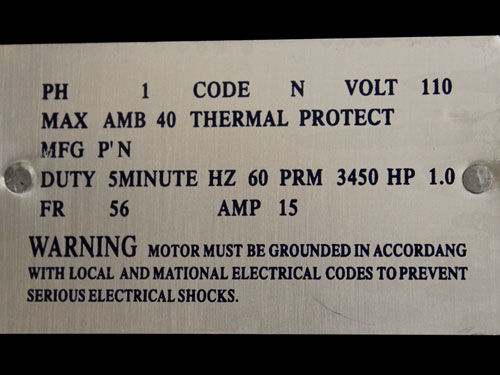
This pic does not agree with OP’s nameplate pic in reply #7.
Plus I’m less assured with new terms like “PRM“, “ACCORDANG” and “Mational“ on the nameplate.
LMFAO!

Actually one thing I was told that I forgot to relay along is, the pump I have was just put into service 6 months ago. Apparently the CSA pulled the last one Because it didn't meet code. Apparently they still haven't gotten it right.

On a plus side I did send atlas Canada an email tonight and got a fairly quick response:

"First off, loving the hoist it has made the fall maintenance on the cars amazing!

I am still having a problem with blowing a breaker. I Decided to try plugging the lift into a 110v 20A circuit running 12-2 wire as putting a 20A breaker in a 14-2 circuit is against electrical code and a potential fire hazzard. It worked ok but did trip the breaker on a couple of lifts meaning obviously that it needs a 30A breaker. This is where the problem lies.*@#$

For me to run a 110V 30A circuit to the power unit, I am going to have to run a new circuit from the panel to the hoist location. This bothers me because now it's going to be a surface mount cable run in my nicely finished garage, but I have no choice. However to have a legal 30A 110V circuit it would be a 10 gauge wiring run. This means the wiring on the motor is not legal. It would also require a 10-2 wire from the motor with a L5-30 plug and the matching receptacle.

I don't know how you want to proceed with this but really at this point although it is working intermittently, it is not safe to be doing so as it is causing undue stress and heat in the wiring.

My thoughts were we could look at the possibilities of either sending me a new motor with the correct wiring installed and the mating receptacle. I would also consider a 220v power unit as I have to install a new circuit anyways."

His response:

"I will forward this information to our tech guru.

I hope that we can find a solution with the existing motor, if we can’t and we deem that there is an issue with it, then I could certainly look at a 220V motor as a replacement.

Let me get back to you next week once I have an answer from our lead."

We'll see what happens!

Sent from my D6603 using Tapatalk
 
Last edited:

pattenp

Well-known member
Joined
Jun 4, 2008
Messages
10,175
Location
Virginia - USA
This pic does not agree with OP’s nameplate pic in reply #7.
Plus I’m less assured with new terms like “PRM“, “ACCORDANG” and “Mational“ on the nameplate.

Sorry about that. I forgot the actual motor data label had been posted.
 

lakeroadster

Well-known member
Joined
Jan 19, 2015
Messages
5,166
Location
Central Colorado
I contacted Greg Smith Equipment via email:

"I was hoping you could help clarify the required wiring for an Atlas garage pro 8000.

The specification sheet states the voltage is 110 and that a 30 amp breaker is required.

Does the lift come from the factory pre-wired with a plug? If so is the plug a standard household 15 amp plug or some special type of 30 amp plug?

Thank you for your help.
"

Their response was as follows:

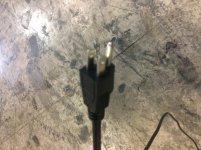
"The motor is a 110volt single phase 60HZ motor that does come with a plug (picture attached).

Only a 20amp breaker is required, not a 30 amp stated on the specification page, I will have our IT team correct that.

You must have the motor plugged into a dedicated wall outlet and if you use an extension cord it must be a heavy duty extension cord or else you will lose amperage and trip a breaker.

Feel free to contact us if you have any further questions.

Thank you"
 

Attachments

  • PRO8000 Plug.jpg
    PRO8000 Plug.jpg
    114 KB · Views: 27

pattenp

Well-known member
Joined
Jun 4, 2008
Messages
10,175
Location
Virginia - USA

You must have the motor plugged into a dedicated wall outlet and if you use an extension cord it must be a heavy duty extension cord or else you will lose amperage and trip a breaker.

Feel free to contact us if you have any further questions.

Thank you"[/I]


You will lose voltage which increases amperage tripping the breaker.
 
OP
S

STICandy

Well-known member
Joined
Jul 1, 2016
Messages
175
I contacted Greg Smith Equipment via email:

"I was hoping you could help clarify the required wiring for an Atlas garage pro 8000.

The specification sheet states the voltage is 110 and that a 30 amp breaker is required.

Does the lift come from the factory pre-wired with a plug? If so is the plug a standard household 15 amp plug or some special type of 30 amp plug?

Thank you for your help.
"

Their response was as follows:

"The motor is a 110volt single phase 60HZ motor that does come with a plug (picture attached).

Only a 20amp breaker is required, not a 30 amp stated on the specification page, I will have our IT team correct that.

You must have the motor plugged into a dedicated wall outlet and if you use an extension cord it must be a heavy duty extension cord or else you will lose amperage and trip a breaker.

Feel free to contact us if you have any further questions.

Thank you"
It doesn't get any heavier than a 12 gauge extension chord capable of 20A. And it still trips a 20A breaker.
You will lose voltage which increases amperage tripping the breaker.


Sent from my D6603 using Tapatalk
 
To avoid these ads, REGISTER NOW!

myredracer

Well-known member
Joined
Nov 1, 2015
Messages
557
Location
Langley, BC
AC motors typically have a momentary inrush current of up to around 6 times the FLA. Someone previously posted that the current would be 20.8 amps and another said it could be 23 amp if PF is accounted for. The inrush current could be as high as around 120+ amps. Momentary starting current is why motorized equipment can require a breaker to be larger than the branch circuit wire rating. Based on my copy of the CEC (now outdated) the breaker called for would be 50 amps for 20.8 amps and 60 amps for 23 amps, and the wire would be min. #10. Motors and motorized equip. typically have the HP, voltage and FLA on the nameplate. Haven't seen just KW on a nameplate before.

If you go to the Vibo-hydraulics website (China), it *seems* like the motor is 1.5 HP at 110 volts, if I looked at the correct info. If so, CEC lists a 1 1/2 HP motor at 20 amps but states that the FLA on the nameplate is to be used. This is close to the 20.8 & 23 amp figures.

The lift will have a motor that complies with the applicable CSA, UL and/or ETL safety standards which would allow a #14 cord on the motor. That does not necessarily have a bearing on sizing the branch circuit wire or breaker sizes.

Voltage drop at startup can sometimes be a concern. If you include the overall length of ext. cord, branch circuit run and wire from panel out to the street, the voltage can sometimes be too low. It would be interesting to see what the voltage at the motor terminals is at startup but you'd need an o'scope for that. You could try a digital multi-meter and see what happens. It might also help to see what the running voltage is at the terminals. It's not inconceivable that you might even need a #10 ext. cord.
I'm gonna go with a min. #10 wire and a min. 30 amp breaker. The CEC calls for a 50 amp breaker at 20.8 amps and a 60 amp at 23 amps. If a 30 amp breaker doesn't trip, I'd use that as there'd be no point in going larger. Don't know if the duty cycle rating changes this.

I'm gonna go with a min. #10 wire and a min. 30 amp breaker dedicated circuit. The CEC calls for a 50 amp breaker at 20.8 amps and a 60 amp at 23 amps. If a 30 amp breaker doesn't trip, I'd use that as there'd be no point in going larger. Don't know if the duty cycle rating changes this. I think you are getting brushed off by the supplier and/or installer.

With a "little" cutting and patching here and there,it's easy to run new concealed in a wall and ceiling... :D In fact, I forgot a run of LV wire for my O/H door and need to do that. :mad:
 
Last edited:

bjcouche

Well-known member
Joined
Sep 11, 2010
Messages
509
Location
Ohio
OK, let's get technical.
STI, when the 20A breaker trips, does it trip the instant you press the start button or does it trip several seconds later while you are lifting a vehicle? This will tell you if the breaker is tripping on a thermal trip or a magnetic trip. The thermal trip portion is a current-time function designed to allow overloads for short duration but protect wireing from overheating. The magnetic portion is designed to trip as fast as possible and intended to trip only during short circuits. Motors draw 5-10X rated current when first started until they get to full speed. With a breaker sized near the motors rated current, often times the breaker trips instantly on startup, due to the magnetic trip function.
I've attached the trip curve for a 20 amp Square D QO breaker. I know it's difficult to read, but here's the info. The breaker will trip in about 0.02 seconds for currents from 6 to 15X rated current (120A to 300A). On the thermal portion of the curve (it got cut off) at 2X rated current (40A) the breaker will trip in between 8 and 35 seconds. The range of times is due to manufacturing tolerances. If the breaker is warm either from being recently tripped, or from sitting adjacent to a warm breaker then the trip times will be shorter.
Your motor is rated for 23A or so we are guessing since it's not listed on the nameplate. 5-10X is 115-230A. so it looks like your motor might fall within the magnetic portion of the breaker trip curve.
If you upgraded to a QO 30A breaker, it's curve (not shown) shows a magnetic trip range of 10-40X for 0.02 seconds, so that's 300-1200A. Since 300A is greater than your estimated, 230A the 30A breaker shouldn't trip.... assuming the motor get's up to speed before hitting the thermal portion of the curve.
I'm not making any recommendations here, just trying to educate why your 20A breaker is tripping. I also don't know if you have Square D breakers or a different brand, but the curves will be similar. Atlas salesmen shouldn't be answering engineering questions. Atlas needs to hire an engineer to do this for them.
Also, keep in mind that breakers do wear out fairly quickly as they aren't designed for high numbers of trips, especially under magnetic trip currents.
Brian
 

Attachments

  • trip curve.jpg
    trip curve.jpg
    102 KB · Views: 10
OP
S

STICandy

Well-known member
Joined
Jul 1, 2016
Messages
175
OK, let's get technical.
STI, when the 20A breaker trips, does it trip the instant you press the start button or does it trip several seconds later while you are lifting a vehicle? This will tell you if the breaker is tripping on a thermal trip or a magnetic trip. The thermal trip portion is a current-time function designed to allow overloads for short duration but protect wireing from overheating. The magnetic portion is designed to trip as fast as possible and intended to trip only during short circuits. Motors draw 5-10X rated current when first started until they get to full speed. With a breaker sized near the motors rated current, often times the breaker trips instantly on startup, due to the magnetic trip function.
I've attached the trip curve for a 20 amp Square D QO breaker. I know it's difficult to read, but here's the info. The breaker will trip in about 0.02 seconds for currents from 6 to 15X rated current (120A to 300A). On the thermal portion of the curve (it got cut off) at 2X rated current (40A) the breaker will trip in between 8 and 35 seconds. The range of times is due to manufacturing tolerances. If the breaker is warm either from being recently tripped, or from sitting adjacent to a warm breaker then the trip times will be shorter.
Your motor is rated for 23A or so we are guessing since it's not listed on the nameplate. 5-10X is 115-230A. so it looks like your motor might fall within the magnetic portion of the breaker trip curve.
If you upgraded to a QO 30A breaker, it's curve (not shown) shows a magnetic trip range of 10-40X for 0.02 seconds, so that's 300-1200A. Since 300A is greater than your estimated, 230A the 30A breaker shouldn't trip.... assuming the motor get's up to speed before hitting the thermal portion of the curve.
I'm not making any recommendations here, just trying to educate why your 20A breaker is tripping. I also don't know if you have Square D breakers or a different brand, but the curves will be similar. Atlas salesmen shouldn't be answering engineering questions. Atlas needs to hire an engineer to do this for them.
Also, keep in mind that breakers do wear out fairly quickly as they aren't designed for high numbers of trips, especially under magnetic trip currents.
Brian
To answer your question, yes I am using square D breakers. Also when it trips, which isn't often, it is immediate from an initial high amperage surge, never thermal and the wiring to the motor is never hot to the touch during operation even after a complete down to up lift.

Sent from my D6603 using Tapatalk
 

ard

Well-known member
Joined
Feb 16, 2015
Messages
4,391
Location
Sierra Foothills... California
Their response was as follows:

"The motor is a 110volt single phase 60HZ motor that does come with a plug (picture attached).

Only a 20amp breaker is required, not a 30 amp stated on the specification page, I will have our IT team correct that.


Huh..so they are playing with ratings and certifications... and once someone starts digging the solution is to 'have IT change the website'?


Perhaps:

Thank you for your reply. Could you explain why a 15 amp plug is provided when you state it should be powered by a dedicated 20Amp circuit?

Could you also provide me with the location of the electrical requirement and ratings in the operating or installation manual?


Atlas' "installation instructions" and operators manual is a joke. There is ZERO data on the electrical requirements. These instructions DO NOT MEET THE REGULATORY STANDARDS for a CE, UL or CSA approved product.

of course, IMO
 

myredracer

Well-known member
Joined
Nov 1, 2015
Messages
557
Location
Langley, BC
Also, keep in mind that breakers do wear out fairly quickly as they aren't designed for high numbers of trips, especially under magnetic trip currents.
Brian

I have to disagree. Low voltage molded case circuit breakers are tested and certified in compliance with CSA or UL & ANSI. They are required to meet endurance testing for cycles of operation to ensure a long service life. Breakers are required to withstand many thousands of cycles of operation and the exact quantity depends on the particular standard and parameters as shown in this Square D bulletin. http://ewh.ieee.org/r6/san_francisco/ias/archive/pdf/2009IEMTour/Technical_Data.pdf. Most of the time, a breaker in a panel just sits there and rarely trips on overload or short circuit. A worn out or defective breaker is rare and would be the last thing I'd suspect.
 
OP
S

STICandy

Well-known member
Joined
Jul 1, 2016
Messages
175
I decided to throw an amp clamp on the power pack today. It spikes at 27-30A on start up but immediately settles down to 10-11A.

Sent from my D6603 using Tapatalk
 

pattenp

Well-known member
Joined
Jun 4, 2008
Messages
10,175
Location
Virginia - USA
AC motors typically have a momentary inrush current of up to around 6 times the FLA. Someone previously posted that the current would be 20.8 amps and another said it could be 23 amp if PF is accounted for. The inrush current could be as high as around 120+ amps. Momentary starting current is why motorized equipment can require a breaker to be larger than the branch circuit wire rating. Based on my copy of the CEC (now outdated) the breaker called for would be 50 amps for 20.8 amps and 60 amps for 23 amps, and the wire would be min. #10. Motors and motorized equip. typically have the HP, voltage and FLA on the nameplate. Haven't seen just KW on a nameplate before.

:

I don't know about the CEC, but the NEC allows the breaker to be larger than the motor circuit ampacity when hardwired. Motor circuits where a receptacle and plug are used the breaker is to be no larger than the amp rating of the outlet.
 

wyliesdiesels

Well-known member
Joined
Aug 14, 2012
Messages
19,994
Location
Modesto, CA
I decided to throw an amp clamp on the power pack today. It spikes at 27-30A on start up but immediately settles down to 10-11A.

Sent from my D6603 using Tapatalk

What brand and model meter did u use?

Unless it specifically has in-rush current measuring capabilities, it wont give u accurate results
 

rlitman

Well-known member
Joined
Oct 18, 2010
Messages
24,591
Location
Long Island
The 87 is not a clamp meter. There is a clamp attachment for it, but I don't think it does inrush metering.
 

wyliesdiesels

Well-known member
Joined
Aug 14, 2012
Messages
19,994
Location
Modesto, CA
It's a fluke 87.

Sent from my D6603 using Tapatalk

How in the world did u measure current above 10a with an 87? U can only measure up to 10a with the 87 by putting it inline. The input is unfused so if u go over 10a u will blow up the meter.

Do u have the current probe attachment?

If so, that doesnt do in-rush so youre reading is inaccurate.

I have an 87v. Great meter, but its NOT for current measuring. Thats why I also have a 381.
 
OP
S

STICandy

Well-known member
Joined
Jul 1, 2016
Messages
175
How in the world did u measure current above 10a with an 87? U can only measure up to 10a with the 87 by putting it inline. The input is unfused so if u go over 10a u will blow up the meter.

Do u have the current probe attachment?

If so, that doesnt do in-rush so youre reqding is inaccurate.

I have an 87v. Great meter, but its NOT for current measuring. Thats why I also have a 381.
I used the fluke amp clamp I have as well. I really don't know I'm not an electrical genius. Just curious as to what it's pulling.

Sent from my D6603 using Tapatalk
 

bjcouche

Well-known member
Joined
Sep 11, 2010
Messages
509
Location
Ohio
Alright Gil, you got me.
My statement about breakers having a limited number of high current interrupting cycles, was a general statement that I specifically didn't look up. I was drawing a wide assumption based on other industrial 3 phase molded case breakers that I worked with that had specific number of short circuit interrupting cycles before they were required to be replaced. My apologies for the confusion. Can you re link your document id doesn't seem to work...
Brian
 

sberry

Banned
Joined
Jun 18, 2005
Messages
35,747
Location
Brethren, Michigan
Aww no. You will lose voltage. Its called voltage drop which causes you to GAIN amperage. This guy doesnt know what hes talking about!!
You do know that the guy that emailed the clerk is the same who 2 weeks ago came to a DIY forum to argue the code was faulty for allowing 15 amp switch and recept on a general circuit.
That's just the start of the gems in this thread.
The op was really right to ask for electrician help or he worded the question wrong. Should have asked for 3 engineers didn't know wtf they doing.
Even the op understands its not going down on thermal. If they now say it goes on a 20 it still sposed to have a 12 feed wire and a 14 whip. The problem here is too much start current, changing out the wire is not going to help and only hurt. Its going to allow more inrush. There is no danger of overheating this with a wire dedicated to it.
Same is some other motor cases for example, unless there is some compelling reason due to distance the installer follows the instruction in regards to wire size on an AC for example.
If it trips now thru a 14 cord changing it to a 12 will let it trip that much faster, this is really my point in the whole thing,,, basically some genius rushing off to tell some clerk they don't know squat and they do not fully undertand the problem anyway. Thats my point, its not about a **** hoist aint got a decent manual but tell me how to give advice and don't even know how toi size a cord whip on a motor,,, says it all.
 
Last edited:

sberry

Banned
Joined
Jun 18, 2005
Messages
35,747
Location
Brethren, Michigan
Most of the rest of this **** is irrelevant except for getting this thing on its own wire. If you want to use it on an existing general add a section of 14 cord in. The guy at the mfg was somewhat right and he just repeats the first thing he learned,, some v drop wont hurt, we cant starve it but 14 is way above the thermal threshold for this duty cycle.
Its the thing about the wire, you are not protecting it from thermal,,, you cant overload it with this motor at the duty cycle so we do not need to size it to match the breaker on dedicated equipment circuit.
Wire it up with a new wire with 20, if it works great, if it doesn't add a little cord.
They actually do make a 50A single pole breaker. The cord would need to be changed to 12 and this doesn't need that. Its a really common problem, this hoist isn't the only piece that does it. Those little air comps are notorious. They are automatic so I use a 14 cord on them.
Nominal voltage is over 120, Put this same breaker on 110V and probably wouldn't trip it.
 

sberry

Banned
Joined
Jun 18, 2005
Messages
35,747
Location
Brethren, Michigan
The op should care about 3 principles, don't burn the place down, don't burn it up and he wants it to work. He has bought a machine he cant fundamentally wear out if this is a home hobby deal. Its not going to hurt to have a 5 v drop for 50 second cycle and resistance and there is probably some real term for it but slows the inrush off the top 10% or so and it works.
Because the preacher doesn't fundamentally effect the safety on this type of circuit if it was mine would tailor the breaker a bit for it, they would have done it with a fuse back in the day and in some cases still do but this isn't that critical. There is a huge margin for it here, if it trips a 30 you got a problem.
There is no danger to running a larger wire,,, it just that it wont help and need to clarify why since we seem to be on that. Its the why this is all about more than the what at this point.
Yes, you are well above 31A, especially if this wire is close to the panel. Closer to 80-90 than 30. My chop saw, a ridged deal pulls 15 at a run, 25 in the average cut and around 40 with some real load in it, will burn the saw up way ahead of heating the wire.
 
Last edited:
To avoid these ads, REGISTER NOW!
Top Bottom