
To avoid these ads, REGISTER NOW!

Help me find a good wiping finish for WW projects

moparfreak

Well-known member
Joined
Jan 24, 2005
Messages
860
Location
Milwaukee, WI
I'm curious if any of you WW around here have a go-to product that you use as a wipe-on poly (or other type of finish) as a topcoat for your woodworking projects. I've used Minwax for a number of years, and I'm curious to see if there's anything out there that's better.

https://www.lowes.com/pd/Minwax-Wip...ethane-Actual-Net-Contents-16-fl-oz/999914303
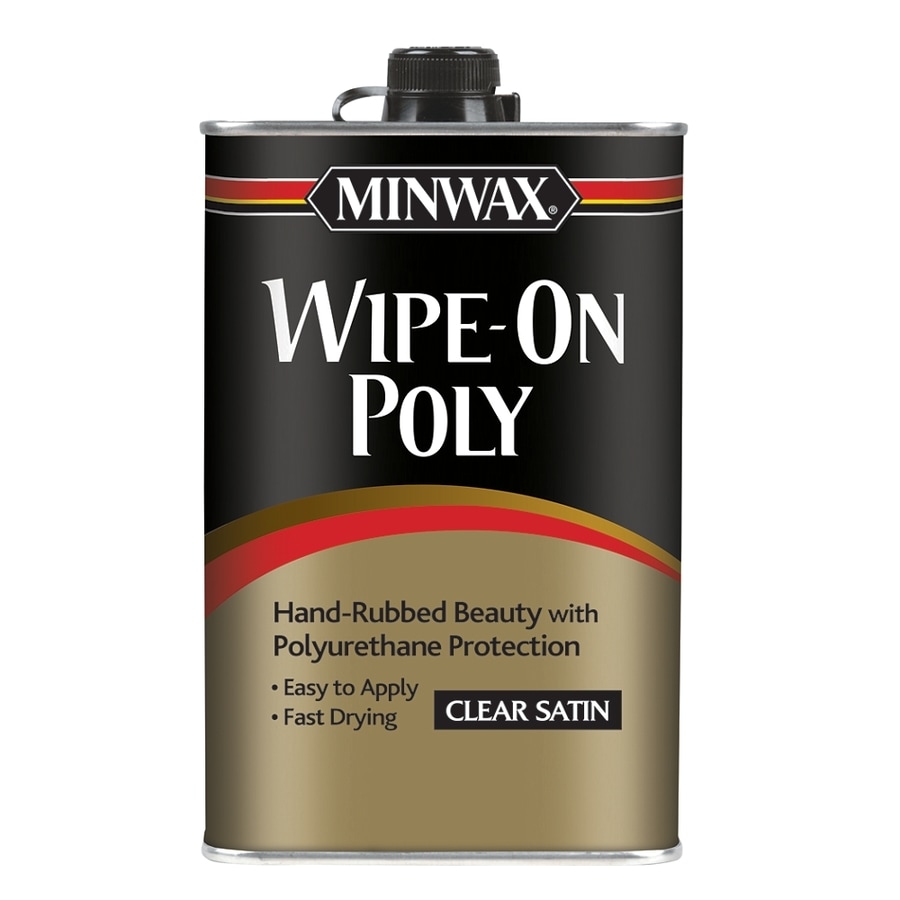
027426409101.jpg


I like wiping it on, as it gives me a better feel for getting the finish on and perfectly smooth. When I brush on it gets pretty thick and bubbly. Wiping does take more coats to build, so I'd like something that builds up a bit better, I usually need to go 4+ coats to get the build I want.

I do like a finish that brings a bit of honey color out and warms the look of the wood a bit, it doesn't have to be crystal clear. Any suggestions? I've heard good things about General Finishes products but never used...
 
To avoid these ads, REGISTER NOW!

Davefr

Well-known member
Joined
Jan 7, 2010
Messages
11,907
Location
OR
I make my own:
1 part Boiled Linseed Oil
1 part Turpentine
1 part Gloss Varnish

It provides a wonderful rich finish without that plastic Poly look. It takes several coats but you can stop whenever you get the finish you desire.

This finish is based on the famous Sam Maloof formula.
 

ARFLY

Well-known member
Joined
Jul 28, 2013
Messages
848
Location
NW Arkansas
I make my own:
1 part Boiled Linseed Oil
1 part Turpentine
1 part Gloss Varnish

It provides a wonderful rich finish without that plastic Poly look. It takes several coats but you can stop whenever you get the finish you desire.

This finish is based on the famous Sam Maloof formula.
Isn't this very similar to Formby's tung oil? What gloss varnish do you use when making this finish?

I usually use the wipe on poly, tung oil or teak oil and apply multiple coats.
 

Davefr

Well-known member
Joined
Jan 7, 2010
Messages
11,907
Location
OR
Isn't this very similar to Formby's tung oil? What gloss varnish do you use when making this finish?

I prefer real gloss varnish in the formula. (not poly or spar varnish). Real varnish is getting hard to find.

16389__91767.1534817994.jpg
 

snickers muncher

Well-known member
Joined
Feb 19, 2018
Messages
958
Location
Northeast GA
I made wooden countertops for the kitchen with an undermount sink last year. I used waterlox and it has performed very well in an active kitchen.
 

paulsomlo

Well-known member
Joined
Jul 16, 2013
Messages
3,954
Location
Northern Colorado
I made wooden countertops for the kitchen with an undermount sink last year. I used waterlox and it has performed very well in an active kitchen.

Another vote for Waterlox - it's essentially a varnish, goes on easy (you can use a rag), levels very well, easy to apply. Doesn't look like plastic and warms up light colored woods.
 

scubadoober

Well-known member
Joined
Aug 15, 2017
Messages
511
I am a fan of danish oil. You can always topcoat with poly if you change your mind.
 

R_einan

Well-known member
Joined
Aug 29, 2016
Messages
461
Location
Eastern WA
Have you considered Shellac? It pads well if you have a steady hand and patience, and you can cut it with denatured alcohol if it’s going on too thick.

You can also cut poly with mineral spirits to thin it so it wipes or brushes easier.
 
To avoid these ads, REGISTER NOW!

Treeman

Well-known member
Joined
Jan 4, 2008
Messages
549
Location
Michigan
Google "Bob Flexner wiping varnish" for an eye opening education on this subject. Here is a good primer: https://www.popularwoodworking.com/article/the_basics_of_wiping_varnish2/ ...(there are 2 pages)

What you will learn is that a lot of the off the shelf products do not contain exotic things like Tung Oil, but are just thinned down varnish that you could make yourself.

Some contend that polyurethane type varnishes yellow more than conventional alkyd varnish. The guys at Sawmill Creek forum are goo goo eyed with Pratt&Lambert #38 varnish to make a wiping finish.

Here are a few more links for learning:

https://sawmillcreek.org/showthread.php?150658-Sam-Maloof-s-finish
https://sawmillcreek.org/showthread.php?198179-Non-yellowing-wipe-on-varnish

I've been using the Pratt&Lambert #38 thinned WAY down successfully as a wipe on finish. One of the best techniques I ever learned.
 
Last edited:

cheechi

Well-known member
Joined
Feb 29, 2012
Messages
4,384
Location
Triad, NC
Some good suggestions in this thread.

Can I also give another suggestion, a foam brush makes fewer bubbles with typical poly finish.
 

marineman

Well-known member
Joined
Jun 14, 2010
Messages
616
Location
Wild Rose, WI
Depending on the project and how invested I am I do a lot of danish oil either store bought or make my own. On the few occasions I'm looking for more build I use general finishes arm r seal. I have no problems with the arm r seal and think it looks nice when that's the look I'm going for but if you put 2 pieces of furniture next to each other I couldn't tell you which one was minwax or which one was arm r seal.

Maybe try a shellac finish some time and see how you like it, looks real nice to me but each finish has their strong suits and isn't made for every project.
 

orangeblood

Well-known member
Joined
Dec 7, 2016
Messages
299
Location
Texas
I make my own:
1 part Boiled Linseed Oil
1 part Turpentine
1 part Gloss Varnish

It provides a wonderful rich finish without that plastic Poly look. It takes several coats but you can stop whenever you get the finish you desire.

This finish is based on the famous Sam Maloof formula.

+1 for making your own (although i prefer sating poly - dont think it creates a "plastic" finish).

making your own enables you to control the penetration and thickness of the finish. it is very easy to mix, apply and clean up. once you try it you wont buy store bought rub on finish again.

i think danish, formbys, et al are trade names that are some combination of turpentine, linseed and varnish/poly.
 
OP
M

moparfreak

Well-known member
Joined
Jan 24, 2005
Messages
860
Location
Milwaukee, WI
I'm definitely going to try this, as when I watched that Wood Whisperer video, he applied the wiping varnishes with a foam brush and got much better / thicker coats that I get using a rag to wipe on.
 

6PTsocket

Well-known member
Joined
Mar 12, 2014
Messages
4,593
Google "Bob Flexner wiping varnish" for an eye opening education on this subject. Here is a good primer: https://www.popularwoodworking.com/article/the_basics_of_wiping_varnish2/ ...(there are 2 pages)

What you will learn is that a lot of the off the shelf products do not contain exotic things like Tung Oil, but are just thinned down varnish that you could make yourself.

Some contend that polyurethane type varnishes yellow more than conventional alkyd varnish. The guys at Sawmill Creek forum are goo goo eyed with Pratt&Lambert #38 varnish to make a wiping finish.

Here are a few more links for learning:

https://sawmillcreek.org/showthread.php?150658-Sam-Maloof-s-finish
https://sawmillcreek.org/showthread.php?198179-Non-yellowing-wipe-on-varnish

I've been using the Pratt&Lambert #38 thinned WAY down successfully as a wipe on finish. One of the best techniques I ever learned.
What did you cut the #38 with and how much and did you add anything else? Thanks.

Sent from my SM-G900V using Tapatalk
 

Treeman

Well-known member
Joined
Jan 4, 2008
Messages
549
Location
Michigan
I use real mineral spirits, not one of the "substitutes" or "safer" paint thinners.

I start out at about 40% thinner: 60% varnish, but sometimes experiment +/- 10%. I don't add anything else. I try to avoid that thick, built up plastic-y look. It seems that I use about 3 to 5 applications. I rub the surface down with various things between applications to remove nubs. I've tried newspaper, cleaned very fine steel wool, scratchless Scotch Brite type pads, even super fine sandpaper( 1000 grit wet/dry I think). Always followed by a tack rag before the next coat.
 

6PTsocket

Well-known member
Joined
Mar 12, 2014
Messages
4,593
I use real mineral spirits, not one of the "substitutes" or "safer" paint thinners.

I start out at about 40% thinner: 60% varnish, but sometimes experiment +/- 10%. I don't add anything else. I try to avoid that thick, built up plastic-y look. It seems that I use about 3 to 5 applications. I rub the surface down with various things between applications to remove nubs. I've tried newspaper, cleaned very fine steel wool, scratchless Scotch Brite type pads, even super fine sandpaper( 1000 grit wet/dry I think). Always followed by a tack rag before the next coat.
Thanks for the info.

Sent from my SM-G900V using Tapatalk
 

rlitman

Well-known member
Joined
Oct 18, 2010
Messages
24,758
Location
Long Island
I use real mineral spirits, not one of the "substitutes" or "safer" paint thinners...

Good point. The "safer" paint thinners are absolutely worthless for thinning any sort of finish. But they are actually useful for post-finish cleanup (like brush washing). Stick to the real OMS for cleaning unfinished surfaces or thinning.

Also, in cold weather, VM&P naphtha can be used in place of OMS.
 
Last edited:
To avoid these ads, REGISTER NOW!
Top Bottom